Will BIM engineers replace architects? The research architects need to drive BIM innovation. 

aia

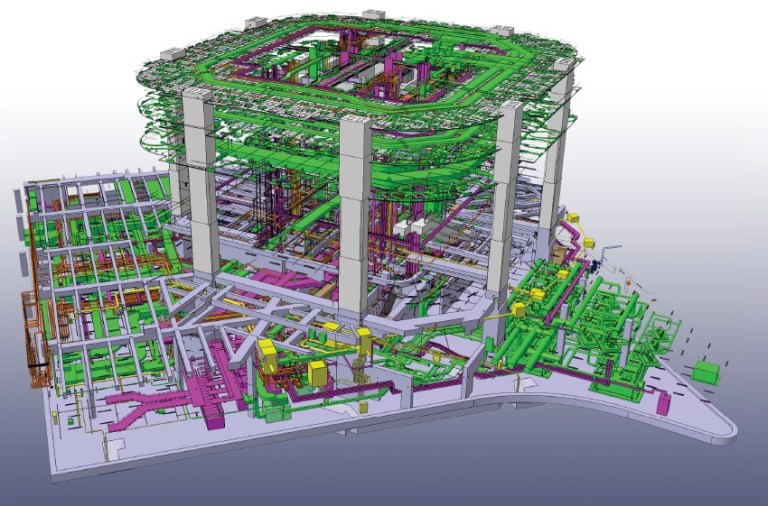
‘Building Information Modeling (BIM) is a digital representation of physical and functional characteristics of facility. A BIM is a shared knowledge resource for information about a facility forming a reliable basis for decisions during its life-cycle; defined as existing from earliest conception to demolition. 

To mandate or not to mandate that is the question for policy makers. In the UK a BIM mandate was announced in 2011. The purpose of the mandate was to aim to get “all collaborative 3D BIM (with all project and asset information, documentation and data being electronic) on its projects by 2016.” There are various opinions about this type of approach and whether or not it is effective. In Australia no such mandate exists and public procurement policy in the construction sector is largely left to the market and a few haphazard initiatives by state and federal government. Almost every  state has a different take on procurement decisions and policy. But in the UK the BIM mandate policy has driven research examining BIM implementation and its impact on the sector. It goes without saying that this kind of research (research into BIM and digital workflows in Construction) is much more advanced in the UK than it is in the  Australia.

For architects and others, a primary problem in formulating research and innovation policies around digital workflows and procurement is the spin that surrounds BIM. It is easy to feel swamped by all of the universal claims made about BIM. Rather than thinking how great BIM is we should ask: How can we manage and develop the capabilities of the majority of small practices who hope to engage with BIM?

My concern is threefold: that BIM is only for  large practices, BIM contains and limits the architectural design process and that BIM is a means by which architectural knowledge is made redundant in the name of economic efficiency. I know it sounds paranoid but will BIM engineers and technicians replace architects?

I know of a few small practices that have purchased BIM licences only to then not get time to implement it. Apart from having the staff to use these systems effectively there is the issue  of setting up a system to manage the data, information and knowledge that such a way of working requires. A Great journal paper on BIM implementation within the firm is from my colleague Dominik Holzer. Whilst written a few years ago it has some good hints on the problems of BIM implementation. His discussion of the Macleamy curve is well worth the read. His BIM managers handbook is great.

Myth 1: BIM change will change everything.

The first problem with BIM is that it has been linked to everything. A kind of all encompassing saviour. For some of its proponents it is a kind of panacea for everything. In theory, BIM project models paired with collaboration tools offer a number of significant improvements and benefits over traditional design, delivery and supply chain processes. Proponents of BIM claim that the BIM will change everything. In current BIM research BIM is linked to Lean Construction, Augmented Reality (AR), project and trade scheduling, safety management, progress measurement on sites, design visualisation and is even seen as a saviour of architectural education.

The BIM literature is full of these kinds of universal claims and possible linkages. Call me cynical but I think its pretty easy to get on a technology bandwagon these days.

Myth 2: BIM is the most important and singular mode of digital representation.

Definitions of BIM already have notions of digital representation built into them. For example, the building SMART alliance (Building Smart Alliance 2012) definition of BIM as:

‘Building Information Modeling (BIM) is a digital representation of physical and functional characteristics of facility. A BIM is a shared knowledge resource for information about a facility forming a reliable basis for decisions during its life-cycle; defined as existing from earliest conception to demolition. A basic premise of BIM is collaboration by different stakeholders at different phases of the life cycle of a facility to insert, extract, update or modify information in the BIM to support and reflect the roles of that stakeholder’.

The danger with these all encompassing definitions, especially given the other claims made about BIM, is that it might easily be seen, and come to be seen as, the only means to represent buildings digitally. This is a tendency that I have to fight time and time again teaching in the design studio. Sometimes architecture students think the computer is the only one way to do things. Yet,  there is a whole range of modes of representation at the architects disposal: From physical drawing to model making to a full range of software applications. But all too often I get students who think that the computer model is everything and there is no point building different models or testing designs in any other way.

Myth 3: BIM will replace drawing. 

Iterative hand drawing or sketching is central to design practice. But, Ambrose (2013) for example claims that BIM represents a new mode of visualisation that will overwhelm traditional conventions and working tools of abstract design thinking such as the “traditional conventions of communication; plan, section, elevation,” In this view BIM is a radically new tool for abstract design thought because of its “ability to virtually simulate the building construction and architectural assemblage” and “is perhaps the most important transformation and architectural production in the last several hundred years.” Proclaiming that “Every other discipline that has adapted simulation as its primary model of design and fabrication has benefited from increased efficiency and economy. Simulation is the destination of contemporary digital design.” It’s shocking that someone would actually write the above.

Like Ambrose (2013) the lean construction proponents Koskela and Dave (2013) also argue that BIM visualisation is superior and that “Traditional design methods do not support sophisticated and accurate visualisation or rapid iteration and evaluation of ideas that will help clients decide the option(s) to select.” Invoking parametric design and seeming to limit and lock in strategic or conceptual design he states: “The Lean and BIM processes and tools not only provide a much more accurate and sophisticated 3D visualisation capability, but also help evaluate the options from a range of criteria set by the client.”

This seems to echo an anti-design sentiment because conceptual design is something that needs to be “contained” and it is favourable that once a design has been formed under BIM it will not change: “Through parametric design and collaborative processes, the value loss is minimised when the conceptual design is passed along to later stages.”

Most architects understand that iterative design processes don’t involve a loss of value as the design proceeds. There is nothing wrong with drawing.

Myth 4 : BIM is suitable for all practices: large and small. 

Small service firms, like architects and other consultants, are critical in fostering an industry wide adoption of BIM. The industry structure of architecture in Australia is heavily weighted towards small firms and for this reason the uptake of BIM in these firms is important. Small and medium sized architectural firms make up the majority of the market for architectural services. According to the Australian Institute of Architects (AIA), there are currently approximately 3000 architectural practices in Australia with approximately 11500 members of AIA. According to the Worldwide Architectural Services Industry report in 2012 there were a total of 1594 architectural firms in Australia. There are 1219 Sole practitioners, 525 firms with 2-5 members, 121 firms with 6-20 members and 26 firms with greater than 21 members, of which only 2 have more than 50 members.

Proponents of BIM claim BIM overcomes some, if not all, of the integration problems of traditional procurement. In theory, in BIM there is more rapid co-ordination as the BIM model develops. But, for small architectural firms the range, complexity and cost of different software tools which enable integration between design and construction creates huge demand in terms of skill sets of staff; small offices tend to adopt one software program and then adapt all aspects of their design and design development workflows to this program within the office. This implementation usually requires a degree of customization which puts pressure on a small office’s IT infrastructure, technical skills, workflows and business processes. Arguably, larger offices can more easily deploy, co-ordinate and implement BIM with design workflows.

Questions for small architectural firms 

In small practices project roles and relationships within teams necessitates an examination of resourcing, technical support, and workflows as BIM teams evolve (Sing et al 2010). For small architectural practices the use of BIM raises a number of significant questions: Do architects simply design the forms for BIM consultants/engineers to create useful models from? In other words, will BIM systems integration and collaboration bring about the erosion of architecture as a disciplinary specialisation? How can parametric design and generative modelling tools be matched to BIM protocols?

With the rise of new fabrication technologies in the construction supply chain how might architects link the data in their BIM models to these new methods? Moreover how can we measure the costs and benefits of the use of BIM in small practices? What are the processes, techniques and protocols that Small and Medium Enterprises need to adopt to keep their services viable in a marketplace where the necessary tools and skills are becoming inaccessible?

BIM attempts to overcome some of the integration problems of traditional procurement. In theory, in BIM there is more rapid co-ordination as the BIM model develops. But, for small architectural firms the range, complexity and cost of different software tools which enable integration between design and construction creates huge demand in terms of skill sets of staff; small offices tend to adopt one software program and then adapt all aspects of their design and design development workflows to this program within the office. This implementation usually requires a degree of customization which puts pressure on a small office’s IT infrastructure, technical skills, workflows and business processes. Arguably, larger offices can more easily deploy, co-ordinate and implement BIM with design workflows.

Often, small practices struggle to convince clients that investing in design or design development is worthwhile. Design and design development is often seen as being too expensive and the end benefits cannot be quantified. As a result, the underlying schema of design and construction solutions are locked into too early and later reiterative processes, or design rework, is seen as being too late to pursue. However, one of the tenets of BIM based procurement is the ease of co-ordination and concurrent use of BIM with collaborative teams during early design stages. This is certainly the case in the BIM centred Integrated Project Delivery model and yet few studies have examined how small architectural firms might account for the benefits of early stage collaboration with BIM in these new procurement models. Barlish and Sullivan (2012) note that”there is a void regarding the measurement of project changes and outcome with respect to BIM utilization”.

The BIM research that we need 

It is a pity that we do not have a BIM mandate in this country as it would certainly help drive much needed research in this area. At the moment there is no BIM research focused on small practice. Given that most architectural practices are small and that many architects are already on the BIM bandwagon it is more critical than ever that practical BIM research is funded and undertaken. This research should:

  • Identify the critical success factors that support BIM adoption, implementation and collaboration by small Australian professional service firms.
  • Describe and map the organisational structures, IT infrastructure and business processes necessary to the successful adoption of BIM across the practice lifecycle in small practice.
  • Compare and then identify the interdependencies between parametric and digital modeling and BIM in early design stages and the later design development and documentation.
  • Identify the potential cost and benefits and productivity gains of BIM implementation in small practices.
  • Establish how the implementation of BIM shifts risk allocation in projects for small practice.



Advice to Malcolm T: Embedding Design Innovation into Australia’s Innovation Policy.

In Australia Malcolm Turnbull our new Prime Minister has made an announcement and a number of policy changes in order to foster innovation. The overall idea is to shift the Australian economies reliance on resources to an economy that generates growth from advanced manufacturing, IT and business services. It is an effort to go upstream in terms of global competitiveness. Achieving this policy goal of course requires developing a national innovation system that brings together govt funding, economic incentives, industry, universities, researchers and entrepreneurs.

What is of interest to me is how architecture research or indeed design research is positioned within national policies and national, indeed global, policy debates about innovation. In other words, how should design, and I broadly mean architectural and urban design, be accounted for in innovation policy in Australia.

1. Don’t get hung up on the latest technology or widget. 

In Australia across the property and construction arena there has been, and still is, an over emphasis on linear models of design, applied engineering and industrial design products in innovation policy. Product design and the latest widget seem to be at the centre of innovation policy. For example, a major funder of construction research between 2001 and 2009 was the Co-operative Research Centre (CRC) for Construction Innovation. Construction 2020, one of the main policy documents of the CRC, written in conjunction with the eminent English academic the late Peter Brandon of Salford University, embodied a future vision of a technologically advanced future for Australian construction. However, the report saw the innovation future in the construction arena encompassing advances in IT and interoperability, performance based design and construction, life cycle cost accounting, the integration of ISO systems with sustainability, time based competition facilitated by broadband, as well as complex and integrated BIM modelling and simulation in design.

None of the 2020 strategy was really about design as architects might know it. This was the strategies greatest flaw. In the 2020 vision the role of design thinking was forgotten and technology would herald a new ‘design as gaming paradigm’ where the internet would provide ‘customers’ with the ability to ‘build and play with different house elements’. This naivety, about design, was matched by the fact that CRC was the single largest investment in Construction R&D in Australia.

The CRC example highlights the problems of developing innovation policy in the Property and Construction and AEC sectors. The CRC vision exemplified a product orientated view of future innovation which saw design and construction as a linear process driven by new technologies and products. I suspect that underneath this was the dream of lean construction: The idea that construction could be like advanced manufacturing. The dream still lingers and deign has little place in innovations policies bewildered and entranced by new technologies such as robots, drones and CNC fabrication.

2. Remember that marketing spin is not innovation.

The real problem, perhaps reflected by the above situation, is that the property and construction industry, of which architecture is a part, is not really that innovative to begin with. There is a gap between what actually happens and the proponents of technological dreams. To put it bluntly: We only have to look at the state of the property market, housing policies, and the lack typological diversity in the crop of high rise apartments in Australian inner cities to argue that. Except in the marketing brochures of inner city apartments we rarely see design innovation as a real priority.

3. Seek integration over fragmentation

Moreover, Australia innovation capabilities seem fragmented between different industry sectors. In the period between 2009 to 2010 the percentage of manufacturing businesses implementing either process innovations or managerial and organisational innovations is 29% and 21% respectively. In the segment of Professional, Scientific and Technical Services which covers architects and engineers process and organisational innovations are 18% and 23% respectively. That’s a little better. But, in the Construction segment the percentages are much lower being 11% for process and 15% for organisational innovations.

4. Foster Design Innovation at a national level.

The few bright points in this policy landscape are fleeting. Most Australian state governments now actively promote architectural design through the state government architects offices. All of which have been established since 2006. Unfortunately, few of these offices are capable of directly funding research and are limited by being focused primarily on reviewing and upholding good design. Fostering design innovation and design entrepreneurship is not part of their remit.

Concluding in 2012 one organisation which focused on design thinking in research and the built environment was the SA Government’s Integrated Design Commission. This is an organisation not unlike CABE in the UK whose remit was to pursue a ‘design-based approach to design, planning and development that acknowledges the interconnectedness of the built and natural world.’  Another fleeting policy initiative which has now lapsed was the Built Environment Innovation Council. The council was nurtured under the Rudd-Gillard govt. If Australia is to have an effective national innovation system which includes design thinking then national bodies along the above lines is needed.

5. Be strategic by avoiding the physical and embracing the spatial

At the moment in Australia the policy emphasis on creating new products and technologies as being at the core of innovation systems predominates. For this reason design innovation is not on the radar in innovation policy. For many outside of the environmental design focused professions design is seen as being more about making and construction something, usually a building, rather than a methodology of thinking. As one eminent academic in Construction Management said to me “Architectural Theory that just sounds like an oxymoron to me.” This academic was well versed in the research methodologies of the social sciences; yet somehow could not see that architectural discourse also proceeds via a complex relationship between theory and practice.

Perhaps the problem is that the practice of architecture inherently involves thinking about spatiality. Howevwr, thinking about architecture and design innovation as a spatial practice frees it from the physical. Hence design thinking is not neccessarily about physical objects like products or buildings it can also be about about designing systems, processes and models that may or may not be physical. The work of Dan Hill  now at Fabrica  also Miguel Robles-Duran and the Urban Ecologies Studios at Parsons are good examples of this kind of approach. This approach fosters design innovation by engendering trans-disciplinary innovation. This is important when considering the problems posed by the urban agglomerations called cities.

6. Promote Design Innovation and educate

For innovation to emerge and grow in Australia sector specific innovation policies must see design and construction as being integrated. Design innovation and design research should also be recognised in broader innovation policies. Patchy commitments from governments, territorial and traditional schisms between developers, contractors, engineers and architects and intense price competition destroy the ability to innovate.

Finally, Architects themselves should be educated in such a way that R&D, entreprenuership, and an understanding of venture capital is built into their DNA. This should happen at architecture school. The proponents of design research also need to actively promote its importance to policy makers. Policy makers need to understand how important design innovation is rather than pursuing the dream of the latest widget. Innovation policy should not be about trying to pick the next big thing.


6 Ways to Generate Research Knowledge in an Architectural Practice.

designideaslabs_4

Recently I bumped into a friend who is a director in an small architectural practice he told me that R&D was the practices highest priority. Many architects say this and numerous architectural websites and brochures are full of statements about how research is valued and prioritised. My friends firm is different. They have an advisory board, are involved in numerous architecture schools, one of the directors appears to be constantly gathering new knowledge across the broad domains of urbanism, design and innovation. Interestingly, the practice is one that is actively involved in seeking funding and commercialising at least one of its ideas. The firm is a good example of a firm that is able to do research and then push that down the pathways of innovation and commercialisation. A number of international architects, Australian architects and even academics have been able to go down this path. But I fear this is the exception and that many architectural firms are not effective or face numerous barriers (lack of time being the principal one) in the way that the approach the research and development question.

My point here is not to question what research is, or how it might be strictly defined, or how architectural or design research contributes to knowledge. That is the subject of another blog (if not a PhD thesis). But my friend got me thinking about the question of how should architectural firms, particularly small ones, organise themselves in order to do research?

1. Have a research strategy.

Research involves developing knowledge or expertise in a particular area. For the reason it makes sense that an architectural practice would focus their research efforts in a way that aligns with their business strategy. If the firm seeks to develop a competitive advantage in health, or facade design, or sustainable design or some aspect of urban design then its research efforts should align with this.

Whilst it is important, it may not be effective to pursue research that is simply about implementing new technologies in the office or figuring out what the next bit of funky software the firm should buy (see no. 2 below). Sometimes the line between these activities and strategic research is blurred. One office I worked for, in the earlier days of CAD, did spend a lot of time researching and understanding the expressive possibilities of CAD design and architectural representation. As CAD developed this gave them a large competitive advantage. Clearly the knowledge and research gained, as CAD systems themselves developed, had strategic benefit to the firm. In any case, I would always push for a line of research in the office that is at least aligned with the its current strategies or with its intention to develop new areas of expertise.

2. Pursue radical innovation rather than incidental research.

Whilst research efforts in an office should create knowledge which adds to the firms competitive advantage. This should not always be the case. Of course, I am not sure that simply being technically proficient or doing research that improves a firm’s current efficiencies and capabilities.It is a balancing act between conducting research to improve current capabilities versus working on seemingly new and radical innovations. Getting the balance right is important but sometimes research needs to be wacky. Research is about trial and error and indeed about making mistakes. That is in part what research is about. Buckminster Fuller is a pretty good example of this.

But research in a architecture should not simply be seen as simply materials research. Research is not simply about finding out about new materials for your latest job and then filing the information into a folder for later reference. Unless, of course you think that the knowledge you gain from the material research process can be used elsewhere. But, I think that is what all architects think: They all think the extra research or knowledge they gain on one project can be used on another. But I am a little skeptical about this. Especially, if the firm does not have a research strategy or its projects are highly customised and different each time.

Sometimes you really have to undertake research that is risky or may not have an obvious or immediate benefit.

3. Create networks that help you to gain knowledge.

As my friend has done in his practice Architectural firms who prioritise research build an ecosystem of mentors, advisers and experts that they can interact with to debate and test new ideas. Almost all startup companies will  have advisory boards that advise them through the pitfalls and hazards of commercialising an idea and then growing. So why not architects.Networking of course isn’t neccessarily always  about trying to find new jobs. It can also be about gaining knowledge of what is going on across the domains of knowledge where you practice. At least one person in any practice needs scan the horizon for new ideas or the latest research developments.

A good example of creating a research network is Google. The Google platform is an ecosystem that includes consumers, software innovators, content providers and advertisers. It is a permeable system where outsiders can also become collaborators. Hence, it is not simply a matter of trucking in people or experts to help you solve a problem. It is about creating an network or ecosystem of collaborators who can help a firm to create new knowledge and to also understand what is happening within architectural and urban discourse. 

4. Use your staff to create research knowledge.

Another dilemma for architects is how to organise a firm to do research. In the old days all wisdom in the office came from the Master. The so-called Master was not unlike Gary Cooper in the Fountainhead movie. He (sadly, always a he) was usually the architectural designer who by force of ego, class background, cachet of education, or through experience and perseverance. When I worked for  a “Master” in the 1980s as a young architecture student I could do nothing right and you can imagine what this did for my confidence as a designer. He was a good architect and in later years proved to be a designer of international note. But, he was also never wrong and always insistently right. Contending with the Master’s wisdom was really not a great career move. It was a little bit like being in a cult. Master’s love acolytes and they of course like acolytes who agree with them. The worst thing a firm can do is to create team’s in its own image rather than diverse teams which I would argue are they key to creativity.

Hence, it is best to strive to create distributed research knowledge within and across the firm. More research is done in a practice where everyone contributes to it. Although, we may not want to emulate Google, it is still a good example to think about in this respect. Of course architectural firms aren’t as large as Google; nor are they filled with Ivy League software engineers who get time off each work to do research. But allowing and organising your staff to do research has a number of intangible benefits. Firstly, it gives employees a reason for being and staying in the firm in between mindless CAD “monkey” work. It obviously helps a firm build a portfolio of research interests and streams that may or may not develop, and thirdly by using your staff or other team members you can quickly increase the firms knowledge base. Directors, managers and team leaders in firms need to cut employees slack to do the research and create the new ideas. Ownership of new conceptual ideas or design processes more often than not is, and should be, shared. It never really resides in the mind of one person no matter how much symbolic capital they may have as a master. As they say at Pixar: “A company’s communication structure should not mirror its organisational structure. Everybody should be able to talk to anybody.”

This might be why my favourite model of Knowledge Management or  is based on the Japanese management theoretician Nonaka whose work points the importance of  knowledge as a vital source of competitive advantage, there is little understanding of how organisations actually create and manage knowledge dynamically.” Nonaka and his colleagues understand that knowledge creation in an architectural firm, or any firm for that matter, is a collaborative and iterative process. 

5. Collaborate with academics.

Bring academics into your firm’s research ecosystem.The problem is academics are often time poor and hemmed in by teaching commitments and an overly regulated bureaucracy. On the other hand not all academics understand the dynamics of practice or business protocols. Most academics in architecture schools love to do research. They also like to talk about it. Because of this it is a good idea to contact and foster the participation of academic researchers (like me!) into a practice’s work. Invite them in as critics. Invite them to the firm’s christmas party. Allow them to participate in planning workshops or esquisses. This will help the academics understand the pressures and time frames of the practice. It will also get them thinking about what you do as a firm and what you can do better. Before you know it you will become part of some usefull collaborative research projects.

6. Teach a studio.

One good way to conduct research and create new knowledge is to teach a studio at an architecture school. I don’t think this is simply a matter of choosing a project with a site and a brief and then getting the students to do it. Studios should not be seen as teaching the students to simply solve specific and simplistic design problems. This is too much of a crank the handle approach to design studio teaching. I believe all studios, particular at a post graduate level should involve the so called “wicked problems”. Research knowledge generated from the studio should be more speculative and less technical. It should aim to solve a difficult problem or be focused on a project that exists in a problematic context.

I would suggest that integrated studios are better. By this I mean studios that integrate different domains of knowledge or disciplines such as landscape architecture, planning or urban design. Or they may integrate different theoretical or cultural domains of knowledge for example the studio may be focused on a particular stakeholder group or sub-culture.

For research in a studio context to be effective it must also have a political dimension. Why? Because, new design knowledge generated from a studio should ideally question an existing situation or status quo. But not everyone would agree with this. Running a studio with an overly technical focus, for example a studio focused on the students exploring the limits and expressive capabilities of a particular software package, may not necessarily be contributing new design knowledge to the architectural domain. In setting up a political dimension or element to a studio the knowledge created can then help the studio leaders to position and locate themselves in relation to various political or policy debates as they emerge in urban discourse. This enables a firm that teaches to gain an advantage over its competitors by actively being a part of an ongoing public and policy debate. A firm may then be able to anticipate and participate in the projects that these policy debates engender and spin off.

COP21 and the ecotopian fairy tale.

walking-city

COP21 is almost upon us and prompts me to think about future cities and the way in which they are currently being design and proposed. In urban theory the discourse of sustainability has tended to focus on existing global or megacities. New York, Paris, London, Hong Kong, Delhi, Shanghai or one of my favourite megacities Mexico City. Like the so called starchitects these are the starcities of the world which urbanists often suggest other smaller or newer cities should emulate. After all densification is a good thing, it is inevitable and cities can only get bigger. So why not emulate the star-cities?

As a result of the above, in response to the warming of the globe, much of the discourse is centred around how to densify the cities further, mitigate to fix their inherent problems or give these cities some kind of low or zero carbon makeover. The recent Planetary Urbanism competition exemplify schemes that demonstrate the range of these different approaches.

But, outside of the star or megacities, as I have called them, there are other seemingly lesser cities that are worth considering in the context of climate change. These are those cities or ecotopian proposals that are currently being proposed, design or built. In other words, these are cities that may have been recently built or are currently proposed as ecotopian cities. A very brief survey of these more recent and newer ecotopian cities suggests how prevailing thinking in urban and city design should be questioned.

Such a discussion must start with China where cities are rapidly being proposed or built everyday like Meixi Lake by Kohn Pederson and Fox which according to the marketing pitch “establishes a paradigm of living in balance with nature.” This is a city of 80,000 people that is masterplanned around conventional functional zoning. Some of the newer Chinese cities highlight photovoltaics. For example, China’s Solar Valley or Solar City  located in Dezhou. It is claimed to aspire to be a Chinese version of Silicon Valley. The city of Solar City  is full of strange monuments. Think of an Alucobond office park with Solar Photo Voltaic add-ons. Solar City city has been developed by the visionary entrepreneur Huang Ming.

Many of the new Chinese cities seem to presume greenfield sites. Sites or landscapes without ecological contexts or indigenous histories. This is often a defining feature of these new cities. For example in Australia there was a proposal for a ecotopian city in adjoining Lake Argyle in the remote Kimberly region. It is a proposal to develop a city of 150,00 people. The city will be fully data connected to the rest of the globe to take advantage of the regions abundance of water and to promote, mining, agribusiness and of course tourism. In some ways this is City is not unlike one of the new Chinese cities built on a greenfield site.

Recent proposals for new cities by architects or urbanists normally focus on the technologies or mix of functions that will be our salvation. But economic or social factors are ignored. China at least in the lead up and at COP15 has announced it will move towards a nationwide Emissions Trading Scheme. This initiative has grown out a pilot trading scheme which covers seven of China’s regions and cover 36 cities. These pilot schemes have been assessed as being generally good. Once fully implemented China will, of course be, the largest market for carbon emissions across the globe. It would be good to see more urbanists strategically consider in their proposals the market mechanisms that new cities need in order for the globe to de-carbonise.

One notable recent city which claims to be carbon free is Masdar City.This city is being developed by the Masdar corporation based in Abu Dhabi whose mission is to “integrated, holistic” business model that merges higher education, research and development, finance, and the development of large-scale renewable energy projects and sustainable communities.

Green cities like Masdar abound as an element of marketing and nowhere is this more evident in Dubai and the large developments undertaken by Nakheel. I have a guilty pleasure in that I must admit that I love the 2008 Nakheel video promoting Dubai. It was produced just before Global Financial Crisis. But maybe if you ever see a video like that you just know you are at the very peak of  a property boom. Whilst Dubai is in a different region of the world its marketing promotions prior to the Global Financial Crisis seem to have set a standard that others like China’s Solar City appear to emulate.  Recent city projects fostered by Nakheel include International City and the curiously named Veneto which is a little more tasteful with its abstract modernist look.

Nakheel projects, such as the Palm Jumeirah and the World also seem to evoke more utopian schemes and with the threat of rising sea levels marine and even underwater cities have made a come back. I discuss some of these in my thesis about the marine and underwater cities of the 60s and 70s. But today, with the spectre of rising sea levels there are numerous examples of these. Some are truly frightening. In their utopianism, these cities seem to ignore basic ecological principals. One of the most frightening for me are the underwater skyscrapers, seascrapers or waterscrapers, as they have been called by there proponents. Not unlike luxury cruise liners, these seem to celebrate the architectural language of resort architecture and ignore issues of spewing pollution into the oceans.

The other category of cities that appear to address the climate emergency are the biomorphic cities. These all seem to look like Darcy Thompson’s diatoms.  This is the new global style of avante-garde urbanism; and arguably it is just that: a style. It abounds in the architecture school’s of my city. But it’s proponents have asserted that the cities of the future can only become truly sustainable if they are parametric. But in more recent statements the parametricists, or should I say the Parametricist, argue that politics has no place in architecture.  It is difficult to understand how the need for sustainabilty, in light of the climate emergency, can be divorced from political agency.

Parametric cities usually look more or less biomorphic, such as in the work of Biothing. The look ecotopian. But it seems that the large urban projects exemplary of this style make little effort to unravel the mechanisms of class, politics, consumption and global financial systems. Although, there are some efforts to more literally and realistically meld biological forms and processes together for example in the work of Francois Roche. The Toronto architect Phillip Beesley’s work is also similar. In some ways Roche and Beesley’s work results in the magnification of biological processes that results in picturesque ruins. To my eye these schemes appear like grottos in the ruined and anxious landscapes of the anthropocene.

Outer space cities have even made a come back in recent years. These cities have been given impetus by the possibility that the exploration of Mars may now be more feasible. Of course this impetus has probably been accelerated by climate change and the fear of tipping points. NASA’s 3D printed challenge ticks the box of Martian habitation and 3D printing. This is not the first time that architects and urbanist’s in obsessed with technology have saught to inhabit outerspace. Paolo Soleri’s Asteromo is probably one of the best examples of this from the 1960s.

Of course my favorite starcity, which is also a Chinese city, perhaps because of its hint of irony, is the one produced by MAD Architects for the 11th Venice Architecture Bienalle. Superstar: A Mobile China Town is claimed to be an ecotopia. It’s authors state it to be “a benevolent virus that releases energy in between unprincipled changes and principled steadiness. It may land in every corner of the world, exchanging the new Chinese energy with the environment where it stays. It’s self-sustaining: it grows its own food, requires no resources from the host city, and recycles all of its waste.” Given the form of the building and the collages which depict it in various locations it is refreshing know that irony still has a place in all of the earnestness of ecotopian and city design.

Many of these newer cities, these new ecotopias, often purport to solve some problem or aspect of a warming planet; they all seem to tout particular technologies, almost seeming to imply that they can easily be rolled out across the global level. It is probably this reproducible characteristic of these cities that I find the most disturbing. A characteristic that implies the erosion of local and regional conditions; such as ecology, climate and indeed indigenous communities. In the planetary urbanisation and urban data and data diagramming discourse difference is too often eroded.

It may seem strange but all of this brings my mind back to the 1960s where technological solutions obsessed urbanists. Arguably, the 60s was the decade in which the city  was first formulated as a global technology.  One of the  great examples of this in 60s architecture was Ron Herron’s Walking City of 1964, inspired by the defensive WW2 forts in the Thames estuary, it posits the idea that the city is  a global technology. Part ocean liner and part space ship Walking City was a technological apparatus clothed in zoomorphic and biomorphic forms.  Herron’s city would conquer new territories, traversing existing environments and in the process immersing itself and the bodies which inhabited it into various mileux. It was a protective cocoon that would protect its inhabitants from an exterior hostile environment. It was both defensive and conquering. It didn’t matter too much what it trampled on.

In the 21st Century technology is back as our salvation. After the events of the worker and student riots in Paris in 1968 the ecotopias and techno-utopias of avante-garde architects rapidly came to be criticised. Buckminster Fuller, (whose geodesic dome adorned the Expo 70 site) was denounced as a fascist, Archigram were seen as being fantasists who could not and were not given the opportunity to build. In the 1970s the Institute of Architecture and Urban Studies led by the American architect Peter Esienman, an avowed anti-technophile, pursued notions related to architectural syntax and grammar rather than technology. Given this gap it is not surprising that architects and urbanists have now returned so easily to the simplistic technological narratives of the 60s.

For the Marxist historian Tafuri architects such as Archigram were futurists creating a nostalgia for the future which was clouded by a subjective techno-mysticism. Claiming that there existed an“academy of the utopian”  across the international avante-garde which  harked “back to the Futurist idolatory of an industrial dynamism of biomorphic and mystical countenance.” An academy seemingly ignorant of the real laws of technology.

Tafuri’s criticism still seems to be a valid of many of todays ecotopias. In the face of climate change we are witness to an academy of the utopian. But this new academy of ecotopian projects is different.  It is different for two reasons. Firstly, climate change is real.  Secondly, the media of through which architectural knowledge is disseminated is now completely different. This only intensifies the fairy tale nature of these new ecotopian cities along with the efforts to deal with the starcities and megacities. As Antoine Picon notes we are on the eve of re-enchantment of the world. A world full of fantastic technologies, cures and copy written words embedded in the current crop of ecotopias. In order to decarbonise the planet we should avoid the ecotopian fairy tale.


Click to access fac-pub-picon-ruinerouille.pdf

3 Questions about MOOCs and the Architecture Studio.

As a long standing studio teacher I don’t want to be replaced by The Massive Open Online Courses or MOOC. The MOOC has rapidly become a new mode of online teaching in higher education. For myself, as an architect and an architectural educator, the MOOC raises three questions: Firstly, how might the MOOC impact on architectural education in general? Secondly, will the MOOC reinforce or erode the production of architectural knowledge via design research? Thirdly, will MOOC’s threaten the architectural studio as the central component of architectural education?

MOOCs have now been devised across every domain of knowledge including fields as diverse as Bioinformatics, Interactive Computer Graphics, Teaching, Programming and Coding, Animal Behaviour and Welfare and even the Beatles. MOOCs are seen as a way to democratise higher education and bring new knowledge to students who would not normally have an elite education. Since 2012 when one of the main MOOCs provider’s Coursera launched there has been phenomenal growth in the MOOC market. There are now countless MOOC platforms, providers and courses across the globe.

As the first wave of MOOC’s were being developed neoliberal university executives started to panic and MOOCs  suddenly became the thing to foster. This because this group saw the MOOC as the next disruptive technology. It was argued that MOOCs would disrupt the Higher Education sector by being an alternative service delivery model to traditional university teaching. Some pronouncements were ominous: An Ernst and Young Report entitled University of the Future published in 2012 predicted that universities “would not survive the next ten or fifteen years” unless they adapted to MOOCs.

Is the MOOC, as well as other types of virtual studios, too easily seen as a glib substitute for face to face studio teaching? We considered this when I put in an application at my university to develop a possible MOOC around architectural design. We presented our work at the Bartlett research symposia in 2013. In thinking about how to develop an architectural design MOOC the obvious difference to studio is the disparity between in size. A traditional studio is a small team of creative individuals and the MOOCs has ten’s of thousands of students. The difficulty of translating the studio to this global format may be why there are only currently a very few architectural design studios delivered by MOOCs. Many of the current MOOC offerings related to architecture focus the history of architecture rather than studio teaching.

In 2013 The ‘Developing Cities’ course developed by the Leuphana Digital School, led by the American architect Daniel Libeskind,  offered a design  based on a  group design competition.  Students worked in teams of 5. The MOOC employed  video lecture keynotes, online forums, a messaging system which enabled virtual classroom discussions. Feedback was provided to the students across a range of categories such as: architecture, economics, social science, cultural history, sustainability, infrastructure and public health. The winning team produced a design for a  port city in Paranagua Brasil.  The final proposal described a Masterplan which was described mostly by text but simplistic photoshopped images and sketches.

I would certainly be interested to hear of more examples of architecture related MOOCs.

I don’t like to see the domain of architectural design diminished as a field of knowledge and practice; in the same way that I don’t like my design students to bury themselves in computers. I tend to agree Michael Jemtrud of McGill who states that architectural education should not be an “impoverished simulacrum for the profession.” He argues that for students design studios are about developing a critical position and understanding different design methodologies. For me the most important element of studio teaching in a architectural school is teaching the “continuous cycle of critical reflection.” A “tick the boxes” approach to a architectural teaching doesn’t really cut it for me. A syllabus in architectural design teaching is worthless unless experimentation and critical reflection is built into the studio. As David Salomon of Cornell, notes that the design as research studio through “experimental process of making and testing risky propositions with recursive trials and errors, that has the potential to move architectural thought and action beyond the dual mythologies of objective reason and individual genius.” I am not sure MOOCs can do this at the moment.

In this context it is useful to compare the MOOC to a Virtual World like the online game Minecraft. The MOOC is also a game world. Like Minecraft it is immersive, individualised and digitally delivered. Minecraft encourages the formation of social networks and has over 40 million users world wide. It is a global game, perhaps a step up from the MOOC, a territory for students of architecture to build in. Minecraft, like the MOOC, is inherently multi-scalar, user friendly and there are substantial resources online to facilitate new users. Most importantly, it fosters sociality the key element that has been observed as missing from many MOOCS. Minecraft is well suited to group collaboration and collectivism for design. As a  component in a MOOC It would allow participants to see and respond to each other’s design exercises as they progress; It allows for architectural projects, and indeed worlds, to be rebuilt and remade. It is easy to imagine how Minecraft design exercises could easily form assessment tasks and would provide students with a basis for developing a Minecraft architectural portfolio.

But playing Minecraft is not the same as designing architecture. Just like the MOOC, there is a problem when the medium of delivery becomes a poor simulacrum of design practice and the production of architectural knowledge in the real world. Living in the game isn’t really architecture.