A Kick in the Head for the Architects: Symbolising the National Parliament as Detention Centre.

Welcome back. First full blog for 2017. 

As soon as Romaldo Giurgola’s concept for Parliament house Canberra came into being it had perhaps already sown the seeds of it own destruction. This is because it was always a holistic and seamless conception of democracy. A unitary idea that appeared without effort to bind together a complex competition brief, Walter Burley Griffin and Marion Mahony’s plan, Canberra’s landscape and the aspirations of a social democracy (of course no mention of the first nations). The concept of a building underground with a hill over it was clever. The spin was that this was a people’s house a monument which allowed the punters, the ordinary public, absolute access above its interior parliamentary workings.

As reported in December:

 the Australian government announced plans for a $60-million security upgrade to Parliament House that included installing 38 CCTV cameras and building a 2.6-metre-high perimeter fence that would prevent the public from accessing the lawns.

Giurgola’s concept

But in hindsight perhaps Giurgola’s concept was all too clever and it is only now that the flaws of the concept are all too apparent. The current move by the parliamentary executive to fence off the hill from the public in the name of security certainly suggest this. The contrast between the aspirations embedded in Giurgola’s concept and the current proposals to change and manage the building could not be more disparate. These current proposals amount to a vandalism of the building’s architecture that is extremely disturbing.

Giurgola’s architecture was that kind of modern classicism prevalent from the mid 20thC onwards. The design is redolent of his mentor (and teacher?) at Penn Louis Kahn, the architect, who more than any modern architect, looked to reinstating a nostalgia for the classicism of Rome and map these to the mythologies of the American republic. There is certainly nothing overtly “Australian” about the overall parti and conceptual design of Giurgola’s project. Most of the seemingly Australian elements were added in a kind of decorative and featuristic way in the internal spaces.

The Competition

Other competition schemes for Parliament house proposed more difficult and indeed complex concepts for how to represent a democracy in this country. Edmond and Corrigan’s concept for the site easily springs to mind. No doubt there are others. The E&C scheme is an interesting comparison to Giurgola’s proposal. Incomplete, fragmentary and more a ad hoc bundle of forms partly incomplete that suggest a city on a hill. A work in progress rather than a monolithic and unitary composition. Unlike Guirgola’s homogenous composition E&C’s entry was brave enough to distribute a few pieces of virtuosity across the site. In some ways Giurgola’s composition, in its efforts to be timeless, is devoid of architectural detail or intimacy. It’s all big scale and symmetry. There is a complete lack of estrangement in the composition. This is certainly not a classicism that even approaches the humour and  empty ironies  of Lutyen’s classical monuments for example.

This is not to belittle Giurgola or his achievements but it is to point to the folly of architectures that are bound to a historic nostalgia and paradoxically the anti-historical idea that there is in architecture so-called fundamentals. Fundamentals and histories that draw upon myths of origin and the monuments of the Roman Forum and the Acropolis.I also vaguely recall at the time that there was a suggestion that the satellite view of the project, read in conjunction with Giurgola’s Italian connections, resembled the fasces symbol.  As the Italian critic Tafuri suggested of Kahn this is an architecture that seeks a “mystic aura” and has a “misplaced faith in the charismatic power of institutions.” But you will probably agree that this is probably beside the point if you read on.

Let the fear loose 

Nonetheless, Giurgola’s original concept and the building deserves respect.  Over the break I met a journo from the press gallery who stated that the good Burghers of the parliament did not want anything bad (e.g terrorism) to happen on their watch. This is the new conservative political correctness. Firstly, conservatives ramp up and create the fears and once these fears are let loose they step in to solve them.

As we now know after years of neo-liberal economics, executive government, the continuing catastrophe of the Middle East set in play by the invasion of Iraq, the hopes and failures of Occupy that a seamless idea of democracy is mostly fantasy.  Arguably democracies are fragmentary, ephemeral and sometimes short lived. As we are beginning to see they are fragile and easily eroded by cycles of fear mongering. To represent them as a holistic and complete image, as is the case with Giurgola’s design, is bound to lead to trouble at some point. For no seamless and complete image can sustain itself for long before its contradictions are exposed.

Even if we grant that the presiding officers of the Parliament have legitimate concerns. It is, as usual, the professional planners of the National Capital Authority, supported by GML Heritage, who really have no idea about architectural heritage, values or history. In parliamentary reports and hearings they argue the fence will not compromise the Heritage values of the site because it can easily be taken down.

At the Joint Standing Committee of December 1 the CEO and chief planner of  the NCA as well as the Acting Executive director of the National Capital Estate all argued that the measures would not infringe the heritage values of this building. At best all I can say is that this belies a genuine lack of architectural knowledge.

Another kick in the head for architectural values from planners not trained in architecture.

The current proposal seems to be a knee jerk reaction to fear. Such sentiments only deepen my cynicism for our governing political masters (not to mention the planners involved). Masters who have no concern for architecture in any way. It’s all ratcheted up fear and then cheap belt and braces pragmatics. Why not a design competition for the fence? Perhaps they could have thought of better ways to control and monitor the building’s hill top in line with both of the Griffin’s and Gurigola’s vision.

No these are men and women who have no regard for architecture, architectural design, or culture. Perhaps their idea of culture is a bit of golf, wine snobbery and an “intellectual” interest in the sports prevalent in our mass media. Again and again in our society, as architects, we are witness to this sensibility. Where architecture lies outside of cultural and institutional logics. The Sirius building, the debacle of Barangaroo, the continued destruction of the remnant 19thC fragments in our major cities. Yet many of our politicians claim to have our best interests of our democracy at heart and yet when it comes to architecture they always seem to favour cheapness.

The bright sparks at the NCA stated that:

The NCA is satisfied that the proposed works have been designed in such a way as to reduce the impacts on the heritage values of Parliament House. Whilst the new structures will be visible, the Heritage Impact Assessment notes that the potential for visual impacts has been reduced to a reasonable level by the modest scale of the guardhouses. The siting of the fence is in keeping with the landscaping contours originally designed to accommodate a fence.

In the May parliamentary hearings the NCA fence is described in the following terms.

  • Construction of two gatehouses in precast concrete with stainless steel and aluminium window framing (you gotta love the shop front framing)
  • Installation of steel security fence and retractable gates (approx.2.6m high)
  •  Installation of eight fixed stainless steel bollards
  • Installation of ten surveillance security cameras and poles
  •  Replacement of window framing and glazing.

This is the architecture most favoured by our political classes. An architecture of cruelty (but not in any nice Artaud kind of way): aluminium window framing, spare skillion roofs, metal decks, steel gates, and off the shelf building products. Just do a Google image search on Manus Island or Christmas Island detention centres and you will see what I mean.

The fence has had a long and cruel history in Australia and this new fence around our national parliament is no exception. The awful thing is that these mofos will have morphed the symbolism of our national parliament building into that of the immigration detention centre.
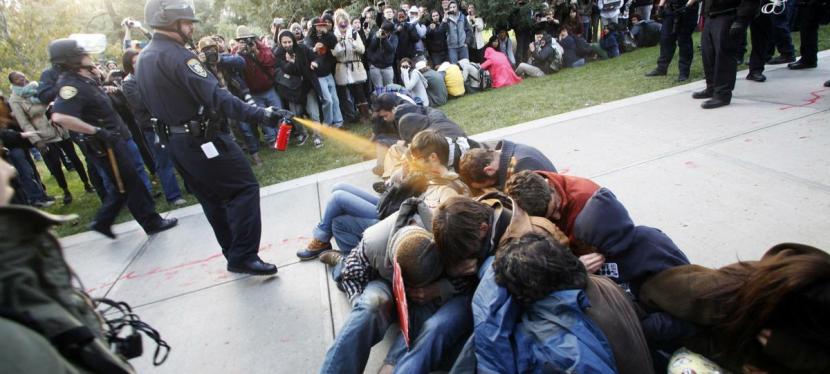
You can sign the petition against the proposal here. 

The 2017 list: What architects and architecture students should try and do over festive season.

Happy New Year. 

As I noted in my first post on this subject in 2016. Architecture school does not necessarily teach you everything there is to know about architecture. I am constantly astounded by those architecture students who think that by completing all the subjects at architecture school they will know everything there is to know about our complex field of knowledge. Unfortunately, the tick the boxes mentality is all to prevalent in our universities and is at odds with real education.

A good architecture school, like the one I teach at, is only an introduction to architecture. It’s up to all of us, regardless of our position in the profession’s career path, to be responsible for our own architectural education and educate ourselves as architects. Without wishing to sound overly didactic or clichéd architectural education is a life long process. Observation and experience are central to this process. Observing, experiencing and recording the world as we encounter it is central to this process. To a larger extent, rather than a lesser one, I think all great architects are self taught to some degree. That was certainly the case for the 20th C modernists. The oldey-worldy apprentice system, the Beux Arts, even the Bauhaus all seemed to encourage the singular and self taught autodidact. In the modern age the rise of the pedigreed architectural education has perhaps eroded these older norms. Being responsible for your own education is vital; and in saying this, I don’t wish to privilege the singularly focused auteur or genius. Collaboration with others is just as much a part of the self-education process as anything else.

The festive and holiday season, especially in the Southern Hemisphere, is the time for all good architecture students and architects to get out and experience life beyond the digital screen of the studio or the office. So here are my tips for what to do over the holiday season in 2017.

Go to a party.

The Cambridge architectural educator Peter Carl was infamous for telling young architecture stduents what they needed to do to expand their realm of experience. Decorum prevents me from saying exactly what it is he is said to have often said. But I can say its great to get out and party. I dont mean one of those pleasant instagrammy Reyes filter in the garden hipster-style picnics. I mean a real party. The kind of nasty snapchatty VICE and vodka filled borderline legal substance party. A selfie in the bathroom over the faucets party. The kind where everyone gets trashed and you get talk to and know people you would not ordinarily meet. Its little wonder I havent organised for myself a birthday party after my 4oth.

If all else fails go and see a band or Simona play. She is great. Of course some of you will already be recovering from the Falls festival and  Woodford.

Read a book

Yes, as with last year’s list reading a book is a really good idea. I know this is hard for architecture students  and perhaps harder for busy parenting architects. So my suggestion is to not read  any old book like one of those middle brow crime novels or historical dramas. I dont want to sound pretentious, but try to read a really difficult book like Finnegan’s Wake, or De Sade or Debord, or light up a few big ones and read Deleuze and Guattari; try and stay away from reading anything by Heidegger (a Nazi after all) and Kahil Gibran.

All of my above suggestions have ideas to convey about architecture, place and spatiality.

Poetry, which I have recently discovered thanks to Susan Fealy, is also good thing to read. As some of you may know about me I am fond of the poetics of place. This year reading the poems of Cafavy I was reminded how a city can be rewritten as poetry.

Go on a road trip

Yes !!!! My recent road trip to the Ngarrindjeri lands of the Coorong was great. Indigenous history, a unique ecology, sand, water and total adventure in my efforts to avoid getting my vehicle bogged or washed away. Whilst I suggested in last year’s list that architecture students should go on road trips where they see buildings. this year I am suggesting that architects go and visit the great landscapes that inhabit the interior of our nation or any nation for that matter. Landscapes are also cities in their own right. Like cities landscapes are also usually layered with the culture of occupation.

Of course you may be thinking that there is nothing worse then being stuck in a car with your friends from Architecture school. I always had fun with my friends doing this and we had crap cars. Not like the Tesla’s which most students seem to drive these days.

Look at Art

Yes, the art gallery at in your local city is always a good place to hang out on the holidays. In my home town I just saw the Victor and Rolfe exhibition and I am bracing myself to see the Hockney spectacular.  I also visited the latest NGV pavilion (dare I write what I think of this?) Further afield, if I was following my son the young prince to the Paris Cy Twombley is on at the Pompidou. James Ensor is at the Royal Academy in London. I wouldn’t bother going to the States at this point in time so you can forget about that.

I am sure there is more to see across Europe. The contemporary architects of Spain and Austria beckon.Get in there quick whilst there is still a thing called Europe.

Finally, get Organised

I think that this year more than others will mean we need to organise collectively. Get your friends together and start your own social enterprise or activist group. I fear, and indeed hope, that the coming Northern summer will bring new movements and tendencies. More and more, architectural design is under pressure to become a lap-dog of  those who seek to diminish our civitas (whatever that may be). Simultaneously, the new strongman Fascists and Baathists are inflaming schisms and then, after that mean handiwork, are ramming the security card down our throats. The situation at Parliament House in Canberra being a case in point. On the other hand the neoliberal project continues to run amok and privatise every bit of public space that isn’t nailed down.

Given all of this it’s probably a good time to join the Pirate Party or hang out with Anarchists and Blackfellas.

Mr. Turnbull all I want for Christmas is a Cities Policy.

For those of you tired of Christmas day gluttony and Hannukah frivolities this blog post from earlier in 2016  is worth reposting. Not much has happened since its publication in the policy arena. Of course the absence of policy only reinforces the idea that the The Australian city is a rhetorical singularity. A discursive construct which is a open and malleable site for the forces that have a vested interest in shaping it. A neoliberal imaginary.

The word on the street is that Australia’s Prime Minister is about to ramp up Cities policy. Not only that, but both sides of politics in Australia are keen to showcase cities policy. Not since the ill fated Multi-Function Polis has urban policy been on the agenda in a Federal election year. Now that the price of Iron Ore has bottomed out  it is the city that has become the hope for the future. In a country beset by booms and busts it is the city that is, and will be the next boom. This boom will be presaged by and indistinguishable from a boom in city orientated policy.

But this current fashion for arguing that the best and most sustainable way to develop is via continual city growth needs to be seriously questioned. In Australia I think these questions are crucial. How big should Australian cities be and where should they be? How should populations, and resources, across the continent be dispersed? Australian cities are obviously cities of the new world and the developed world. In some ways Australian cities don’t have the same problem’s characteristic of larger older cities built on mediaeval or ancient foundations in the developing world. Perhaps this is why it is easy to conceive of Australian cities as greenfield sites engines of a new boom; a primary means to leverage and improve productivity (whatever that might mean). Much of the architectural, urban and policy discourse around Australian cities presumes that their continual survival and growth is the most efficient and sustainable way forward. But in its current formulations cities policy in Australia does not ask the fundamental and basic questions related to cities. Cities concerning distribution, size, structure, social governance and relation to country all need to be addressed before the cities boom becomes the next bust.

In urban discourse across the globe their has been a lot of talk around the notion of the anthropocene. The idea as it is defined is that the “earth’s most recent geologic time period as being human-influenced, or anthropogenic, based on overwhelming global evidence that atmospheric, geologic, hydrologic, biospheric and other earth system processes are now altered by humans.” We are all in the Anthropocene discourse nowadays. The vibrant and energetic discourse around the anthropocene appears to be inextricably linked to the idea of the city and the urban.  As the sponsors of a forthcoming seminar at University  of Westminster put it:

The discursive rise of the anthropocene has been accompanied by the normalisation of the idea of the ‘urban age’. The city has come to constitute a powerful imaginary, simultaneously the locus of all manner of contemporary crises – ecological and otherwise – and the focus for our hopes of their resolution. While earlier visions of urban sustainability disrupted the nature/culture divide, the goal remained one of ‘balance’, to be achieved through intentional agency.  Such aspirations are increasingly augmented, or framed, by notions of ‘resilience’ and ‘smartness’, in which human agency becomes at best reactive, or even dissolves within a process of recursive co-adaptation.

As they argue:

But where does this leave our ability to ‘plan’ our (urban) future? And is this imagined ‘city’ in fact a multiple construct? Might its rhetorical singularity across different discourses be holding us back from reimagining the future in more productive ways?

This pretty much sums up the urban policy debate in Australia. The Australian city is also now a rhetorical singularity. A discursive construct which is a open and malleable site for the forces that have a vested interest in shaping it. A neoliberal imaginary. The Whitlam agenda of focusing on cities, but also suburbs and regions, was an aberration quickly extinguished. But Australians have been witness to the cities rise over the past 25 years which perhaps started with Hawke’s Building Better Cities program. The cities rise over this time frame is easily discerned in a number of developments: in the discourse of architects, who have abandoned the house, and social housing, as a object of intellectual pursuit, in the rise of the urban design profession, and the emergence of landscape urbanism. Fuelling this rise and impending boom, young hipsters flock to see Jan Gehl and his particular brand of cities for people spin. An entire industry has grown up around state government and local councils fostering green cities, resilient cities and so called smart cities.

A boom focused on the discourse of the urban now exists, and also includes developers, all levels of government, the consulting class, policy specialists, academics, architects and urban designers. There are a number of key groups with different agendas and views which circulate around the cities policy pond. A few of these are worth mentioning. These include: Infrastructure Australia an independent statutory body poorly funded and yet somehow still beholden to whoever is in power in Canberra. Alongside sits lobby groups like the Property Council of Australia and quasi-lobby groups like the Green Building Council of Australia  which has made a virtue of legitimising , and marketing, mediocre green initiatives and passing them off as radical. Even the conservative think tank the IPA  is on the case with housing in cities.

There has also been recent work from the Grattan Institute with its City Limits: Why Australia’s cities are broken and how we can fix them. A report, which identifies issues but elides notions of design and community perhaps because its research is rooted in the corporatist methods of the Boston Consulting Group. More admirably groups like AHURI struggle on limited funds to gather data and produce research around cities. At our architecture school at MSD great groups like VEIL offer unique bottom up insights into community and distributed infrastructure systems. AURIN offers insight into the data throw up and produced by urban agglomerations.

For many of these actors the city is seen as the integrative platform through which various wicked problems can be solved. This integration, both imagined and real, drives the new boom in cities and city policy.  This boom is based on the idea that problems are economic and the city is seen as a place where economic functions can be integrated. It is not about addressing ecological damage or income equality. It is about place and productivity. For example, the  Deloitte Economist Professor Ian Harper has recently espoused the centrality of place in economic theory. It is surprising for someone trained in architecture and urban design to see the mantras of place, innovation, creativity, knowledge capital as these have long been discussed in architecture. As Harper proclaims “crowd’s accelerate” the process of value creation in a services economy moving from manufacturing towards the digital utopia.

Of course transforming place in cities will require the most advanced modelling: Urban research datasets (so called big data), combined spatial and statistical modelling, VR simulation and digital visualisation, as well as Carbon accounting and heat sink modelling. Alongside these tools new urban methodologies will also be needed and employed including AI, complex adaptive urbanism, digital ethnography, systems dynamics and agent based modelling. All of the above is supported by the hardware of mobile computing, the internet of things, wireless and sensor networks and drones.

This theatre of actors and set of technologies associated with this boom will accelerate , once the political apparatchiks, fresh faced ministerial advisers and pedigreed policy mavens accelerate city policy. Events, media releases, showcases of excellence and the ever tightening noose between the discourses of design and innovation will be a part of it. Complicating this is the fact that Australians forgot to establish  a sovereign wealth fund during the commodity boom years. As a result there will be always be a mismatch between the boom in policy needs and the volatility of global financial markets. Policy mavens will always try and catch up and explain away market volatility or alternatively align policy with the markets. But, as the proponents of the Westminster  Centre for the Study of Democracy suggest, the idea of setting policy around cities, without radically rethinking settlement patterns, political governance, technology futures, infrastructure, procurement pathways and community participation in development may only lead to the further degradation and implosion of Australian cities. Isolating any one of these factors for example technology futures or procurement (via new methods of financing) will only lead to further disfunction.

Even a simple dialectal or dichotomous approach is better than seeing cities and place as a localised, simplistic, unified, all encompassing, holistic singularity or imaginary. I suspect a whole-of-continent approach is preferable. The problems of the Murray Darling Basin and the remote communities in the West would suggest that.

Before we think about cities we need to defetishise the way we think about them. Let’s hope its not too late to forestall the next boom.

Sex, Drugs and Rock and Roll: Online Culture, Universities and the Architecture School.

This post was first published in January 2016. I had such a great time at the Six Degrees end of season party (snapshot of what I did at the party above; smoking and petty vandalism inflicted on a strawberry). It was in their new office a few days ago and it reminded of what I had written here. 

Bowie is dead and this made me think about the rock and roll life style. I just thought great maybe I should listen a bit to his Berlin trilogy of albums and ponder the sex, drugs and rock and roll lifestyle. Questions rang in my head. Why couldn’t I be more like Bowie? Is 69 the new 27 0r 28? Naturally, these thoughts made me think about my experiences at architecture school 30 years ago. Then I saw an article in the Harvard Business Review which argued that developing a organisational culture is critical if an organisation or enterprise is to be successful. In my grieving Bowie mind it all seemed to link up and this got me thinking about the context I work in and how the issue of culture is currently playing itself out in Architecture schools and more broadly universities via social media. 

All Australian Universities, and not just architecture schools,  appear to suffer from the malaise I describe below. A uncertain policy environment does not help. Why make positive and strategic policy decisions when it’s so much easier to measure stuff. 

Teaching and research academics, like myself are increasingly regulated, measured and administered. I concur with the article in the HBR that play is an important part of developing a organisational culture. Organisations that are constantly monitored, managed and measured end up being crap organisations with a transactional culture of individuals incentivised to blame, use carrot sticks on each other and amass brownie points rather than contributing to a collective culture of ideas (Or as the HBR article summarises it more politely, “emotional and economic pressure combined with inertia” erode motivation). Organisational culture is all too often managed out of the equation. I once had to explain to a university manager why it was a good idea to buy a few dips and have a few bottles of wine for cohort function for new architecture students. They kept saying: “why would you bother to do that?”

The reputation of a school like the AA in Bedford Square London is famously said to be built around its bar. The architecture school I attended, which will remain nameless here, quickly built its reputation as one of the best architecture schools in Australia on similiar factors. Firstly, it developed a culture around the rituals of the end of semester drinking fest, opening night parties and long alcohol soaked dinners with local architects. It became a hot bed of gossip and trivial scandal. It appointed a Head of Department who appeared to want to do nothing more than party with the local architects and put on great parties for the students. Of course as a young graduate teaching at the place I took all of this ethic on wholeheartedly. This was until I got into trouble for standing in front of a group of prospective students and their prim parents and said that attending architecture school was all about sex and drugs and rock and roll.
It was a highly effective strategy by the HOD. 

All of this activity, quickly drew in practitioners, decision makers, graduates and students. It wasn’t too long before the discussions, debates, controversies, and alliances engendered by this activity resulted in the school being seen as the centre of the known architectural universe. The parties were the places where the business was done: where the school’s students formed their career networks, where recent graduates found jobs and where industry did deals. It became a culture where architectural ideas were promulgated and debated and this culture inevitably became associated with the school itself. Quickly the school gained an international reputation as a place to be. The product’s of the school’s vibrant culture became associated with the schools brand and this contributed to the school’s reputation. A reputation which it still holds today 30 years after its formation. Building a culture within any tertiary program adds to the student experience, helps to foster links with industry and position a school as a place of disciplinary leadership.

As an architectural academic who now works at a university I am conscious of the technological differences between today and when I was taught. The web and social media now reign supreme. Building a culture in an architecture school, or in any university cohort for that matter is now very different. All of the activities of student experience are often programmed and managed via web interfaces. Relationships to industry are fostered by industry nights and public lectures managed though online ticketing. Alumni are managed via databases and contact software. 

Web pages abound for every graduate architecture school in Australia but when I look at these many seem to be stale and lacking in interactivity. Few, if at all any, seem to contribute to building an online culture or a community of interest around a school. Yet, it seems that social media, in addition to the parties, is one critical way that a school or university department could build its reputation as a place of intellectual excitement and controversy. Digital content needs to be actively produced, and social media should be used to both foster and connect students to the events and architectural culture of the school.

Building online cultures

So along with having more cocktail parties, exhibition openings, public seminars and lectures. I offer the following suggestions:
Forget print. Develop a digital platform and a governing architecture for this platform. All faculties should have a sub-Dean responsible for digital policy and delivery. Other organisations in the Industry have digital CEOs.

1. Build a community of influence centred the school. Get recent and distinguished alumni, members of industry and students themselves to influence and write short pieces or blogs on issues of interest to both student and industry (my friends at Parlour have been able to do this very cleverly with few resources).

2. Tweet and Instagram and Snapchat all the time. One way to do this is to get a different academic, distinguished alumni, student or staff member to take on this role each week.

3. Connect social media to real time events. Use the real time social media channels such as Tweet and Instagram and Snapchat (and I forgot to mention Tumblr). Use these to follow and stay in touch with exhibitions, events and the student lifecycle.

4. Communicate to cohort segments via the most ubiquitous platforms such as Facebook. 

5. Publish the selected work of every studio each semester on the web.

6. Use a central web page that directs and connects to all of the other digital points of connection.

7. Forget the corporate branding and get the web graphics right. The best design schools have the best graphics. Change the look every two to three years.

8. Publish multimedia and rich content on the web: simulations of projects, cartoons, interviews with architects and architectural presentations and guest lectures.

9. Send out a monthly newsletter to all alumni who want it. Use it as away to get alumni to contact each other.

Too often universities and the managers see a digital platform as a way to market the school rather than as a means to build a culture. Filling web pages with pictures of the brightest looking students and recent graduates doesn’t really do it for me. Too often the managerial class sees regulation and administrative rules as the solution to everything. As noted in the HBR article by Lindsay McGregor “A great culture is not easy to build — it’s why high performing cultures are such a powerful competitive advantage.” As universities move to, and impose, online modes of teaching it would be a tragedy if the old ways and culture of the architecture school was erased.


Architecture as Knowledge Design vs. the Low Fee Mentality.

 Architecture is about ideas and what I call Knowledge Design as compared to that oh so icky cult of “DESIGN.”  This is a more developed and modified version of a talk I gave at Denton Corker Marshall my piece at the ACAA website.

Architecture is an endeavour focused on the creation of knowledge. It’s about Knowledge Design as compared to just being about Design. Architecture is about designing processes that create knowledge. I guess, I think that this stem’s from the fact that architecture is essentially about ideas. In the same way that a work of literature or political philosophy is also about ideas.

Don’t let anyone tell you any differently. Too often we are bamboozled by the architects as salespeople who tell us that architecture is about all sorts of things: architecture is about BIM, architecture is about Green Roof’s or Resilience or Sustainability or Parametrics. Thats all fine, but I think seeing architecture as idea and knowledge driven might help to resist the urge to simplify everything in this so called Post-Truth world.

Architectural knowledge is generated via the design process and then – if you are lucky and get something realised – it is embedded in both built and spatial forms. This knowledge created by architects, and the professional services through which it is delivered, makes architecture valuable to society.

If architects are to prosper as a discipline in the future, they need to make Knowledge Design a central platform of their practice. Recently, I became interested in how UN Studio conducts its own research. They focus this through what they call Knowledge Platforms. In short, each platform is a different area of specialised knowledge – UN Studios explains:

“the objective of the Knowledge Platforms is to distil knowledge from within the practice of architecture in order to propel design thinking and innovation.”

Of course, proposing that knowledge is central to architectural production is a more complex model than simply saying that architects design buildings. This model of practice places ideas and knowledge, rather than the delivered object, at its centre. Yes, this approach is quite different to seeing architecture as simply being about the design of physical buildings (as, unfortunately, too many people do). But, in the digital age the Vitruvian tenet of firmness, commodity and delight is a little bit harder to apply to something as seemingly intangible as knowledge.

For the anti-design types, and anti-elites and anti-intellectuals in our world the intangible always seems to a struggle to understand.

Architects as knowledge workers. 

Seeing architects as knowledge workers is more commensurate with our wide-ranging education, our role as systems integrators, and with the ambiguities of living in a networked global system (a global system now beset by the spectre of nationalism). Moreover, architects are now working in cities saturated by a combination of ‘wicked’ problems such as inequity, incessant conflict and climate change. Cities themselves can no longer be understood as stable entities that, through patronage, architects adorn with the symbols of power. Do we need more Bilbao’s or Dubai Palm’s or ghost town MASDARs?

Notions of future proofing practice should not be about jumping on the latest technology bandwagon or getting excited about the latest procurement method. New developments in both technology and social organisation need to be thought about and strategised by architects. In the future, thinking about architectural services in terms of knowledge will be more and more important. Excellence in architecture has to be about ideas and the design of knowledge and not just about the time and cost, or even zero carbon, outcomes of project delivery. Dare I say it but architects need to abandon the cult of design to do this. I am beginning to wonder if the “design” is a paradigm, or episteme, that actually cripples radical ideas and innovation.

An Upstream Knowledge Future

I am more optimistic about what I call an upstream future for architects. In this future architects will create upstream knowledge that downstream clients, and others in the industry, can utilise. In the upstream future knowledge creation and management is placed at the centre of the practice. In this future architects will be at the centre of creating new knowledge across all aspects of the built environment. After all that is what our long training equips us to do.  This knowledge will enable architects to charge more for their services in markets that have traditionally been beset by price competition, pseudo cartels and the lowest common denominator of service to clients.

In the upstream future each practice will look at advanced methods of collaboration between and across practices. Architects will no longer be bound by traditional practices centred on a ‘name’ or star architect. Much larger collaborations of small practices coming together with effective governance will help architects be more competitive and gain larger commissions. Moreover, architects will collaborate and form knowledge ecosystems with a full range of other consultants with specialist knowledge: engineers, academics, economists, urban planners and even financial analysts.

Research will be the central driver to what I call an upstream knowledge future for architects. Every great practice, no matter how large or small, will have a research plan and function embedded within it.

I was pretty disturbed and amazed when I presented a contracted research proposal to a consortium of architects. The aim of the research was to understand the degree to which architectural design added value to property assets. It was a modest proposal. To get the feedback that the research itself was going to cost too much made me wonder. It made wonder if architects themselves are not able to value research, into our own industry development and its development, then it is little wonder that no one else in our communities and sector put a value on our services.

I guess I am really over the low fee for service mentality. It’s a mentality that is slowly destroying our profession.

This is my last   blog post for the year and I need to recharge. As we are now well and truly in the festive season and I am thinking I shall return in to blog sometime in January.

I started this blog a year ago and I have had over 10,000 views now.  I would like to thank all of you who have bothered to read my posts and indicated support for my efforts in person.  As a result, I am really looking forward to the 2017 blogging year. 


Vale: Peter Corrigan 1941 to 2016

The great architectural partnership of Edmond and Corrigan is now no longer. I have just heard the news that the Australian architect Peter Corrigan has died at his home in North Carlton. With his death a dream of Australian architecture slips away from us. This was not any old dream. It was foremostly, I think, a dream about Australia. It was about what Australia could be like as a nation of architects and artists and whose institutions served a social democracy of intelligence, difference and equality. This was not a dream of architecture justified by simple images, crude pragmatism, slick technologies, theoretical masques or private beliefs. Corrigan’s architecture and his vivid set designs were for everyone here in this country: the punters and the toffs and perhaps even the racehorses.

It was a dream Australian architects could take their place in their world with our own rightful predilections, language, traditions and canon; a critical canon of projects that suited our economic circumstances and both the optimisms and failures of our social democratic institutions. The work of Peter Corrigan was at times simultaneously mysterious, cryptic and complex. It was work that proclaimed architecture as an intellectual and artistic pursuit of the highest order in both our cities and our suburbs.

This was an architecture that drew on a broad range of eclectic sources Scharoun, Mendelsohn, Aalto and Venturi. In his set designs I think he liked Schwitters and George Grosz. Sometimes it was really hard to know what the sources of his work was. This was not the polite yet experimental modernism of Boyd or Grounds, nor was it the chamfered slip form slush of Borland, Gunn, Jackson and Walker or John Andrews. This architecture was different. Really fucking different. So much so that some doubted it was architecture at all.  It was completely different to anything that has been done before or since. A cacophony of images and instinctual impulses thrown together but organised via exquisitely expressionistic and evocative plans.

The projects were in places like: Monbulk, Mortlake, Sale, South Belgrave, Dandenong, Wheelers Hill, Frankston and of course Keysborough. Suburbs and towns where architecture was and is virtually extinct these days. The buildings in these places weren’t luxurious commissions. These were projects that were a kind of poor theatre of Grotowksi and Brecht translated to architecture and we might now wonder if Corrigan wanted  Australia to be a kind of Antipodean Weimar.

So many architects I know hated Corrigan. These haters were the gentleman architects, the straighteners and wowser architects the ones who were lucky enough to get the jobs. Corrigan always had his avid supporters and detractors. The now superannuated bureaucrats were afraid of him. At architecture school, and in his office, he generously protected students who had obvious promise, but needed time to develop. Under his wing a few of my friends did his studio quite a few times. Once grown, he would eventually let them go into the world.

As a young architecture student I was only brave enough to do his studio once. He was fierce to those he thought were upstarts and generous to those of us who shared his zeal. His studio, which he taught with Jason Pickford, expanded my brain a lot. It was the very best that a liberal education in Architecture could offer at that time. He had a library and taught us to read. I was told to read Patrick White’s Voss and he told me to go to the Pram Factory where we saw his set design for Bold Tales starring the actor Tim Conigrave who ended the show naked amongst Corrigan’s set of building rubble and a small statue of Michelangelo’s David. It was a long time before I understood what I had seen.  His sets for Barrie Kosky’s operas and the Peter King plays were mesmerising. This was an architectural education that no longer exists in these current days of mindless managerialism and student experience scoring.

My memory has probably distorted my all too brief glimpses of Corrigan. I am sure there are others who have other memories and will rightfully claim more. Nevertheless, mine are brief but vivid. I remember him arguing with Peter Eisenman in the Gossard building about critical regionalism. When he came back from Harvard he gave a drunken lecture and showed 6 million slides of Saarinen’s Cranbrook. At the height of Post Modernism he told us that abstraction “still had legs” and to “keep an eye” on a relatively young architect then called Libeskind. I didn’t believe him. There was also the time when Corrigan and Stanley Tigerman did a drunken studio crit at Melbourne Uni excoriating the University students and praising each RMIT student as pure genius. It was a great and conniving set up. I can see a very young Corrigan and Jason P wearing woolly jumpers and smoking pipes in the Clyde as architecture students in 1961. I was too young to be there so I have no idea how I got that image into my head. I once heard him tell a student “you can’t put a fucking sound shell there” and he was right, but that student never came back to studio. One day in the studio he went on and on about the Japanese architect Maki. Another time I saw him in the Standard Hotel in Fitzroy drinking Shiraz with water and hanging out with Jack Hibberd. I remember the night Keating came to open Building 8 at RMIT and I felt that architecture had finally arrived in this country.

Even though, I was so hopeless as student, he was always generous and encouraging. Many people owe their lives to him. He once terrified me when he pointed at me and beckoned, I thought I was done for, instead in that kind of seductive Australian New England like accent he had, and he said it with a slow emphasis on every syllable: “ I want you to go downstairs and get me one of those big round sticky buns with jam and cream.” I was pretty relieved it wasn’t worse than that, and maybe he said it like that, because he thought I was dim, because in those days I didn’t talk much.

At architecture school I wanted to be him when I grew up.

He had a kind of Irish Catholic disposition and all that went with it. But, he was one of the few Melbourne architects to actually, yes actually, be in practice with a formidable woman. In some ways he always seemed to me most like the American author John Cheever with all his proclivities. A brilliant exponent of his art but a radical larrikin thrown into the middle class and high art. An outsider looking for an architectural home in the suburbs. A kind of Australian Cheever who would mention crazy Louis Kahn in the same breath as he would mention Henry Lawson, Joan Sutherland or Phar Lap. I always wondered what he had done at Johnson Burgee in New York during the Whitlam years.

All the fire stations and houses are amazing; and one hot day, with my friends Dean and Catherine we went to visit the Athan house in Monbulk as it neared its completion. We got lost, and hurt our shins, clambering over it’s unfinished joists. We found a labrynthine house of mystery; a suburban castle with an interior city within it. Nothing like the pornography of glazed box houses that I find in my social media feeds these days. Peter’s expressionism always seemed to touch on the ethereal and a kind sacred secularism at some point.

As with all great architects there are always lost opportunities. I think Edmond and Corrigan’s 1985 project for the State Library and Museum was one of them. It is tragic Edmond and Corrigan were not the architects of the City Square, Stockman’s Hall of Fame, or Parliament House or even the Geee. Yes, if Edmond and Corrigan had been the architects of the MCG we would all now be living in a much richer nation. A nation with significantly more cultural dignity than it has now.

The Folly of the Folly: Architecture and the new age of Trump.

The semester is over and Trump is the prez. So this required a little bit of time to write a more theory driven blog. 

In this new Trumpian age that we find ourselves in we are witness to the rise of the architectural folly. We all love to go to and visit the follies and drink the champagne or suck on Aperol icy poles.  These little follies or pavilions often pop in the parks and cities and galleries. There are few, here and here,over the Southern hemisphere summer in my city of Melbourne. The Serpentine Gallery famously has at least one each year in Kensington Gardens. I wrote about the 2016 folly here.  Tiny houses, tiny cafes, tiny pop-up shops, tiny little renovations, eency weency rooms, instantaneous barista centres, decorative baroque makeovers straight out of the flat packs and lots of public sculpture.

All these follies have become interwoven in our lives via their transmission though social media. These follies have quickly developed there own history in our lives. A history made of Instagram moments, Facebook landscapes and Snapchat curiosities.Our social media channels seem beset with architectural follies. Of course, all of this seems pretty innocent and well-meaning, an effort on the part of architects to create a communal connection via the digital urbanisation of the city. But, perhaps this is all architecture can do these days.

I am wondering if all of this micro-designing is a way to make a space for architecture itself, or any kind of architecture for that matter, given that the two extremes of the modernist project in architecture appear to be exhausted. This certainly seem to be the case in my city where the public and civic traditions of architectural language appears to be caught between two poles. I imagine it may be the same in other rich globalised cities. The first pole is the tradition of minimalism of Mies Van Der Rohe (Farnsworth and the like, the brick country houses) , mixed with its precursive tradition in the functionalism of the Russian Constructivists (but, more Melnikov than Leonidov) and uber functionalists  like Hannes Meyer. In the traditions of my city this pole exhibits itself in private housing; well mannered modernism usually drawing on the traditions of the 1950s. In the area of housing OMA and BIG are its more recent manifestations. In many projects this becomes an elegantly proportioned but try-hard functionalism; a functionalism, whilst seeming to be objectively expressed, is obviously softened by the markets and so called value management; as a result it becomes a functionalism of mediocrity that struggles to make anything strange as the Russian literary formalist Viktor Shklovsky would urge us to do.

The second pole is easier to identify but it is, I fear, no less empty. It is probably best related to the poetics of Corbusier symbols, volumes, lines and shapes and symbols drawn from the animist and natural world or the architectural canon itself.  As Tafuri was to point out in relation to Corbusier’s Algiers project this approach represents a pinnacle of the CIAM avant-garde’s failure to make the intellectual work of architecture mean anything in the face of  capital.As well as Corbusier examples of this pole can be seen in the work of the New York Five, both Saarinen’s, Niemeyer, and all of the concrete brutalist buildings in the world that seem nowadays to choke our feeds. For Tafuri these were games without meaning or content disconnected from the real economics of the capitalist universe. In the hands of better architects this poetics becomes a kind of shamanism pointing to its own absurd emptiness. In the hands of other architects it becomes a chaotic cacophony of empty signs.

The architectural folly or project is usually set in a landscape. This landscape is viewed as either being hostile in which case the architectural responses typically point to fortress like metaphors of protection or a picturesque ruin in the landscape. The folly always disengages with its political context. In fact, context only serves to reinforce the folly’s claims to a romantic and ideal sentiment. But in reality this is an attitude denoted by Tarfuri as “the exaltation of apartness” and this contrived apartness is never a terror of faith. It is always so so certain in its cultural, and dare I say it, colonising groundedness.

As Vidler notes in a commentary on Tschumi’s Parc La Villette

“The folly, is on one, level, genuinely a meaningless object, a reassemblage of once-meaningful terms to make a nonsense out of them.” With no political agenda, no revolutionary aesthetic or social aim, and no historicist nostalgia, the allusion to constructivism becomes a mad shot in the dark that at once cherishes its avant-gardism but comprehends its madness. Analogically, the folly stands for a body already conditioned to the terms of dissemination, fragmentation and interior collapse.”

All too often I see these kinds of projects as fragments in architecture schools. Poetic renders and hand drawings, uniquely and sensitively rendered with shadows and lines. Iconic shapes representing typological figures. The primitive huts evoking the gables houses of Tessenow nowadays rendered in core ten-steel or Larch and packaged up for TV on Grand Designs. Poetic renders and hand drawings, uniquely and sensitively rendered with shadows and lines. Or worse still: parametric adornments and crystalline jewels, bridges (prevalent), aorta like tubes, shells, distorted urban blocks and even bits of clothing. Beautiful galleries and institutions also feature as fragments in Westchester like verdant landscapes. Many folly like projects ar etaken as rehabilitated ruins, loving crafted to give life to derelict buildings and all to often these are made whole with pop-up stores and shops. Nothing like a bit of retail therapy in the old warehouse.

The sustainability architects have their own follies. Rather than being concerned with issues of climate justice, their proposals are too often about reinforcing fragmentary rather than radical change across the city. In our digital streams we see glimpses of verdant rooftops, recycled facades, algae vats and mycelium walls and strange eco-machines driven by the wind.

In the work of people like Neil Brenner the diagram itself has become a folly (look at how first nations people are represented in these diagrams). From the Smithson’s onwards the diagram as kind of folly that adorns, decorates and tattoos our proposals. My cynicism urges me to say that every folly these days needs a power point presentation and a Ted Talk with lots of clever diagrams and statistics. Another decorative placebo to offer us the hope that as architects and urban designers we are making a difference and have things under control.


The rush to the folly is I think  because both of aesthetic tendencies streams identified above, junk functionalism and  a kind of poetic bruto symbolism, have been corrupted by the consumptive tendencies of capital. The city has been sped up by the new urban-digital technologies that employ follies for content and feeding the city in order to further fragment it before our eyes. Once adorned with these folly like fragments this new city machine gives the appearance of being the result of intellectual work and critical insight.

It is too easy to think of these fragments and follies as benign. In some ways the folly seems like an escape and a placebo.  This may be because the folly and these urban machine-made fragments are so easily attached to our individual lives via social media. Follies seem innocuous perhaps because the are small. Fragments celebrating an otherness we can grasp and exist in before returning to the world. Some are very tiny trinkets indeed. All architects yearn for their own fragment to go viral. Yet are these follys all we can propose as architects?

Yep, some of these follies are as big as cities. Follies can also exists at other scales as geopolitical instruments. In geopolitics the Israeli wall and the new Mexican wall to be proposed by Trump are follies at the geopolitical scale. I don’t know why but Trump’s Tower seems like a folly fragment embedded in the grid of New York. For some reason I associate it with Saddam Hussein’s monuments in Iraq. Maybe, this is why I think Donald Trump’s victory represents the emergence of a Baathism peculiar to the United States. A secularism that is nationalistic in outlook and against pluralism of any kind. Trump, like others Baathist’s is a populist hell bent on urban modernisation. Yes, in the current interregnum between election and inauguration, it is Trump Tower which is the ultimate folly. A folly gone viral.

Trump Tower is now the most famous building in the world. Perhaps very little of our own architecture will escape the taint of Baathist emptiness. Follies have always been empty and I decry their unthinking appearance in architecture and our cities. For the most part, in architectural discourse follies are cut adrift from theory. Seeing another garden pavilion folly in my digital stream only deepens my emptiness and yearning for a different kind of freedom.

Next week normal transmissions shall resume. 


Architects vs. Project Managers: Rising up against the alien overlords known as Project Managers.

This weeks blog is a bit later as I have been busy writing another piece here. I have also been consumed with Final semester design juries and marking. 

Architecture takes a long time to learn. Designing and organising the construction of buildings is a complex process. As most architects will know even the smallest renovation can involve juggling a complex scenario of client brief, planning and building regulations, site conditions, sustainability issues, construction detailing and logistics, contractor and subcontractor capabilities and of course design itself. This is a much wider range of design and construction knowledge than many project managers are either trained in or know about.

A few times in the past few weeks I have heard my architecture friends bemoan the profession of project managers. Good project managers, like good architects, will be able to make the trade offs, have the foresight and understand the  complexity of managing user requirements. Basically, good project managers understand architecture and design processes. The best project manager I have ever met was one who gained valuable experience in an architect’s office based on community buildings that involved a great deal of community consultation work. She then went on to much larger projects.

I should also say that I share an office with a project management academic. He is great. A kind of rocket scientist who has taught me a great deal about advanced quantitative decision analysis.

But bad project managers are really bad and I mean really bad. Of course some would argue the IT project managers are worse (but that’s another story). But, I worry that all the really bad ones have ended up in construction. One qualification for being a project manager is to be able to do a Gantt chart with unrealisable time outcomes that you can then bludgeon the architects and all the other consultants with. Yes, you don’t need refined or nimble negotiation skills to be a construction project manager. You just need to be a bully. Interestingly, the architects I have heard complain the most about these vermin have been female architects.

Of course I speak from a partisan point of view. This is because I think it is time architects really rebelled and rose up against the alien overlords known as project managers.

Blame the “bloody” architect.

But all too often the architects either individually or as a group are blamed when things go astray. Why is this?  I guess its related to some of the things that surround Trump’s election being elected. In the modern digitally connected world its pretty easy to run a spin campaign with no substance these days. It’s pretty easy to troll the architect, after all architects are dandified dickheads who don’t care about client needs or wishes. I think the star alpha-male architects have contributed a lot to this impression. Hopefully, as new alternative forms of practice emerge and architects are more aggressive in how they brand themselves as a group, these impressions will change.

Why architects are better  

An architect is a highly skilled professional, usually about 7 years of training, including two years of audited and examined experience. Architects are trained to lead projects from start to finish, on time and on budget. If they don’t get this right they can be sued. They are uniquely placed to understand cost pressures in construction supply chains.  Project managers often only have an overview of these things. Architects are trained to understand client and user needs and ensure that a project is feasible from the very beginning. The problem is that all too often Project managers get the architects in too late. They have already decided the wrong approach to the project’s feasibility, strategic design and often ignored risks that an architect, with more on the ground experience and a better overview of client needs as well as the broader context would have picked up.

Project managers love to tell the clients what they want to hear in the early stages of the project. Architects have to tell the truth because they are usually bound by architects registration acts and PI Insurance issues.

Architects are able to communicate. This is what they are trained to do. Architecture is in some ways a liberal arts education and communication across the project team and down the construction supply chain is essential.

Some real PM fuck ups. 

Southern Cross Station a low bid tender price put in by the contractor. When the architects came on board the architects wondered why there was no cost manager on the project. Basically the contractor low balled the price to get the job. All the other tenders for the project were 25% above. Lo and behold the final price was 25% above. The contractor then decided in the media to push the blame on to the architects. You can read about it here and I think this situation really poisoned my view of project managers and contractors. Its a pretty cheap shot to blame the architect all because of public antipathy and punter distrust of design aesthetics.

Federation Square is a case in point. This facility has now served the public of the City of Melbourne admirably. It actually works as a fine public space alongside its public institutions and commercial spaces. It is a building that is a legacy project that will serve the city’s future for many years to come.  Yet at the time the architects were excoriated for trying to uphold standards of construction and design decency for the project. You can read about some of it here. The meddling of politicians in the project and the hacking off of the Western shard was one of the most despicable anti-architecture campaigns I have ever witnessed.

As one of the architects of Federation Square Donald Bates was to note recently on Linked-In, “Project Managers produce negative consequences to projects – to the detriment of clients, to the degradation of quality and legacy and to the interests of the wider public. Very rarely do they bring innovation, intelligence, respect and wisdom to a project.”

Another example: The problems with the $16.2B Commonwealth’s Building the Education Revolution (BER) was not the result of architects. It was the result of project managers stuffing up. You can read all about it here. Schools that managed their own affairs with architects did better than those BER schools managed by Project Managers.

Architects best placed to do the cost trade-offs

The rise of project managers can be attributed to the impression that architects are not suitable to manage projects because they are not sufficiently focused on time and cost outcomes. In a 2011 paper we published which looked at how architects work with Quantity Surveyors we concluded that an important thing that architects contributed to projects, amongst other things, was the ability to make complex finishes and material tradeoffs in the clients favour. You can get the paper here.

In value management and cost reduction exercises it is the architect who is best positioned to uphold and fight for the best materials and finishes for the sake of the project. Architects are uniquely placed to do this because project managers and few other consultants or trades in the building and construction industry have an overview of how it all works.

Project manager’s, by virtue of their training, wouldn’t have a clue about material finishes in either domestic, community or public projects. A quantitative Gantt chart jockey is not going to be the sort of person you should trust with complex decision about your domestic reno,  legacy building or your facility designed to bolster your community. Another case in point is the Harold Holt Pool. You can read about that here. The project manager employed by Stonnington Council on the pool redevelopment really had no idea bout the modernist heritage values associated with the pool. You can read about that here.

In some industry segments client expectations have driven the pressures for unrealistic time frames and low budgets. This has been a significant factor in the continuing use of project managers in the construction and development industry. In the dark dim past it was the architect who managed, organised and supervised the construction process. It was the architect who was the single point of communication. I would argue that Architects are still the best people to lead integrated construction projects This is primarily because of their training architects are supremely placed as system integrators.

For the last 30 years architects have bemoaned the fact that project managers have taken over  their role. Of course it’s easy for project managers to blame the architect. I am sure many architects reading this will have stories about project managers with poor integration skills. A good project manager like the best architects can integrate systems and  make the trade offs. Most of all good project managers should have the foresight to see what is coming down the line. And yes, a good project manager treats you with respect.

Rise up !

So next time, as an architect you are being set-up-to-fail by some low-grade project manager, clutching spreadsheets with no idea about design, construction processes or user requirements call them out. Its time for architects to rise up against their alien project manager overlords. When the clients work that out as well our cities, community institutions and housing will be suitable for the future.

On my planet the students have gone teaching has finished. So, its time to do some research and get ready for semester 1 2017


Surviving the Design Studio: Seeking MSD Architectural Practice Tutors

We are looking for architects with a commitment to architectural education to tutor, guest lecture or join our weekly discussion panels, in Architectural Practice in Semester 1 of 2017. The subject aims to develop a strong connection between MSD MArch students and architectural practice. The tutors are a key part of helping us to make this connection. For many of the students in the class this will be their first introduction to practice.
Using the traditional practice syllabus as a platform the subject covers strategic thinking, emerging forms of collaboration, foresight and forecasting, negotiations, gender issues and knowledge futures.
In 2017 lecture content will be delivered online and via lecture based panel discussions as well as structured tutorial case studies.
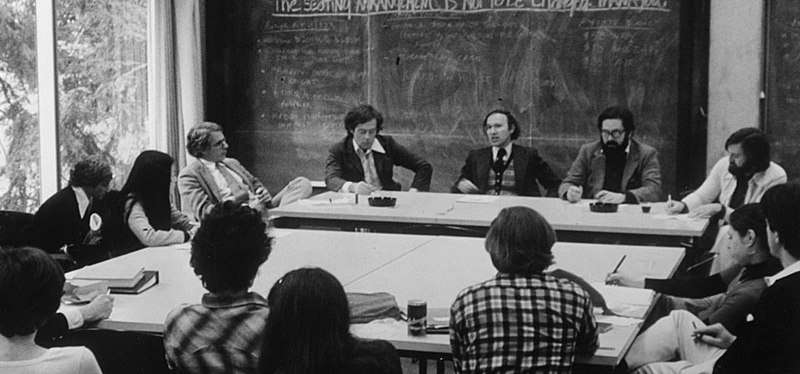
Ideally tutors in this subject will be registered architects or practitioners with post registration experience who are currently working in their own practices or as project architects in medium to large firms. It is expected that tutors will meet the challenge of teaching in a cross-cultural and diverse context (perhaps unlike the people in the photo above)
We would also welcome people currently in leadership positions in practice who wish to contribute to the subject either as a tutor or as a guest lecturer and discussion panel member.
Time commitment for tutors is significant and this will be: 11 x 90 minute tutorials plus 4 x 1 hour moderation sessions during the semester. As well as attendance at 2 x 1 hour lecture panel presentations. This is an opportunity to make a direct contribution to current debates about architectural practice.
Tutors will also need to view the online lectures. There is approximately 32 hours of marking during the semester. Tutorials are generally either Monday and Tuesday evenings.
To give students a sense of the reality of practice each tutor will also be responsible for posting “a week in the life of the architect” content to the subjects Instagram account for one week of the semester.
I am happy to talk with you further if you have any further questions about your contribution as tutor to the subject. I look forward to your application as a tutor via the MSD’s Session Staff Recruitment System at the following link.

Paradoxical Design Thinking: How architects can avoid the BIG IDEA is crap trap.

In this week’s blog I resuscitate from my vault an old conference paper which discusses design processes. This came after a conversation with friend about how and why his firm of architects is suffering because they have not won a lot of new work recently. I think this blog might help those architects and other creative orientated firms, stuck in a rut, and seeking to reflect on their creative processes. 

The BIG IDEA syndrome

Trump is full of big ideas like build a wall, lock up HRC and even all those franchising ideas Trump steak, Trump uni, Trump perfume and Trump Vodka. Sadly for some there is a view that creativity and genius is something innate. A secret sauce or recipe that is embedded in our DNA. This sensibility leads to people looking for the one big idea. The BIG IDEA. Dare I say it: the big fucking idea. The secret to the universe or the solution to the particular problem. (Of course as noted in another blog when the problem is “wicked” there may not even be a single solution). Unfortunately, in the many professional cultures, for example architecture, urban design, landscape urbanism and maybe even advertising, the single idea or big idea view reigns supreme. Once you have that idea you, or the team, runs with it. But as Andy Warhol said of Trump he is kind of cheap and I think the same about the Big Idea in architecture. It’s always kind of cheap.

So, what if the one BIG Trumpian idea is crap? How do you avoid the Bad BIG IDEA syndrome (it’s a bit like saying how can America avoid Trump)? If the idea is bad you might lose the competition, the job, the client or the pitch. You might even lose the confidence of your team working on it. You might end up with a design or an end strategy that is so bad that all you can do is polish it a bit (there is a saying for this but I think I can only sustain one profanity per blog post).

Paradoxical Design can save you 

One way to get around this conundrum is to abandon the focus on the one big idea syndrome and always build a portfolio of ideas into your design practice. This is done by deliberately fostering the generation of paradoxical or counter ideas in a project. Ideas that are in opposition to the prevailing project idea. In opposition to the one BIG IDEA. In other words, its great have a few paradoxical, counter or oppositional ideas being pursued at once. Yes, it makes for chaos with contradictory ideas are competing at some point in the project but this is manageable and ensures that you are not locked into a dog of an idea. The counter ideas can help you to test and compare the prevailing idea. Not only that but you can use the paradoxical ideas in other projects in the future.

Design thinking is about constantly generating creative ideas and every project should run with and explore a few ideas in parallel. This is one aspect of design thinking that most, but not all architects, understand and are taught in architecture schools (well some of the time anyway).

Running with a few paradoxical ideas might actually save time and effort (and of course money) in the long run. The problem is that for architects or other creative design professionals changes are often seen as being unwelcome and at odds with sequential project development milestones. Changes are often seen as negative in a productivity sense; or changes contribute to rework during the construction or production process and this adds costs to project risks. Also, there is the perennial problem of how you explain changes to the client.

But, on the other hand creative and generative design is seen to foster innovation and this is at the heart of the design paradox. One way is to ignore this constant paradox but the other way is to embrace Paradoxical Design.

Paradoxical Design and innovation 

In innovation theory a number of notable theorists also suggest that embracing Paradoxical Design means recognising, but also fighting against linear and binary descriptions of the design process. As Winch theorised (sorry to get all academic here) designing can either be characterized as either a conjectural model or a linear model (Winch, 1998). He argues that the linear model is a problem solving approach which involves analysis, synthesis and evaluation. Which is all very well and dandy. But he goes onto argue that the conjectural model, a model which is arguably linked to ker-razzy assed architectural design, is more discontinuous or disruptive. For those of you reading this interested in innovation theories and systems, in Clayton Christensen’s parlance, (the elder-king of innovation academics) conjectural design is what might be termed as exploratory innovation.

In Paradoxical Design, an initial hunch or conjecture is formulated and following this the process then proceeds through a number of iterations. It is through these paradoxical iterations that design knowledge is created; in each iteration conjectures are proposed and then abandoned. The iterations, or the creative idea embodied in each one, are paradoxical because they might be quite different to one another. They may even contradict each other.

A rapid survey of architects

In a rapid survey I did a few years back of architectural firms practices in Australia in a desperate effort to churn out a quick conference paper. I aimed to find out to what degree architects pursue Radical Design vs Incremental Design solutions as design projects progressed. You can find the paper here. Its full of diagrams describing the process I am describing.

To cut a long story short, in the survey I defined Radical Design solutions as: solutions “leading to fundamental rethinking of elements of the project”, “affect the form or conceptual origin”, “change the design concept” or “a change that affects the fundamental design – so great that the concept must be re-assessed or thrown out.

In the survey which had about 70 respondents the term Incremental Design was seen as being “stepwise improvements” or “incremental refinements of an existing idea.” Incremental Design represents linear, logical, and rational design gestures and solutions.

Survey results

28% of the Architects surveyed responded by saying that “Pursuing radical design changes is a part of the practice’s normal design process.” 29% claimed that “In our practice any project the principal designer, designer teams and design architects have the time to pursue new design solutions throughout the project.” More importantly. 42% stated that “continuing to generate both Incremental and Radical design solutions throughout the process helps to identify and highlight new design issues and problems as the design progresses.”

In terms of cost benefits, 21% responded that “Continuing to generate both Radical and Incremental design solutions throughout the process outweighs impacts on project delivery time or cost.” But despite this 72% acknowledged that sometimes it is necessary to discard a design solution or sketch design and start the design process again in order to achieve a better project outcome. And 65% agreed that “Creating and then culling both Radical and Incremental successive design solutions in a given project helps to achieve high quality and innovative design.

Design architects are often accused of changing their minds once decisions have been made during the project development and delivery process. Some see this as architects just being all about ker-razzy assed architects. For other professions, even creative ones, paradoxical design is not possible. This is because an investment in design itself is seen as all too costly and wasteful. Let alone running with the wolves of Paradoxical Design. But, on my town we all remember the brouhaha over Federation Square; which turned out great despite the village naysayers decrying its cost and design.Of course it is always cheaper to run with one idea. But, a badly and cheaply designed building or project has many longer term societal costs.

But if you really want to find the creative idea that is so compelling that clients, users and the punters can’t resist it then you are not going to find it just latching onto the first big idea that comes along. Thats part of the paradox I guess. You may only get there by thinking about a set of pradoxical ideas rather than one BIG IDEA.  In any case, thinking about and managing Paradoxical Design processes is a great way to build design knowledge and a portfolio of design ideas in your firm. Paradoxical Design thinking is essential to winning those clients, the big commissions and the awards.

My students in the colliding spaces studio have pretty much finished the semester. thankfully no one imploded. A few even seemed to enjoy it ! But then again as we all know archi-students will say a lot of nice things about their tutors to get a good mark. I am hoping to put their projects up on this site in the next few weeks.