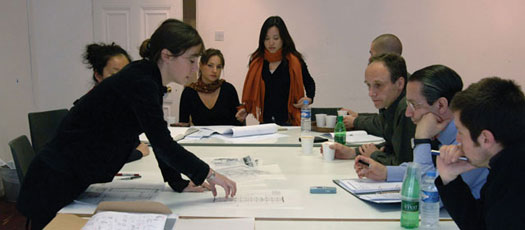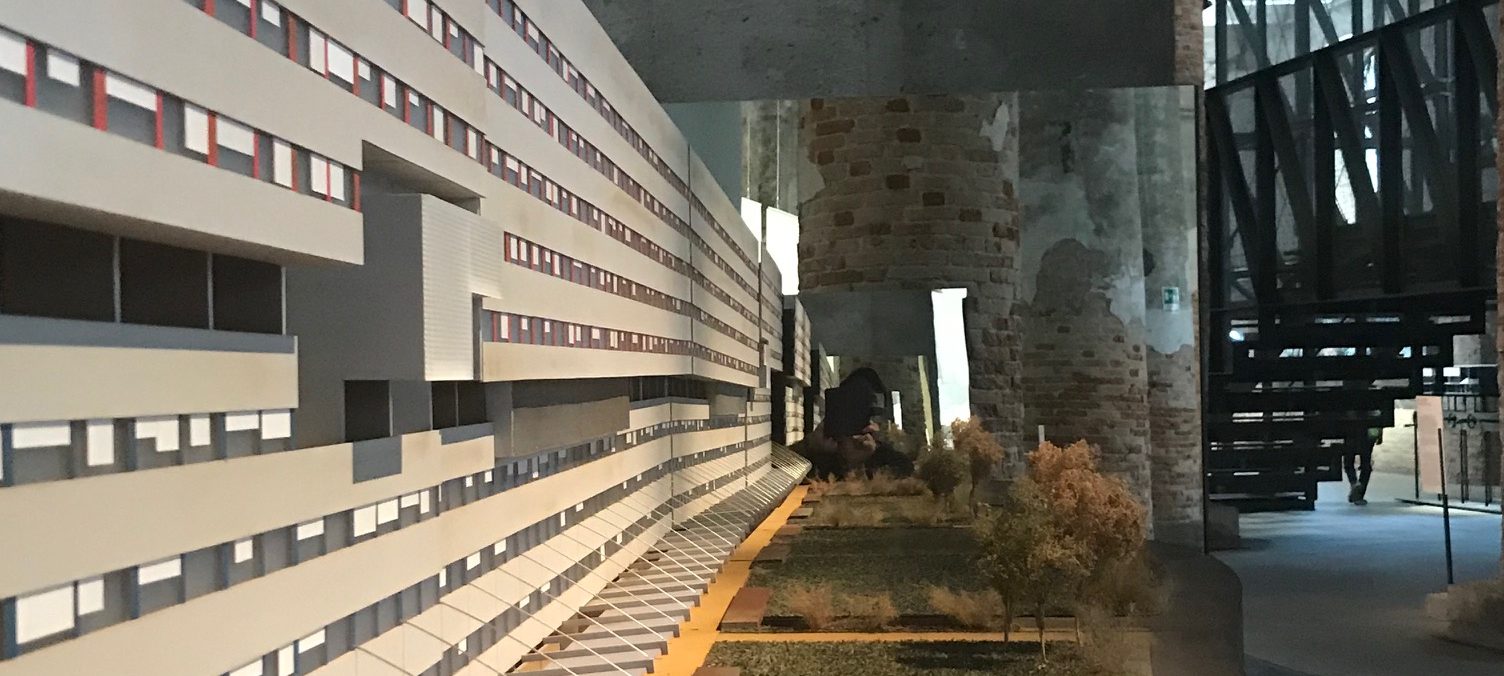

The 2017 list: What architects and architecture students should try and do over festive season.

Happy New Year. 

As I noted in my first post on this subject in 2016. Architecture school does not necessarily teach you everything there is to know about architecture. I am constantly astounded by those architecture students who think that by completing all the subjects at architecture school they will know everything there is to know about our complex field of knowledge. Unfortunately, the tick the boxes mentality is all to prevalent in our universities and is at odds with real education.

A good architecture school, like the one I teach at, is only an introduction to architecture. It’s up to all of us, regardless of our position in the profession’s career path, to be responsible for our own architectural education and educate ourselves as architects. Without wishing to sound overly didactic or clichéd architectural education is a life long process. Observation and experience are central to this process. Observing, experiencing and recording the world as we encounter it is central to this process. To a larger extent, rather than a lesser one, I think all great architects are self taught to some degree. That was certainly the case for the 20th C modernists. The oldey-worldy apprentice system, the Beux Arts, even the Bauhaus all seemed to encourage the singular and self taught autodidact. In the modern age the rise of the pedigreed architectural education has perhaps eroded these older norms. Being responsible for your own education is vital; and in saying this, I don’t wish to privilege the singularly focused auteur or genius. Collaboration with others is just as much a part of the self-education process as anything else.

The festive and holiday season, especially in the Southern Hemisphere, is the time for all good architecture students and architects to get out and experience life beyond the digital screen of the studio or the office. So here are my tips for what to do over the holiday season in 2017.

Go to a party.

The Cambridge architectural educator Peter Carl was infamous for telling young architecture stduents what they needed to do to expand their realm of experience. Decorum prevents me from saying exactly what it is he is said to have often said. But I can say its great to get out and party. I dont mean one of those pleasant instagrammy Reyes filter in the garden hipster-style picnics. I mean a real party. The kind of nasty snapchatty VICE and vodka filled borderline legal substance party. A selfie in the bathroom over the faucets party. The kind where everyone gets trashed and you get talk to and know people you would not ordinarily meet. Its little wonder I havent organised for myself a birthday party after my 4oth.

If all else fails go and see a band or Simona play. She is great. Of course some of you will already be recovering from the Falls festival and  Woodford.

Read a book

Yes, as with last year’s list reading a book is a really good idea. I know this is hard for architecture students  and perhaps harder for busy parenting architects. So my suggestion is to not read  any old book like one of those middle brow crime novels or historical dramas. I dont want to sound pretentious, but try to read a really difficult book like Finnegan’s Wake, or De Sade or Debord, or light up a few big ones and read Deleuze and Guattari; try and stay away from reading anything by Heidegger (a Nazi after all) and Kahil Gibran.

All of my above suggestions have ideas to convey about architecture, place and spatiality.

Poetry, which I have recently discovered thanks to Susan Fealy, is also good thing to read. As some of you may know about me I am fond of the poetics of place. This year reading the poems of Cafavy I was reminded how a city can be rewritten as poetry.

Go on a road trip

Yes !!!! My recent road trip to the Ngarrindjeri lands of the Coorong was great. Indigenous history, a unique ecology, sand, water and total adventure in my efforts to avoid getting my vehicle bogged or washed away. Whilst I suggested in last year’s list that architecture students should go on road trips where they see buildings. this year I am suggesting that architects go and visit the great landscapes that inhabit the interior of our nation or any nation for that matter. Landscapes are also cities in their own right. Like cities landscapes are also usually layered with the culture of occupation.

Of course you may be thinking that there is nothing worse then being stuck in a car with your friends from Architecture school. I always had fun with my friends doing this and we had crap cars. Not like the Tesla’s which most students seem to drive these days.

Look at Art

Yes, the art gallery at in your local city is always a good place to hang out on the holidays. In my home town I just saw the Victor and Rolfe exhibition and I am bracing myself to see the Hockney spectacular.  I also visited the latest NGV pavilion (dare I write what I think of this?) Further afield, if I was following my son the young prince to the Paris Cy Twombley is on at the Pompidou. James Ensor is at the Royal Academy in London. I wouldn’t bother going to the States at this point in time so you can forget about that.

I am sure there is more to see across Europe. The contemporary architects of Spain and Austria beckon.Get in there quick whilst there is still a thing called Europe.

Finally, get Organised

I think that this year more than others will mean we need to organise collectively. Get your friends together and start your own social enterprise or activist group. I fear, and indeed hope, that the coming Northern summer will bring new movements and tendencies. More and more, architectural design is under pressure to become a lap-dog of  those who seek to diminish our civitas (whatever that may be). Simultaneously, the new strongman Fascists and Baathists are inflaming schisms and then, after that mean handiwork, are ramming the security card down our throats. The situation at Parliament House in Canberra being a case in point. On the other hand the neoliberal project continues to run amok and privatise every bit of public space that isn’t nailed down.

Given all of this it’s probably a good time to join the Pirate Party or hang out with Anarchists and Blackfellas.

Surviving the Design Studio: Seeking MSD Architectural Practice Tutors

We are looking for architects with a commitment to architectural education to tutor, guest lecture or join our weekly discussion panels, in Architectural Practice in Semester 1 of 2017. The subject aims to develop a strong connection between MSD MArch students and architectural practice. The tutors are a key part of helping us to make this connection. For many of the students in the class this will be their first introduction to practice.
Using the traditional practice syllabus as a platform the subject covers strategic thinking, emerging forms of collaboration, foresight and forecasting, negotiations, gender issues and knowledge futures.
In 2017 lecture content will be delivered online and via lecture based panel discussions as well as structured tutorial case studies.
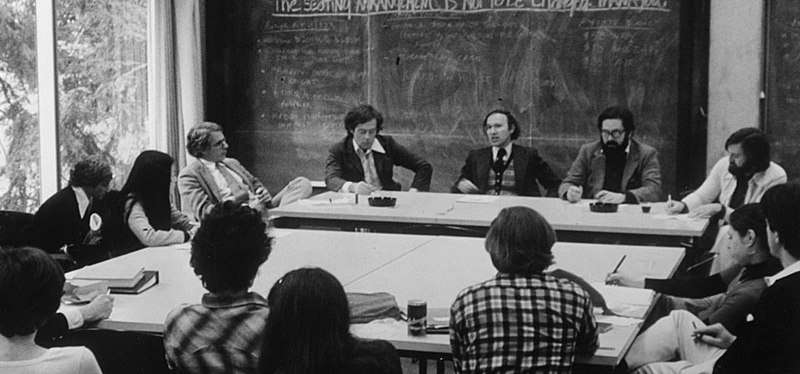
Ideally tutors in this subject will be registered architects or practitioners with post registration experience who are currently working in their own practices or as project architects in medium to large firms. It is expected that tutors will meet the challenge of teaching in a cross-cultural and diverse context (perhaps unlike the people in the photo above)
We would also welcome people currently in leadership positions in practice who wish to contribute to the subject either as a tutor or as a guest lecturer and discussion panel member.
Time commitment for tutors is significant and this will be: 11 x 90 minute tutorials plus 4 x 1 hour moderation sessions during the semester. As well as attendance at 2 x 1 hour lecture panel presentations. This is an opportunity to make a direct contribution to current debates about architectural practice.
Tutors will also need to view the online lectures. There is approximately 32 hours of marking during the semester. Tutorials are generally either Monday and Tuesday evenings.
To give students a sense of the reality of practice each tutor will also be responsible for posting “a week in the life of the architect” content to the subjects Instagram account for one week of the semester.
I am happy to talk with you further if you have any further questions about your contribution as tutor to the subject. I look forward to your application as a tutor via the MSD’s Session Staff Recruitment System at the following link.

Avoiding architectural extinction: The hazards and joys of interdisciplinary architectural practice and research.

Last week I blogged about branding and I got some comments back saying that it was all about the actual design of the building and “branding” was a superficial concept. Of course, design should be  paramount. In this week’s longer blog  I write about the need for authentic interdisciplinarity in architectural education, research and practice. 

In architecture there has always been a lot of talk about interdisciplinarity. Architecture, both as a field of research knowledge and as it is practiced has always crossed borders. Architectural education at its best gives, to those of us who subscribe to the cult of architecture, both generalist skills and the ability to understand, in detail specific areas of knowledge. Well trained architects are knowledgeable in construction techniques, urban planning, the  sciences (particularly the environmental sciences) and for some mediating cultural difference is essential; not to mention the world of organisational behaviour and science. On a design project architects are expected to make decisions about space planning, function, structure, environmental services, statutory regulations, contracts, construction methods (costs and details), organisational behaviour and heritage issues. In addition, knowledge of aesthetics is important: tectonics, style, methods of visual abstraction and how things look in the finished form (colour, paint, materials). And of course, and uniquely, spatiality. By this latter term I mean how things will appear, and made present, in three dimensions in space.

History of the city

High in my pecking order of things architects need to know about and research is  history. Why? In some way’s history can glue all the diverse archipelago of knowledge that constitutes architecture together; also architecture has its own traditions and histories. Buildings, cities, cultures, people all have history. These histories are all intertwined with architecture. The gradual erasure, of history and theory, in architecture schools is probably one of the most barbaric things to happen to the discipline. Nowadays, who needs history when you have the immediate gratifying moment of architecture in the internet world of dezeen, archdaily or snapchat.

Architects are expected to have knowledge across many domains as well as enough detailed knowledge within different domains to make decisions. The architect must make decisions that are both strategic and detailed and operational.  Some  architects can easily move across the spectrum and between these different scales of decision. But some architects get stuck at the extremes of these two poles. In other words some architects think more towards the “big picture” end of the spectrum and strategic and other architects can only think around the detail end of the spectrum. The best architects are those that can do both, or at least recognise both ends of the spectrum. This is what we might call interdisciplinary thinking.

Of course this kind of interdisciplinary thinking, or the idea of it at least, has its hazards. In higher education I would be rich if I had a few dollars for every time I heard the words interdisciplinary. It is an idea, with its associated mantras, that seems to have been been around forever. When I started architecture school the Yakka overalled, bearded (original hipsters?) greenie architects were always talking about. Well, talking about it between tokes on their spliffs. It was their way to take down a provincial profession centred on the gentleman architect.

Systems theory

I think to some extent the idea of interdisciplinarity it is related to the dream of systems theory. The idea that by understanding the world as a series of systems we can then begin to link together different systems and l of knowledge. The multi-talented Gregory Bateson was a key proponent of this and it has been said of him that “Bateson’s epistemology proposes a ‘communicational world’ based on cybernetics, systems theory, and ecology.” Wow ! Let me write that again: WOW ! In the 1920s, Bertalannfy, the founder of General Systems Theory, was to contrast the mechanistic approach to biological disciplines and he consequently ‘advocated an organismic conception in biology which emphasizes consideration for the organism as a whole or system, and sees the main objective of biological sciences in the discovery of the principles of organization at its various levels.’  (Bertalanffy, General System Theory, 12.). In 1968, he wrote that ‘If someone were to analyse current notions and fashionable catchwords they would find “systems” high on the list. The concept has pervaded all fields of science and penetrated into popular thinking, jargon and mass media’(General System Theory, 3.). It kind of sounds familiar and such sentiments appear to point to the influence of General Systems Theory in architectural discourse. In effect, and arguably without systems thinking, and related concepts we may not have all of the discourse and polemics attached to parametric design.

Higher education and research 

The above dreams of unified and general systems seem to spur on the idea that universities are one place where systems and cross disciplinary thinking can be fostered and encouraged. But, the problem is real collaboration comes together when common platforms of thought are bought together, and in a sense even into conflict, from disparate fields of knowledge (not to mention inclusiveness). For  architectural educators working with educators from other disciplines this generally means: agreeing on a common design processes, understanding different disciplinary conceptions of design, agreeing on hierarchies of knowledge and circumscribing what should be included in any particular curricula or syllabus.

In the architectural education setting this means agreeing on joint learning aims and outcomes. This is not to sound critical of any one university or program. We all want to teach the modes of interdisciplinary thinking as this is important for future graduates. It is not simply about teaching a bit of architecture and then teaching a bit of engineering, or product design or whatever it is side by side each. It’s not simply a matter of offering broad humanities subjects alongside architecture, or just renaming things. Too often this kind of thing ends up being about teaching by committee. where the committee devises the syllabus and the syllabus is a grab bag of topics. I suppose one of the reasons I hate planners is that they are always talking about interdisciplinary perspectives and yet when push comes to shove few of them seem that interested in the aesthetics, spatial considerations and design processes. I would love to run a studio with planners but they never seem to be that interested. As I have written elsewhere few planners seem interested in learning about design thinking.

In this context implementation of truly interdisciplinary teaching and research programs is the key to real success and positioning in the competitive word of the future knowledge economy. Not just packaging up, shuffling subjects, or research topics, around, renaming and then branding these different units.  But effective leadership and implementation is so important if interdisciplinary architectural and research education is of real concern. And this is why the studio is so important in architectural education and research because it is the central, perhaps the only place, for this kind of thinking to take place.

My sad experience in the discipline of architecture is that interdisciplinary research is too often overlooked in favour of research that is narrow and highly specific and technical. Maybe, it’s always been like this I guess. Of course I don’t want to sound like a pompous whiner. But, if you are a generalist, as most architects trained before the millenia are, or a humanities graduate with some ideas of crossing a few different areas, or conducting research on the perimeter, or at the limits of your discipline, you will probably have trouble getting funding. Perhaps this is why architectural research is so underfunded.

Doing it 

Thankfully, in the real world interdisciplinary thinking is embedded in architectural practice itself. In getting projects built architects, engineers, consultants, user groups of different cultures all come together. One of the really key parties in the project mix are the sub contractors. Often, despite their unfashionable high-viz vested ways and penchant for non inclusive language, they are the ones where the information is. My friend, the esteemed professor, of construction management once said that in the future he thought that all the design decisions would be made in the supply chain.  Of course one thing he meant is that it is in the supply chain where real interdisciplinary practice often takes place. That is where  architects conveying the concerns of the clients across a number of dimensions, problem solving with other specialist disciplines, seeking information from both contractors and subcontractors in order to make complex and difficult decisions.

The prospect of extinction. 

architects need to acknowledge the interdisciplinary aspects of architecture in design studio education, research and practice. Otherwise, our profession will become increasingly typecast as a profession of “technical specialists” who draw the design. Otherwise, our work will become increasingly commodified and that’s a recipe for diminishing returns and extinction.


It is what is called swot vac here in our graduate school of architetcure. We are now well and truly in the crazy season and quite a few of my students have gone to ground; hopefully to remerge, like butterflies form a chrysalis, with beautifully imaged projects next week at the studio juries.  

Surviving the Design Studio: 10 things design tutors really really hate (and like) about Archi students.

This week I discuss how to make the most of being in a design studio at architecture school.

I will keep this one short and simple. The following is based on my own experiences and I was trying to figure out how many design studios I had actually taught over the years. I think it is around 30. Maybe more. On average about one a year since I graduated. Most studios have been pretty good and my current students this semester at MSD are awesome. Some studios have been bad; usually as a result of a bad combination of mismatched expectations (usually: tutor expects students to do work, students not motivated to work). Of course some studios I have done are great and memorable. A few studios and moments spring to mind “The Springtime for Hitler Studio” (Speer’s classicism), the studio when I jumped on the student’s model ( a really bad move), the Situationist studio when all the students hated me and I pretended to be Debord, the fire station studios, the tower studios, the Mexico Studios and the summer studios both at RMIT and MSD. Studios with friends or colleagues too numerous to mention although the early studios I did with Neil Masterton of ARM were great. The ones I did with Dr. Karen Burns whilst doing my PhD were memorable. Now I am sounding perhaps all too nostalgic. But, nostalgia for past studio glory means nothing. The real point to remember for architects, design tutors and architecture students is you are only as good as your last studio or project.

So here is the list of the things we as tutors both like and of course hate, and I mean really hate. If you are doing more than five of these hate things then maybe you should not be at architecture school.

10 things that design tutors really like/hate.

1. Turning up 

Hate: Not turning up without a prior email or message. It’s always best to turn up to the crit than not turn up. The one thing a studio tutor hates more than anything else is a student who does not turn up.

Like: A courteous email or text to say you are not turning up.

2. Being on time

Hate: Turning up late after you have had the main discussion with everyone else in the studio.

Like: Being on time

3. Being present 

Hate: Spending the entire session looking at you from behind a PC or multi-tasking on a phone (of course I am being a little hypocritical in mentioning this).

Like: Being present to interacting and listening to all of the conversations in the studio.

4: Listening when other students present their work.

Hate: Just turning up for your presentation. Not engaging with the presentations of other students.

Like: Engaging with and asking questions when other students present. Most good tutors like to hear questions from other students when someone is presenting. After all the reason we have studio groups is so that individual students can see and learn from what other students are doing when confronted with the same problem.

5. Working consistently

Hate: This is really a bundle of syndromes. Doing a lot of work at the end of semester or just doing enough work to get by each week. The tragedy of this is that a design project could have been so much better if the work did not happen in short bursts. Students who consistently do this often wonder why there marks are lower or the get bad crits at the final.

Like: Students that work consistently and produce something no matter how seemingly minor each week.

6. Doing a lot of work. 

Hate:  Getting the project up to a reasonable point for mid semester and then just stopping work for a few weeks until the end.

Like: Doing lots of work each week. Letting your tutor know when you have other time pressures.

7. Seeking help when stuck 

Hate: getting stuck after a 1 hour of design work and then waiting a whole week to see a tutor. Worse still employing “getting stuck” as an obvious excuse to do no work.

Like: Student who contacts tutor or friends as soon as they are stuck in order to get unstuck.

8. Avoiding print queue excuses. 

Hate: Making excuses. The more common ones being: Print queues, IT problems (May variations on this one) and Laptop stolen. Problems printing seems to be an affliction that strikes a small but significant minority of architecture students.

Like: A student that seems to be constantly reflecting on and improving their own design and project workflow. A student constantly checking in with the tutor about this. A student organised enough not to print at the last-minute.

9. Drawing it rather than talking it up. 

Hate: Minimal drawings or diagrams on the wall or the screen and then a long, long intimate description of the concept, what the design will be like and the student’s semester narrative. It’s really annoying when this style of presentation is repeated each week with little or no design development.

Like: Students who talk succinctly and have  drawings  on the wall that describe the current state of their projects development.

10. Students who know architectural history. 

Hate: Students who look at you blankly when you mention famous 20th C architect, 21st C architect or iconic project’s constructed in the last 10 years. As tutors in the modern era we need to respect our students as “customers.” But it is pretty hard to know what to say, apart from a non customer-centric  profanity, when the occasional student does not know who Corbusier (let alone Terragni or Libera) is. The crazy thing is most students at architecture school do history but there are still some who don’t really get it.

Like: Student’s who know something of architectural history and read actual architecture books as well as following architectural discourse on social media.

Finally 

Mostly, as design tutors we want to be generous, we want to help people, we want everyone to do well and produce great projects. We want great students in our studios, we want to teach  in the best way that best prepares architecture students for the real world. Moreover, tutors want all their students to be resilient, successful and great architects. Sadly, in the managerialised and “customer” orientated university the above is getting harder and harder to do.

I have survived the week back after the teaching break, recovered from my painful sinus infection and now my MSD MArch students have about three weeks to get their projects complete. Yesterday in the studio we had  sustainabilty, structural and mechanical consultants from AURECON come in and enage with the stduents designs. It was a great session. 

Surviving the Design Studio: You will never be an architect unless you make physical models.

The realisation came about a week or so a go at the mid semester crits in our Colliding Spaces studio. One of the students was presenting and the guest critics and myself were holding up a white cardboard physical model and turning it around. It was massing model and there was a previous version with less massing and facade articulation. The project had curvilinear geometry and in seeing the two models seen together were able to ascertain how the project had developed from the first physical model to the second. Despite the whiteness of the card we could get a sense of possible façade treatments and materials.

I realised that we would never have been able to have looked at the model in this way if it was a computer model.

If it were a computer model we would have seen a schematic volumetric diagram printed and pinned onto the wall. A diagram ready to be filled in with texture and colour to make it look real. If we were lucky, if the student is kind to us, we might be able see this diagram with a bit of context thrown in.

The ubiquitous and depressing digital model pinup  

generale

I then began to think about the number of times I had seen design studio projects where there has not been any physical model design development. In other words, the times when the digital model had been spat out and printed from the computer and stuck on the wall. Looking back they all seem drearily similar, the same lack of context, the same lack of façade development, the same depressing lines delineating volumes, the same annoyingly and inappropriate view point.

Why we need physical models 

Physical models are vital to effective architectural design and development and it would be churlish to suggest that I am being an old school troglodyte in asserting this. Many large global offices use models as a way of quickly and efficiently developing massing options. Effective architectural design rests on hybrid practices that move between and combine the virtual and the physical. As the work at the AADRL establishes physical models also allow for the realisation of experimental digital processes. More importantly:

  1. The sooner you make a model of your design in the process the quicker you will understand the complexity of the design. This is because a physical model provokes the important decisions that need to be made at an early stage.
  2. A physical model embodies different design knowledge that may not be captured in a digital model. In other words, the physical model embodies in a physical form more design knowledge than what we might find with an undercooked diagram.
  3. A physical model once made can be easily be changed it is more effective as a tool that can be used to produce further reiterations of the design.
  4. A physical model can be shared more easily with others.
  5. In the studio a physical model can be easily moved around around and apprehend it from different angles and viewpoints.
  6. Physical models are more congruent with the final reality of the project.

How did it come to this ?

In the studio it seemed so simple and easy to turn the model around and look at it from different angles and to try and understand its possibilities. As well as imagine it in its context. After this realisation panic set in and it turned into rant in my head:

How did it come to this I wondered? How did our design teaching and practices become so diminished in favour of the lockstep production of the digital model? When did the physical model as a development tool depart from the design studio? Why did we so easily and unquestioningly welcome the dreams of the computer into our arms as architects and throw away all of the other things essential to design practice? Why as architectural designers have we allowed the proponents of technology, software vendors, grass hopper jockeys, CNC manufacturers, BIM engineers and the systematisers to tell us that everything can be done in a computer and then believe it?

More practically, and less rhetorically, perhaps all architecture students should do a model making subject. It should be in the curricula of all architecture schools.

This is an important debate that needs to happen. We need to ask why have some architects privileged the acquiring of technical skills at the expense of critical architectural thinking? By critical architectural thinking I mean the ability to generate and iterate solutions and ideas in three dimensions. The digital computer model only partially does this and its critical poetics is often diminished unless we pursue hybrid practices,

This weeks blog comes to you from ARCOM 2016 in Manchester. Where I presented my paper: The architect as Gleaner:  Design Practice As Performance In The Architectural Office

Surviving the Design Studio: Bjarke Ingels is evil because he has hair.

It never ceases to surprise me that other architects, and indeed clients, would continue to promote the cults of identity  that beleaguer the architectural profession and our discourse. It has been exacerbated I think by the celebritization of social media. Maybe the phenomena surrounding identity cults make it easier to brand architects in a global setting.

Be like Bjarke 

Last week or so a fellow blogger whom I follow, and have great regard for, lamented how his studio tutor had told him “to be more like Bjarke.” My friend took the advice wholeheartedly and earnestly and whilst there was for him some merit in being told to be more like Bjarke. I wondered if he was being encouraged to join, in yet another architectural identity cult, centred on Bjarke Ingels.

The cults 

In the 50s and 60s in my city it was the cults of Robin Boyd and Roy Grounds that caught peoples imaginations. Their enmity, if that is what it was, is the stuff of legend. By the time I was at architectural school in the 80s there were quite a number cult’s available for archi-students to join. Firstly and fore mostly there was the Australian Venturi Scott Brown suburbs cult (although Scott Brown was usually never mentioned)? Lesser cults, each with their own local deities that architecture students could worship at where, the mud brick cult (think roll your own cigarettes and Confest), the humanist brutalist cult, and the beginnings of burgeoning  postmodern eschatalogical absurdist architecture cult (which became very successful; and which I was a fully subscribed member of). Another one was the smaller cult centred on the work of Christopher Alexander. Then there was also a kind of offshoot of the AA’s Roxy Music architecture cult (the Raisbeck archive is pretty much sealed up on that one). As a cult member one a few of these cults I felt like I belonged to something, that I was learning about architecture and that the cult leader would keep me safe.

When Peter Eisenman came to our architecture school I remember shouting at the Berkeley trained Christopher Alexander adherents. I was pretty obnoxious thats for sure. At the other main  architecture school the cults seemed to congregate around the Miesian shearing  shed aesthetic (which came to represent Australian architecture’s global brand).  Often these cults were adaptions of overseas trends to the local cultures and layers of Australian architecture. But these days the identity cults now are often global and the poorly mirrored by the local adherents.  Of course its great to have architecture schools were different cults, or traditions, emerge and architectural debates are fostered as a result. But, in hindsight I think the problem is that all of these cults seemed to coalesce around particular figures and identities.

I have nothing against Bjarke himself having never met the man and whilst I might quibble about the simplistic and descriptive dreariness of the “Yes is More” book (not enough room to go into here) and as some of you know I liked this year’s Serpentine Pavilion designed by his firm BIG.

Calling out Bjarke’s hair 

But, I really wonder if it would be better for architecture students and architects to be less Bjarke-like and I thought about it a lot and I think that in some ways Bjarke is evil because he has hair.

Of course, it is not really Bjarke himself who is evil (although he might be if I knew him well enough to make that judgement). It is  and the way that architectural discourse seems to privilege hair. Of course for those in the Bjarky cult he must be great because he has hair and also he did a TED talk. Which you can see here.

But then again maybe TED talks are just another artifice as so described here by Pat Kelly.


I guess it is the cult of celebrity that goes with the hair that I am railing against. It is the politics of identity in architecture that leads me to say that Bjarke’s hair is evil and makes me want to Bajrke.  It is a look that says: You will never achieve architectural fame yourself unless have hair that can be styled in a cool photoshoot. Thick and boyish, sometimes parted on the side. A few shots have it flattened down. But mostly it is tossled. He looks like he just got out of the bed of his NYC apartment. An architect who can afford to hang out in bed all day playing Pokemon Go. What a great image for an architect.

Silverfox or Moptop? 

Unfortunately, identity politics tends to coalesce around those architects with hair. Have you noticed that all, I mean a lots and lots of them,  of the star celebrity architects have hair. Gehry has hair (silverfox), Ando has hair (beatles moptop), Libeskind has hair (kinda spikey, but sometimes kind a flat) and of course Patrik Schumaker has hair. The Californian Tom Wiscombe has a great head of hair. His is a kind of swept back and lion like. Together with Schumaker they make a great couple. Patrik is looking at you and I wonder what he wants? Tom is looking into the distance and I wonder what he is thinking? Its slick versus Wild West. Central European, kinda F1 racing with that little stripe,  vs. American Bruce Goff optimism.

PatrikSchumacher_TomWiscombe

Whilst I was writing this blog I did a count at this site in the web swamp lands I found entitled “40 famous architects of the 21st Century” 37 of the 41 pictured architects were men; one firm (Massimiliano and Doriana Fuksas )with a male and female director was counted only as one and not two people. Oddly, Zaha is the last image on the bottom right. At least 24 (60%) of these architects have a lot of hair. Notable studio photos are from Portzamparc who has a kind of wavy silver fox look. Steven Holl has hair. De Meuron has hair. Heatherwick has hair. He has kind of curly hair. Viny Maas has hair. Fuck, all the guys are probably using luxuriant hair conditioner.

Of course, you might say I am jealous as I dont have hair. But I am not worried. Because, yes, there are those architects on the list who are cultivating the Raisbeck look. It’s a look that is a little bit Italian, I picked up from the style influencer guys working in the Ministry of Finance in Rome. Closely shaved head  a bit of a stubble.  Herzog and of course Koolhaas and Rogers are all following my lead. It works for the ageing male architect. But Nouvel has taken the Raisbeck look further, perhaps too far,  and has a shaved skull (Recently, whilst on hols I spotted him shuffling out of up market restaurant in the hills behind Nice, he waved and thanked me for the fashion tips).

All of these so called famous 21st century architects are mostly white and generally european males. There are no tatts, there are no peircings, no mohawks, or mullets, no Trump-like toupees or much gender diversity of any kind (as far as it is portrayed in these shots).  Perhaps, these are the architects smart enough to get the stylists, the photographers and the interns from the “elite” architecture schools pumping out the stylised and identity driven content. Maybe there isn’t much hope for the rest of us, we cant all live the dream in NYC as Bjarke does, and maybe this is why so many people rejoiced when Assemble won the prize.

The construction of the architectural identity should be regarded as being problematic and contested rather than being seen as a singular, wholistic and a stable domain. As architects in this age of celebrity we need to foster debates around the real laws,  and dilemmas of architectural design our cities. It perhaps goes without saying, but it keeps needing to be said, that the identities that we privilege in architectural discourse need to be more inclusive of difference. The recognition of collaborative practice is one way forward. But in the swamplands of social media a constant critique and dismantling of the rhetorical images that are presented to us is essential and necessary. Otherwise, the rhetorical idealisation of the architectural identity will continue to corrupt our discipline and architectural education.

This week I am the Parlour Instagram guest. You can find me at @_parlour on Instagram and of course more usually at @archienemy.


Surviving the Design Studio: Why Architecture students should read books instead of sticking their heads up Snapchat.  

I took some old books to studio the other day. The students just looked at me like WTF. I also felt a bit ashamed because I felt like I was some kinda old-timey-Appalachian-mountain-fogey bringing out his old architectty books. With all of the current enthusiasms for craft beer, artisanal coffee, cardboard  furniture that  goes soggy when its wet (just like a book), pop up vegetable gardens (real books are made from real vegetables), old timey Ned Kelly bushranger lumber jack beards,  and Aravena communitarianism you think the humble bound book would have have made a bit of a comeback.

My architecture school has a library. Yes, thats right a real live actual library and guess what?  It is actually full of books and it is opposite the workshop. But, as far as I can tell the workshop is more popular and in the library the students just appear to sit there and look into their lap tops. So in this digital age of Pinterest why would you ever read a book about architecture? The following points suggest why the physical book may not be dead after all and that maybe reading is not such a bad thing. My overall argument is that architecture isn’t simply about spinning the Rhino or computer model around and around and around and crafting that so called final render.

The Archive

Books and print media was actually where it was at before the dawn of the computer. In the 60s, 70s and well into the 1980s the main means by which architectural ideas were transmitted was via print media. The architectural magazine and the book reigned supreme. Magazines like Architectural Design, Architectural Review, Progressive Architecture, Japan Architect and also Domus were the places where ideas where debated about architecture. In the 1970s Oppositions, and a bit later in Australia, Transition were central to the architectural debates.

Any one interested in the architecture of the 20th Century, or particular projects in this enormous archive, probably needs to look at magazines and books to try and figure out what kind of project was being proposed and understand the general context at that moment in time.

Not looking at the books or print media means you are limited to what you can know about architecture and its history. As students have got more desperate about learning technical software skills historical knowledge of architecture has unfortunately tended to be seen as being redundant. I would disagree and argue that knowledge of architectures historical traditions and its canon of projects is essential to critical thinking and architectural education. Anything less reduces architecture to a technical discipline rather than

Reading Plans

Books enable you to read plans rather than just consuming architectural images as a series of pressed like buttons. How often do you see a plan on the main social media feeds? Not that often I suspect and it would be interesting to get some data analytics on that.

By reading a plan I mean actively looking at a plan, and its associated sections in order to ascertain how the building or project is spatially configured. What can the plan tell you about the three dimensional form of the building or the project. I think it is easier to read a plan in a book than on the web. The problem with the web is that web plans, and associated drawings, of buildings are often too fragmented. You never see the whole plan or a series of plans in relation to the sections and other orthographic instruments. A neccessary skill of all architects is to  figure out how the plan relates to all of the other spatial and material components that make up the building or project. By learning how to read plans we can begin to imagine in our heads what different places are like even though we may have not visited them. Just looking at images on Pinterest or Google image search doesn’t really cut it with me.

Literature and Cities. 

Architectural books should be regarded as much a part of literature as anything else. Of course not all architects can write well. But there are a few. Some of my favorite books written by architects that would also fit into this class. Aldo Rossi’s Scientific Autobiography springs to mind. Some of the writings of the American architect John Hedjuk arguably also appear to fall into the category of literature if not poetry. Colin Rowe and Fred Koetter’s Collage City is beautifully written. Delirious New York by Rem Koolhaas is also another work where the writing is good.

But you don’t have to read architecture books alone to learn about architecture. Works of fiction which evoke cities and places are also a great thing to read. At first glance these may not neccessarily be books about architecture. Italo Calvino’s Invisible Cities is a book that appears to span history literature and architecture. A book that helped me to see the history of cities, in particular Venice, in a new light. Lawrence Durrell’s Alexandra Quartet is a fabulous evocation of a particular historical city. Reading about cities in the work of those who evoke them is a great way to think about architecture and urban design and its connection to lives and memory.

Employable skills

In this age of high student debt and the investment of time and energy to get through architecture school it is understandable that students would desperately want to get technical and computing skills at the expense of the book or the architectural archive. But reading books is a powerful way to help us to apprehend plans, sections and to understand orthographics and not to mention construction detailing; this all enhances the process of the spatial imagination. Theory and practice are often intertwined in books.  This might be bad news for those architecture students who stay away from the book. Those desperados determined to be CAD monkeys, fabrication technicians, coders in order to “advance” their career or get a job.

But, of course the most valuable people in the future architects office will not be the people with just the technical digital skills. Nor will it be the social media mavens with their heads stuck up Snapchat. Both stances are limited. The most valuable architects in the future will be those architects who can go digital and go the old-timey physical books as well.

Those are the architects who will be called on to do the thinking.


Surviving the Design Studio: 7 things to do to hit the ground running.

The first few weeks of any project or new graduate studio are critical to the success and delivery time of the project. Too often I have seen both architects and students waste valuable time by not quickly setting up the research, design research and design production process. Whilst, I am all for mulling ideas around in ones head this is not all one should focus on early in the project. Too often procrastination or a laissez faire approach in the early stages of a project can ensure problems with the design further down the track. Timing is critical and what follows are a few ideas about getting started in order to hit the ground running.

1.Curiosity

One of the key things any student or architect needs to do at the start of the project is to ask questions. These may be tacit questions one may ask oneself or questions you might ask a studio tutor or team leader. Critical questions about the site, the program, the brief, design approach or timing can all be asked at the project or studio’s outset. The purpose of these questions is to begin to set out the parameters and limits of the project. What can be done? What needs to be designed and what is possible? Are there special site conditions? What kind of density of building does the project parameters suggest? What are the critical things that need to be designed? What is ambiguous about the project; what new information needs to be ascertained prior to designing? What still needs to be researched?

Of course some architects or students never ask questions. There are often different motivations for this. But in my experience the student who has asked the most questions in the studio over the semester usually get’s the best design result. In design studio no one is going to tell you the answers. Unless you ask.

2.Traditional Research

I hate it when I hear about studios or teams that have spent weeks or months researching and not leaving enough room for design. Inevitably no time is left for actually designing and the results are usually mediocre. It’s great to be methodical. But, a good studio leader or team leader will recognise this and get the balance right between conducting traditional research activities, urban or precedent analysis and actually designing. I think it is a myth to not feel that you can’t design something until all of the parameters and research information (site topography, history, regulations, precedents, urban context and briefing notes) have been fully researched and documented. Given the internet this kind of research should not take that long. Of course it needs to be done. But it needs to be done quickly and efficiently and in tandem with early diagramming and conceptual design.

3.Design Research Parameters

A lot of architects these days talk about design research. As some of you may have guessed, it is not the same as traditional research although the two are linked. Good textural or theoretical research will underpin your design concerns. I worry that the activity of designing is too often conflated with this more recent notion of design research. Simply designing or thinking that because what you are doing is design doesn’t neccessarily make it design research. Design research is what it is you are trying to find out through the activity of designing. Are you trying to find out more, or ask something about, about a particular site, or brief or typology or cultural context? Is there a design research question underlying your design efforts? You also need to ask how your design process can contribute to knowledge. For example, in our recent proposal for the Pilbara we asked if Australia remote regions were a viable place for new settlements. We explored this via the design and strategic design of a autonomous settlement around an iron ore mine. Our contribution to knowledge was to establish how important notions of country are to new regional settlements. Moreover, the Planetary Urbanism brief was a good design research summary of the issues, the questions and the ground to be covered.

It may sound simplistic but design research should be structured around these questions and conclusions. The why, what, how and so what questions are important in generating design research solutions. To reiterate, design research parameters need to be clearly set out. What is the critical contribution to design knowledge that is being saught? What is unique about the project? What will be explored and how is this different to other similar or related projects.

4.Design

All I will say is why wait. Design is best explored by designing. It is not simply a matter of being creative or spinning that digital model around and around and around. In the early stages it is about exploring the parameters of the site, the brief, and any other things. In more conceptual projects it is about finding the right abstract structure or process that best represents and solves (in a sense) your design question. Procrastination only delays your ability to reiterate and explore different design options at a later point in time.

5.Avoid the delusions of technology

There is a lot I can write about in regards to design and design processes. Mostly, it is about the evils of computers and the need to respect traditional orthographics. I won’t bore you here as I am sure many of you know architects, or have tutors, who know more than I do about architectural computing and software. Needless to say, a computer model can easily lead you to believe you are designing when you are not. Just being technically adept at producing a digital model is not the same as designing.

6.Design production

The end result is important. It’s a good idea to think about it at the beginning of the process. What kinds of outputs in terms of drawings or models does the project suggest. It’s not good just making it up as you go along and lurching from graphic communication crisis to crisis. Having a vision of how you want to represent or draw your project at the end is actually really important. Considering this at the beginning will help you to design the most important parts of your project and help you to structure your time. Time is so important in the design process. Mismanage it and this will show up in the design. The last minute design effort, or the quickly found new concept a week before the hand in is usually obvious to every one. Client’s and jury critics can usually tell when they are looking at shit presentation.

7.Make space to design as much as you can

There are those who still think that design is all about being creative. Some innate force of ego or the will and innate talent is born into us at birth and the world is occupied by those who design and those who cannot. It is a view about stereotypes. It has helped to perpetuate the culture of star architects, gender and class stereotypes in the profession. It is a view that should not have any place in studios or graduate schools. This is one of the most damaging myths to prevail in architectural culture and discourse. Not unlike public speaking or politics or formula one or airline pilot’s designers are made and not simply born. Which is why we need to design as much as we can in our studios and graduate schools. Avoid being your own worse critic to the point where you can’t do anything. Everyone can design but like most things it requires a space to practice in. If you want to design, either in an office or at architecture school, then the above suggestions should help you to make that space.


Architecture Students as Customers: How not to measure the value of architectural education

Whilst we are waiting for the outcome of our federal election it is worth noting that The Abbott-Turnbull  government has increased funding to a new project that measures quality in tertiary education. This initiative is called QILT: Quality Indicators for Learning and Teaching. QILT is a ranking system that relies on independent data based on the 2015 different Student Experience Surveys. In September the survey will add in graduate employment data as well. On this basis your architecture school is a great architecture school if you graduate (in order to do the survey), love the experience (no matter how little you learn) and earn a buck. Yes, as a customer you will need to earn a buck to pay down your Higher Education student debt. But as we all know nowadays everyone pays to attend. Some more than others.

Architectural education is now well and truly a part of this increasingly global “business” of education. Although, architecture is not a large part of the “business”, or as large in revenue generation as law, commerce or biomedical sciences, it still seems to tick over nicely. For some university executives architecture is a commodified cash cow. You can thrash it like an old Holden via lot’s of short term contracts and  high staff-student ratios in the studios. It doesn’t really matter who you take in as students, or how you treat them, just as long as they pay.

QILT

Data measures such as QILT only seem to reinforce these “customer” orientated tendencies. The architecture student is now a customer; student’s get the branded degree they paid for; and they aren’t challenged too much or they might complain (tell me about it); and they learn a few technical skills (throw in a bit of of CNC, Rhino and Revit) that enables them to get a paying job (maybe).

The first flaw of QILT in relation to architectural education is is that it  aggregates data from across number of different disciplines.  This includes Architecture & Urban Environments, Building & Construction.It slums together Architecture, Urban Design and Regional Planning, Landscape Architecture and Interior and Environmental Design, Building Science and Technology, Building Construction Management, Building Surveying and Building Construction Economics. How any one could lump together architecture construction management and economics with urban planning is astounding. The built environment design disciplines should be in a separate dataset.

QILT uses data that is based on university Student Experience Survey (SES) which, as most committed tertiary teachers will tell you are notoriously flawed for reasons too long to discuss here (this is a good introductory paper on the issues). In architectural education a brief example might suffice: In architecture design students respond to the surveys prior to their final studio presentations. The administrators of the SES view these crits as an examination but do not realise that getting students to respond prior to the crit distorts the figures. Fewer architecture students respond, they are to busy preparing for the crit, and more importantly, the end of project design crit is one of the significant learning points in the semester.

QILT is also based on data gathered from the The Course Experience Questionnaire (CEQ). This is completed by graduates of Australian higher education institutions four months after completion of their courses measuring: Overall satisfaction, good teaching, generic skills. QILT also measures data gleaned from the Graduate Destination Survey. Which includes the median salary of graduates. This is one reason why the discipline data should not be mixed up together as every one is on different pay scales. The QILT data jockeys are also developing a “The Employer Satisfaction Survey (ESS)” which  is being developed as part of the Quality Indicators for Learning and Teaching

The QILT website allows you to compare between universities. Using the quick comparison I did it would seem that one architecture school in Australia appears to outshine all of the others in terms of graduate satisfaction, skills learnt and median salaries. There is not a lot I can say about this; except I don’t think much of the QILT methodology or its comparative results.

What makes a great architecture school

Of course, we all want to say that we went to a great architecture school. The one I went to is now argued to be, by some at least, one of the best in the world (it did not rank as well on QILT). The one I teach at is also ranked highly across global research measures. Of course when I went to Architecture school in the pre-digital dark ages there, some of us much longer than others, we thought it was a shambolic and chaotic mess. That was part of its charm and that’s probably what you get when you have architects running the whole show. Of course now that we have left architecture school and look back on it it doesn’t seem so bad. Compared to other schools in Australia at the time, or even elsewhere we had a pretty good deal.  In fact I would argue that because the architects were in positions of leadership in the faculty and the school this contributed to it’s burgeoning global reputation at the time. Sadly, one architecture school I know of is governed almost entirely by administrators.

Measuring architectural culture

QILT doesn’t really measure the value of an architectural culture or how students may be involved in current global debates. It is  a one size fits all approach to running the “business”. As a student I was actively involved and close to the architectural debates, controversies and conversations of the day. I had the opportunity to be taught by the best practitioners and academics of the day. As students we were challenged by our studio tutors and we did not mind this. As students we helped to create the culture that made the school better. Moreover, thanks to Whitlam I didn’t have to pay a cent and in fact I even got paid an allowance to escape my outer suburban bunker and go to architecture school.

Measures like QILT are easy tools for the administrators to bludgeon university academics with. Its a misleading tool to guide the potential customers. Fostering the link between teaching, research and industry in architecture schools is essential for the future of the architectural profession. This is not measured in QILT. Just giving graduates a technical skill set or measuring output by how good the graduate feels during the course or their employment and salary outcomes really misses the mark.

In the future most architectural graduates will have to cope with the firestorms of technological change, climate change, political volatility and perhaps worse. Being narrow technologists who cant think across disciplines, or graduates who have never been challenged by inspired teaching to think doesn’t really cut the mustard with me. Bad shit is coming down the pipeline and our architectural graduates really need to be able to think rather than consume.

 I am almost out of the country yet on annual leave. So watch out for next week’s blog which might even be written in road trip style.