

As an architecture student I was a miserable wretch and I was treated as such by my design tutors. At my part-time architecture job I slept at nights under the dyeline machine in the back of the office I worked in. Every week when I presented my studio work at the crits it was torture. My tutors either said nothing at all or said things like, “I am not really sure this is a 4th year (fill in the year) project”or worse still, “you cant put a fucking toilet (fill in the function room name) there or even better, (although often said with some laconic humour) “that is the worst model (drawing, axo, plan) I have ever seen in my whole life” which I think may have often been true. I was a pretty ordinary student and for the most part I was a sullen martyr who just sucked it up.
It was worse for my colleagues the female architecture students. No matter how hard they tried they couldn’t seem to get anything right. They were never going to be golden boys because the were simply not boys. At times it was an exhilarating but also brutal environment. I learnt a lot but I am not sure it did a lot to foster my confidence as a designer or even as a person. Supposedly, in the modern digital age things are better now in architecture schools and architectural education is a fairer, kinder and less misogynist enterprise. But are things now any better? A recent survey in the UK magazine The Architects’ Journal suggests otherwise.
The Architects’ Journal surveyed 450 architecture students in the UK that just over a quarter of them (26 per cent) of “architecture students had received medical help for mental health problems resulting from their course, and a further 26 per cent feared they would need to seek help in the future.” Most disturbing was the finding that these issues were “more acute with female respondents, of whom almost a third had sought support for mental health issues compared to 26 per cent of male respondents.”
Details of the entire survey and its results can be found here. It covers working through all-nighters, student debt, working for free, practical training, discrimination and the length of architectural education. The survey identified that for the student respondents the primary stressors are issues related to increasing debt, a culture of crazy working hours and the anxiety about acquiring effective skills in order to be employable at the end of a long course.
As Robert Mull the former Dean of The Cass Faculty of Art, Architecture and Design, noted in Dezeen “High fees, debt, the fear of debt, low wages, poor working practices and educational models that reflect aspects of practice based on individualism and competition rather than collective action and mutual support have put intolerable pressure on those students who can still study and has excluded many more.” Mull (what a great name) is a noted critic of homogenised and commodified versions of higher education. In response to the survey the head of the Bartlett Rob Shiel argued that new models of architectural education were needed in order to increase access to architectural education from different backgrounds and to reduce the mental health pressures on architecture students.
Mental health of the emerging generation of architects should be taken as a serious issue in architecture schools and by the profession. Larger studio sizes (recently shocked to hear of one school with 25 people in each studio; 12 to 14 is best) are one significant pressure point in the mix of fee paying higher education, poor and entrenched working cultures in the profession and the need to teach an increasing complex architectural curriculum.
For architecture students mired in the above circumstances there are probably a few things you can do to avoid a meltdown and manage your mental health through architecture school. As I am not a trained clinical psychologist I will keep my suggestions short and simple. They cover the most common things that I have seen in my experience as a architectural design educator.
1. You are not invincible
Sometimes things happen. Health issues, family issues or even accidents. In my experience it is often not great for those who are grieve. When stuff happens its best to take the time out or at least to change your expectations or aspirations to manage it. Too often I see students think they can just work or push through the rough bit. Only to find later, usually towards the end of semester, that they just can’t do it. That is usually when it may be too late to compensate. No one is invincible.
2. Timing
Timing is crucial. Design studios are as a much a project management exercise as anything else. Managing and organising your time is critical to your own mental health. You should not have to work all night either in the studio or in an office. This opinion piece on unpaid overtime speaks to some of the complexity of these workplace issues. Architects should not be working 60 hours a week. Unfortunately bad working habits often start at architecture school. If you think your tutor is mismanaging your time or you are putting in all nighters and not getting much traction then you need to rethink how you are managing your time or speak out.
3. Dont procrastinate
Don’t procrastinate. As I have mentioned elsewhere on this blog the sooner you get started designing and the more consistently you work on a design the better. If you get stuck or need help get it from your friends or your tutor. Tackle the hard design task’s first and don’t leave things to the last minute. Dont get sucked into doing text based research and no drawing or thinking that you are working by spinning that 3D model around and around in the computer. Too often I see students putting pressure on themselves by procrastinating, week after week, and then letting it build up and up to the point where their stress levels almost prevent them from actually working.
Procrastination leading to the all nighter, or last few days, in the last few weeks of semester only reinforces this culture.
4. Get help sooner rather than later
Depression, anxiety, grief, and illness can all take its toll. All design tutors are usually extremely sympathetic to these issues and more than happy to help you adjust and get through the crap moments in life. There are lost of resources on the web to help you get through things. Its better to seek help or talk to someone rather than doing nothing at all.
5. Take a break
Know when to take break rather than beating your head against a wall. A break no matter how short will help improve your productivity in the long run.
Doing and considering the above will help you develop the resilience you need to survive the design studio. Of course, the best architects, and architectural teams, are kind of crazy in their own way. Some of my best and most successful students have been the ones who have worked through and come out of other side of serious mental health issues. It happens to everyone at some stage in life. As a profession we need to harness and foster the creative aspects of craziness that makes our profession unique rather than the toxic craziness of overwork and sullen martyrdom. Our profession deserves better.


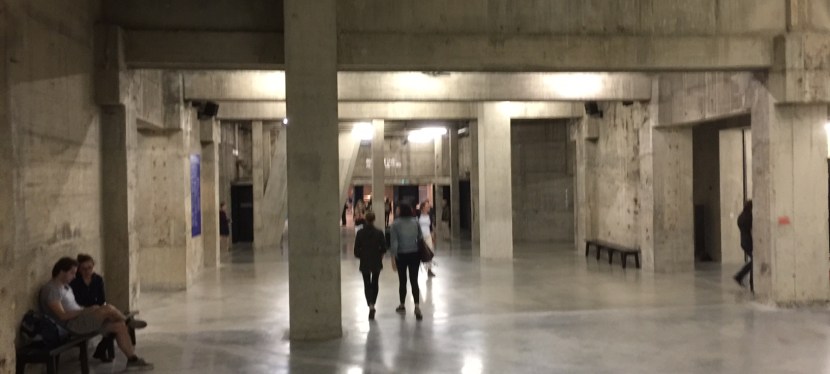
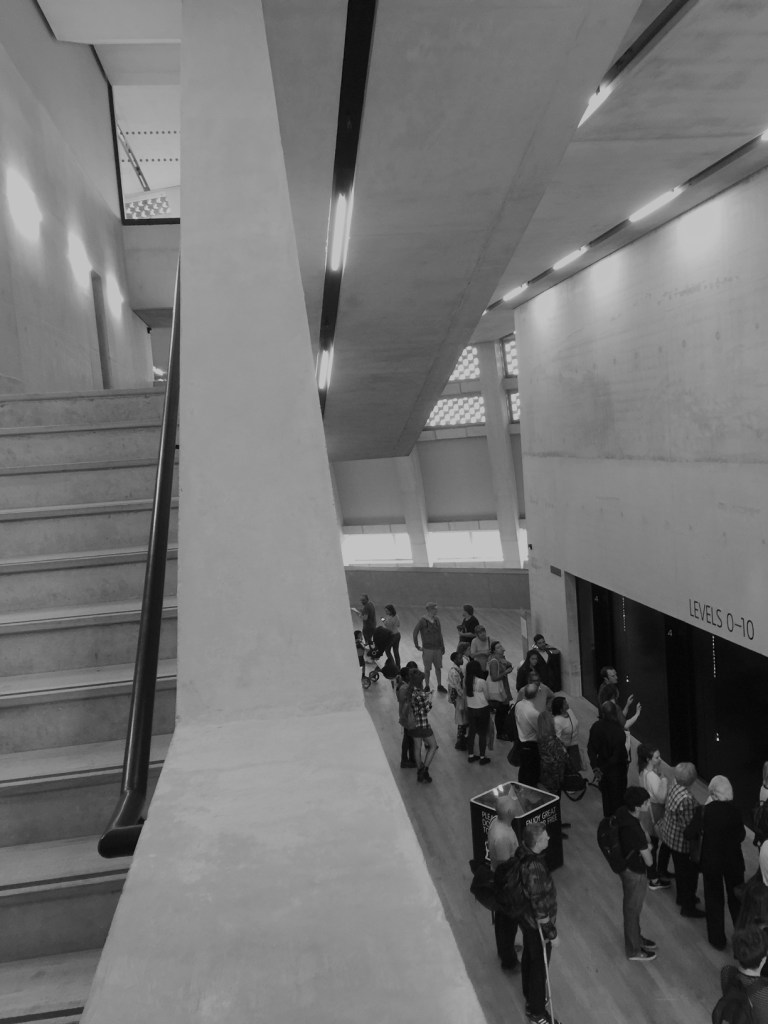
 Stairs are always a place of apprehension and darkness; often the back stairs are where the budget ran out or where the fire services are fully revealed or where you may never encounter others. In the Switch House stair system this a generosity of space, attention to material detail, views to the exterior, as well as view lines along and across the vertical circulation spaces to other adjoining spaces. There are a series of different promenades within the building, through the undercrofted old tank spaces, the heroic helical stair, vertical stairs, and outside the lifts and along the perimeter walls with glimpses of the outside world. This is a hollowed out pyramid with a palimpsest of interior spaces. In this theatre of spaces the silhouettes of both individuals and small groups seem momentarily freeze framed before they move on.
 In some ways the antithesis of the Tate Modern’s turbine hall and galleries. In these one is subsumed by the monumental spaces of a now archaic industrial technology of
  The Switch House is certainly more claustrophobic than the spaces of the turbine hall and there is a dissonance in the architecture with its odd juxtaposition of concrete columns, brick lattice grill work, and seemingly adhoc spaces which come into much closer confines with ones body. This is not a public palace that one can walk through easily as a god-like citizen of Rome or Athens, ala Richard Meier at the
  My own biases makes me think that the extension points to the architecture of Loos, the paintings of De Chirico or the subtle yet weird surrealism of
  There is a real treat on the viewing deck. The viewing deck is great because you get a 360 degree view of the City. The sense that you are in a public building is further emphasised by the fact that you can see directly into the neighbours houses in the unfortunate





 Peter Raisbeck: surviving the design studio