
Strategy and Design Thinking: Why architects need strategic thinking.

This blog explores the nexus between architectural design and strategy. I am thinking there will be more blogs on this subject to follow over the year. 

Most architectural practices seem to lurch from crisis to crisis. In Australia most architects are small practitioners, juggling family commitments, trying desperately to maintain work life balance and at the same time running a small business that produces bespoke projects that require innovation, high levels of risk management, advanced negotiation skills not to mention networking and marketing skills. Architects, in between juggling the school drop off or saving for their own mortgages, work hard to add value to their clients, the built environment and society at large. Of course, its much easier, as it is for some in the building industry, to take the low road of cheaper, better faster and easier when it comes to delivering projects. If its cheap and nasty it must be good, right?

Having a strategy, and embedding strategic thinking into practice, a good way to help guide and resolve the dilemmas of practice. A good way to combat the cheap and nasty faction. Recently it was suggested to me by an architect that architects need not learn the finer arts of strategy. It was put to me that some architects never learn it and that it doesn’t really matter. I was pretty surprised by this as we were taught at Business School, regardless of what you think of business schools or biz school education, that strategic management and thinking was the highest form of managerial action.

In classical management theory the classical definitions of strategy are intertwined with notions of competition, military thought and the notion of winning. Mintzberg argued that strategic thinking was a central component of creating innovation and was by its nature intuitive, creative and divergent.  Strategic thinking as defined by the managerial theorist Mintzberg argues that strategic thinking is:

“about synthesis. It involves intuition and creativity. The outcome…is an integrated perspective of the enterprise, a not-too-precisely articulated vision of direction”

Michael Porter another management theorist argued that:

“Competitive strategy involves positioning a business to maximize the value of the capabilities that distinguish it from its competitors.”

Of course strategy as a field of thought has moved on since the work of Mintzberg and Porter. This has happened because technology has morphed and remorphed and the interconnected complexities of the global system have seemingly increased. In recent times the discourse of strategic management has reflected this. In strategic management theory and research questions abound: Is strategy formulation something that emerges or is it something that can be designed top down? How can strategy help our institutions with concepts of turbulence and uncertainty? As noted in a recent editorial in the Strategic Management Journal strategy may cover: organisational capabilities, interfirm relationships, knowledge creation and diffusion, innovation, organisational learning, behavioural strategy, technology management, and of course corporate social responsibility.

For architects having an understanding of strategy and strategic thinking is vital. In fact I would argue that it is vital for future architects to study strategy at architecture school, perhaps in the design studio.  To suggest that strategic thinking is not a part of architectural education or architects expertise suggests that architecture is simply a bundle of technically orientated skills and processes. A bundle of repetitive actions that require little thought. Actions that can be transferable and imparted to others. This suggests a craft based notion of architecture where skills and knowledge are passed down from so-called master to apprentice. I am not so sure about the craft myths that seem to permeate architecture. The craft myth is hard to shake even when highly advanced design and construction methods are used. The craft metaphor is probably a little bit too formulaic as a concept of architectural knowledge for my liking.

In Australia the competency standards describe the competencies and skills that architects are expected to know. These standards are used in accreditation processes to determine if a particular person is capable of being an architect; or an architecture school is teaching the correct skills or competencies. Interestingly, the standards say little about the need for strategic thinking.  They mostly describe what architects do rather than the thinking or conceptual skills they require. They are activity and process based. The standards are really lacking when it comes to issues around concepts of strategy, foresight, risk, project management and financial skills. The weight of the standards are focused on design and documentation. Viewed in detail much less emphasis is given to practice management and project delivery. I mean who needs that stuff? All we need as architects are the skills inherent to the traditional practice life cycle: Sketch design, design development, contract documentation, contract administration ect etc. In fact all we need to know about is Sketch Design. No matter that this lifecycle is increasingly under pressure and fragmented and as result a result of the industries lack of diversity, fee competition, and dis-intermediation.

Strategic thinking and planning has a number of advantages even for those architects lurching from the client to the consultants between picking up the kids from school. Strategic thinking sets a direction, even for the small firm beyond the day to day. A kind of thinking that helps to guide resource allocation when difficult decisions or trade-offs need to be made. It determines how your firm might be different, and I mean really different, to all of the other firms out there. Understanding strategic discourse can help the architect understand clients as they make strategic decisions regarding the future. If the management consultants and gurus can do it, why not architects? We are a lot smarter and more diverse than those guys.

An appreciation of strategic thinking helps to get architects out of the cycle of reacting from practice crisis to practice crisis or seeing architectural design as simplistic, step by step, and linear process of sequential tasks. Seeing design as a narrow technical specialisation is a huge mistake. Strategic thinking is inextricably and broadly linked to design and should be regarded as the highest form of design thinking.

It’s all quiet on the front at my grad school of architecture. A few summer studios are running and there is till 5 weeks to go before classes start. Nonetheless, next week, in the lull I am pre-recording a whole lot of online lectures! 

Architects vs. Project Managers: Rising up against the alien overlords known as Project Managers.

This weeks blog is a bit later as I have been busy writing another piece here. I have also been consumed with Final semester design juries and marking. 

Architecture takes a long time to learn. Designing and organising the construction of buildings is a complex process. As most architects will know even the smallest renovation can involve juggling a complex scenario of client brief, planning and building regulations, site conditions, sustainability issues, construction detailing and logistics, contractor and subcontractor capabilities and of course design itself. This is a much wider range of design and construction knowledge than many project managers are either trained in or know about.

A few times in the past few weeks I have heard my architecture friends bemoan the profession of project managers. Good project managers, like good architects, will be able to make the trade offs, have the foresight and understand the  complexity of managing user requirements. Basically, good project managers understand architecture and design processes. The best project manager I have ever met was one who gained valuable experience in an architect’s office based on community buildings that involved a great deal of community consultation work. She then went on to much larger projects.

I should also say that I share an office with a project management academic. He is great. A kind of rocket scientist who has taught me a great deal about advanced quantitative decision analysis.

But bad project managers are really bad and I mean really bad. Of course some would argue the IT project managers are worse (but that’s another story). But, I worry that all the really bad ones have ended up in construction. One qualification for being a project manager is to be able to do a Gantt chart with unrealisable time outcomes that you can then bludgeon the architects and all the other consultants with. Yes, you don’t need refined or nimble negotiation skills to be a construction project manager. You just need to be a bully. Interestingly, the architects I have heard complain the most about these vermin have been female architects.

Of course I speak from a partisan point of view. This is because I think it is time architects really rebelled and rose up against the alien overlords known as project managers.

Blame the “bloody” architect.

But all too often the architects either individually or as a group are blamed when things go astray. Why is this?  I guess its related to some of the things that surround Trump’s election being elected. In the modern digitally connected world its pretty easy to run a spin campaign with no substance these days. It’s pretty easy to troll the architect, after all architects are dandified dickheads who don’t care about client needs or wishes. I think the star alpha-male architects have contributed a lot to this impression. Hopefully, as new alternative forms of practice emerge and architects are more aggressive in how they brand themselves as a group, these impressions will change.

Why architects are better  

An architect is a highly skilled professional, usually about 7 years of training, including two years of audited and examined experience. Architects are trained to lead projects from start to finish, on time and on budget. If they don’t get this right they can be sued. They are uniquely placed to understand cost pressures in construction supply chains.  Project managers often only have an overview of these things. Architects are trained to understand client and user needs and ensure that a project is feasible from the very beginning. The problem is that all too often Project managers get the architects in too late. They have already decided the wrong approach to the project’s feasibility, strategic design and often ignored risks that an architect, with more on the ground experience and a better overview of client needs as well as the broader context would have picked up.

Project managers love to tell the clients what they want to hear in the early stages of the project. Architects have to tell the truth because they are usually bound by architects registration acts and PI Insurance issues.

Architects are able to communicate. This is what they are trained to do. Architecture is in some ways a liberal arts education and communication across the project team and down the construction supply chain is essential.

Some real PM fuck ups. 

Southern Cross Station a low bid tender price put in by the contractor. When the architects came on board the architects wondered why there was no cost manager on the project. Basically the contractor low balled the price to get the job. All the other tenders for the project were 25% above. Lo and behold the final price was 25% above. The contractor then decided in the media to push the blame on to the architects. You can read about it here and I think this situation really poisoned my view of project managers and contractors. Its a pretty cheap shot to blame the architect all because of public antipathy and punter distrust of design aesthetics.

Federation Square is a case in point. This facility has now served the public of the City of Melbourne admirably. It actually works as a fine public space alongside its public institutions and commercial spaces. It is a building that is a legacy project that will serve the city’s future for many years to come.  Yet at the time the architects were excoriated for trying to uphold standards of construction and design decency for the project. You can read about some of it here. The meddling of politicians in the project and the hacking off of the Western shard was one of the most despicable anti-architecture campaigns I have ever witnessed.

As one of the architects of Federation Square Donald Bates was to note recently on Linked-In, “Project Managers produce negative consequences to projects – to the detriment of clients, to the degradation of quality and legacy and to the interests of the wider public. Very rarely do they bring innovation, intelligence, respect and wisdom to a project.”

Another example: The problems with the $16.2B Commonwealth’s Building the Education Revolution (BER) was not the result of architects. It was the result of project managers stuffing up. You can read all about it here. Schools that managed their own affairs with architects did better than those BER schools managed by Project Managers.

Architects best placed to do the cost trade-offs

The rise of project managers can be attributed to the impression that architects are not suitable to manage projects because they are not sufficiently focused on time and cost outcomes. In a 2011 paper we published which looked at how architects work with Quantity Surveyors we concluded that an important thing that architects contributed to projects, amongst other things, was the ability to make complex finishes and material tradeoffs in the clients favour. You can get the paper here.

In value management and cost reduction exercises it is the architect who is best positioned to uphold and fight for the best materials and finishes for the sake of the project. Architects are uniquely placed to do this because project managers and few other consultants or trades in the building and construction industry have an overview of how it all works.

Project manager’s, by virtue of their training, wouldn’t have a clue about material finishes in either domestic, community or public projects. A quantitative Gantt chart jockey is not going to be the sort of person you should trust with complex decision about your domestic reno,  legacy building or your facility designed to bolster your community. Another case in point is the Harold Holt Pool. You can read about that here. The project manager employed by Stonnington Council on the pool redevelopment really had no idea bout the modernist heritage values associated with the pool. You can read about that here.

In some industry segments client expectations have driven the pressures for unrealistic time frames and low budgets. This has been a significant factor in the continuing use of project managers in the construction and development industry. In the dark dim past it was the architect who managed, organised and supervised the construction process. It was the architect who was the single point of communication. I would argue that Architects are still the best people to lead integrated construction projects This is primarily because of their training architects are supremely placed as system integrators.

For the last 30 years architects have bemoaned the fact that project managers have taken over  their role. Of course it’s easy for project managers to blame the architect. I am sure many architects reading this will have stories about project managers with poor integration skills. A good project manager like the best architects can integrate systems and  make the trade offs. Most of all good project managers should have the foresight to see what is coming down the line. And yes, a good project manager treats you with respect.

Rise up !

So next time, as an architect you are being set-up-to-fail by some low-grade project manager, clutching spreadsheets with no idea about design, construction processes or user requirements call them out. Its time for architects to rise up against their alien project manager overlords. When the clients work that out as well our cities, community institutions and housing will be suitable for the future.

On my planet the students have gone teaching has finished. So, its time to do some research and get ready for semester 1 2017


Surviving the Design Studio: Seeking MSD Architectural Practice Tutors

We are looking for architects with a commitment to architectural education to tutor, guest lecture or join our weekly discussion panels, in Architectural Practice in Semester 1 of 2017. The subject aims to develop a strong connection between MSD MArch students and architectural practice. The tutors are a key part of helping us to make this connection. For many of the students in the class this will be their first introduction to practice.
Using the traditional practice syllabus as a platform the subject covers strategic thinking, emerging forms of collaboration, foresight and forecasting, negotiations, gender issues and knowledge futures.
In 2017 lecture content will be delivered online and via lecture based panel discussions as well as structured tutorial case studies.
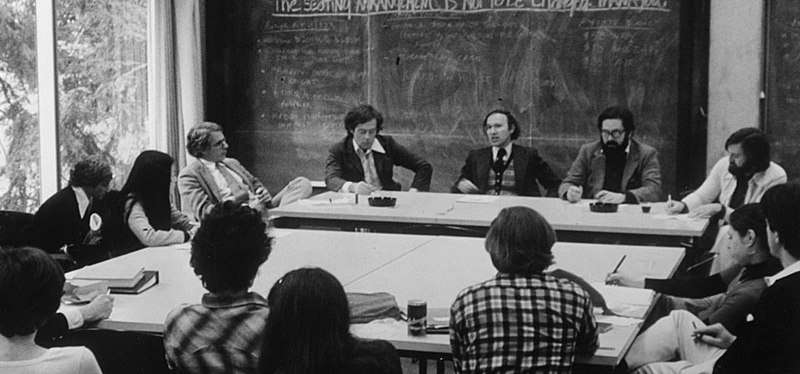
Ideally tutors in this subject will be registered architects or practitioners with post registration experience who are currently working in their own practices or as project architects in medium to large firms. It is expected that tutors will meet the challenge of teaching in a cross-cultural and diverse context (perhaps unlike the people in the photo above)
We would also welcome people currently in leadership positions in practice who wish to contribute to the subject either as a tutor or as a guest lecturer and discussion panel member.
Time commitment for tutors is significant and this will be: 11 x 90 minute tutorials plus 4 x 1 hour moderation sessions during the semester. As well as attendance at 2 x 1 hour lecture panel presentations. This is an opportunity to make a direct contribution to current debates about architectural practice.
Tutors will also need to view the online lectures. There is approximately 32 hours of marking during the semester. Tutorials are generally either Monday and Tuesday evenings.
To give students a sense of the reality of practice each tutor will also be responsible for posting “a week in the life of the architect” content to the subjects Instagram account for one week of the semester.
I am happy to talk with you further if you have any further questions about your contribution as tutor to the subject. I look forward to your application as a tutor via the MSD’s Session Staff Recruitment System at the following link.

Avoiding architectural extinction: The hazards and joys of interdisciplinary architectural practice and research.

Last week I blogged about branding and I got some comments back saying that it was all about the actual design of the building and “branding” was a superficial concept. Of course, design should be  paramount. In this week’s longer blog  I write about the need for authentic interdisciplinarity in architectural education, research and practice. 

In architecture there has always been a lot of talk about interdisciplinarity. Architecture, both as a field of research knowledge and as it is practiced has always crossed borders. Architectural education at its best gives, to those of us who subscribe to the cult of architecture, both generalist skills and the ability to understand, in detail specific areas of knowledge. Well trained architects are knowledgeable in construction techniques, urban planning, the  sciences (particularly the environmental sciences) and for some mediating cultural difference is essential; not to mention the world of organisational behaviour and science. On a design project architects are expected to make decisions about space planning, function, structure, environmental services, statutory regulations, contracts, construction methods (costs and details), organisational behaviour and heritage issues. In addition, knowledge of aesthetics is important: tectonics, style, methods of visual abstraction and how things look in the finished form (colour, paint, materials). And of course, and uniquely, spatiality. By this latter term I mean how things will appear, and made present, in three dimensions in space.

History of the city

High in my pecking order of things architects need to know about and research is  history. Why? In some way’s history can glue all the diverse archipelago of knowledge that constitutes architecture together; also architecture has its own traditions and histories. Buildings, cities, cultures, people all have history. These histories are all intertwined with architecture. The gradual erasure, of history and theory, in architecture schools is probably one of the most barbaric things to happen to the discipline. Nowadays, who needs history when you have the immediate gratifying moment of architecture in the internet world of dezeen, archdaily or snapchat.

Architects are expected to have knowledge across many domains as well as enough detailed knowledge within different domains to make decisions. The architect must make decisions that are both strategic and detailed and operational.  Some  architects can easily move across the spectrum and between these different scales of decision. But some architects get stuck at the extremes of these two poles. In other words some architects think more towards the “big picture” end of the spectrum and strategic and other architects can only think around the detail end of the spectrum. The best architects are those that can do both, or at least recognise both ends of the spectrum. This is what we might call interdisciplinary thinking.

Of course this kind of interdisciplinary thinking, or the idea of it at least, has its hazards. In higher education I would be rich if I had a few dollars for every time I heard the words interdisciplinary. It is an idea, with its associated mantras, that seems to have been been around forever. When I started architecture school the Yakka overalled, bearded (original hipsters?) greenie architects were always talking about. Well, talking about it between tokes on their spliffs. It was their way to take down a provincial profession centred on the gentleman architect.

Systems theory

I think to some extent the idea of interdisciplinarity it is related to the dream of systems theory. The idea that by understanding the world as a series of systems we can then begin to link together different systems and l of knowledge. The multi-talented Gregory Bateson was a key proponent of this and it has been said of him that “Bateson’s epistemology proposes a ‘communicational world’ based on cybernetics, systems theory, and ecology.” Wow ! Let me write that again: WOW ! In the 1920s, Bertalannfy, the founder of General Systems Theory, was to contrast the mechanistic approach to biological disciplines and he consequently ‘advocated an organismic conception in biology which emphasizes consideration for the organism as a whole or system, and sees the main objective of biological sciences in the discovery of the principles of organization at its various levels.’  (Bertalanffy, General System Theory, 12.). In 1968, he wrote that ‘If someone were to analyse current notions and fashionable catchwords they would find “systems” high on the list. The concept has pervaded all fields of science and penetrated into popular thinking, jargon and mass media’(General System Theory, 3.). It kind of sounds familiar and such sentiments appear to point to the influence of General Systems Theory in architectural discourse. In effect, and arguably without systems thinking, and related concepts we may not have all of the discourse and polemics attached to parametric design.

Higher education and research 

The above dreams of unified and general systems seem to spur on the idea that universities are one place where systems and cross disciplinary thinking can be fostered and encouraged. But, the problem is real collaboration comes together when common platforms of thought are bought together, and in a sense even into conflict, from disparate fields of knowledge (not to mention inclusiveness). For  architectural educators working with educators from other disciplines this generally means: agreeing on a common design processes, understanding different disciplinary conceptions of design, agreeing on hierarchies of knowledge and circumscribing what should be included in any particular curricula or syllabus.

In the architectural education setting this means agreeing on joint learning aims and outcomes. This is not to sound critical of any one university or program. We all want to teach the modes of interdisciplinary thinking as this is important for future graduates. It is not simply about teaching a bit of architecture and then teaching a bit of engineering, or product design or whatever it is side by side each. It’s not simply a matter of offering broad humanities subjects alongside architecture, or just renaming things. Too often this kind of thing ends up being about teaching by committee. where the committee devises the syllabus and the syllabus is a grab bag of topics. I suppose one of the reasons I hate planners is that they are always talking about interdisciplinary perspectives and yet when push comes to shove few of them seem that interested in the aesthetics, spatial considerations and design processes. I would love to run a studio with planners but they never seem to be that interested. As I have written elsewhere few planners seem interested in learning about design thinking.

In this context implementation of truly interdisciplinary teaching and research programs is the key to real success and positioning in the competitive word of the future knowledge economy. Not just packaging up, shuffling subjects, or research topics, around, renaming and then branding these different units.  But effective leadership and implementation is so important if interdisciplinary architectural and research education is of real concern. And this is why the studio is so important in architectural education and research because it is the central, perhaps the only place, for this kind of thinking to take place.

My sad experience in the discipline of architecture is that interdisciplinary research is too often overlooked in favour of research that is narrow and highly specific and technical. Maybe, it’s always been like this I guess. Of course I don’t want to sound like a pompous whiner. But, if you are a generalist, as most architects trained before the millenia are, or a humanities graduate with some ideas of crossing a few different areas, or conducting research on the perimeter, or at the limits of your discipline, you will probably have trouble getting funding. Perhaps this is why architectural research is so underfunded.

Doing it 

Thankfully, in the real world interdisciplinary thinking is embedded in architectural practice itself. In getting projects built architects, engineers, consultants, user groups of different cultures all come together. One of the really key parties in the project mix are the sub contractors. Often, despite their unfashionable high-viz vested ways and penchant for non inclusive language, they are the ones where the information is. My friend, the esteemed professor, of construction management once said that in the future he thought that all the design decisions would be made in the supply chain.  Of course one thing he meant is that it is in the supply chain where real interdisciplinary practice often takes place. That is where  architects conveying the concerns of the clients across a number of dimensions, problem solving with other specialist disciplines, seeking information from both contractors and subcontractors in order to make complex and difficult decisions.

The prospect of extinction. 

architects need to acknowledge the interdisciplinary aspects of architecture in design studio education, research and practice. Otherwise, our profession will become increasingly typecast as a profession of “technical specialists” who draw the design. Otherwise, our work will become increasingly commodified and that’s a recipe for diminishing returns and extinction.


It is what is called swot vac here in our graduate school of architetcure. We are now well and truly in the crazy season and quite a few of my students have gone to ground; hopefully to remerge, like butterflies form a chrysalis, with beautifully imaged projects next week at the studio juries.  

Getting Jiggy with Research: 6 ways for architects to create upstream knowledge.

Research is vital to architectural practice. So I thought I would rewrite, revise and update some of the practical comments from a previous post from December 2015. 

Research and Development is central to any relationship, engagement or linkage between architecture academia, practitioners and emerging businesses. Perhaps this goes without saying but too often it needs to be spelt out. Numerous architectural websites and brochures are full of statements about how research is valued and prioritised. But sometimes it all seems a little bit too “feel goody” and “mission statement” like for me. Architects need to be specific about their research aspirations.

Most architectural firms are keen to go upstream. By going upstream I mean creating distinct knowledge that helps a firm to get clients and charge more. There are however, I think a few things small firms and teams of architects can do to amplify their research capabilities. Even larger architectural firms would benefit from some of these suggested strategies about research.

1. Actually have a research strategy

Research involves developing knowledge or expertise in a particular area. But this knowledge needs to be integrated across the firm. For that reason it makes sense that an architectural practice would focus their research efforts in a way that aligns with their business strategy (if they have one). If the firm seeks to develop a competitive advantage in health, or facade design, or sustainable design or some aspect of urban design then its research efforts should align with this.

Whilst it is important, it may not be as effective to pursue research, or view research, as simply being about implementing new technologies in the office or figuring out what the next bit of funky software the firm should buy (see no. 2 below). Sometimes the line between these activities and strategic research is blurred. One office I worked for, in the earlier days of CAD, did spend a lot of time researching and understanding the expressive possibilities of CAD design and architectural representation. As CAD developed this gave them a large competitive advantage. Clearly the knowledge and research gained, as CAD systems themselves developed, had strategic benefit to the firm. In any case, I would always push for a line of research in the office that is at least aligned with its current strategies or with its intention to develop new areas of expertise.

Research is not simply about finding out about new materials, or the latest technical thingo, for your latest project and then filing the information into an electronic folder for later reference. Unless, of course you think that the knowledge you gain from the material and technical research process can be used elsewhere. But, I think that is what all architects think: That extra research or knowledge they gain on one project can be used on another. But I am a little sceptical about this as it seems too adhoc. Especially, if the firm does not have a research strategy or its projects are highly customised and different each time.

2. Wacky research is ok.

Of course sometimes architects might do research just for the hell of it (this kind of contradicts the first point above). There is a balancing act between conducting research to improve current capabilities versus working on seemingly new and radical innovations. Getting the balance right is important but sometimes research needs to be wacky. Research is about trial and error and indeed about making mistakes. That is in part what research is about. Buckminster Fuller is a pretty good example of this.

Politicians and shock jocks

Of course if you are a politician or a shock jock or a member of conservative think tank all research has to be somehow “practical” not “obscure” and have some demonstrable value to the tabloid reading public. I guess that’s how politicians and some journalists think. It’s a weird position to take. Because most of the people who espouse this view, especially the political class, have never have never really ever worked in the real world.

For those of us who have worked and struggled with their own business in the real world you understand that you have to undertake research, or take positions, that are risky or may not have an obvious or immediate benefit. But it’s the risky research that’s probably going to give a firm the real disruptive edge in business. Arguably, the obvious less risky thing is the thing everyone else is doing as well.

Firms, universities and individual researchers, gain competitive advantage when they pursue knowledge for its own sake.

3. Create a Research network

As one of my friend’s has done in his practice Architectural firms who prioritise research build an ecosystem of mentors, advisers and experts that they can interact with to debate and test new ideas. Almost all start-up companies will have advisory boards that advise them through the pitfalls and hazards of commercialising an idea and then growing. So why not architects? For architects, networking of course isn’t necessarily always about trying to find new jobs. It can also be about gaining knowledge of what is going on across the domains of knowledge where you practice. At least one person in any practice needs scan the horizon for new ideas or the latest research developments.

Although it is far removed form small architectural practices good example of creating a research network is the Google example. The Google platform is an ecosystem that includes consumers, software innovators, content providers and advertisers. It is a permeable system where outsiders can also become collaborators. Hence, it is not simply a matter of trucking in people or experts to help you solve a problem. It is about creating a network or ecosystem of collaborators who can help a firm to create new knowledge and to also understand what is happening within architectural and urban discourse.

4. Use your staff to create research knowledge.

Another dilemma for architects is how to organise a firm to do research. In the old days all wisdom in the office came from the Master. The so-called Master was not unlike Gary Cooper in the Fountainhead movie. He (sadly, always a he) was usually the architectural designer who by force of ego, class background, cachet of education, or through experience and perseverance.

When I worked for a “Master” in the 1980s as a young architecture student I could do nothing right and you can imagine what this did for my confidence as a designer. He was a truly good architect and in later years proved to be a designer of international note. But, he was also never wrong and always insistently right. Contending with the Master’s wisdom was really not a great career move. It was a little bit like being in a cult. Master’s love acolytes and they of course like acolytes who agree with them. The worst thing a firm can do is to create teams in its own image rather than diverse teams that I would argue are they key to creativity.

Ownership of new conceptual ideas or design processes more often than not is, and should be, shared. It never really resides in the mind of one person no matter how much symbolic capital they may have as a master. As they say at Pixar: “A company’s communication structure should not mirror its organisational structure. Everybody should be able to talk to anybody.”

This might be why my favourite model of Knowledge Management or is based on the Japanese management theoretician Nonaka whose work points the importance of knowledge as a vital source of competitive advantage, there is little understanding of how organisations actually create and manage knowledge dynamically.” Nonaka and his colleagues understand that knowledge creation in an architectural firm, or any firm for that matter, is a collaborative and iterative process.

5. Collaborate with academics.

Bring academics into your firm’s research ecosystem. The problem is academics are often time poor and hemmed in by teaching commitments and an overly regulated bureaucracy. On the other hand not all academics understand the dynamics of practice or business protocols. But, most academics in architecture schools love to do research. They also like to talk about it. Because of this it is a good idea to contact and foster the participation of academic researchers (like me!) into a practice’s work. Invite them in as critics. Invite them to the firm’s Christmas party. Get them drunk and see what they say. Allow them to participate in planning workshops or esquisses. This will help the academics understand the pressures and time frames of the practice. It will also get them thinking about what you do as a firm and what you can do better. It’s like having your very own free management consultant attached to your firm (sort of).  Before you know it you will become part of some useful collaborative research projects.

6. Teach a studio.

One good way to conduct research and create new knowledge is to teach a studio at an architecture school.

In setting up and running a studio the knowledge created can then help the studio leaders, as practitioners, to position and locate themselves in relation to various policy debates, and emerging programs, as they emerge in urban discourse. This enables a firm that teaches to gain an advantage over its competitors by actively being a part of an ongoing public and policy debates. After all isn’t that what it’s all about.

 I have been pretty sick this week with a cold I caught on the plane from the conference in Manchester that then turned into an excruciating sinus infection. But, this week at my great architecture school and faculty we are launching an entrepreneur’s breakfast. The basic idea is to get the disciplines within our faculty to engage and come into contact with entrepreneurs, founders of start up companies and for academics and higher degree students to have a greater appreciation of innovation systems, business entrepreneurship, the magical and mystical world of venture capital and perhaps more importantly how to manage small businesses so that they grow into more sustainable ones. 

Surviving the Design Studio: You will never be an architect unless you make physical models.

The realisation came about a week or so a go at the mid semester crits in our Colliding Spaces studio. One of the students was presenting and the guest critics and myself were holding up a white cardboard physical model and turning it around. It was massing model and there was a previous version with less massing and facade articulation. The project had curvilinear geometry and in seeing the two models seen together were able to ascertain how the project had developed from the first physical model to the second. Despite the whiteness of the card we could get a sense of possible façade treatments and materials.

I realised that we would never have been able to have looked at the model in this way if it was a computer model.

If it were a computer model we would have seen a schematic volumetric diagram printed and pinned onto the wall. A diagram ready to be filled in with texture and colour to make it look real. If we were lucky, if the student is kind to us, we might be able see this diagram with a bit of context thrown in.

The ubiquitous and depressing digital model pinup  

generale

I then began to think about the number of times I had seen design studio projects where there has not been any physical model design development. In other words, the times when the digital model had been spat out and printed from the computer and stuck on the wall. Looking back they all seem drearily similar, the same lack of context, the same lack of façade development, the same depressing lines delineating volumes, the same annoyingly and inappropriate view point.

Why we need physical models 

Physical models are vital to effective architectural design and development and it would be churlish to suggest that I am being an old school troglodyte in asserting this. Many large global offices use models as a way of quickly and efficiently developing massing options. Effective architectural design rests on hybrid practices that move between and combine the virtual and the physical. As the work at the AADRL establishes physical models also allow for the realisation of experimental digital processes. More importantly:

  1. The sooner you make a model of your design in the process the quicker you will understand the complexity of the design. This is because a physical model provokes the important decisions that need to be made at an early stage.
  2. A physical model embodies different design knowledge that may not be captured in a digital model. In other words, the physical model embodies in a physical form more design knowledge than what we might find with an undercooked diagram.
  3. A physical model once made can be easily be changed it is more effective as a tool that can be used to produce further reiterations of the design.
  4. A physical model can be shared more easily with others.
  5. In the studio a physical model can be easily moved around around and apprehend it from different angles and viewpoints.
  6. Physical models are more congruent with the final reality of the project.

How did it come to this ?

In the studio it seemed so simple and easy to turn the model around and look at it from different angles and to try and understand its possibilities. As well as imagine it in its context. After this realisation panic set in and it turned into rant in my head:

How did it come to this I wondered? How did our design teaching and practices become so diminished in favour of the lockstep production of the digital model? When did the physical model as a development tool depart from the design studio? Why did we so easily and unquestioningly welcome the dreams of the computer into our arms as architects and throw away all of the other things essential to design practice? Why as architectural designers have we allowed the proponents of technology, software vendors, grass hopper jockeys, CNC manufacturers, BIM engineers and the systematisers to tell us that everything can be done in a computer and then believe it?

More practically, and less rhetorically, perhaps all architecture students should do a model making subject. It should be in the curricula of all architecture schools.

This is an important debate that needs to happen. We need to ask why have some architects privileged the acquiring of technical skills at the expense of critical architectural thinking? By critical architectural thinking I mean the ability to generate and iterate solutions and ideas in three dimensions. The digital computer model only partially does this and its critical poetics is often diminished unless we pursue hybrid practices,

This weeks blog comes to you from ARCOM 2016 in Manchester. Where I presented my paper: The architect as Gleaner:  Design Practice As Performance In The Architectural Office

Cowboys vs. Aliens: Planners vs. Architects, the NRZ’s and the apartment apocalypse.

In a recent blog here I opined on the antipathy between planners and architects. I was surprised to get quite a few anonymous responses from both architects and planners. The very best response I received, perhaps from a statutory planner, simply said:

“I am a planner and I hate you.”

Another respondent proposed that the antipathy between architects and planners had an economic basis arguing that:

“A planner makes money from the same share of a project that an architect does and naturally in a free market way, seek to cut their share.”

Another planner stated in response to my assertion that few planners understand urban aesthetics argued that architects are just as much to blame:

“Says someone from a profession where a smooth featureless 50 metre-long glass facade is seen as totally acceptable at ground level in a densely populated area. Urban aesthetics indeed. Architects would inflict a rash of dead lobby space on this city if allowed, and frequently do in less powerful LGAs (local Government Authorities).”

It would be harsh to say that the above response underscores the critique that planners do not really understand architecture or urban design. Nonetheless, the same correspondent noted that planners are also pretty angry about the planning system:

“Politicians write the legislation, under immense pressure from developers and banks. Planners bring as much pressure to bear as we can but ultimately we’re not a wealthy cohort, and are mostly public servants so we couldn’t give money as political donations even if we had it to give.”

Of course I also received a number of comments from architects bemoaning the idiocy of the planning system and their experiences with it. As one architect noted:

“As architects we despondently watch planners merrily approving the work of drafting services and developers because they tick all the boxes of the planners ‘design-by-guideline’ approach. The reality we face is that planners actually have no idea what design really is. They want applications to comply to regulatory frameworks and think that architects waste their time as we usually challenge the frankly moronic and ill-conceived mathematics of site coverage, articulation, FSR and whatever their rulebook happens to say that day of the week.”

These comments indicate the quagmire that we are now in. It is a quagmire where the lines a blurred between who are the so called Cowboys and those who are the Aliens. Arguably the real problem may not lie with the conflict with the professions of architecture and planning but the alliances formed between small minded small business, councillors, provincial politicians and developers out for a buck. These are the real Cowboys. Two recent, and in some ways contradictory developments, in the planning quagmire in Melbourne appear to underscore this.

Development 1: Non Residential Zones or NRZ’s

The first development is a little in the past but it seems to contradict, and in some ways fuel the things which the second development seeks to alleviate.  It is to do with the Non Residential Zones or NRZ’s. This was a Matthew Guy ministerial initiative that you can read about these here and here. Under NRZ zoning a lot is restricted to the development of only two dwellings. This sets a maximum building height of 8.0 metres and enables local councils to set minimum lots sizes. I was alerted to the NRZ when I was invited to attend and found myself (and my De Niro style mohawk haircut) on a panel-speak at an Architeam CPD event entitled Planning Better Suburbs. Funnily enough, I was a bit nervous in finding myself as the only architect amongst the planners invited the panel. I was waiting to be killed by the planners as the only Alien on the panel  but fortunately it did not eventuate.

Colleen Peterson from Ratio Consultants (yes, I am actually citing a planner) creditably argues that these zones, by limiting more than two developments per allotment or site, prevent higher density urban housing form being developed. For example in August 2013, in the City of Glen Eira, Minister Guy approved a zone regime that placed 84% of that municipality’s residential land into the NRZ. This effectively shuts down the supply of medium-density housing in most of that municipality.

In some ways Glen Eira set a benchmark for other municipalities. Following hot on the trail of Glen Eira were other local government areas seeking to, and locking in, between 70% and 90% of their residential land into the NRZ’s. Hence in these zones anything over 2 units will be prohibited regardless of the surrounding urban fabric.

Development 2: Draft Apartment Guidelines  

The second development is the announcement of the recent draft apartment guidelines. Or as they are titled in policy spin world “Better Apartments Draft Design Standards.” This blogger is not really sure these standards actually have anything to do with design. Despite the fact that the proclaimed aim of these guidelines is to approve the design amenity of high rise inner city apartments. The planning minister seems to reinforce this by stating that:

“We are plugging a hole in the planning rules which allowed dog boxes to be built because we want future apartments to be constructed for long-term living,”

Richard Wynne is an ok guy. But maybe he should sack his spin advisers. I love the spin words on this especially “Plugging a hole” and “dog boxes” and of course “long-term living”.  In a nutshell the guidelines, plug the holes of the dog boxes for long term living, by addressing room depth, windows, cross ventilation, storage minimum room sizes, and communal open spaces. Nothing in any of this is suggested about the complex nexus between housing design, urban design and well being.

The draft guidelines appear to have a number of sensible measures but as Vanessa Bird the President of the Victorian AIA notes they do not go far enough and they seem to be more about regulating a kind of existenzminimum approach to apartment design: As she states:

“Minimum metric standards are really about weeding out the worst of the worst,” she said. “It’s like all regulation, it’s about weeding out what’s at the bottom and you balance that with allowing some flexibility and innovation though a parallel process that allows design excellence. That’s always been our position.”

In other words the guidelines are minimum requirements that do not involve the mandating or use of architects in the process. This is not surprising given that the project reference group for the guidelines, amongst others, consisted of the cowboys: Building Designers Association of Victoria, Housing Industry Association, Master Builders Association of Victoria, Property Council of Australia, Real Estate Institute of Victoria, Urban Development Institute of Australia and the Victorian Planning & Environmental Law Association. These are all groups or lobbyists not really known for their design acumen or expertise. Of course, the Office of the Victorian Government Architect was involved in the mix somewhere in the process and perhaps they should have been the only reference group involved.

Even with the recent changes to heights and plot ratios the draft guidelines do nothing much to avert the apartment apocalypse that we will be witness to in Melbourne’s future.

Development 1 x Development 2 

Taken alongside the NRZ’s the apartment guidelines seem to push us into an ever downward spiral of the diminishment of design in our city. The new apartment guidelines do nothing to encourage typological diversity and only really set minimum standards.  In fact whenever I hear the words “performance standards” attached to a policy I just think of toothless regulations and policies that maximise developer outcomes rather than urban design, real housing and architectural outcomes that are enduring.

The NRZ’s prevent the development of new architectural typologies; in other words, they prevent a broader range of housing types. The draft apartment guidelines effectively promote the idea that “tick the box” and BCA like regulations and minimum standards are the way to go: Fuck design value and fuck architecture say the Cowboys.

Helping the cowboys feel warm and fuzzy 

But, really ? A city cant be regulated like the dimensions in a disabled access or an emergency egress code. We seem to be stuck in a machine that is creating more housing junk; more frustration and conflict between architects and statutory planners. The NRZ’s will only force developers to build more high density apartments in some places in order to meet the demand created by NRZ driven affordability and land supply issues in other places. The minimum standard guidelines will do nothing to alleviate the boom of inappropriate and badly designed high density apartments. Worse still the guidelines will give the Cowboys a warm fuzzy feeling that they are law abiding citizens in this anarchy.

I am an architect not an Alien

It would be great if more planners, politicians and policy makers aligned themselves with design and design thinking. Planners involved in policy need to recognise and understand the value of design in more complex ways. What cities need are comprehensive policy approaches and systematic urban governance rather than regulation contradiction and fragmentation. Because after after all isn’t it the job of politicians and strategic planners to make wise policy. Moreover, these players have to stop treating architects like Aliens in their battles against the actual Cowboys. And we all know who they are they.


Surviving the Design Studio: 5 ways architecture students can avoid a mental health meltdown.

As an architecture student I was a miserable wretch and I was treated as such by my design tutors. At my part-time architecture job I slept at nights under the dyeline machine in the back of the office I worked in. Every week when I presented my studio work at the crits it was torture. My tutors either said nothing at all or said things like, “I am not really sure this is a 4th year (fill in the year) project”or worse still, “you cant put a fucking toilet (fill in the function room name) there or even better, (although often said with some laconic humour) “that is the worst model (drawing, axo, plan) I have ever seen in my whole life” which I think may have often been true. I was a pretty ordinary student and for the most part I was a sullen martyr who just sucked it up.

It was worse for my colleagues the female architecture students. No matter how hard they tried they couldn’t seem to get anything right. They were never going to be golden boys because the were simply not boys. At times it was an exhilarating but also brutal environment. I learnt a lot but I am not sure it did a lot to foster my confidence as a designer or even as a person. Supposedly, in the modern digital age things are better now in architecture schools and  architectural education is a fairer, kinder and less misogynist enterprise. But are things now any better? A recent survey in the UK magazine The Architects’ Journal suggests otherwise.

The Architects’ Journal surveyed 450 architecture students in the UK that just over a quarter of them  (26 per cent) of “architecture students had received medical help for mental health problems resulting from their course, and a further 26 per cent feared they would need to seek help in the future.” Most disturbing was the finding that these issues were “more acute with female respondents, of whom almost a third had sought support for mental health issues compared to 26 per cent of male respondents.”

Details of the entire survey and its results can be found here. It covers working through all-nighters, student debt, working for free, practical training, discrimination and the length of architectural education. The survey identified that for the student respondents the primary stressors are issues related to increasing debt, a culture of crazy working hours and the anxiety about acquiring effective skills in order to be employable at the end of a long course.

As Robert Mull the former Dean of The Cass Faculty of Art, Architecture and Design, noted in Dezeen  “High fees, debt, the fear of debt, low wages, poor working practices and educational models that reflect aspects of practice based on individualism and competition rather than collective action and mutual support have put intolerable pressure on those students who can still study and has excluded many more.” Mull (what a great name) is a noted critic of homogenised and commodified versions of higher education.  In response to the survey the head of the Bartlett Rob Shiel argued that new models of architectural education were needed in order to increase access to architectural education from different backgrounds and to reduce the mental health pressures on architecture students.

Mental health of the emerging generation of architects should be taken as a serious issue in architecture schools and by the profession. Larger studio sizes (recently shocked to hear of one school with 25 people in each studio; 12 to 14 is best) are one significant pressure point in the mix of fee paying higher education, poor and entrenched working cultures in the profession and the need to teach an increasing complex architectural curriculum.

For architecture students mired in the above circumstances there are probably a few things you can do to avoid a meltdown and manage your mental health through architecture school. As I am not a trained clinical psychologist I will keep my suggestions short and simple. They cover the most common things that I have seen in my experience as a architectural design educator.

1. You are not invincible 

Sometimes things happen. Health issues, family issues or even accidents. In my experience it is often not great for those who are grieve. When stuff happens its best to take the time out or at least to change your expectations or aspirations to manage it. Too often I see students think they can just work or push through the rough bit. Only to find later, usually towards the end of semester, that they just can’t do it. That is usually when it may be too late to compensate. No one is invincible.

2. Timing 

Timing is crucial. Design studios are as a much a project management exercise as anything else. Managing and organising your time is critical to your own mental health. You should not have to work all night either in the studio or in an office. This opinion piece on unpaid overtime speaks to some of the complexity of these workplace issues. Architects should not be working 60 hours a week.  Unfortunately bad working habits often start at architecture school. If you think your tutor is mismanaging your time or you are putting in all nighters and not getting much traction then you need to rethink how you are managing your time or speak out.

3. Dont procrastinate 

Don’t procrastinate. As I have mentioned elsewhere on this blog the sooner you get started designing and the more  consistently you work on a design the better. If you get stuck or need help get it from your friends or your tutor. Tackle the hard design task’s first and don’t leave things to the last minute. Dont get sucked into doing text based research and no drawing or thinking that you are working by spinning that 3D model around and around in the computer. Too often I see students putting pressure on themselves by procrastinating, week after week, and then letting it build up and up to the point where their stress levels almost prevent them from actually working.

Procrastination leading to the all nighter, or last few days, in the last few weeks of semester only reinforces this culture.

4. Get help sooner rather than later

Depression, anxiety, grief, and illness can all take its toll. All design tutors are usually extremely sympathetic to these issues and more than happy to help you adjust and get through the crap moments in life. There are lost of resources on the web to help you get through things. Its better to seek help or talk to someone rather than doing nothing at all.

5. Take a break 

Know when to take  break rather than beating your head against a wall. A break no matter how short will help improve your productivity in the long run.

Doing and considering the above will help you develop the resilience you need to survive the design studio. Of course, the best architects, and architectural teams, are kind of crazy in their own way. Some of my best and most successful students have been the ones who have worked through and come out of other side of serious mental health issues. It happens to everyone at some stage in life. As a profession we need to harness and foster the creative aspects of craziness that makes our profession unique rather than the toxic craziness of overwork and sullen martyrdom. Our profession deserves better.


A New Fortress for Art: Herzog and de Meuron’s Switch House at the Tate Modern

The new Switch House extension at the Tate Modern museum attests to Herzog and de Meuron’s ability to propose a public architecture that need not be a mish mash of white walls and fully glazed open vistas. As the Observer art critic Laura Cumming noted the Switch House seems to go against the “dominant piety of modern public buildings that democracy = transparency = glass.” This dominant and simplistic piety seems to have infected much of contemporary architecture. As I have written elsewhere the house seems to have suffered the most from this kind of architectural pornography. In the public realm this dominant piety is certainly the public and civic architectural language most beloved by the neoliberal state. Everything is Richard Meier like these days. In some ways it is the final triumph of the architecture of the New York Five.

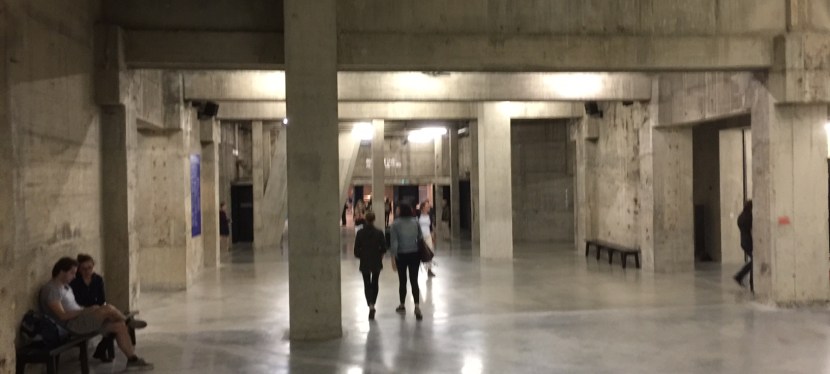
The new Switch House as an addition to the Tate Modern adds more gallery spaces, education and events facilities, staff facilities, a restaurant, members rooms and best of all a viewing deck across London. All of this sounds like a lot of extra space and prior to visiting the building I naively expected to see it organised around clever vertical circulation with large open and flexible floor plans. I naively expected a similar regime to that evident in the existing Tate Modern previously refurbished by the Swiss pair. The new extension is more intricate than this and its public spaces, and circulation routes exhibit a finer grain of detail that is not common in contemporary architecture. The internal circulation and public spaces are generously scaled and inflected by strange warp and weft of the concrete frame that supports the exterior brickwork.

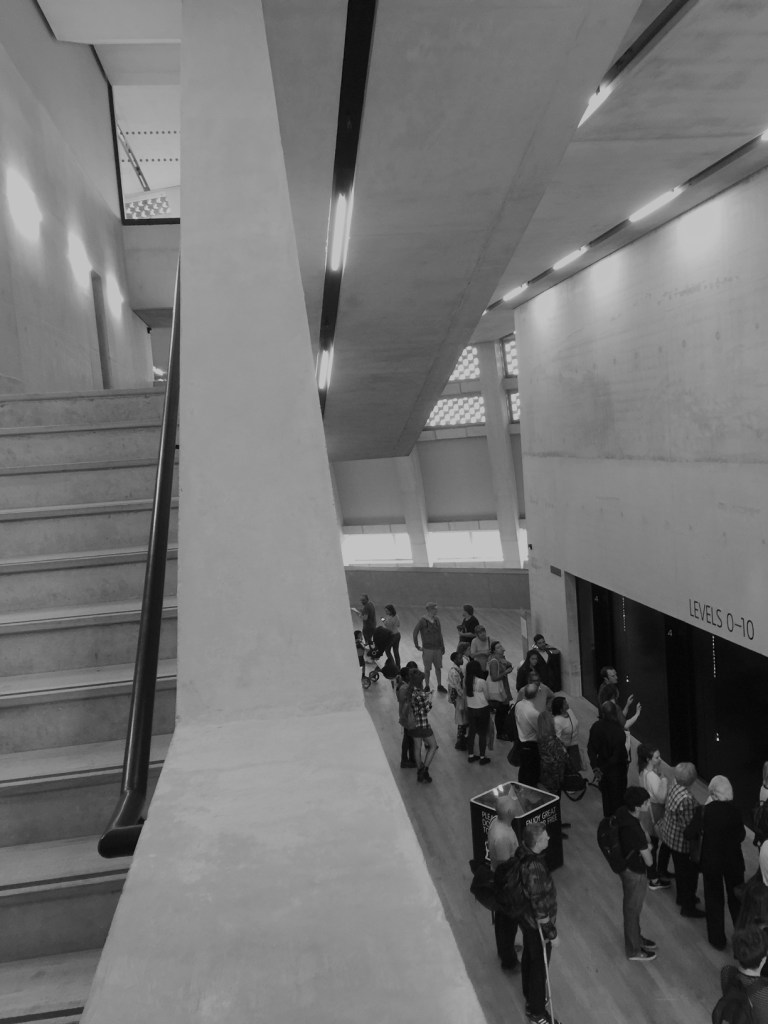
IMG_0359Stairs are always a place of apprehension and darkness; often the back stairs are where the budget ran out or where the fire services are fully revealed or where you may never encounter others. In the Switch House stair system this a generosity of space, attention to material detail, views to the exterior, as well as view lines along and across the vertical circulation spaces to other adjoining spaces. There are a series of different promenades within the building, through the undercrofted old tank spaces, the heroic helical stair, vertical stairs, and outside the lifts and along the perimeter walls with glimpses of the outside world. This is a hollowed out pyramid with a palimpsest of interior spaces. In this theatre of spaces the silhouettes of both individuals and small groups seem momentarily freeze framed before they move on.

IMG_0196In some ways the antithesis of the Tate Modern’s turbine hall and galleries. In these one is subsumed by the monumental spaces of a now archaic industrial technology of Giles Gilbert Scott’s power station desperately designed not to overshadow Wren’s dome at St Paul’s. Where the 2000 Tate Modern is vast and cavernous and the surreal glimpses and dissonances of conceptual art can be taken at distance. Walking up and down this building one becomes enveloped in its spaces as a flaneur both of the architecture but also of the other people one can see and may encounter within the building. In other words Herzog and De Meuron have created a city within a city. The complexity of the circulation spaces seem like a version of Loos’s raumplan; the building is certainly more raumplan than free plan. The Switch House circulation reminds me of the vertical stair circulation at the back of the Muller House. The grain of the concrete in the Switch House also seems strangely like the interior cladding stone of Muller.

IMG_0194The Switch House is certainly more claustrophobic than the spaces of the turbine hall and there is a dissonance in the architecture with its odd juxtaposition of concrete columns, brick lattice grill work, and seemingly adhoc spaces which come into much closer confines with ones body. This is not a public palace that one can walk through easily as a god-like citizen of Rome or Athens, ala Richard Meier at the LA Getty, with the ease of knowing that the space itself is open and rich and luxurious and supported by a network of philanthropy. Herzog and de Meuron have created a series of spaces that are variegated in their lighting effects, a bit dingy in some ways, and perhaps more like being in the underworld of the enslaved Nibelung dwarves in Wagner’s Das Rheingold than being on the mountaintop. The Switch House is an fortress that has, through its sparse material treatments, had a kind of melancholy folded into it.
IMG_0198 My own biases makes me think that the extension points to the architecture of Loos, the paintings of De Chirico or the subtle yet weird surrealism of Corbusier’s houses of the 1920s. Perhaps Herzog and De Meuron’s work is related to the Swiss artist Urs Fischer. In any case, this is an architecture that evokes notions of estrangement and the grotesque in minimalist forms. The geometric kink in the exterior of the building is both gargoyle and pyramid. After all, and despite its Renaissance pretensions, London is essentially a Gothic city.

IMG_0193There is a real treat on the viewing deck. The viewing deck is great because you get a 360 degree view of the City. The sense that you are in a public building is further emphasised by the fact that you can see directly into the neighbours houses in the unfortunate Neo Bankside development. It’s actually funny as these are the neighbours that happen to be part of Richistan, the nation where money is made, accumulated and distributed to the Caymans. It is this contrast that highlights the fact that the Switch House is to some degree a fortress of public space in a city where public and civic space, the space of encounter and possibility and freedom, has been largely destroyed by the bankers and more recently the celebrity politicians of the City.

IMG_0189

But by some miracle of circumstance and patronage Herzog and de Meuron have created a public building that is both fitting to the radical art that it might house and suggestive of a civic spatiality that is not the result of  a simplistic formula of the neoliberal palaces. There are no sunfilled spaces, open planned white minimalism with a bit of glazing desperately trying to frame or invent a serene view. Of course, the bankers and the celebrity politicians have no need for the poetics of the grotesque and estrangement which underpins so much radical art. The new extension is great because it suggests that for some at least, the techniques related to the grotesque and estrangement, and indeed architecture itself still matters.


Bjarke Ingels vs. Pokemon GO: the summer pavillion at the Serpentine gallery.

A regular pilgrimage for many architects in the Northern summer is to the Serpentine Gallery in Kensington gardens to see the summer pavilion. This year’s pavillion is Bjarke Ingels of BIG architecture fame. It goes without saying that the summer pavilion or Serpentine folly in the park is now a regular feature on the international architectural calendar.It is just another part of the global architecture road show. Of course we have our own version in my city. 

I have seen a few other pavillions, although not all, at the Serpentine over the last few years. In 2007 I saw Olafur Eliasson with Kjetil of Snohetta strange and totemic spiral volume, in 2009 it was SANAA’s smeared reflective mirrors and last time I was here in 2011 I saw the Peter Zumthor’s enclosed contemplative garden. Last year it was selgascano which looked colorful but probably crap to be inside; because, there is nothing like the smell of  being inside a plastic tent structure when its skin heats up. This year there are also four small summer houses nearby designed by Nigerian architect Kunlé Adeyemi, Barkow Leibinger, Paris-based architect Yona Friedman and British architect Asif Khan.

One of my friends is an architect in London who has seen more pavillions than me and suggested this years is the best yet. Being cynical by nature I wasn’t sure that this could have been at all correct. Living on the periphery far from the great architectural centre’s of the world one likes nothing more than tearing down a star god architect. Especially, one that has that look that is kind of the epitome of the hero architect image. As most of us know Bjarke himself is one of the gods in the current panoply of star brand architects. One of those big name architects full of self confidence and regard. One of Denmark’s more successful exports in the global competition for architectural services. These days his firm BIG or Bjarke Ingels Group is reported to be a huge going concern of 200 or so staff with 10 or so partners. The group is currently working on the new Google HQ in California.

20160710_162724

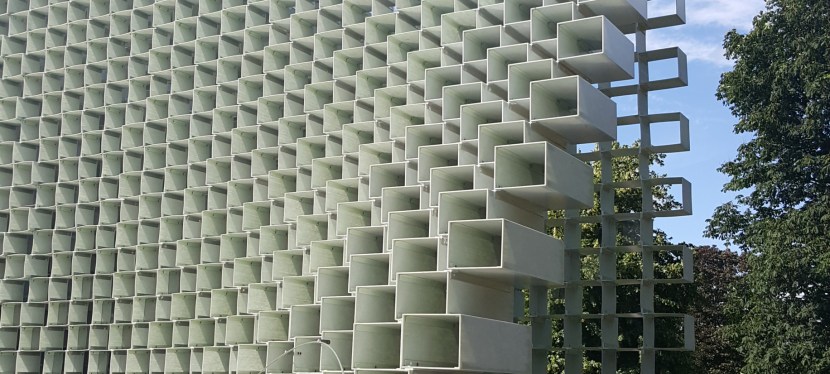
BIG’s pavillion is constructed from a series of rectangular boxes. The boxes are made from a kind of carbon or composite fibreglass. They are connected together with neat well detailed aluminium angles. Each box, or tube, is about 150 by 150 mm in cross-section and depending on there placement in the construction thyme vary in length. This year’s pavillion is cleverly sited, which is more than I can say about the other pavillions I have seen here. Mostly they have just been plonked in the garden with no regard to context. This one frames the lantern of the Serpentine gallery and it is has a deft relationship from the roadside entrance to the gardens.

Parametric design has been employed to good effect in this project. From one side it looks like a high wall and then from another view it appears to be a fallen down jumble of the fibreglass boxes. It appears to be both a monument or a folly in the park, as well as an object that has been deliberately and chaotically dismantled. In the interpretation notes Bjarke argues that the concept of this structure was that of a unzipped wall constructed from the bricks. As noted elsewhere it has been likened to a construction one might find in Minecraft.

20160710_162631

Inside the pavillion one is easily engaged, if not entertained by the different and variable permutations of the fibreglass boxes. There are numerous views from the boxes to the immediate confines of the outside garden.The height of the pavilion gives the impression that one is inside a kind of mini cathedral. Somewhat dubiously Ingel’s makes a connection to the work of Utzon (star-brand appropriating hero-brand) by saying that the pavilion was in fact inspired by work of Utzon:

“had this idea that you could create any imaginable form with carefully designed, mass-produced elements, almost like creating difference out of repetition, and it’s essentially that spirit we’ve tried to bring here” 

In any case, the pavillion seem’s to confirm to me how BIG’s architecture always seems to work with a kind of constructed tectonics often working with serial elements alongside direct and uncomplicated disparities and juxtapositions of scale and form. At the pavillion the elements of its making are not hidden and are evident both at the scale of the detail as well as at the scale of the pavillion itself. There is no deliberate fuzziness, or ambiguity, between its interior and exterior planning. What you see is what you get. Any ambiguity in the work is highly controlled, logical and the result of a generative parametric system. Whilst it fits in with the existing gallery this is not an architecture of memory and place.

20160710_162749

As with most things on the periphery there are the second order imitators. If any Australian firm comes close to the work of BIG it is probably Jackson Clement Burrows who have deservedly won a raft of awards of late. BIG’s work and the pavillion in general sits between the two dominant streams evident in Australian architecture. BIG’s (why do I keep thinking of this BIG persona?) facade of repetitive elements with their different permutations reminded me of the Design Hub at RMIT but unlike the design hub the Serpentine pavillion does more with its repeated elements. Who knows perhaps the discs on RMIT’s design hub will be replaced and live up to there initial and early promise. In general BIG’s work, and perhaps this is why Jackson Clement Burrows have been so successful, is positioned between the all singing all dancing kerraziness of ARM and Lyons and the assertive and odd agricultural minimalism (think moleskin pants and horse stables) of Sean Godsell with its overtones and nostalgia for the mannered modernism of the 1950s.

The pavillion is certainly a change from the dreary CNC plywood framing, reused milk cartons, laminated struts, and timber or laser cut timber held together with bolts and connecting fittings bought from the local hardware store. The BIG pavillion appears to establish that the tectonics of order as compared to creative disorder must count for something. This is minimalism with a tale to tell and the pavillion goes some way to drawing us back to architecture, to reminding us that tectonics, construction, siting, view lines and materiality still matter. It was as if the architect(s?) of the pavillion wanted us to be reminded of all the sane and logical things architecture can still do.

The last pavillion I went to we all sat around and contemplated the garden and the sky. In this pavillion there is nothing like that. On the afternoon I visited it was full of people looking at the boxes but mostly they were looking on their own little boxes. Their smartphones. They were taking pictures and doing whatever social media things the network would allow.

I think most of them were playing Pokemon GO in the pavillion and I wondered if BIG’s efforts to drag us back from our digital distractions were working. Somehow I doubt it until seriality and parametrics is able to engage with the memory of cities. At the moment Pokemon GO is winning against architecture.