
Design Genius is not Design Leadership: Avoiding the cult of architectural design secrecy

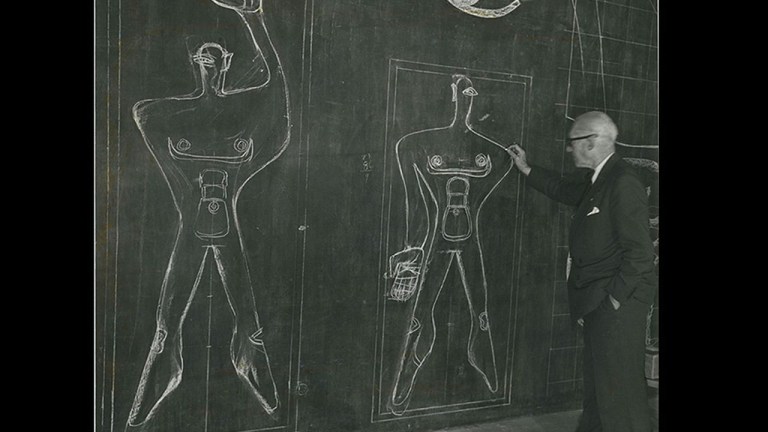
Design Leadership requires the ability to be open and transparent about the way ideas and design knowledge is conceived, transmitted and fostered in the organisation. One thing that seems to hamper research across the field of architecture is a culture of secrecy. There are patches of this culture all across the topography of architecture. It manifests itself in a number of ways and at a number of levels. It might be the directors in a larger firm afraid of sharing information that is seen to have some competitive advantage. After all, if the cabal shares the premises of a firm’s competitive advantage that might mean exposing that knowledge as inconsequential. It could be the project architect who hangs on to project information and does not share it with others in the team. Better to keep them guessing or in the dark. It is easier not to explain anything. Or it could be the so-called design architect who refuses to reveal the sources or the inspiration of his conceptual ideas. After all, someone might steal those ideas and claim them as their own.

atelier-35-rue-de-sc3a8vres-paris-le-corbusier-et-ses-collaborateurs.jpeg

All of these shenanigans of secret knowledge, tacit and unspoken communication and preciousness are corrosive to developing an architectural culture that maximises design knowledge. The covens of design managerialism and secrecy, the power tripping of withheld project information, and the egotistical horrors of pathetic design ideas made more important by being locked in the head of the design architect. All of these attitudes make it very difficult to conduct research within the profession.

I am not really sure where this culture begins. Of course, the curricula and studio systems of the architecture schools as usual, can be blamed. Few subjects are devoted to leadership and organisational governance in architecture school curricula. No wonder the profession is struggling to maintain itself.

In these systems, without the right studio leadership, individual competition can be vain, petty and subject to the vagaries and whims of favouritism. We have all been in studios where we will never make the favoured circle. Design Leadership is not about simply reinforcing and replicating your own theoretical position or the way you were taught architecture. Nor is Design Leadership is not about positioning a design within systems of parochial politics in order to gain influence. It is not about designing in a way that positions you for a commission or a peer award.

To reiterate, Design Leadership is about maximising design knowledge in the most efficient, effective and brutal way possible. After all when the rubber hits the road and the project is besieged by clients, value managers, and contractors the design ideas need to survive the journey.

The continued glorification of the design genius, which I have written about elsewhere, only leads to a situation where the profession is riven by localised mystery cults. Each genius, whatever their stature, surrounded by acolytes along with initiation ceremonies, encouraged rivalries, different circles of access and knowledge. It all starts to sound like Trump’s White House. Better to be an outsider than in the cult. So here a four principles to creating a culture of Design Leadership in your practice.

  1. Make design processes visible

Design leaders have clear processes in place. These processes are visible, transparent and communicable. Design leaders understand design processes and how these processes work through team environments. Design Leadership requires generating design knowledge and ideas through clearly communicated actions and gestures. By doing this everyone in the team can pursue, develop and contribute to the design.
r1220202_15999276.jpg

  1. Don’t hide design knowledge.

Hiding design information only creates islands of territorial power. The role of Design Leadership is to constantly posit design knowledge into the public sphere. Of course this sphere may the realm of the project team or it may be the consultant team. from different groups or individuals within the organisation It is not about hiding things away. If design are ideas are hidden they are not fully tested and may then crumble at the first sign of value management.

  1. Make designing inclusive.

Design Leadership does not require the trappings of a cult. It does not exclude or set boundaries around who can be in and out of the team. A collaborative team open to a range of design views is better than a team subservient to a single design view. Effective design leaders mentor and foster their team members. They do this is in order to make individual team members better designers.

2009-12-10 22.42.08

  1. Create space for design.

Good design leaders are bale to create safe havens for the most extreme and seemingly kookiest of design ideas. This is because, Design Leadership requires teams that ask questions rather than teams that simply reiterate like-minded principles. Excellence in Design Leadership nurtures and fosters this questioning. Everyone should feel safe to ask the dumb questions in the design team.

  1. Creates more ideas than can be used.

This is the measure of great Design Leadership. Having a cauldron of ideas constantly generated and replenished as the project proceeds. Design Leadership means both generating and then managing design ideas as they proceed. Design Leadership means having the luxury to pick, choose and give life to the best of architectural design knowledge.

Architects need to change the way they approach Design Leadership and their own organisational structures. Architects need to more effectively manage their own pool of talent. What architect wants to sit in front of a computer second guessing what needs to be done? Worse still, is sitting in front of a computer knowing whatever you do is never going to be quite right, because you weren’t initiated into the favoured circle.

Now back after a brief Easter Break ! 


Architects and Risk: The personal connection.

Thank you for all those who have completed the Surviving the Design Studio: Global Research Survey. The results and comments so far have come from all over the globe. It has given me much food for thought and the results will be shared here as blog post, or two, in early March. I would like to thank everyone for the comments and certainly the next research Survey I conduct will be better again. In the meantime we are rushing to prepare the Practice subject for the beginning of semester at MSD in two weeks.

tom_oliver_payne_robin_hood_gardens_brutalism-8.jpg

The Myth of the Digital Superhero

For most architects the drive of the architect to be a digital superhero, a creative celebrity, or a young Instagram genius, obviates and perhaps erases the necessity to focus on risk mitigation. But, regardless of the efforts to fashion a stable, if not stellar, identity in the vain hope of surviving financially, the overwhelming focus of attention for both employed and self-employed architects is risk mitigation. This has a personal dimension.

Yes, like most architects when I hear or read the word “risk”, my eyes glaze over and I think about hopeless project managers and all those risk matrix forms we sometime have to fill in the workplace. Like everyone I ahte thsoe cheesy Risk Management powerpoints.

For the majority of small practices and employee architects managing project risk appears to be dependent on the procurement path that has been chosen for any individual design or project. Yes, of course, managing project and design risks has been inculcated into architects since architecture school. But sometimes, like the dmeolition of Robin Hood Gardens, everyhting goes pear shaped.

Risk and the everyday life of architects. 

But, there is another aspect to the predominant approaches to managing risk in architecture that has, I think,  been overlooked. Whilst rarely stated project risk, the risks managed by architects as they undertake projects, and the risks they must manage in their everyday lives are linked; individual architects and small firms are required to manage their own personal financial risks in the face of volatile cash flows.

More alarmingly, given that the majority of architects either work in or a part of small SMEs project risks can easily impact on an architects individual economic circumstances. These risks may include:

  • The architect being sued for perceived or actual negligence.
  • Insolvency as result of not recovering client fees.
  • Insolvency through individual mismanagement; either time or financial management.
  • The need to use individual resources to rectify a design or construction error.

To reiterate, all of the risk events can connect to and impact individual and personal circumstances. But small firms often have few resources to manage the risks they face. They are often locked into cycles of inadequate fees, over work and conflicts in their work-life balance.

Fighting Risk

v1.jpg

Arguably, in Australian risk management is only partially inscribed in the competencies that determine architectural education. Yes, many of the architectural associations, wherever they may be in the world, have tried to plug the risk management gaps with professional development programs. In other words, the first response, the fighting response, has been  to build capability and knowledge about risk management.

 In a study of risk management practices in UK SMEs including architects (64 small practices and 49 medium practices) noting that risk regulation frameworks have been extensively studied and proposed. Yet, it was found that there is little understanding of how these frameworks are implemented in SMEs. The studies suggest that the resources required to adequately manage risks, in particular to implement risk management techniques, was often prohibitive because it was “unrealistic for SMEs and beyond their capability and affordability.” Despite this limitation he concluded that small firms required appropriate organisations structures, tools and organisational culture in order to implement effective risk management in order to gain competitive advantage.

Fleeing from Risk  

Recently in a discussion in an architect’s office it was put to me that in some ways architects have run away from risk. It was stated that in some respects architects had actually de-risked their practices but done this in a way that has given away ground to our competitors.

Because of a lack of resources individual architects have not resisted, and perhaps been complicit in the de-risking that has come about as result of external factors including: competition from project managers, disintermediation across the practice life-cycle and the increasing  availability and lower costs of digital tools. We have to stop doing Trash-for-Cash-Jobs. 

As architects we are best able to manage design and construction risks. But too often we perceive ourselves as the victims, of clients, developers and contractors.

3081684_img_7367

The personal dimension

But as suggested above, risk for many architects also has  personal dimension. This is often missed in the risk management literature. In the UK in 2009 a study of architectural job satisfaction, found that:

“20 and 40 percent of respondents are dissatisfied with their rate of pay, practice management, promotion prospects, working hours and opportunity to use their abilities”

In contrast self-employed architects appeared to experience better occupational well-being. In contrast self-employed architects had more satisfaction because they had more flexibility and control over their workflows. However, there were issues for these architects, particularly in the area of job security as well as greater conflicts in their work-life balance.

In another similar UK based study focused on architects similar findings are confirmed. However, these researchers point to the:

 “a seismic shift in industry culture is required in order to address issue around flexible work practices, effective time management and workload planning⁠.” 

Mental Health: the real risk.  


Another area of personal risk for the architect is in the area of mental health.

In a landmark survey of existing research commissioned by the NSW registration board and the ConNetica.

There exists a dearth of research around the mental health concerns facing architects, when students, when seeking employment, and when employed.”

But perhaps, more importantly, As the study states in this conclusion:

“The perception of architecture as a profession that is male dominated, that involves excessively long study hours and intense commitment during education, and excessive work hours and intense, often isolating, project focus in practice, suggests there are elements in the profession’s culture that could be contributing factors in mental health concerns. Whilst research to date has addressed the mental health of students (with some addressing architecture students specifically), There also are concerns in regards to women in architecture, given that it is considered a male dominated industry, and that their mental health may be at risk as a result.”

Architects, as a profession, need to think about risk in both deeper and broader ways. But it also makes me think that in Australia we need an Architects Benevolent Society. 

Robinhood images are from Deezeen and the Architects Journal 

ARCHITECTS VS. TRUMP-LIKE CLIENTS: Rising Up Against The Alien Overlords Known As Client.

As we start to get into 2018 many of us can see that Trump would be the worst kind of architectural client. But sadly, many clients have Trump like tendencies and this is a real problem for most architects. It is a particular problem for those architects who have to deal with clients with the resources to do large projects. Please note: I am always available to run a client education or design thinking workshop for your most evil and Trump-Like clients. 

Architects, apart from having to deal with Project Managers, without any idea of the complexities and nuances of design thinking, architects also have to deal with that other group of evil alien overlords: Trump-like clients.

Emotional Domestic clients

maxresdefault.jpg

An Emotional Domestic Client 

Don’t get me wrong many clients are great, supportive trusting and generous in their relations with the architect. But many clients are problematic to the architect for a number of reasons which I will explain below. For small architectural projects, in particular residential projects client emotions can and tend to run high. In some ways this is understandable if the client has had no previous experience of building procurement or you are ripping off the back of their house, usually their largest asset, in order to make it better. In my experience domestic clients tend to flip out the most just after the demolition stage, or during framing stage prior to anything else being installed.

Large project clients

But my remarks here are directed to those architects with larger projects and clients. These are the clients who should know better. But, often they don’t and I want to outline some of the pathologies at play here. By larger clients I mean large companies, large public institutions, state or federal governments, not for profit agencies with turnovers exceeding not just millions, but hundreds of millions and even billions of dollars. There large projects spun out of these entities might include projects related to urban infrastructure, health or education.

7 Characteristics of Trump-like Clients 

lead_960.jpg

I met a friend over January for a coffee who is a project manager in one of the larger entities. This person trained as an architect and then pursued a career in Project Management. By the end of her latte she had quickly outlined the characteristics of the dysfunctional, Trump-like Clients often found in these large organisations. These clients may be individuals, the may be CEOs, senior executives, line managers, so-called project managers with responsibilities, or worse still a committee of so-called stakeholders.

1. Dithering

Firstly, the dysfunctional client is always meddling. Mostly the process is additive. Adding a bit to the design here and there, a new material, a new subsidiary design concept, a new function, a new bit of technology, an increase in space allocation or a new stakeholder to be thrown into the project mix.

Sometimes this process goes back and forth, they alien client adds something and then takes it way in the next minute. These clients are not able to trust architectural expertise and will add and subtract things depending on who they have just spoken to.

These clients think that by doing this that they are actually managing effectively: But, they are not. These clients tend not to be able to cede control to others (until things go wrong of course) and the often have no overview or strategic insight into project timing or processes. They think that adding and subtracting in this way is about “refining” the project.

Dithering is time wasting and corrosive to a projects overall design strategy. With lots of client dithering, a project can bit by bit, end up being something completely contrary to its initial strategic intent.

In these situations architects need to assert control and get the client’s over-control  out of the project process as far as possible.

2. Indecisiveness

static.politico

All projects have time and cost benchmarks. Despite myths to the contrary most architects have the benchmarks firmly stuck in their heads from project inception. In order to meet these decisions, decisions need to be made in a timely fashion.

Client indecisiveness, for whatever reason will slow things down. Often it is the result of procurement and design ignorance combined with the fear of being seen to do the wrong thing

Where there is more at stake for the client, for example a domestic client, decisions can be made quickly. For line manager or a senior executive in a large organisation, direct incentives do not apply because the projects outcomes will not impact the manager’s personal finances. Indecisiveness can easily be covered up by managers in large organisations, but it is essentially destructive to a project, if not self-destructive to the entity sponsoring the project.

Architects need to communicate clearly to clients when indecisiveness impedes project time and cost outcomes. This can be difficulty when it means telling your client that their own indecisive practices are screwing things up. But, if you don’t you are being set up to fail. 

3. Managing up

There worst and most dysfunctional of the clients are the ones that don’t really care about the project. In fact, they are more interested in managing up to their own overlords. What matters is not a great project but how this project is perceived. In other words, how project looks, both as a process and as an end result, to other client overlords is the most important this.

These clients don’t really care about effective client or stakeholder consultation, they don’t care about design (even though they say they might), they don’t care about effective and sensible project processes and workflows, they only care about how it looks to their own networks and political masters.

These are truly Trump-like clients Some of these client types are really more interested in the projects ability to be promoted across social media, once the project is complete, or as I recall in one instance, the executive manager more interested in hosting a dinner for their own managerial networks, to celebrate the project’s completion. Despite the fact that the manager had little to do with the building’s genesis or design.

Smart architects will use this syndrome to extract design leverage out of a client. Amoral architects will just go along with it out of political necessity.

4. Too many stakeholders

susana_core_group_and_key_stakeholder_meeting_in_eschborn_germany_18th-20th_of_april_2013_8674293921-1-e1517367526795.jpg

Too many stakeholders with no decision making governance in place. Stakeholder management and processes often ill defined. Without proper project governance and a process for managing stakeholders everything becomes a meeting; where nothing is decided and no leadership is exerted. Everyone feels good at the end of these meetings, they feel like they have done something. But actually they have done nothing.

I once pitched for a job which had 13 people on the selection committee. I should not have wasted my time and in the end no-one got the job because the committee couldn’t decide. There other extreme is when the managers make a pretence to “consult” with stakeholders but then make autocratic decisions. Usually the autocratic pathway leads to organisational resentment once the project is complete. Often it is the architect who then bears the brunt of post-occupancy dissatisfaction.

Effective client excellence means having effective and authentic organisational leadership. It means having an idea how to govern and consult with stakeholders and make decisions.

Architects need to be sure that they are dealing with the right stakeholders and this project is being managed by the organisation authentically. 

5. Turf war warriors  

Clients who don’t have the leadership ability to negotiate between different parts of their organisation. There extreme of this is those clients who use the project to gain organisational territory or power over other organisational groups and networks within the organisation. This usually has an impact on the resourcing an organisational entity can give a project. It may mean that as a result of territorial disputes and Architect is denied vital information that is vital to integrating design and construction elements as the project proceeds.

Architects need to make sure what the lines of project reporting and governance are in place between different sub-groups or organisational silos in an organisation. Architects need to be clear at the outset that they may need to gain information from across the organisation.  

6. Blame gamers

1_2a1_lcnxke63sx37cg-2bq.jpg

Architect Post Blame-Game

The client or the clients are so busy blaming each other that nothing gets done. The  extreme of this is that the Trump-like clients are so worried about cycles of blame, or getting, fired that they are not willing to take design risks, or risk anything. This really distorts the architects risk management process.

As an architect caught up in the vortex of blame eventually the cycle will come to you. There is no easy solution to this one. 

7. Zero Design and Procurement Knowledge

It’s great when the project manager is an economist, or has background in accounting and management consulting, or nursing and health and really now idea about urban design, architectural design, or bottom-up community development and consultation.

So, maybe worse still, are not the evil clients who know very little, but the ones who think they know about what architects to do, because they did their own house renovation once, or they have allied degree in maybe civil engineering or construction management.

Procurement pathways and options these days can be very complex. Making the right decisions about procurement in the early stages of a project is vital. There current community and political controversy over the Apple store at Federation Square is a case that reinforces this point. Clearly, for such a project, a procurement and decision-making process that was both lacking in transparency and did not build in community consultation, was bound to explode in the face of the Trump-like project sponsors and clients.

Time consuming as it is: Architects need to constantly communicate and educate clients about the entire process. Be wary of the clients who think they know stuff. 

Finally: What Architects should do ? 

The difficulty for architects when faced with these larger evil clients is then having to explain and communicate, in other words educate, to them the intricacies and risks involved in the complex process of making great architecture. Arguably, that’s why we need to have negotiation and organisational leadership skills as a core competency in our national competency standards. Or, as a post professional development option.

Not only do architects have to face the challenges of designing great architecture but they also have the challenges of educating and working around evil clients. Many, architects do these things all the time and as a result their design and project leadership skills are often more effective and authentic than the large clients they serve.

Rebranding the Architectural Firm: a brand framework for architects.

This week I spoke at the M-Pavilion and I got a little carried away talking about branding in relation to the Apple Store and Federation Square in Melbourne controversy. I will write more about that in coming weeks. But in the meantime, here is my first take at thinking about branding and architects.

mars-bar-53g__55165.1281000026.1280.1280

Intro

In the wonderful world of digital advertising. The subject, tone and style of a campaign needs to be delivered to a customer within the first 9 seconds of a digital advertisement. But architectural branding is a different kind of beast. Architectural services are not a fast moving consumer good (FMCG), like a Mars, Bar, or a product that requires a simple pay wave transaction. Branding and the elements that constitute an architectural brand are a little more complicated.

The Problem: How to change your architectural brand

The lead times in running an architectural practice are quite long. Sometimes it may take a practice up to 10 years to achieve stable and less volatile income stream. But in my experience the branding of a firm is often set very quickly within the first few years.

Late last year a friend of mine said there were two types of larger architectural practices those with “family” brands and those with “corporate” brands. She wondered how do you change an architectural brand once it has been established? This made me think about what the elements of branding is for an architectural firms. Once that branding is set how might you then change it? In other words how do you change the branding of a firm that has been going for 10 years or more.

The Elements of Architectural Branding 

Slide1

In my framework the three elements that make up an architectural brand are Knowledge Creation, Knowledge Delivery and Knowledge Style.

This is because I think a Knowledge Management approach is the best way to approach thinking about branding in architectural firms. Forget about the focus on designed objects. It is better to think about:

  • What design knowledge is being created?
  • Then, how is that design knowledge then delivered to clients and others?
  • Finally, and in doing the above, how is that design knowledge expressed in terms of an expression or style?

Knowledge Creation: What knowledge is created

You can see from the diagram that elements of this include the kind of architectural types your firm works, on or the size or scale of projects, the regions that you work in and create knowledge about, or the different kinds of expertise your firm is known for.

This may also be a proportion or mix of different elements.

Knowledge Pathways: How is knowledge delivered? 

 How you deliver this knowledge also contributes to your brand. Is your firm only interested in time or cost outcomes. Or maybe your firm is focused don generating concepts or iconic architecture. Or maybe it’s just about getting awards.

Knowledge Expression: How is knowledge expressed?  

 How your brand is expressed is also another aspect of this framework. Part of this is how an architectural firm creates knowledge that helps to brand its own clients.

  • Is it focused on informal styles where the firm does not have to structure the expression or aesthetics of design knowledge.
  • Or is design knowledge expressed somewhere in between. This is when the firm employs a mix of formal and informal signifiers and design knowledge to help brand groups or communities.
  • Or is the style of the brand, what I have termed high style, where the firm is focused on Iconic Symbolic Capital at a National or International Level? Where design knowledge is highly structure and bound by aesthetics.

Family vs. Corporate brands. 

Family brands are common in architectural practice. These are architectural firms that employ or hope to employ family members as leaders within the firm.

This has a number of advantages:

  • The value created by hard won financial stability over a long period of time stays within the firm.
  • Personal networks and connections vital to business can be maintained.
  • Succession problems are easily solved
  • Directors have more control, and incentive, over design decisions rather than giving these design decisions to managers.
  • In practice a “family” architectural brand might have this kind of mix.

The corporate branded architecture firm is different:

  • The brand may not be determined by a name associated with familiar and long standing networks or particular design approach.
  • Corporate style architects rely on the portfolio of projects within the firm.
  • The project portfolio, as whole then partly determines how the form is branded.
  • Managers, including designers, have more incentives to get projects which in turn determine the brand.

 Rebranding: the all important question. 

So if you need to change your brand or even rebrand your firm you can then look at this framework and decide which things you need to shift to achieve this. For example, a family brand wanting to be a corporate brand can see which elements to change.

In other words, the framework helps architects to decide which elements to change or transform and it also suggests that changing or rebranding necessitates changing more than just one element. Many architects fall into the trap of getting in a few new designers and fresh design ideas in the hope this will change the brand or how the firm is perceived. Or they think they can do it by, going after a new types of projects they havent done before, or by developing new types expertise.

It doesn’t really work like that because too often the other elements in the mix are not changed.

This is the first real post of 2018 and I would like to thank those of you who read and visited the site over January. Quite a few of the greatest hits posts from previous years were more popular than when they were first posted! The site has had a bit of a makeover and I am hoping to renovate it a little more in coming weeks.

Business Suits vs. Designers: Why architectural practice is going down the gurgler.

bathplug-e1516068648199.jpg

This was another popular blog post from the last year or so. Many readers contacted me to comment on the post. Most were in general agreement with the sentiments expressed in it. Re-reading it now, I am more emphatic in my thinking, and wonder how does a profession or a domain of knowledge expect to survive? Especially, if it gives no priority to educating its best and brightest about economics, finance, business strategy and management.  

Down the gurgler is Australian slang for: down the plug hole; something has failed; wasted (as effort, money, etc.); ruined, destroyed. 

Before you read this you may be interested in the:

SURVIVING THE DESIGN STUDIO: 2018 ARCHITECTS GLOBAL RESEARCH SURVEY. 

At the 2106 ARCOM conference I attended I met a few other researchers working in the area of architectural services. One was from Western Australia and the other was from Delft. Delft is one of the largest and well regarded architecture schools in Europe. At Delft my friends there have a large EU research project looking at the nature of architectural services and their value. Whilst standing at our conference having a cup of tea one of them mused that architecture seemed to have a global ideology. I asked “What do you mean?” thinking that perhaps the counter is that architecture is something that is pretty much formed by what Kenneth Frampton called critical regionalism.

The great divide 

She went on to discuss that no matter where you went in the world in architecture there was always an insanely stupid divide between the creative designer’s and the so called “business” people of architecture. At her architecture school the “in-crowd” of design professors turn there nose up and reject the so called “business side” of architecture. I agreed and then thought more about it. This divide is contributing to the demise of the profession. It prevents big practices from integrating knowledge and going upstream; it cripples small practices because they often do not have the business skills needed to make them sustainable.

It’s not real until it’s real syndrome

This divisive refrain has often been driven home to me in the architectural practice classes I teach at MSD. Every semester students question why we would do business plans in the class as part of the syllabus. Of course, when I talk to practitioners and I tell them we teach business planning in the class at MSD they say that’s awesome. When I tell they students this they don’t really care and they don’t really get it until they themselves become practitioners. Even when I say: “you will be more employable if you understand this stuff”, they still don’t seem to get it. It might be the it’s not real until it’s real syndrome.

The “practice” lecturer syndrome 

blonde-salesman-wig-1

How “design” architects see “business” architects

Also, as the so-called “practice” lecturer I constantly, get the impression, that  in some way I am written me off as some kind of accounting value managing drone who hates architectural design because I have an MBA. Yet, I love Debord and Deleuze and Guattari and late Foucault just as much as the next theoretically inclined architect.

download-2-e1516068545796.jpg

D & G 

Of course, in other fields it is different. For example, in advertising, the dark heart of capitalism itself, the collaborative tensions between the creatives, the so called suits and the production people are acknowledged and managed well. Agencies still manage to produce great work that moves people and contributes to brand survival in the spectacle.

french-architect-jacket

“Design” architect complete with mandatory jacket. 

What exactly is the business side of architecture? 

Thinking about it I am actually not sure what is meant by this. It is such a vague term and ideological prejudice. Does it mean you just want architects to make money (don’t we all want this?) Does it mean if you are “pro-business” you just do what aesthetically ignorant clients do? Does it mean you hate design and design processes? But just maybe actually, paying attention to the “business side” means architects need to pay attention to the following: Diversity,  in our team structures, strategic positioning, innovation systems, knowledge management processes, technology implementation and how we respond to emerging forms of procurement.

Oh and there is that that other area of academic and professional study that is often ignored in architecture schools, and missing from our competency standards, also relegated to the “business” side: Leadership.

Long hours, price cutting and other structural problems of the profession 

As the Sydney architect Clinton Cole eloquently argues, amongst other things, the profession is beset by a number of structural problems that impact on its well-being and competitiveness. He cites the “hugely entrenched cultural tendency to perform long hours” combined with truckloads of unpaid overtime, anomalies in charge out rates (Charging staff out at 40 hours per week but working more than this). As Clinton points out these practices disadvantage women in the profession. Or anyone else, for that matter, seeking a reasonable work life balance.

Oh and I forgot to mention  the other structural problems such as fee competition (the persistent rumours about large practice cartels price fixing low fees) and the push in some quarters, even by some so called-architects themselves, to deregulate the word architect.

The need for industry research 

Industry development backed by evidenced based research is the key to help architects  argue their case. But, as far as I can tell the AIA has had no real research function for years. The Government Architect’s across Australia are also generally deficient in this regard. So it’s great to see the Association of Consulting Architects taking up this mantle and filling some of the basic research gaps with the fine work of Gill Mathewson.

As suggested above, there is a whole range of research areas, that architects could collectively pursue for the benefit of the public, policy makers and even their clients.

7 tips for bridging the divide despite the horror of small practice

Lets face it in small practice organising and scheduling time, managing cash flow, preparing marketing materials is extremely boring. But it is stuff that needs to be done. In larger firms, let alone any firm for that matter, strategic thinking, marketing and branding, HR and management policies that promote diversity and creativity are vital. So if you are a small or solo practice in the outer suburbs or inner suburbs of a large city. What do you do? How do you avoid the quagmire of overwork, high stress and the feeling that you are always reacting from crisis to crisis.

In my experience the following things are all definitely worth considering to bridge the divide.

  1. Don’t cut your fees just to get the job.
  2. Have a business plan even if it is only two pages long.
  3. Calculate charge out rates that allow for fair work hours and profit. Stick to them.
  4. Work on your business systems.
  5. Take the time to constantly market the value of design.
  6. Do what Google does and don’t work for half a day a week. Just think or meditate.
  7. Do some research that will help strengthen your knowledge base.

Unless a practice considers acting on the above 7 points it will always struggle.

Design value and design fees are positively correlated

Of course I fear, that if you mention business systems to one of those big name alpha-male architects  that adorn the global system of architecture they look at you as if you some kind of pariah. They always leave it to someone else. As a result our profession is getting killed. It struggles to argue to clients why there is a direct relationship between design fees and design value. It struggles to shake off the overall prejudices that the broader public have about architects. More importantly, it is currently struggling to compete with other professions that claim to offer similar services.

The business-creative divide and corresponding global ideology has crippled architecture and threatens to hasten its further demise as a domain of knowledge. As a result the viability of architecture as an profession is increasingly at stake. Unless the divide is bridged we remain a naive profession full of poetic and narcissistic dreamers who are rapidly losing ground.

MSD Architectural Practice 2018: Seeking Tutors, Practices and Architects to be involved.

We are looking for architects with a commitment to architectural education to tutor, guest lecture or join our weekly discussion panels, in Architectural Practice at MSD in Semester 1 of 2018.
IMG_3069
Subject aims and syllabus
The subject aims to develop a strong connection between MSD MArch students and architectural practice. The tutors are a key part of helping us to make this connection. For many of the students in the class this will be their first introduction to practice.
Using a traditional practice syllabus as a platform (e.g. fees, tenders and contracts), the subject covers strategic thinking, emerging forms of collaboration, scenario and business planning, negotiations, gender issues and work rights in the profession, as well as knowledge futures.
The subject covers just about anything architects need for survival in the current age. In 2018 the lecture content will again be delivered online and via lecture based panel discussions as well as structured tutorial case studies.
Social media 
We will be using social media more this year through our Instagram account amongst other things. To give students a sense of the reality of practice each tutor will also be responsible for posting “a week in the life of the architect” content to the Instagram account for one week of the semester.
Wanted: Tutors with passion 
We are not looking for star-architects but architects with a passion for architectural practice, business and design. The tutorial team is diverse and I welcome applications from architects with a wide range of experiences and backgrounds. The  guiding philosophy of the class is that professional practice is actually about maximising design outcomes.
Ideally, tutors in this subject will be registered architects or practitioners, with post-graduation or post-registration experience, who are currently working in their own practices, or as project architects in medium to large firms.
IMG_3075
Time commitment
Time commitment for tutors is significant: 11 x 90 minute tutorials plus 4-6  x 1 hour moderation sessions during the semester. As well as attendance at 2 x 1 hour lecture panel presentations. This is an opportunity to make a direct contribution to current debates about architectural practice. Tutors will also need to view the online lectures. There is approximately 32 hours of marking during the semester. Tutorials and lectures are Tuesday evenings.
It is expected that tutors will meet the challenge of teaching in a cross-cultural and diverse context. Tutors are expected to abide by the universities teaching policies.
We also welcome architects currently in leadership positions in practice, no matter where you are based as we can easily Skype,  who wish to contribute to the subject either as a tutor or as a guest lecturer and discussion panel member.
Host practices  
This semester we are hoping to have one tutorial in an architectural office or practice. This will probably take place in May on a Tuesday afternoon. If you are willing to host let me know. That would be fantastic. We are also hoping to run some employment ready sessions through the class.  Contact me here if you are interested.
Interested? 
IMG_3067
I am happy to talk with you further if you have any further questions about your contribution as tutor to the subject. I look forward to your application as a tutor via the MSD’s Session Staff Recruitment System at the following link.

Big Data and Architects Part 1: Big vs. Little Data in the Architectural Practice

The Big Picture

The image accompanying this blog is my Google Analytics map from the cities across the globe from which I have had new visitors this year: The blog is big in Samara and Almaty and of course Dunedin and Lagos. So, thank you everyone who has visited from near and far. 

Cities_Blog

There has been a lot of talk about big data and data analytics of late. I saw a talk at work the other day about metrics concerning global-cities and thought: Wow ! We all love the macro-view. It makes us feel that we are above it all. Big data nowadays is kind of like a juggernaut as online information is constantly being gathered by big, big, big firms like Google and Faceybook. Arguably Trump employed data analytics from Cambridge Analytica to win HIS election. Of course, much closer to home is AURIN.

It’s easy to get seduced by the big picture stuff and BIG DATA; it has become such a catchphrase for the academic, consulting and elite chattering classes; So, I thought I might devote a few blogs to discussing it from the architect’s perspective.

For the architect it is not so much about BIG data but in fact LITTLE data.

Little Data = Data generated within and circulating through the architect’s firm.

Architects are too small and certainly not the cloud platform or solutions we might find at Google.

I am quite interested on following Meltwater a firm that gathers and gains insights from the realm of online data that exists outside of “internal reporting systems.” I guess when I saw those words I wondered about the internal and external reporting systems of architects. Do these systems actually exist? Or, is it all just seat of the pants decision-making and guess-work in the architect’s office? Their CEO of Meltwater has written a book which looks good and can be found here.

It’s probably a good idea to start with some of the basics of what I might call Little Data pertaining to the architect’s studio. Then further blogs will cover big data, data analytics and strategic intelligence (including its politics and ethics) and most importantly how data analytics might be employed in the design studio. I might even throw in a bit of critical theory for fun.

Think of this as a crash course in data, information and knowledge management. For most architects there is probably three or four types of data that they need to gather (and scrubbed), and manage in order to make effective decisions.

1. Internal Firm Data and Information:

Information about the firm internally is really critical. Especially, given that for architects the primary input is the amount of hours worked accurate data on this is crucial. Another category of data central to the firm This can then be mapped against the fixed and variable expenses that the firm incurs in doing the work. Of course, in Australia, as is the case elsewhere, keeping time and wages records (like overtime) is an important thing to do under the Architects award.

2. Broader Industry Structure Data and Information:

This covers information about the broader Industry, other similar, or contrasting  firms and how all of these things are performing. How much profit should a firm be making, how many hours should it be spending on particular project phases? How much should be spent on marketing each year, for example, and how does this compare to other architectural firms?

Yes, all architects really need to pressure our professional associations, groupings and even governments to continually collect and distribute this kind of information about the market for architectural services.

3. External Facing Data and Information:

This includes information about potential clients, potential areas or sites of development and expertise. In the real world they call this Business Intelligence. If an architectural firm is to be entrepreneurial and anticipate future work then it needs to develop a base of research and knowledge in particular area. For any firm it is important to understand that overall demographics and needs of the entities or agents that might fund architectural work.

For this reason data gathered around the strategic imperatives, culture, asset management, site, planning and regulatory contexts, demographics and anything at all to do with the client is important. How is client’s business and operations structured? Who should we develop relationships with?A good question to ask is: where is the money coming from and who actually owns a company that might give you work?

4. Online Information:

A rapidly rising subset, if not the only one to be concerned with, is online information. This could mean anything from collecting data and about the firm’s own websites or new media channels like Instagram or Farcebook. Or collecting (scraping, is the term used, I think) information, from online, about areas of knowledge the firm is interested in. I will discuss this more in future posts.

So what ?

Once you have all of this data a firm might then be in a situation to make some reasonable design decisions. But all of this data, once gathered needs to be readily at hand. In other words it needs to be in some kind of legible and easily accessible data, information and knowledge management system. Maybe it’s an just an excel spreadsheet, database or maybe that’s  a IT system with a legible file directory.

It’s not rocket science but too often data, information and Knowledge Management in architectural firms is not seen as high priority.  But, how many architectural firms have a knowledge manager or even think about having a Knowledge Management function within their firms.

For small firm’s it is a stretch to even get the right information and data systems, even if it is only an excel spreadsheet of contacts, in place and for large firms too often data is spread across to many different silos and knowledge is too often locked into people’s heads or hidden from view by management.

Too often architects are sucked in by the production and delivery orientated technologies. Yet in the future, for both clients of architects managing data, information and producing knowledge will be where it is at. Not producing actual things. This is especially the case,  in terms of design and design outcomes, so let’s hope architects don’t miss the boat on this one.

Mental Health, Burnout and Architects: Starting the conversation

RUOK day has come around again in my peripheral part of the global architectural galaxy. Recently, I met an architect who was having a few really bad weeks in her practice. She said it was the worst time she had ever had in practice. After a series of particularly gruesome negotiations and risk management issues she decided to take, what is known as, a mental health day.

Survey Invite for Architecture Students

Anecdotal evidence suggests that there is a widespread issue regarding mental health the both for practitioners and students. If you are an Architecture student reading this you might like to complete our survey.  We are investigating how undergraduate and postgraduate students’ experiences of psychological wellbeing and distress relate to other aspects of their university experiences. Understanding these relationships is important for supporting students to develop strategies that enhance their wellbeing and overcome experiences of distress. The survey link is here.

The Stress Factors Practicing Architects Face 

No matter how hard architects try to manage risk it doesn’t take much in practice, for things to go awry. In the last year I have been witness to some of these things:

  • A builder who misrepresents his financial position because he is not getting paid on another project.
  • A  bullying project manager who can’t make decisions on prestigious government project and then blames everyone else for time delays
  • A client who moves in and then vociferously complains about every detail despite extensive prior consultation.
  • The bad advice from the product manufacturer combined with sloppy installation resulting in the necessity to replace all the floor coverings.
  • Every minor planning ambiguity or skirmish that architects have to deal with.

All of the above situations is enough to put extreme pressure and stress on any architect, regardless of how experienced they may be. Running and directing an architectural practice can be gruelling. No matter how big or small your architectural practice, or even if you are a student of architecture being an architect can take a real toll on your mental health.

Speaking from my own personal experience burnout is common factor amongst architects and academics.  I came to the conclusion that the “grin and bear” it school of working, doesn’t really help anyone. It is too easy to sweep a culture of out of balance work practices under the carpet. Run for the exit if you here your overlords telling you to “man up” or just “just grin and bear it” or it “is what it is” when unreasonable work expectations are made and you start to burn out.

Contributing Factors

In some practices staff are subject to long hours, relatively low pay, entrenched cultures of discrimination and worse still bullying. To what extent are these issues systemic? I guess, no one really knows as there have been few studies looking at these issues and the mental health outcome of architects (there is a PhD there for someone). Some of the contributing factors in regards to mental health and architects as noted by RIBA recently are:

  • Lower pay relative to other professions
  • A culture of long hours
  • Adhoc career pathways
  • Gender and other forms of discrimination.
  • “Boom’ and “Bust” workflows
  • High personal investment in the actual work
  • Lack of union protection
  • And a working environment where HR support is not a part of the working landscape

This is not to say that every architectural practice is exhibits all of the above attributes. But architecture is hard enough any way so why make it worse?

Discrimination

But, it also needs to be said that all of the above is relevant to those architecture students and architects who experience discrimination as a result of their sexuality, gender identity or ethnic differences. (You can read some of my thoughts on this here). Thankfully there are more, although not enough, community support groups for these people than there where in the past.  My previous blog on some of these issues can be found here.

For me personally, that many of the problems, is because of an entrenched culture that gives primacy to the architects as singular genius with loyal followers. Slowly but surely, architects are waking up to how much this has damaged our profession. Anyway here a few points for your consideration:

1. A Few Online Resources.

There are lots of online resources these days so here are a few.

In my country RUOK day is coming up and this can be found here.

There are plenty of online resources in Australia Usually a good place to start. Some of the resources again the ACA is on top of things here.

The AIA in Victoria currently has a health in the workplace module.

Tim Horton’s the NSW registrar’s article about this is also worth reading here.

2. You are not invincible.

We all need help sometime. For younger architects, it is easy to think you are invincible. But like everyone else life events, for example grief, can easily take their toll. So, don’t be afraid to seek help from a trained psychologist or counsellor.

In Australia, you can start to find someone who might be able to help at this link. There are also plenty of places where you can go to for immediate and urgent help such as Lifeline if you are having an immediate personal crisis.

3. Getting a coach or mentor.

As architects, we need all the help we can get. No matter what kind of practice you lead or are in it is really important to develop your own support groups or find yourself some mentors further up the food chain. One great group is EMAGN and also the young architects group in Victoria. There are also various groups for small practitioners around.

If you are in a position of leadership, or decision-making is crucial in There is also a lot to be said for getting a career coach. Leadership and Decision Making is not taught in architecture schools so executive coaching may help you develop and fill the gaps. The best design leaders are the ones that are reflective and can evolve.

4. Take a Mental Health day

Yep, just go for it. Turn the smart-phone off. Get out and party, or shop, or as suggested by the blog image go for a spin down the freeway. Go for the Yoga thing. Sleep in or hang out with the Baristas. Do nothing. Go to Burning Man 2018 as my friend did in 2017.

Sacrificing your mental health for architecture does not really help anyone. As a local, regional and global community of architects we will be stronger if we start to have this conversation. As a profession, no matter our roles or where we are situated, not talking about this stuff is toxic to architectural culture.

We Need To Talk About MONEY: 10 profit drivers of small architectural practice.

I can already see the disgust in the faces of those of you who have just read the title of this blog. This is supposed to be a kind of architecture blog and not a money blog. The P for Profit word, and of course, the D for Drivers word. Some of you will also be thinking we never talked much about money at architecture school. So why should we talk about it now?

The AIA in America (not the other Australian one with the similar acronym) 2016 Firm Survey reports that in American firms in 2015 9.7% of firms were not profitable.  21.5% were very profitable with profits above 20% of revenue. 27.6% had profits of between 10 and 20%. But, for 41.2% of everyone else, they only had profits of less than 10% of revenue.

AIA_research

In Sydney the other week, I mentioned this to another MBA graduate who was managing a large firm. It was the usual Architects with MBAs conversation, bemoaning the financial knowledge of architects. This person suggested that there would only be a “few firms” in Sydney that were making a profit of more than 10% or even 5%. If that’s all you are doing then you might be better off putting your money in the bank or buying some shares that will give you a 5 or 6% dividend.

The following is for you: 0 to 10 percent architects, for the architects, wanting to get out of the doldrums of low margin profits. There is no one silver bullet for making your small practice, or even large practice, more profitable. Unfortunately, managing a practice is about getting whole range of little things correct to make it profitable.

1. Don’t guess or make up your charge out rates.

Don’t guess it or make it up. I am thinking maybe there are still people who actually don’t bother to work out charge out rates. Your charge out rate has to cover your own salaries, superannuation and all overheads. The Australian ACA has a great tool that can be found here.

2. Charge for everything (and I mean everything).

Don’t give anything away for free. Not your Intellectual Property, not your time and not anything else. Think like a lawyer and charge your clients for copying, printing, travel and especially your EXTRA time. Charge for EXTRA time expended on a project as a result of client backtracking, indecision, planning or other stuff ups outside your control.

3. Fix (or actually have) your office systems

Ever get the feeling you are spending your life trying to find bits of information no matter in what format or where they are stored. The essential bit is being able to find information quickly and efficiently.  Having in place databases, filing structures and systems that makes workflows quicker is important given that your time is the biggest cost in a practice.

4. Negotiating: Say no and be willing to walk away

Don’t take on a job at a low price because you need the work. What’s the point of doing a job at such a low fee that you are either making a loss or you cannot pay your staff to do it. That’s like you are actually paying the clients to let you do the job.

5. Cash Flow

Sadly, this can be almost full-time job and requires constant vigilance. Get a bookkeeper. Cash flow is volatile. If you think architectural practice is about a steady stream of cash or revenues coming in you are very wrong. You need to manage the volatility of erratic and chaotic cash flows. Use the dreaded Excel sheet.

Figure out when your bills or expenses are coming in and when you will get paid. Try and understand the concepts of Free Cash Flow and Economic Value Added. Managing your cash flow means you will not crash and burn and always be lurching from crisis to crisis because you have no money for stuff. There is great advice and techniques here about Cash Flow management for small practices at Panfilo.

6. Looking after the talent

Don’t underpay your staff. That can be illegal. Don’t discriminate. Don’t treat your staff like shit. You will reap what you sow. It takes a lot of time and money to employ new staff. Don’t yell at them, don’t give them conflicting messages or information. Manage staff in a timely manner. Recognise if you are employing less experienced people who are cheaper to hire, then please help them to be more experienced.

This is a huge subject, and it goes without saying the better you can mentor, manage, and treat your staff the more profitable you will be. Take the time to be with them and provide them with everything they need to get things done for you. Managing and empowering your staff so they can do the boring stuff means more time for you to design.

7. Managing your portfolio of projects

Don’t try and design everything. Spend design time on the projects that matter to you. Decide which projects are trash-for-cash. Don’t waste your time on these get them done. For every five projects in an office one will be great, one will be a nightmare and 3 will bring in the dollars.

8. Competitive strategy

Having a strategy means you know what you are doing and what it is you will design. Don’t waste time designing things that don’t matter.

Every small practice, in my country does housing of some sort. Every architect says they are into sustainability. How are you going to market yourself so that you are seen to be different?  How is your practice going to deliver its services to clients in a way that makes them want to come back one day in the future?

9. Research

Do some research or design research (maybe the odd competition or speculative project) that will build design knowledge in your firm. Work on it when the drudgery of everything else gets to you. Build expertise in something you are passionate about and this will help you differentiate yourself and win work.

10. Operating priorities to build capability 

One thing at a time. Do you have an operational plan? A plan that helps you to prioritize the next three to six months? Do you have projects in the office that will make you more productive? Projects that build capability. Like sorting out the material samples, reviewing the marketing stuff, getting some new software?

Finally: Andy and Philip

For those of us who drank the Architecture Kool-Aid when we were young architecture students the future seemed rosy. Imbued with the Kool-Aid toxin I was convinced that I could make a go of it. I would live the jet-setting architecture lifestyle and hang out in the art galleries in NYC with the New York 5, Nico, Andy W, Lou and the Velvets, and go to a loft dinner with Fischerspooner and Laurie Anderson. We were spoon fed this stuff and these days the star-architect’s dream now seems embodied in Bjarke, Rem and Schoomie.

The more efficient and profitable your firm is the more time you will have for design. In a strange way design is actually all about the money. I am definitely sure Andy Warhol (and this most subversive of architects) would agree with this proposition as well.

New Paths of Architectural Practice: Not everyone is going to be an architect with a capital A.

There has been a lot of chat lately about new models of practice. Increasingly, the scavengers and myriad tribes of architects that exist find it difficult to make their practices profitable in the face of intense fee competition and, what some have called, the economics of austerity. I have touched on alternative modes of practice in a few other blogs but I thought I would say a bit more.

No Silver Bullet

Foremostly, I am worried that practitioners think that there is a silver bullet or a simple solution to this issue. That we can wave a magic wand over the structure of their practices and it will all be better. I am worried that practitioners think that if only they had restructured their practice in a different way in the first place things would be easier. Yet, the legal and corporate frameworks for practice are normally quite limited within, and across different countries. There is no one way or legal “switch” that a practitioner can switch on or off if a practice is not profitable or not seeming to get anywhere. Changing the legal or financial structures may not change things. If you are not making money you are not making money.

The traditional models of sole practitioner, partnership or even company model appear to limit what architects can do. Some of the mega-firms, or Transformer firms, as I have denoted them elsewhere, seem more successful. They appear to manage ok, by virtue of being extremely large and having integrated service chains that provide a potential client anything; let’s not think too much about how these large firms might manage their taxation affairs.

Critical Regionalism

For many smaller scavenger and tribal practices there is still the dream of criticality at a local level. Of doing great jobs that people love in your own city, street or neighbourhood. Thinking about this reminded me that in the early 80s Kenneth Frampton argued for a new architectural culture based on critical regionalism. Frampton advocated an architectural culture and discourse that was resistant to what he saw as processes of universalization. Frampton argued that optimising technologies had delimited the ability of architects to create significant urban form. For Frampton, the work of critical regionalism a practice focused on, and grounded in local traditions and inflections, was intended in Frampton’s words to “mediate the impact of universal civilisation.

I think that much of Frampton’s dream has come to imbue much of what we value in Architectural Practice and design. The Pritzker prizes seem to go to regionally inspired and grounded architectural auteurs. In my country a lot has been written about the two main city based “schools” or traditions of work the Sydney School and the Melbourne School. But, I worry that as architects we have been boxed in and swamped by global capital and technologies while we clong to models of practice are focused on the auteur. I think the the dream of critical regionalism is something that perhaps masks the real situation: The continuing commodification of architetcural knowledge.

Exploring new models of practice.

A few years ago, I got my architectural practice students to do business plans for Social Enterprises. In other words, for enterprises that had a social purpose or profit. In my naivety I thought they would love doing it. The idea was to encourage the students to think about how they would use their architectural skills and knowledge to determine the nature of a new social enterprise. It was a way to hopefully get the post-graduate Master’s students to think, yes actually think, about different forms and models of practice.

The better social enterprise plans were encouraging.  A number of plans aimed to address gender discrimination. One plan looked at commercializing feminine hygiene products in order to get homeless woman off the streets. Another group targeted the architecture and construction workforce by supplying sustainable personal protective equipment and then investing the profits to advance gender equality in the design and construction workforce. A few projects looked at issues around waste and recycling. For example, one project looked at recovering discarded food and food waste. One of the better social enterprise plans produced by the students was based on putting beehives into social housing estates and then harvesting, marketing and the selling the honey. Thus, employing some of the residents in the estates.

Thinking outside of the box. 

But by and large most of the students hated the exercise, my student experience scores that semester tanked, and my academic masters wondered “WTF” I was doing. A practitioner associated with the school asked, “why are you doing business plans at all?” I think the social enterprise plan about the Bees was the one that really drove everyone nuts. Of course, it didn’t really help that I said in the Assignment instructions that: “There are no prescriptions for this assignment. On the basis of the business plan, you will be assessed as to how well your social enterprise will realistically establish itself, survive, and grow.”

So much for getting the students to think out side of the box and deal with high levels of ambiguity.  This year we went back to business plans for the straight-down-the-line architectural practices.

Abandoning the old ways

If we are to talk about different forms of practice then I think architects really need to abandon their pre-conceived notions of what practice is. There is no magic solution. We need to use our learned creativity and design thinking skills to embrace new ways of doing business. Not everyone is going to be an architect with a capital A. We need more beekeeping ideas.

A recent exhibition at the CCA, and now travelling, suggests that historically alternative practice doesn’t always have to centre on the single genius.  At any point in time architects have always sought to explore new models of practice and escape the constraints that beset them.

Thankfully, there have been those in recent years who have broken out of the old moulds of architectural practice. Collective and collaborative action is a common theme on my short list. Notably, and not in any order, the following spring to mind:

Assemble, Parlour, Forensic Architecture, ONOFF, Sibling, R&Sie and Group Toma.

These  examples suggest, a wider range of practice, as well as the different ways, that architects might now practice. I am sure there are also other examples and I will add to this list over time. Contact me if you know of anyone. But the final upshot is this: Architects really need to think about these new paths. Because, architects can’t be sure that the old ways are going to work for much longer.