Surviving the Design Studio: How to avoid plan reading blindness

Sometimes I get to tutor, as in actually teach in front of students face to face, and a lot of the time it is fun. Another night in a practice tutorial I held up the three plans and a section of Corbusier’s La Tourette to the students and asked them if they could look at these plans imagine what the building was like in 3 dimensions. Some responded with an educated guess, but most just looked at me blankly. I then held up a trade breakdown of figures for a different project and asked them to imagine what these figures might also suggest about the three dimensionalities of the project.Hence, the seemingly perverse exercise of comparing some photocopied plans of La Tourette with a list of Trade Breakdown figures I suppose I was trying to indicate how “reading” plans are the same as reading a list of figures. More blanko looks.

Plans and Trade Breakdowns

But I then led them through the figures with a close textual reading as historians also do. I told them how you could “read” the trade break-down figures to understand what these say about the buildings final form and the opportunities buried in the figures for getting some design into the project. One student had the insight to ask me, “how might an architect stack up or shape the figures to achieve some design objectives”? Which in the real world, if you are not a so-called architect obsessed with project productivity and optimization, means having further opportunities to design as the delivery process unfolds.

Afterward, I thought about this encounter with the students and begun to worry if they had now lost the ability to read drawings or anything else for that matter. Although, that is a little harsh, and far be it for me to appear to be or seem harsh in my judgments (you only have to look at my last two blogs to see what a paragon of fair-minded generosity I am).

Plan reading blindness

Anyway, I then began to wonder if that is the case, if the students now ensconced in the joys of computers and Instagram had now lost the ability to read plans. And dare I say it, these plans are, what some of us might call “traditional plans” and sections. But reading and interpreting plans and sections and other documents is a critical skill that all architects should possess. If my hypothesis is correct, that architects are no longer teaching, or taught, how to read plans (and I hope it isn’t), it might nonetheless explain why the industry thinks that the skill base of graduates is declining. Is it any wonder if graduates are not learning actually to read, interpret, ponder or wonder about plan drawings.

What an architecture course is not

Same with digital graphics and the other evils of computing. I wonder if the problem is that interpreting or reading a drawing requires an attention span that goes beyond the ten milliseconds it takes to like an Instagram or Zuckerberg post. Then there is the obsession with just making stuff.  Many schools are nowadays obsessed with making stuff. I suppose the highest planet of all this maker-spacey making seems to have been the AA’s DRL lab. That’s all fine and good but making stuff is not the same as learning to interpret drawings. Nor is the obsession with a computer or some other kind of digital graphics. You can’t build an architecture course around digital technologies and prefabricated construction and workshops. This isn’t actually an architecture course!

These algorithmic things are ancillary to architectural design and they always have been. I know you might think I sound like an old curmudgeon and that’s also part of the problem as well. The traditional-new polarity is a misnomer. All because a technique is new, or has a legacy, doesn’t necessarily mean it is either excellent or needs abandoning. Architects and educators have a responsibility to consider how new techniques should constitute and shape architecture. The problem with that proposition is that might mean thinking and arguing about architecture in a theoretical sense. What broad techniques, instruments or ways of thinking should we be encouraging in architectural education and through our industry bodies?

After a while, architects may not even know what a plan is. So here is an exercise that everyone might do to remedy the situation.

A remedy for plan blindness

So, If you an architecture student this is what you need to do. Its kind of like a mindfulness exercise for architects.

1. Find some plans and sections print them out.

2. Look at the plans for about an hour.

3. Lie down and think in your mind what these plans imply about the buildings three-dimensional form and materiality.

4. In your mind walk through the building.

5. Go to sleep.

6. Wake up the next day

7. Go and visit the building and see if it is the same as what you thought.

8. Write a few notes about the experience.

9. Repeat for a different set of plans.

Avoid the urge to skim around the internet or look at your phone while doing the above. It is entirely possible that all of that attention seeking digi distractions are making you a dumb and dumber designer. The problem is you may not even realize you cant read plans.

The Other Housing Crisis: Australian architects “breaking” the new pristine ground.

For Architects the individual house, house renovations and housing are a central concern. Housing is a source of income for many architects and many architects appear to believe that, despite the emotionally charged nature of domestic clients and the strictures of planning regulations, housing can still be the site of experiment. A recent publication that I came across is entitled : “Twenty-one Australian Architects Breaking New Ground” the book is edited by “acclaimed architectural and design editor Karen McCartney – author of the popular Iconic Australian Houses series and Superhouse. 

The blurb attached to the book describes the book in these terms.

The stylish cloth bound tome takes a comprehensive look at 21 Australian architectural practices that are leading the way today. The fabulously photographed volume is an exciting design journey which introduces readers to the cutting-edge architects currently working in Australia and discusses their design philosophy and inspiration alongside examples of their work. 

As a young architecture student the gag reflex probably would have kicked in when I read the blurb. I think I thought the word “cutting edge” was particularly galling. What exact edge are we actually cutting here? For me it conjures up images of ritual scarifications and Tattoo removal. These days I tend not to choke as much.

Cutting edge and emerging 

Along with that, the thing I really hate about this book is the way the architects are depicted in the photos. Who can blame them for getting the publicity and being published? But, the book claims to go behind the scenes to tell us what it is really like. But we don’t see any architect mum’s juggling the kids between child care or male over fifty architects struggling in their little home offices and wondering how they will survive when they have no superannuation. The crude emphasis on the iconic object has helped to create a global system of architecture that is overly bound to a clustering of architectural brands around educational pedigrees, patterns of discrimination and privilege, “cutting edge” architecture and “emerging” architects; a cult of architecture more interested in the fashionable pictures of architects than any real critical debate.

A short history of the architect man-tribes

When I look at the projects in this book I kind of wonder if anything is changed at all for Architects since the 1950s, or maybe it’s worse and contemporary architects are pretending otherwise.  I wonder if we are still in that oh-so-nice 1950s version of Australian cities when the children of the depression era parents moved to the suburbs. Perhaps, thanks to Robin Boyd from the 1950s onwards my city of Australia was full of Architects fighting the Ugliness. In Melbourne, an epi-centre of the fight, there has always been architect men like Boyd: tastemakers and shepherds of modernism. The houses in the streets, and the post-war suburbs in the city, were full of these fighting-Ugliness architects. All of them Boyd’s, or mini-Boyds of one kind or another and all Anglo male: Neil Clerehan, John Mockridge, James Earle, David McGlashan, Peter Jorgenson, Ken Hardcastle, Geoffrey Woodfall, Peter Burns and David Godsell. In Toorak there was Guilford Bell, David Rosenthal, Holgar and Holgar, Theodore Berman and Reg Grouse. Many of these names were later to become holy names in the architectural histories of the city; talismans of nostalgia and reverence.

Alongside these above there were émigré architects such as, Harry Ernest, Anatole Kagan, Mordechai Benshemesh (a name perhaps too long to be revered), Theodore Berman, Kurt Popper, Joshua and Mary Pila, and of course Dr. Ernest Fooks; they plied their trade and tried to forget the camps. Then there were the Whitlam men who sought to meld architecture to a socialist idea of community. Kevin Borland, Max May, Daryl Jackson and Evan Walker and Graeme Gunn. Borland was arguably the most adept architect of the Whitlam men. Borland’s idea of community broadened the dissemination of architectural ideas through his work for Preshill, New Gordon House and his concepts for Clyde Cameron College. Arguably, The 70s were the last golden age of architecture a time when the man-tribe architects were still in the procurement mix and could meld together notions of community in the suburbs.

Housing as a contested site

Housing is a realm of conflict and contestation related to gender, class and race in Australian society. Yet architects and historians seem oblivious to this. Too often architectural theory and history celebrates the nostalgia for past glories of Australian housing with little thought. I think you all know the regime, the glorification of mid-century architecture and those fascinating little gems and idiosyncratic curiosities, hidden in our suburbs. Usually attached to one of the man-tribe talismanic names notated above. Too much honorific salvage history and not enough theoretical history, methinks, has led to this particular situation. Little wonder we get contemporary publications like this.

Refugee housing 

In Australia we have arguably created a machine that regurgitates an architectural history that repeats the tropes of a mannered male modernism, a patrician and pedigreed modernism of the 1950s. This current tome seems to perpetuate that. In this swampland of nostalgia no-one really hears any one screaming about homelessness, affordable housing or radical sustainability in the face of catastrophic climate change. Perhaps a greater insight into our social history and housing might be a better thing like my friend doing the PhD on refugee housing in Australia. I don’t think Belle are going to cover that.

The tragedy is that the housing architects of Australia’s past, as suggested above, still seemed to cling to a modicum of architectural theory and still sought to speak about social conditions and culture. Boyd was obsessed with explicating theories of modernism through his work as he slowly sought to build his own framework of theory and practice. The houses of Borland in the 1970s, Gunn’s Merchant Builders work also seemed to engage with the social.  Looking at this book I am not sure if this is the case now. I guess we have Nightingale, not published here, but is that really enough?

Fight-the-Ugliness

This book is full of a whole lot of tastemakers fighting the ugliness with modernism. So many contemporary architects focused on appeasing and expressing the lifestyle of their clients through the glories of big windows, minimalist detailing ala Scarpa and the well-worn tropes of modernism; there are obviously no social contradictions to express in this housing market. Perhaps housing, the bourgeois house in particular, is a bit of pop-up folly-like fun. After all why should the house be anything else ? Cut loose from theory and memory why shouldn’t it just be about the fun of architecture.

I could go through each of the projects published in this tome and put them through a sieve to see if any of them elevate themselves beyond the marvels of a great details and minimalist modernism. There are probably a few projects in this lot that escape the ennui that a disengagement with architectural theory brings.

The worst crime, in this cutting edge publication– and perhaps crime is too soft a word–is that many of the houses, revel and glorify in landscape, with no acknowledgement of the real history of country.  One of the houses published in this book, and I am too polite to name it, reeks of this. The house is named after a French explorer and situated in a place where the worst of the settler crimes of genocide were committed. Yet these architects blithely state that within the house there is “a  black interior” providing “relief from the blisteringly bright light” As Mark Mckenna writes in his recent Quarterly Essay Australian’s have avoided the bright light of a real history. Casey Brown Architecture in Sydney seems to win the prize for colonising the landscape with the biggest range and riffs on the settler shed. Can us architects please get over this sheddy stuff ?

As for the projects, you won’t find any irony in this lot. The white walls and big windows and quirky details have washed the irony out. There is a lot of Paris in the 1920s with a little mix of Ibiza and the Greek Isles. There is a truckload of “old and new conversations” and that’s about as theoretical as it gets. Once you are cut loose from architectural theory you can really have some fun.

Image making and oblivion

Everyone is pretty serious in the publicity shots. Stutchberry (not sure how he is “emerging”) is there with his hair. Millsy is there with his boyish charm and who can blame him for his Facebook adverts; and there is whole lot of pictures of architects with, don’t fuck with us architects looks on their faces, because we are so serious. White shirts, black cardigans, jackets and designer glasses; we are about to go to a wedding in our expensive trainers. A few smug smiles from some. Why architects perpetuate these images and tropes with their hints of understated and aristocratic luxury never ceases to amaze me. It’s like going into Vittorio de Sica’s movie the Garden of the Finzi-Continis. Like the aristocratic Finzi-Continis oblivious to Nazi storm about to descend on them and Australian architects are similarly oblivious but its not the Nazis.

This book screams: hey come and spend your dollars with us and archiects will make you feel good. No need to worry about the vapours of indigenous genocide still rising from the landscape: Let’s just build a luxury home and pretend its a settler shed.

Project Kulcha vs. Design Knowledge Kulcha: What type of Practice are you in ?

I hate the word HR, especially the HR people who give the impression of impartially managing the protocols but are really just doing what they are being told by the organisational power brokers. Yes, I am bitter and twisted but architects deserve better. Favouritism, recruiting-in-your-own-image, gender discrimination and of course age discrimination (try and get a job in architecture when you are over 50) does not make for an innovative meritocracy. Throw in a bit of class based stereotyping and profiling. Oh, and I forgot to mention the fostering of acolyte cults and the sleazy disease of managing up; which all too often seems to work for some; eventually these people are caught out; usually not before the practice or organisation has been irretrievable damaged.

Open systems of governance and inclusive collaboration in design studios and architectural firms is where architects should be at. It is not rocket science but why is it so hard to examples of.

As someone said to me recently:

“Design leadership is not simply about putting the smartest people into the design studio and then telling them everything they do is “not quite right”, a “little bit wrong”, or their work has “no credibility” or doesn’t actually “count” or “amount” too much. All of which is a recipe for resentment and low organisational morale.

All these practices are too often rife in architecture and eventually they all impact on a firm’s ability, and the capabilities of the profession at large, to retain a competitive advantage or do great architecture.  There is some hope as in Australia, The Association of Consulting Architects Australia (why didn’t the AIA do this sooner I hear you ask?) has a lot of material here for those of you interested in developing a productive workplace.

And of course there is the elephant in the room. The bullying and sexual harassment that goes with poor workplace cultures. Australian Architecture has yet to have its big Weinstein #MeToo moment. But this is certainly an issue bubbling away in the pressure cooker of architectural firms in Australia as margins remain under pressure and the sector is forecast to not grow in the next year or so.

One theory that seems to accelerate this bundle of syndromes and horrific work practices in architectural firms is what I call the Project Culture mindset.

In the schizo, Project Culture mode, many architectural practices swing between, a project culture that is about processes of delivery, as well as time and cost outcomes and a project culture that is excessively focused on the “design”. Over determined reporting, pedantic detailing in documentation (as if that’s the only thing that counts), IT and quality systems that slow rather than speed, are all aspects of this type of culture. Combined with rigid organisational hierarchies and they are also an aspect of this type of culture. Feeding into the firm’s hierarchy is often the ill-informed practices mentioned above.

Project Culture. Managing projects to ensure: Design Knowledge Culture. Designing in order to:
Compliance Create new norms of compliance
Avoidance negligence Have foresight in relation to negligence.
Avoidance risk Testing the boundary conditions of risk.
Efficient time and cost outcomes Have time and cost outcomes that maximise Design Knowledge.
Managing relationships Managing relationships in way that creates Design Knowledge.
Operations Maximise the operational creation and delivery of Design Knowledge.
Qualitative Value Management Link Design Knowledge to Value.
Quantitative Cost Management Develop pockets of Design Knowledge within Value Management Agendas.
Managing staff through rule based incentives and metrics. Managing staff so they create Design Knowledge.

The Project Culture Firm

A firm with a project culture orientation will concentrate on the following types of knowledge:

Yes, this is the stuff the design architects are always pushing against. Within the project culture firm conflict between the design architects and the project architects, and so-called business architects is incessant and cyclical and often counterproductive. It’s a cycle that is really very boring. But it is also a cycle that is unnecessary and it is best typified by the large, and conservative, practice that wants to “beef” up its design credentials: Enter the new design director ( or recent grads), on the promise of being able to have design agency, who end up doing little and being frustrated by resistance from an entrenched project culture. This happens all too often. I guess its one way to exploit the design talent.

But what is also scary is that this list, as well as sounding all too familiar, looks so much like the competencies that architects learn or an Architectural Practice subject syllabus. But there is not a lot in there about, what I call, the real and authentic issues, of leadership and culture. Being a good project architect, or administrator, or a great managing upper, does not necessarily mean you are a good leader. We also need to decouple the design genius types out of our ideas of leadership as well: Being a good designer does not mean you are a good leader. It might just mean in all these cases you are a common garden variety arsehole (apologies for using the A word, at least I used lower case) who is incapable of building through leadership an inclusive Design Knowledge culture in a firm.

The Design Knowledge Culture Firm

A firm with an orientation towards a Design Knowledge culture is more interested in generating Design Knowledge or even other forms of construction orientated knowledge. This is a similar argument to that proposed by Flora Samuel, a recent visitor to MSD, argues this—although a little naively– as well in her latest book Why Architects Matter. Samuel argues that knowledge architects are concerned with “developing systems and processes the profession needs to subsist, not buildings.” Great, but I think there may be more to it than just getting out the Post Occupancy Evaluation and Quality Systems checklists. Nonetheless, the book is certainly worth a look even if it is still stuck in a project culture.

Within a Design Knowledge culture there is no conflict between the design architects and the project architects and so-called business architects. There is no territoriality or regimes of pettiness and power. All staff, with different roles, are incentivized and working towards creating knowledge; Design Knowledge speaks for itself.

Design Leadership 

In this ideal knowledge orientated practice Design Leadership is used to set the culture of the firm. This is the first role of leaders. But sadly, project orientated culture has a real grip on the profession and it is currently the predominant mode of developing leadership and culture. But architects now need to shift to the new models of leadership, unfettered by project pedantry, if they are to avoid the sludge of mediocrity and irrelevance.

Design Genius is not Design Leadership: Avoiding the cult of architectural design secrecy

Design Leadership requires the ability to be open and transparent about the way ideas and design knowledge is conceived, transmitted and fostered in the organisation. One thing that seems to hamper research across the field of architecture is a culture of secrecy. There are patches of this culture all across the topography of architecture. It manifests itself in a number of ways and at a number of levels. It might be the directors in a larger firm afraid of sharing information that is seen to have some competitive advantage. After all, if the cabal shares the premises of a firm’s competitive advantage that might mean exposing that knowledge as inconsequential. It could be the project architect who hangs on to project information and does not share it with others in the team. Better to keep them guessing or in the dark. It is easier not to explain anything. Or it could be the so-called design architect who refuses to reveal the sources or the inspiration of his conceptual ideas. After all, someone might steal those ideas and claim them as their own.

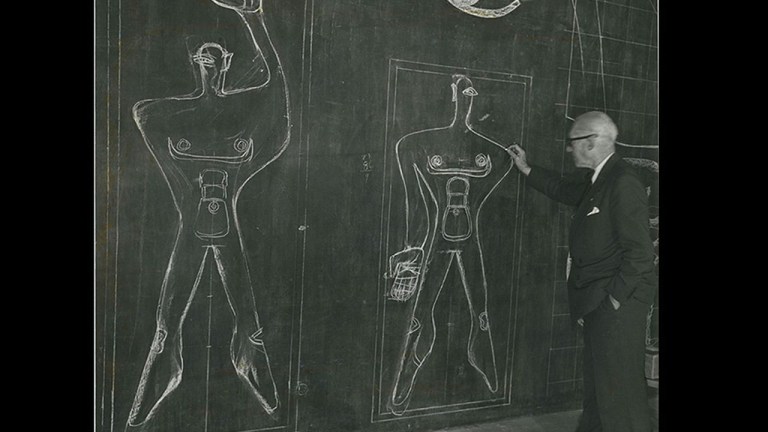
atelier-35-rue-de-sc3a8vres-paris-le-corbusier-et-ses-collaborateurs.jpeg

All of these shenanigans of secret knowledge, tacit and unspoken communication and preciousness are corrosive to developing an architectural culture that maximises design knowledge. The covens of design managerialism and secrecy, the power tripping of withheld project information, and the egotistical horrors of pathetic design ideas made more important by being locked in the head of the design architect. All of these attitudes make it very difficult to conduct research within the profession.

I am not really sure where this culture begins. Of course, the curricula and studio systems of the architecture schools as usual, can be blamed. Few subjects are devoted to leadership and organisational governance in architecture school curricula. No wonder the profession is struggling to maintain itself.

In these systems, without the right studio leadership, individual competition can be vain, petty and subject to the vagaries and whims of favouritism. We have all been in studios where we will never make the favoured circle. Design Leadership is not about simply reinforcing and replicating your own theoretical position or the way you were taught architecture. Nor is Design Leadership is not about positioning a design within systems of parochial politics in order to gain influence. It is not about designing in a way that positions you for a commission or a peer award.

To reiterate, Design Leadership is about maximising design knowledge in the most efficient, effective and brutal way possible. After all when the rubber hits the road and the project is besieged by clients, value managers, and contractors the design ideas need to survive the journey.

The continued glorification of the design genius, which I have written about elsewhere, only leads to a situation where the profession is riven by localised mystery cults. Each genius, whatever their stature, surrounded by acolytes along with initiation ceremonies, encouraged rivalries, different circles of access and knowledge. It all starts to sound like Trump’s White House. Better to be an outsider than in the cult. So here a four principles to creating a culture of Design Leadership in your practice.

  1. Make design processes visible

Design leaders have clear processes in place. These processes are visible, transparent and communicable. Design leaders understand design processes and how these processes work through team environments. Design Leadership requires generating design knowledge and ideas through clearly communicated actions and gestures. By doing this everyone in the team can pursue, develop and contribute to the design.

r1220202_15999276.jpg

  1. Don’t hide design knowledge.

Hiding design information only creates islands of territorial power. The role of Design Leadership is to constantly posit design knowledge into the public sphere. Of course this sphere may the realm of the project team or it may be the consultant team. from different groups or individuals within the organisation It is not about hiding things away. If design are ideas are hidden they are not fully tested and may then crumble at the first sign of value management.

  1. Make designing inclusive.

Design Leadership does not require the trappings of a cult. It does not exclude or set boundaries around who can be in and out of the team. A collaborative team open to a range of design views is better than a team subservient to a single design view. Effective design leaders mentor and foster their team members. They do this is in order to make individual team members better designers.

2009-12-10 22.42.08

  1. Create space for design.

Good design leaders are bale to create safe havens for the most extreme and seemingly kookiest of design ideas. This is because, Design Leadership requires teams that ask questions rather than teams that simply reiterate like-minded principles. Excellence in Design Leadership nurtures and fosters this questioning. Everyone should feel safe to ask the dumb questions in the design team.

  1. Creates more ideas than can be used.

This is the measure of great Design Leadership. Having a cauldron of ideas constantly generated and replenished as the project proceeds. Design Leadership means both generating and then managing design ideas as they proceed. Design Leadership means having the luxury to pick, choose and give life to the best of architectural design knowledge.

Architects need to change the way they approach Design Leadership and their own organisational structures. Architects need to more effectively manage their own pool of talent. What architect wants to sit in front of a computer second guessing what needs to be done? Worse still, is sitting in front of a computer knowing whatever you do is never going to be quite right, because you weren’t initiated into the favoured circle.

Now back after a brief Easter Break ! 


Advocacy not Awards: The awards categories you won’t see.

My local branch of the AIA had its awards jury presentations last weekend. I wanted to go and have a look at few categories. Sadly, an impending conference paper deadline prevented me from attending. I might go to the awards ceremony I am hoping they will get out the red carpet this year and then there might be a few protests like the one above at the Baftas.

But like all good awards punters I had a look at the form guide. It was ok as far as lists of architecture go. As someone reminded me during the week the culture of architectural practice in my city is vibrant and well developed with its own legacies, tribal distinctions and pecking orders. The stability of this pecking order never fails to amaze/annoy me. I remember when I went to the awards presentations one year after a significant absence and felt like I was returning to my old high school. I wondered, what has really changed in 20 years since I left architecture school. Same principal, same deputy principal, same prefects and house captain’s same acolytes and lackeys. Same old, same old, so called “rebels” and other people on the outer. Which was actually just about everyone else who wasn’t in the principals group. Everyone in their place, certainly not a lot of difference and inclusion, as Roy Grounds was reputed to say: “Melbourne is a rich smug city.” There is a downside to existing in a city with a strong practice culture.

I love this chart by Deb Verhoven mapping the awards in the Australian film industry. I am sure this the same in the architecture awards networks.

Even so despite my misgivings and raw cynicism, even though I couldn’t go to the presentations this year I had a look through the categories there is really a lot of very impressive architecture in each category. The small category for small and micro projects was a stand out.

Anyway the categories for the Australian National and Victorian awards go like this and both have pretty much the same structure: Public Architecture, Educational Architecture Residential Architecture – Houses (New), Residential Architecture – Houses (Alterations & Additions), Residential Architecture – Multiple Housing, Commercial Architecture, Heritage, Urban Design, Small Project Architecture, Sustainable Architecture, Enduring Architecture (What is this exactly?), International Architecture And of course that great anti Trump Tariff award: Category A1: Colorbond® Award for Steel Architecture.

Yada, Yada, Yada.

Raisbeck’s Form Guide

So after checking out the categories I set up my Ladbrokes account app on my phone, where you can bet on the wards, and decided to put my money on the following in the Victorian Architects for the Awards. So here is my quick guide to the firm.

In Small I like Brickface Austin Maynard Residential its kooky and small should be kooky. I am sucker for the cute brickwork.

In Residential Alts and Additions I like Templeton Architecture’s Merriwee. Those bricks are fantastic. So Yassss !! maybe I am a real sucker for the brickwork If architects cant do great brickwork who can? I wouldnt give any of my awards to Rob Mills because everytime I open the internet I am delivered a targeted ad for this firm. Mills should check his advertising algorithms.

In New Housing: Compound House, (although I like the Panopticon but maybe it’s just the name and the Foucault reference). In Public Architecture: I like the cop shop for Melbourne’s most disadvantaged outer suburb.

In education I was worried this category was going to be full of middle brow aluminium external panelled with sanitised teaching spaces. But I was relieved to see 18 Innovation Walk Revitalisation Project by Kosloff Architecture, Callum Morton and MAP (Monash Art Projects). Maybe these guys don’t deserve it because they have been such baddasses with form, but hey why not. In multi residential my pick is: Nightingale 1 by Breathe Architecture It would be criminal if this did not get the award. There rest of the category is train wreck that deserves a dissertation on it own about the corrupting influence of developers on architects.

So after placing a few bets, I am thinking all of these award categories don’t really do architects justice. There awards system in this country is too object focused. It’s remarkable that for the professional bodies to devote so much of their marketing efforts on the awards for architect design buildings.

Even Architeam has an award for unbuilt projects and an award entitled contribution. I think that is great idea.  I was judge for them in 2013 and they never asked me back. They have a slightly different system to the other professional body.  One jury to judge all the categories. That can be ok. The year I did it here were 3 or 4 of us. Last year there were seven on the jury and of course, it is said that, the egos came out and the project I was involved with as a client, I think, was shafted. I think the let’s be precious and not give out too many award’s brigade held sway. Architects need to give out more awards rather than less.

More is More and not Less

So it goes without saying architects need broader categories of awards if we are to successfully market the profession in the new millennia. So it would be great to give out awards each year for contributions to research, architectural education, public advocacy (the anti-Apple crew), or one for sustainable advocacy, or design leadership and of course business leadership, or maybe just leadership in the profession. How about an award for Parlour ? Or an award for architectural media? Or an award to someone who has done a lot to promote Melbourne Architecture to the world ( I am thinking of you know who)? By this strategy you might even get some people from outside of the profession of architecture to participate in the judging.

Or maybe, you could also do critical negative awards. I am thinking best hot-shot firm from overseas who gets the commission, fees, publicity and then leaves town. Leaving the town looking, and living with a dog of a public building (will this be Apple?). In parochial parlance this award could be called the Wombat award. Or maybe, a Weinstein like award for the best octopus like local star architect or director and then you can have awards for the most exploited student, or recent graduate, or most underpaid mid-career female architect. I won’t go on.

Is the profession so moribund and stuck in its parochial awards culture that it can’t get out of the rut of only thinking about buildings? There are a lot of architect’s out there who aren’t architect’s in the narrow and traditional sense and their contributions should be recognised. Plus, we need to recognise both architects and firms at all stages of their careers.

Maybe if we had more categories and more vision, I would stop thinking, in my more cynical moments, that the awards systems is just replicating a favoured circle and narrow canon of bourgeois, liveable and sustainable slop and that only the chosen few will ever get the prizes for.

The featured image above was taken by Hannah Mckay of Reuters.


TESTOSTERONE FUELLED TECHNO-OPTIMISM: 2018 Global Architectural Research Survey Part 2.

This blog follows on from the previous blog discussing the responses to my rapid survey of research attitudes and structures in architectural practices. I have sprinkled a few thought provoking quotes from survey respondents throughout.

As a new practice with limited mentor-type assistance research consumes a massive amount of time which results in inefficiency and financial stress. It is nevertheless a constant element that underpins all projects through all phases. The assumption is that through research we develop our knowledge and the ability to recall and apply it in order to achieve better result and with greater efficiency.

Research Ad hocism

Around 57% of responding architects have no, or only partial, systems within their practices to capture research knowledge. Yet as noted in the previous blog on this many architects still claim that they are doing research in informal ways as they design projects.

Chart_Q18_180322

If all this ad hocism is the case then it is reasonable to ask: what sort of research are architects currently pursuing in their wonderfully ad hoc, informal, doing the project-at-hand and organic ways? The survey asked a two questions about this. The first question asked: Does your firm conduct research into any of the following established research areas ? The results are below:

Chart_Q12_180322

Perhaps the survey question could have been sharper. But look at the chart: Lots are doing sustainability research (surprise, surprise), lots are into Urban Design (I am old enough to remember when no-one did this) and then different variants of health, housing and education crop up. Health and ageing looks like its a bit low. Nonetheless, my innate trained at RMIT cynicism tells me its a list of the usual suspects.

What is probably more interesting, in the above somewhat prosaic list of responses, are the outliers (the other responses) and these were things like: indigenous cultural awareness, forensic architecture, animal welfare,  pre-fab, modular, briefing methodologies, co-living, design advocacy and dispute resolution.

The list certainly reflects broader economic realities. Being the areas where clients have the money and the architects are following. As they say, follow the money.  So this may simply reflect broader economic realities.  But is this really a list of research areas that are going to help architects enhance their agency in the future? If everyone is doing the same research how can an individual firm differentiate itself?

I’ve noticed many practices in the UK do formally engage in meaningful research and employ full time research staff to organise and catalogue information. Not only does it help to strengthen the practices body of work, but also their image as a practice that engages with contemporary issues, this consequently gives them a competitive edge when competing to win much sought after public projects and roles involving design advisory for government bodies

One strategy for firms is to set up structures, to research the things around what the practice is currently doing but also develop a few research projects that lie outside of the firms expertise; research that might create knowledge that will differentiate the practice.

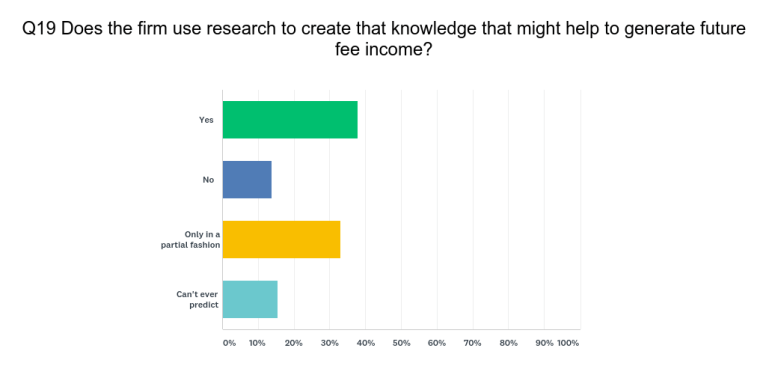
Chart_Q19_180322

The research carried out by the practice is underutilized, and should be benefitting the practice and the industry in general.

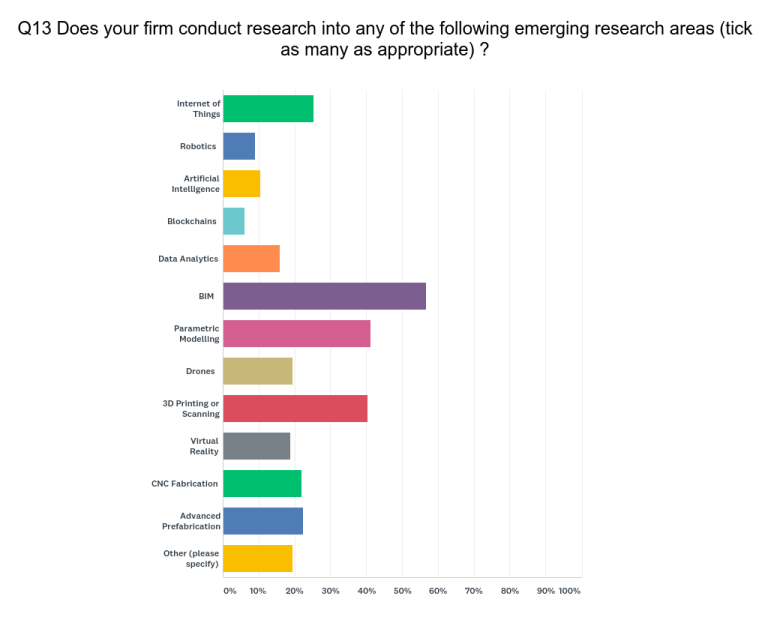
Which leads us to the next chart, the second question about what architects do, which was intended to be a little more future orientated:

Chart_Q13_180322

Looking at this one, I am beginning to wonder, again with my cynical hat on, if anything outside of the techno-optimistic agenda might be too hard for architects. But all of the other usual and overtly macho-boyo technical suspects were there including: BIM, Parametric Modelling, Drones & 3D Printing or Scanning (stab me in the eye with a biro),  Virtual Reality, CNC Fabrication and Advanced Prefabrication. Not a word about the organisational or social sciences. The what?

I was somewhat shocked to see that a huge slab of architects listed BIM Modelling and Parametric modelling as the big ticket future research items. Maybe not so suprising. Surely, any future research in these areas is more about incremental rather than radical innovations. Perhaps architects are now lost without a kind of technical agenda for guidance.

But, as someone said to me if you are going to research this stuff don’t dabble in it. Either do it as pure research or do it as serious applied research, at the other end of the chain, which will give you some kind of competitive advantage. But don’t dabble.

Little thought is given to incentivising staff to carry out research. For more could be achieved if there were incentives for staff. Staff are assumed to be interested in research but many capable members of staff feel they are too busy to do it especially when they do not see a return.

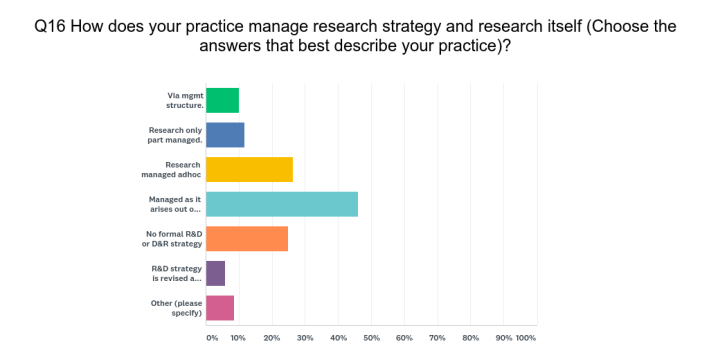
Heres another chart looking at research governance:

Chart_Q16_180322

While there is a knowledge bank from previous successful and never built projects that can be accessed by anyone in the practice, it is a tool that it is rarely used. There is this idea among architects that there is always the need to reinvent the wheel, even when sometimes the answer is within previous research and projects undertaken by the practice.

Ladbrokes 

For my money I am betting with my Ladbrokes account on research into data analytics and social media. This is because I think architects can profitably bring their creativity, spatial thinking skills and ability to see across disciplines fields like data analytics.  Maybe those qualities are a bit old school. But, I am over the boys-with-toys technologies in architecture. And what really worries me is all that testosterone fuelled techno-optimism has eroded our ability to think clearly.

Surviving the Design Studio: 4 Ways to make sure you become a BIM monkey.

Feature Image: ‘Concrete[I]Land’ (Photograph courtesy of New_territories with Ann-Arbor)

Getting older in architecture sucks. Along with all the other forms of discrimination, profiling, appalling labour practices and lack of diversity once you get to certain age you become invisible. Worse still you become really really invisible to those architects above you adept at exploiting the talent. Much easier to exploit the interns and the recent graduates than the old hands.

A friend of mine, an architect with about 25 years of experience working with the very best architects in town, as well as the worst, bemoaned the early career architectural graduates she had to work with. In a nutshell she said there was

“sometimes a staggering gulf between “confidence level and knowledge-experience-skill.”

Another friend, who came through the same cruel archi-school regime I also suffered under, wondered out loud:

“why would you go to architecture school just to learn BIM and not much else?”

Someone else I know in NYC, was aghast in a design meeting where one early career architect proclaimed:

  “I’ve done some research and Brooklyn has a lot of old buildings with arches so we should do a building with arches.”

images

Someone else said to me:

Whenever I go to those large practices full of young architects on computers don’t they realise in a few years all these computers will be gone? What will they do then?

This of course is not to stereotype a whole generation of early career architects as dumbed down, dullards who think doing BIM is what architecture is and thus have no need for history and theory. Many of this generation are going to be great architects and help to transform the profession. Perhaps even save the profession from itself.

But there are nonetheless a few gentle warnings in the above litanies of architectural senility and cynicism. So, if you do want to be BIM monkey this is what you need to do:

  1. Actually think that BIM is Architecture.

Of course BIM is just a bundle of software programs and processes. I won’t bore you with the definitions. But in this is not the same as architecture. You will only be able to spend so much of your life doing the CAD or BIM monkey seated jigs. In fact jigging on the computer jigs has a limited life-span as documentation becomes increasingly more commodified.

  1. Know in your heart that Parametric Modelling makes the best architecture.

Listen to and channel Schumakkker.

IMG_4363

schumakkers ear

The Parametric types like to push the idea that every Parametric model is a unique and customised product or object. Our digital feeds have since the early 2000s been swamped  with completely dysfunctional and useless Parametric “art” objects; conceptual objects that claim to increase our haptic awareness. Hit me up with a another geomorphic iceberg skeletor thing. Another adornment or folly to cleanse our souls and “transport” us to a natural environment. At least Francois Roche is brave enough to explore the scatological and organic forms in a way that isn’t just pap.

download

‘Robotic Processes’ (Photograph courtesy of New_territories

I am not sure Parametric Design has really moved on in the last 15 years. It certainly hasn’t engaged with politics nor does it seem to have a sense of its own irony.

  1. Forget about wild and crazy design thinking.

Wild and crazy Design Thinking is central to architecture. But if you want to be a great BIM Monkey just go for that linear problem solving, get it done one quickly, jam that round problem into square hole type of thinking. Get excited about the efficiency of the CNC code. Love that little laser cut model that looks like a plywood skeleton.

If you are at architecture school just to learn BIM and hot-shot oversaturated realistic rendering then maybe you are better off somewhere else. I really don’t want you in the profession. You are only hastening the commodification of architecture as a domain of knowledge.

No wonder the 30,00 strong REVIT group on Linked-In told me to only post “relevant” pieces to their group page.

  1. Love and consume the tasteful.

Yep, just eat up the tasteful. Wear the clothes and subscribe to the mags. Follow the Insta influencers. The best way to become a BIM jockey is to keep thinking the best architects are the ones that the real estate marketers, middle brow property developers and the lifestyle magazine editors love. Who can blame architects for getting in with this crowd?

The above people are obviously the gatekeepers who see architecture as a narrow canon of taste and fashionista profiling. Best to stay on side with them. Ignore anyone different.

Abandoning theory 

Architecture has a complex social politics and history. Abandoning theory in favour of fashionable consumption is your choice. But it will just leave you ceaselessly jigging in the BIM jig money chair.

I made the worst models and did the worst drawings at architecture school. But I did learn how to think and that is what is most important. So my advice is, from an older invisible architect verging on senility, if you want to have an enduring architectural career see if you can get through the whole of architecture school without learning BIM. Otherwise, you will end up jigging with the software jigs for the rest of your life.

You be a robot architect and then the real robots will take over and you will be out of a job. If don’t learn how to think at architecture school this will be your fate.

Keeping it Real: Melbourne has the best Architectural Practices in the World

One of the challenges of teaching architectural practice in the modern era is to architecture engage students with real practice. Complicating this is the fact that the face to face lecture is increasingly a thing of the past. More of often this is done in the class room where the Practice Lecturer attempts to convince and persuade the students that the lecturer is the font of all knowledge and experience. This is how I started of teaching the subject. There face to face lectures were full of wonderful war stories, solo sea shanty’s, and other various tales about my life in practice working for architects, dealing with builders and also working for myself. I used to bring in specialist lecturers as we trudged our way through the syllabus. Of course as time went on, over a number of years, less and less students turned up to my face to face lectures. No one wanted to hear about my life and times as a practitioner. Why would they ?

img_4902-e1520928157196.jpg

The classes also become much bigger and bigger (in fact this year I have 320 students).  Neo-university regimes, students who want subject content rather than discipline based learning, the rise of social media all means that these days architecture students want their learning delivered differently. And I mean delivered. Many students, hemmed in by other work and financial commitments, just want to come to the class, quickly figure out what they need to know, what boxes they need to tick and what they need to do to pass.

So long for the long languid apprenticeship style of learning how to be an architect.

The above confluence of factors has led to the situation where architecture students are increasingly removed from the narratives of architectural studio experience. This year, as in past years, we are employing a fantastic group of tutors who are with a lot of experience.

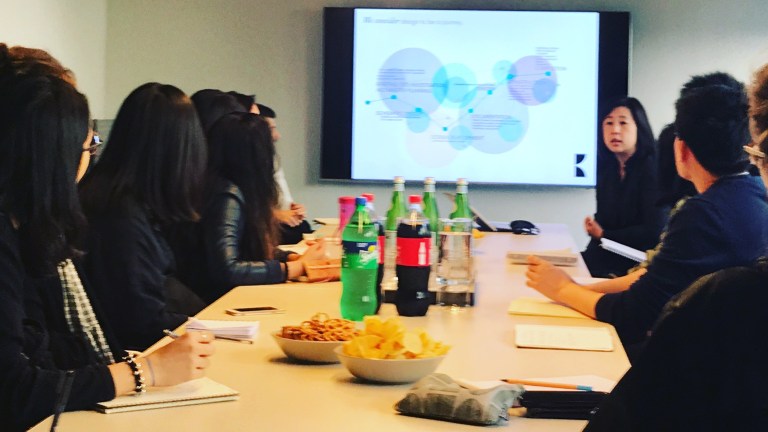
This year in an effort to keep it real and bridge the gap we have organised the students to visit actual practices in and across my small city on the outer edges of the architectural galaxy. As a result, we have 20 or so practices who were willing to be involved and I would like to thank everyone of them. It was great to have such a generous response from practices in Melbourne ! The practices involved are as follows:

img_4897.jpg

Hassell

Woods Bagot

Architect Hewson

Atelier Red+Black

Six Degrees

ARM

Emma Templeton

K2LD Architects and Interiors

BKK Architects

Williams Boag

NAAU Studio

Rebecca Naughtin Architect

MAArchitects

DCM

Architectus

Grant Amon Architects

Wowowa

Bates Smart

Kennedy Nolan

Lyonsarch

BY Projects Architecture

ClarkeHopkinsClarke

John Wardle Architects

BAU

img_4899.jpg

So I would like to thank all the practices who generously offered their time and were involved in this effort. The response from practice was overwhelming and I will try to organise more events like this. Melbourne really does have some of the best Architectural Practices in the World.

A special thanks to our Senior Piret Veeroja for facilitating this as well as a shout out to all our tutors this year Sonia Sarangi, Emma Templeton, Rob Polglase (who also facilitated a few practices), David Walker, Aurelia Gachet and Camilla Tierney of Bates Smart, Norman Day and David Walker. As well as, Nurul Sedek and Meng Hau Siow of BY Architecture. Not too forget Rowan Brown. You can follow the subject at Instagram @msdarchiprac. I would also like to thank K2LD architects for their hospitality towards me.  


Research-In-Practice: 2018 Global Architectural Research Survey Part 1

The Surviving the Design Studio: 2018 Global Architectural Research Survey is in. Thank you so much to everyone, to those architects, who responded. I was working off a few different contact databases.  Next time I do this research survey I will more effectively target respondents and make the definitions and the questions more precise. I have interspersed the survey with quotes from the respondents.

Architects are slowly starting to wake up to the fact that they need to do research to in order to stay ahead of their competitors whoever those competitors might be.

I work in a practice three days a week that is run by one principal and 3-4 staff. He is interested only in the projects he is working on and would consider research a waste if time and resources.

With the rise of the Design as Research movement in the early to mid 2000s architects began to question and argue about what constitutes research. For the most part this project, or push, was a response to the introduction of various research metrics and research evaluation exercises in universities in Australia, the UK and Europe. This push also coincided with the rise of parametric design and a renewed interest in technology in the discipline.

Many firms do not provide budget allocations for research or post occupancy studies and any research allocation can be difficult to get and has to be in relation to a particular project and only as a small time/money allocation. Therefore most research that I do is in my own time and often after hours.

But what might have been missed in all of this was the idea of industry development in relation to Research-In-Practice. Even in the universities we still don’t know what Design as Research is. Even that old Etonian and architect Jeremy Till and now head honcho at Central St Martins  doesn’t seem to have quite got his head around it in this piece on architectural research.  He seems to have boiled architectural research down to “three stages” and then provides us with the diagram devised by Alejandro Zaera-Polo & Guillermo Fernandez Abascal as an example of research “into architectural processes.”

The diagram looks like an updated version of a Charles Jencksy diagram that only reinforces architecture as a narrow canon of profiling and privilege. Yes, that’s a cheap shot at Jeremy and Alejandro and Guillermo and yes, I need to look at that diagram in detail. But it looks like hocus pocus to me.

So read on: The Surviving the Design Studio: 2018 Global Architectural Research Survey is in. 

Response rate

The response rate from the database I was working off was around 13%. Respondents came from all over the world and 47% were either partners or directors. 63% were from Australia and so the survey gives a pretty good idea of what is happening in Australia. The next biggest block was 10% from the UK and  8% from the Americas and about 8% came from Asia. 27% of practices had more than 50 people and 21% had from 11 to 50 people, and the rest 52 % had less than 10 people.

Most practices do not have a formal R&D program established

Chart_Q6_180309

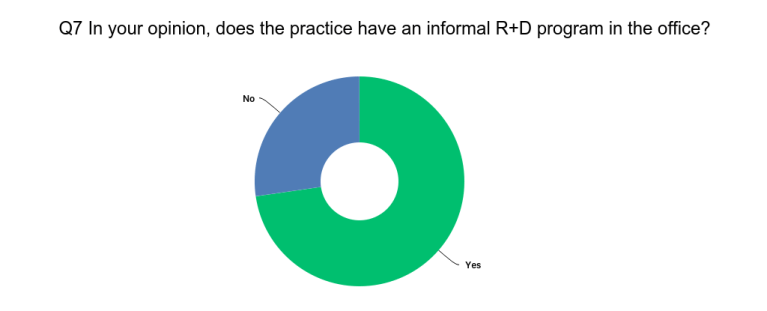
Yet most Practices claim to have an informal R&D program in the office.

Chart_Q7_180309

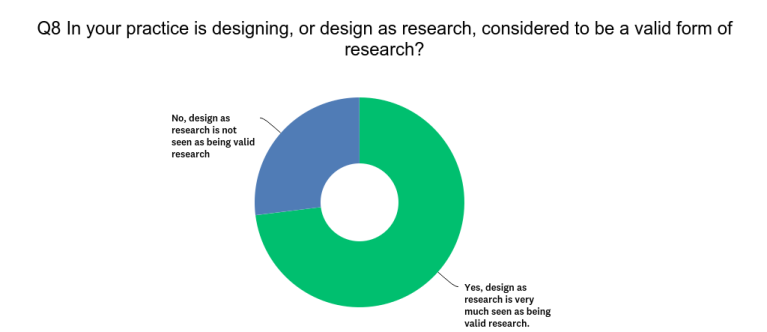
Everyone thinks Design as Research is a valid form of research.

Chart_Q8_180309 (1)

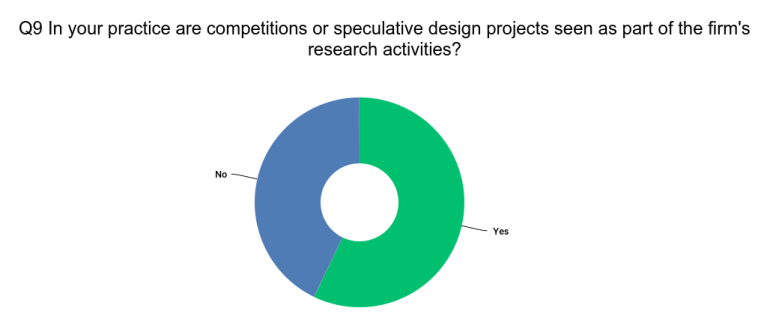
But not all practices think competitions or speculative design projects are part of a firms research activities.

Chart_Q9_180309

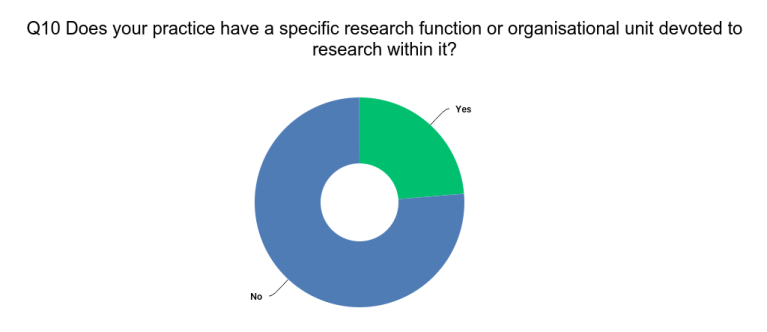
The majority of practices do not have a research function.

Chart_Q10_180309

Design as Research ?

Architects in practice still think design is research but then, by and large, they have done little, for whatever reason to foster research or build a formal infrastructure around research. Most architects think they are researching when they design stuff. This may be why most architects think don’t have a formal research program, or research function in the office, and yet claim that they are still doing research.

In practice, the Design as Research proponents have failed to help practices, and the profession at large, to build the research infrastructure, methodologies and discourse required to help  architectural firms.

In academia, the Design as Research proponents have failed to convince those who don’t think design as research of this merits. Yet some of these same proponents have simultaneously supported themselves in the university system via the mantra of Design as Research.

Walking the Talk

I am an adherent of the Design as Research project. But the primary aim of this project,  to recognise design as a research activity, has been weakened by a lack of rigour to say the least.

Those who are sceptical about Design as Research cannot be blamed for that scepticism. If the knowledge produced through Design as Research cannot be verified, tested and positioned as new knowledge why wouldn’t you be sceptical?

Those architectural academics (many of whom, have aligned the project with the new delivery technologies) who have pursued the Design as Research have done little for its take up in Practice. Some academics just mouth of about it. It is little wonder that sceptics of the concept have not been swayed. Embedding a researcher into a practice and getting them to do things is not necessarily going to produce good research. Getting notable architects to reflect on their “body of work” is not necessarily going to produce new research knowledge that will help to develop architecture as a discipline.

Research-In-Practice

I see more hope for research in the practices themselves; I think even Jeremy the Etonian thinks this as well. Architects need to change their practice models if they are to survive. Its no good to just say we do design and that is research. That doesn’t just mean giving someone a job or a role as the research person in the office. It means changing the way design knowledge is created, conceptualised, captured and distributed in the office. That would require a Knowledge Management approach. But as well know many offices struggle with even the most basic and simplistic notions of management. Yes, different offices will require different models, and yes, smaller offices and sole practitioners obviously need a different research model as compared to a larger firms.

Finally, as one respondent noted:

There is a strong trend within the architectural community to claim what is in reality ‘work’ as ‘research’ for what are essentially marketing purposes. This is especially true with Design led Research which seems to rarely meet any sort of broadly accepted or quantifiable bar set by the broader research community.

 Design led research is an excellent way for practices to contribute to the profession and broader community but a better definition and clearer bar needs to be established for it to gain traction or credibility within the research and broader communities. Sadly architecture doesn’t have a great track record in this area and the current systematic abuse of the term Design led Research does little to improve the standing of the profession.

 If we can’t get more rigorous we will never take on the authority we need to build better cities.


Architects are living in La-La-Land: Project tyranny and network fantasies 

Traditional logic suggests that architects are focused on project networks rather than projects. But architects we now are witness to a rise of the project network organisation. This new form of organisation has arisen as a result of project complexity requiring greater degrees of specialist knowledge. Such organisations are seen as being the best way in which complex tasks can be achieved by bringing together heterogeneous and diverse skills and knowledge. Project networks are argued to be more flexible and creative.

As soon as project outcomes have been achieved the knowledge network is dismantled and reconfigured for the next project. According to this body of theory projects now embody “temporary systems” and that these systems are “constituted by multiple individual or organisational actors” (see: Whitley, 2006; Manning and Sydow, 2011).

In this context the challenge for architects, is to adapt in a competitive global system that is increasingly flexible and indeterminate. This is a system where the project itself has, in a manner of speaking, disappeared. As a result, architects now face competition from project delivery actors who are better, because of their agility, at project control and management than architects ever were.

Project tyranny and the genius

img_4363.jpg

ear of an architectural genius 

It is reasonable to ask in this context, if architectural firms are sufficiently flexible, both internally and in their external facing guises, to adapt to the demise of the project. Certainly, architects focus on projects but increasingly utilises and connect to various knowledge networks outside of the firm. This suggests the line between project based organisations and network organisations is in theory at least increasingly blurred. For architects there is still a tension between being project-centric and the idea that projects are themselves temporary systems.

In other research, focused on consulting and knowledge based firms, it is contended that: projects are exclusively customer or client centric, leading to a kind of “project tyranny.” This tyranny does not allow for or easily accept competing, flexible or organisational principles and dynamics.

All of which struck a chord with me because architects seem dangerously focused on the designed project with a capital P and this approach this is linked to the inflexible postures of the creative designer. In combination project centricity with the current culture of design leads to inflexible, archaic work and discriminatory work practices. The tyranny of client centric projects alongside inflexible organisational hierarchies and haphazard infrastructure reigns supreme within many firms.

Network fantasies

64_pot_grf1_cha_58.jpg

Potteries Thinkbelt Cedric Price 

But for architects there is another danger: the allure of the internet as a distributed technologies. Architects have been obsessed with networks for a long long time. There is a superficial resemblance between the project networks that architects seek to build and the internet technologies that facilitate these networks. In the strategic thinking of some architects these two different types of networks are conflated. This conflation is exacerbated by the optimistic and utopian rhetoric’s that surround the ongoing development of technology in architecture. Every architecture school in Australia has robots, we are getting workshops technologies and software shoved down our throats at every turn. Yet very little of any architectural school’s curricula is devoted to how to manage these technologies. As I was reminded in a recent ACA webinar architects aren’t even taught how to manage projects. Design them: Yes. Manage them: No.

download

Cedric Price and the windscreen wiper goggles 

For architects technology networks are seen as a realm of possibility rather than a realm that threatens to limit the agency and range of architects. Emerging technologies may be the architects worst enemy. There emerging bunch of technologies (I won’t name the usual suspects here) are arguably broadening the size of our professional service markets, market geographies and worst of all reducing differences amongst competitors and increasing the proliferation of substitute services. Oh, and I forgot to mention, the internet allows suppliers of knowledge to reach end users more directly. Yet architecture students are frigging around in every studio workshop across the globe with little bits of laser cut timber.

22711055_144479806170606_782134886294093824_n.jpg

Collaborative Leadership

On the one hand, architects may survive in a scenario where projects are organised around a temporary teams, enabled by technology, that is both mobile and fluid as it connects and reconnects to different networks. Arguably, it is the architects, organised around teams with good studio based leadership, leadership that is collaborative and inclusive, rather than the old creative design genius style, design leadership needs to be about gathering, configuring and integrating design knowledge, from within and across networks, in order to design and produce through temporary project systems. Not just stamping your ego and whims on a project.

La-la land

In the future survival and competitive advantage will go to those architects, who cling to the notion of the designed project but also recognise the indeterminacy of both projects and networks. As well as this architectural survivors will reject, the fallacies of technology, and its associated hyperbole, and opt for models of collaborative leadership. Anyone else is living in La-la Land

what-nasa-does-when-an-astronaut-dies-in-space-05.jpg

It has been a hectic week: Architectural Practice at MSD has started up, I have discovered WeChat, my son has started his final year of school, and we have been busy organising our Practice Night for the subject on the 13th of March. Wow !!! we have about 24 practices across Melbourne involved. Thank you so much to those firms who have agreed to participate. It will be quite a night, especially on Social Media. Not only that but the rescheduled Faculty Christmas party is this coming Friday (lets hope I survive it).