New Paths of Architectural Practice: Not everyone is going to be an architect with a capital A.

There has been a lot of chat lately about new models of practice. Increasingly, the scavengers and myriad tribes of architects that exist find it difficult to make their practices profitable in the face of intense fee competition and, what some have called, the economics of austerity. I have touched on alternative modes of practice in a few other blogs but I thought I would say a bit more.

No Silver Bullet

Foremostly, I am worried that practitioners think that there is a silver bullet or a simple solution to this issue. That we can wave a magic wand over the structure of their practices and it will all be better. I am worried that practitioners think that if only they had restructured their practice in a different way in the first place things would be easier. Yet, the legal and corporate frameworks for practice are normally quite limited within, and across different countries. There is no one way or legal “switch” that a practitioner can switch on or off if a practice is not profitable or not seeming to get anywhere. Changing the legal or financial structures may not change things. If you are not making money you are not making money.

The traditional models of sole practitioner, partnership or even company model appear to limit what architects can do. Some of the mega-firms, or Transformer firms, as I have denoted them elsewhere, seem more successful. They appear to manage ok, by virtue of being extremely large and having integrated service chains that provide a potential client anything; let’s not think too much about how these large firms might manage their taxation affairs.

Critical Regionalism

For many smaller scavenger and tribal practices there is still the dream of criticality at a local level. Of doing great jobs that people love in your own city, street or neighbourhood. Thinking about this reminded me that in the early 80s Kenneth Frampton argued for a new architectural culture based on critical regionalism. Frampton advocated an architectural culture and discourse that was resistant to what he saw as processes of universalization. Frampton argued that optimising technologies had delimited the ability of architects to create significant urban form. For Frampton, the work of critical regionalism a practice focused on, and grounded in local traditions and inflections, was intended in Frampton’s words to “mediate the impact of universal civilisation.

I think that much of Frampton’s dream has come to imbue much of what we value in Architectural Practice and design. The Pritzker prizes seem to go to regionally inspired and grounded architectural auteurs. In my country a lot has been written about the two main city based “schools” or traditions of work the Sydney School and the Melbourne School. But, I worry that as architects we have been boxed in and swamped by global capital and technologies while we clong to models of practice are focused on the auteur. I think the the dream of critical regionalism is something that perhaps masks the real situation: The continuing commodification of architetcural knowledge.

Exploring new models of practice.

A few years ago, I got my architectural practice students to do business plans for Social Enterprises. In other words, for enterprises that had a social purpose or profit. In my naivety I thought they would love doing it. The idea was to encourage the students to think about how they would use their architectural skills and knowledge to determine the nature of a new social enterprise. It was a way to hopefully get the post-graduate Master’s students to think, yes actually think, about different forms and models of practice.

The better social enterprise plans were encouraging.  A number of plans aimed to address gender discrimination. One plan looked at commercializing feminine hygiene products in order to get homeless woman off the streets. Another group targeted the architecture and construction workforce by supplying sustainable personal protective equipment and then investing the profits to advance gender equality in the design and construction workforce. A few projects looked at issues around waste and recycling. For example, one project looked at recovering discarded food and food waste. One of the better social enterprise plans produced by the students was based on putting beehives into social housing estates and then harvesting, marketing and the selling the honey. Thus, employing some of the residents in the estates.

Thinking outside of the box. 

But by and large most of the students hated the exercise, my student experience scores that semester tanked, and my academic masters wondered “WTF” I was doing. A practitioner associated with the school asked, “why are you doing business plans at all?” I think the social enterprise plan about the Bees was the one that really drove everyone nuts. Of course, it didn’t really help that I said in the Assignment instructions that: “There are no prescriptions for this assignment. On the basis of the business plan, you will be assessed as to how well your social enterprise will realistically establish itself, survive, and grow.”

So much for getting the students to think out side of the box and deal with high levels of ambiguity.  This year we went back to business plans for the straight-down-the-line architectural practices.

Abandoning the old ways

If we are to talk about different forms of practice then I think architects really need to abandon their pre-conceived notions of what practice is. There is no magic solution. We need to use our learned creativity and design thinking skills to embrace new ways of doing business. Not everyone is going to be an architect with a capital A. We need more beekeeping ideas.

A recent exhibition at the CCA, and now travelling, suggests that historically alternative practice doesn’t always have to centre on the single genius.  At any point in time architects have always sought to explore new models of practice and escape the constraints that beset them.

Thankfully, there have been those in recent years who have broken out of the old moulds of architectural practice. Collective and collaborative action is a common theme on my short list. Notably, and not in any order, the following spring to mind:

Assemble, Parlour, Forensic Architecture, ONOFF, Sibling, R&Sie and Group Toma.

These  examples suggest, a wider range of practice, as well as the different ways, that architects might now practice. I am sure there are also other examples and I will add to this list over time. Contact me if you know of anyone. But the final upshot is this: Architects really need to think about these new paths. Because, architects can’t be sure that the old ways are going to work for much longer.

Q: Why do Architects need to be better communicators? A: Because everyone is ripping us Architects off.

A few years back I got together with another architect who had also been to business school. We had the idea of looking at how we might develop a course about that would help corporate strategists and line managers understand the nuances, ambiguities and worth of design thinking, innovation ecosystems, prototyping, creative destruction, design methodologies, iterative generation, developing idea portfolios and managing creative teams. We had even gone some way to developing a syllabus.

We trucked it around to the architecture schools. No one really cared. The local business schools were more interested but wanted to see architecture schools buy-in. The architecture schools did not really get it. Oddly enough the only people who seemed half interested were the Edward De Bono types.

Of course, these sorts of courses have now sprung up in quite a few places. But certainly not in architecture schools. Nor, have they emanated from anywhere near the domain of architecture. There are now design thinking courses and more  courses, and consultancies all over. In fact everywhere. Except in architecture. Maybe because of these developments architects are slowly coming to the realisation that they have a unique way of viewing the world and this is valuable and can be of value to others. But coming to this realisation now could be too late.

Now all of this is not to say, or exalt our own egos, by saying that we were ahead of our time. But I did start to think about this failed project when I came across a recent article by Barbara Bryson at Design Intelligence entitled, the Future of Architects: Extinction or Irrelevance. This article appears to have gone viral across the usual social media platforms and it is worth quoting and analysis an excerpt:

Firstly, I strongly agree with her argument that:

Design thinking, the empathetic problem-solving methodology, grew, in part, out of our architectural problem-solving design methodologies. Education innovators are also taking lessons from architecture schools. Active learning, making spaces, and student engagement all have roots in the studio process.

But it’s probably not just in the education that our design expertise is being ripped off by others. Everyone is grabbing our best stuff. Maybe this is why, the next sentence struck a chord with me:

The rest of the world is learning from our processes, grabbing our best material, and moving on to success and relevance.

She then concludes that:

Architects, on the other hand, are impossibly stagnant in process and perspective, incredibly vulnerable to irrelevance and even extinction. I believe we have been on this road for decades, and we need to make some profound changes if we as architects are to have an impact on the built environment in the future and if we wish to be relevant.

Her argument is that architects have become too narrow in defending the territory of design. It’s still a hard task to convince architects that we need to expand our territory and domain of knowledge. Trying to convince other architects that a couple of architects with MBAs could teach the strategic line managers something was mostly greeted with blank looks and polite silence. Yet, Architects are better at design and know more about it than engineers, accountants, lawyers, and dare I say it, even software developers.

But, have architects really been that good at communicating why design thinking is important and how it may apply to other fields of knowledge? Have we really been able to develop our own research methodologies and methods in order to stake expanding territories of knowledge rather than shrinking ones? Are we really open to strategic collaboration and using our design intelligence to expand what we can do; and what we need to do in cities and urban settlements?

Unless architects move out of a defensive mode to a more generative and expansive domain in regards to our traditions of design thinking, it is possible that we will become irrelevant. Spitting the dummy, and having apoplexy every time: we perceive our design territories becoming somehow “impure”;  or when we argue that simply designing something  is somehow design research, without understanding what the contribution to architectural knowledge is; or we cling to an alpha-male and pedigreed star system, a star system that rewards the biggest egos; or worse still, the biggest spinmeisters; or we silently support a non-inclusive career path system; or an intern and work culture of chronic underpayment; or an industry association research infrastructure that is non-existent; or our unthinking love of new and emerging technologies. Any wonder we get cut out of so much stuff.

Don’t get me wrong I love architects and wouldn’t be in any other profession. But, we need to grow up as a profession and have a mature discourse. Otherwise, we are heading down the gurgler.

As one of my connections in my social media feed said: Barbara Bryson has “nailed it.” And you can read her full blog here.


This is The End: Australian Architecture’s end game.

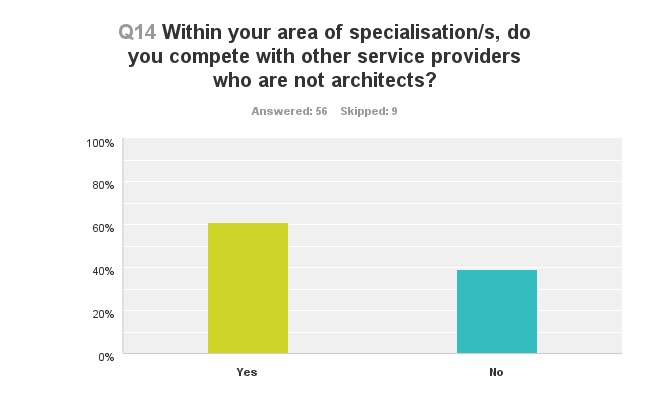
Like Martin Sheen in the above image most architects in Australia are barely surviving. Their heads are just barely above water. Like the Doors song “The End” one must question if the profession is heading down the gurgler as I noted in a previous blog. For those of you reading this in larger practices with lots of awards and institutional work or from the comfort of the large multi-disciplinary practices or consultancies spare a thought for the noble and small architectural firm. The tribal firm, protecting its own local territory and connecting to community, and yet struggling to survive. These firms exist in a highly competitive climate; most do housing , competing with every other wackadoodle price cutting, project manager, builder or huckster, and most are struggling to survive.

Tipping point. 

Without new industry wide strategies and approaches aligned with effective industry development the long term survival of these firms is not sustainable.  We are possibly about to reach a tipping point as baby boomer firm directors retire leading to even less critical mass in the profession. A tipping point and mass extinction.

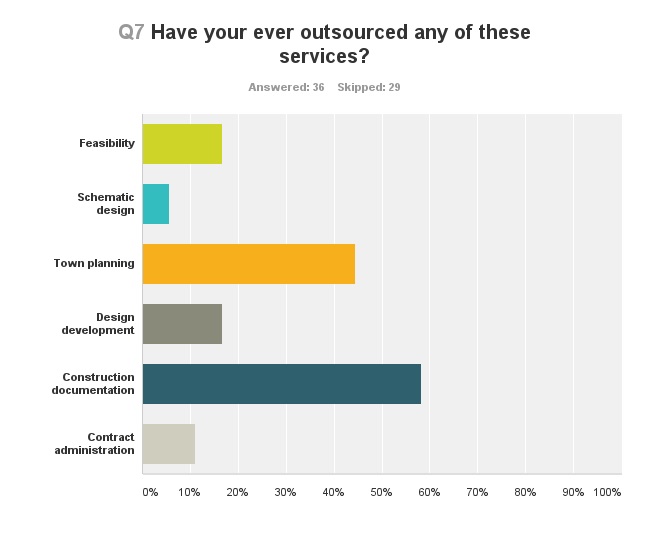
Chart_Q7_170406Chart 1: Outsourcing is widespread 

Technology and Disaggregation

A few quotes from the architects who responded to our recent surveys will suffice:

“We see that conventional Architectural Services are not going to be sustainable in the future and are looking at other services and models of practice to survive.”

and:

“Specialist Services, sadly, are a precursor to the the shame of the an industry being eroded by the increasingly acceptable practice of piecemeal delivery”

and this doosey from a practitioner working in the housing market:

That market is highly competitive and the fees were not sustainable and the liability was enormous. The role and respect for architects in those areas has dramatically reduced over the last 15 to 20 years.

In the practice class at MSD this week we had a Q&A panel on documentation. A practitioner who runs a documentation outsourcing company came and spoke. He is at the cutting edge of disaggregated services. He fills the gap for architects who can’t document or administer contracts. Some of the work of this practice is outsourced to documentation factories in South-East Asia. Increasingly technologies such as BIM are driving the commodification of architectural services. Design Development is almost non-existent these days. Ever tried explaining to a client what DD is? 

Chart_Q14_170406Chart 2: Competition is Intense 

Strategy and business plan education

Architectural education at large, alongside the accreditation standards, basically doesn’t give a fuck about anything outside of the box ticking. By this I mean any curriculum or syllabus, that might suggest that architects are more than just a profession of digital building technicians; more than a profession plying commoditized knowledge and processes. The univerisites simply want fee revenue, customer satisfaction and graduate employment outcomes. All of which conspires to corrode our discipline of architecture. Worse still, our own accreditation standards have been built around activities that, are not about analysis, entrepreneurship, strategic thinking or innovation but are about simply “doing it.” Doing the old SD, DD, CD, CA dance is what it’s all about.  Thank god those national competency standards still at least cover a knowledge of history and theory. It won’t be long before the university’s replace those aspects of our architectural education with CNC fabrication subjects. 

Business planning or strategy specifically tailored to architecture students is scant. Much easier to get the commerce faculty to give them a dose of generic marketing and branding. In response to our survey questions it is obvious many architects do not have business plans and I suspect this is because they are just struggling to get the work at hand done.

Chart_Q6_biz-plan_170406 (1)

                      Chart 3: Too few business plans 

Demographics and Diversity.

Yes, we still need more data and research into the demographics and underlying industry diversity. But the problem here I think is that architects think they are already diverse enough when they clearly are not. This is still a white Anglo-Celtic male dominated profession. This has hampered the profession at large from rejuvenating itself from within. It may be the efforts to rejuvenate the profession by correcting its misalignments with gender, race and class may now be too late.

Check out this great video and then think about the profession you know.

Research 

The architectural profession in Australia has had no research infrastructure for some time. As a result, architects have little knowledge about their own industry structure. Profitability, what segments of the market they dominate, various practice financial demographics, and the impact of technology. are all mostly mysteries. In the battle for survival it is always the larger firms that win out in driving industry policy, research and shaping industry structure. The problem is all of our current research on our industry, fostered by the peak bodies and associations, is catch-up research. Very little of it will add to the competitive standing of architects. It’s mostly about understanding how things stand. Not about how architects can get better at innovating. 

My own bitter experience suggests that the ARC research system, with few exceptions, has not served us well at all. As far as many architectural researchers are concerned it is a broken system. A few years back myself and two other middle career researchers joined with a small firm to submit an ARC Linkage proposal focused on small practices and BIM. We got excellent peer review reports back. The other researchers thought it was in the bag. One of them even had dream we had got it. But in that round the big money went to a project with eminent and credentialed researchers with a big practice partner focused on health. In the ARC system its much easier to get funding if you have been to an elite uni overseas and sometimes you don’t even need a PhD. Fair enough, that’s how the system works. It would be a better system if it was blind reveiwed. But it’s a system that is killing a profession that needs effective bottom up research as it struggles to survive.

The Perfect Storm 

It’s a perfect storm. Of course its easier to think that everything is ok. But everything is not ok. Architects in Australia may be at a tipping point. The profession is in a parlous state and even though I believe architects have much to offer our society and culture it is tragic many ordinary practices are stuck in the constant game of survival.

Architecture as Knowledge Design vs. the Low Fee Mentality.

 Architecture is about ideas and what I call Knowledge Design as compared to that oh so icky cult of “DESIGN.”  This is a more developed and modified version of a talk I gave at Denton Corker Marshall my piece at the ACAA website.

Architecture is an endeavour focused on the creation of knowledge. It’s about Knowledge Design as compared to just being about Design. Architecture is about designing processes that create knowledge. I guess, I think that this stem’s from the fact that architecture is essentially about ideas. In the same way that a work of literature or political philosophy is also about ideas.

Don’t let anyone tell you any differently. Too often we are bamboozled by the architects as salespeople who tell us that architecture is about all sorts of things: architecture is about BIM, architecture is about Green Roof’s or Resilience or Sustainability or Parametrics. Thats all fine, but I think seeing architecture as idea and knowledge driven might help to resist the urge to simplify everything in this so called Post-Truth world.

Architectural knowledge is generated via the design process and then – if you are lucky and get something realised – it is embedded in both built and spatial forms. This knowledge created by architects, and the professional services through which it is delivered, makes architecture valuable to society.

If architects are to prosper as a discipline in the future, they need to make Knowledge Design a central platform of their practice. Recently, I became interested in how UN Studio conducts its own research. They focus this through what they call Knowledge Platforms. In short, each platform is a different area of specialised knowledge – UN Studios explains:

“the objective of the Knowledge Platforms is to distil knowledge from within the practice of architecture in order to propel design thinking and innovation.”

Of course, proposing that knowledge is central to architectural production is a more complex model than simply saying that architects design buildings. This model of practice places ideas and knowledge, rather than the delivered object, at its centre. Yes, this approach is quite different to seeing architecture as simply being about the design of physical buildings (as, unfortunately, too many people do). But, in the digital age the Vitruvian tenet of firmness, commodity and delight is a little bit harder to apply to something as seemingly intangible as knowledge.

For the anti-design types, and anti-elites and anti-intellectuals in our world the intangible always seems to a struggle to understand.

Architects as knowledge workers. 

Seeing architects as knowledge workers is more commensurate with our wide-ranging education, our role as systems integrators, and with the ambiguities of living in a networked global system (a global system now beset by the spectre of nationalism). Moreover, architects are now working in cities saturated by a combination of ‘wicked’ problems such as inequity, incessant conflict and climate change. Cities themselves can no longer be understood as stable entities that, through patronage, architects adorn with the symbols of power. Do we need more Bilbao’s or Dubai Palm’s or ghost town MASDARs?

Notions of future proofing practice should not be about jumping on the latest technology bandwagon or getting excited about the latest procurement method. New developments in both technology and social organisation need to be thought about and strategised by architects. In the future, thinking about architectural services in terms of knowledge will be more and more important. Excellence in architecture has to be about ideas and the design of knowledge and not just about the time and cost, or even zero carbon, outcomes of project delivery. Dare I say it but architects need to abandon the cult of design to do this. I am beginning to wonder if the “design” is a paradigm, or episteme, that actually cripples radical ideas and innovation.

An Upstream Knowledge Future

I am more optimistic about what I call an upstream future for architects. In this future architects will create upstream knowledge that downstream clients, and others in the industry, can utilise. In the upstream future knowledge creation and management is placed at the centre of the practice. In this future architects will be at the centre of creating new knowledge across all aspects of the built environment. After all that is what our long training equips us to do.  This knowledge will enable architects to charge more for their services in markets that have traditionally been beset by price competition, pseudo cartels and the lowest common denominator of service to clients.

In the upstream future each practice will look at advanced methods of collaboration between and across practices. Architects will no longer be bound by traditional practices centred on a ‘name’ or star architect. Much larger collaborations of small practices coming together with effective governance will help architects be more competitive and gain larger commissions. Moreover, architects will collaborate and form knowledge ecosystems with a full range of other consultants with specialist knowledge: engineers, academics, economists, urban planners and even financial analysts.

Research will be the central driver to what I call an upstream knowledge future for architects. Every great practice, no matter how large or small, will have a research plan and function embedded within it.

I was pretty disturbed and amazed when I presented a contracted research proposal to a consortium of architects. The aim of the research was to understand the degree to which architectural design added value to property assets. It was a modest proposal. To get the feedback that the research itself was going to cost too much made me wonder. It made wonder if architects themselves are not able to value research, into our own industry development and its development, then it is little wonder that no one else in our communities and sector put a value on our services.

I guess I am really over the low fee for service mentality. It’s a mentality that is slowly destroying our profession.

This is my last   blog post for the year and I need to recharge. As we are now well and truly in the festive season and I am thinking I shall return in to blog sometime in January.

I started this blog a year ago and I have had over 10,000 views now.  I would like to thank all of you who have bothered to read my posts and indicated support for my efforts in person.  As a result, I am really looking forward to the 2017 blogging year. 


Paradoxical Design Thinking: How architects can avoid the BIG IDEA is crap trap.

In this week’s blog I resuscitate from my vault an old conference paper which discusses design processes. This came after a conversation with friend about how and why his firm of architects is suffering because they have not won a lot of new work recently. I think this blog might help those architects and other creative orientated firms, stuck in a rut, and seeking to reflect on their creative processes. 

The BIG IDEA syndrome

Trump is full of big ideas like build a wall, lock up HRC and even all those franchising ideas Trump steak, Trump uni, Trump perfume and Trump Vodka. Sadly for some there is a view that creativity and genius is something innate. A secret sauce or recipe that is embedded in our DNA. This sensibility leads to people looking for the one big idea. The BIG IDEA. Dare I say it: the big fucking idea. The secret to the universe or the solution to the particular problem. (Of course as noted in another blog when the problem is “wicked” there may not even be a single solution). Unfortunately, in the many professional cultures, for example architecture, urban design, landscape urbanism and maybe even advertising, the single idea or big idea view reigns supreme. Once you have that idea you, or the team, runs with it. But as Andy Warhol said of Trump he is kind of cheap and I think the same about the Big Idea in architecture. It’s always kind of cheap.

So, what if the one BIG Trumpian idea is crap? How do you avoid the Bad BIG IDEA syndrome (it’s a bit like saying how can America avoid Trump)? If the idea is bad you might lose the competition, the job, the client or the pitch. You might even lose the confidence of your team working on it. You might end up with a design or an end strategy that is so bad that all you can do is polish it a bit (there is a saying for this but I think I can only sustain one profanity per blog post).

Paradoxical Design can save you 

One way to get around this conundrum is to abandon the focus on the one big idea syndrome and always build a portfolio of ideas into your design practice. This is done by deliberately fostering the generation of paradoxical or counter ideas in a project. Ideas that are in opposition to the prevailing project idea. In opposition to the one BIG IDEA. In other words, its great have a few paradoxical, counter or oppositional ideas being pursued at once. Yes, it makes for chaos with contradictory ideas are competing at some point in the project but this is manageable and ensures that you are not locked into a dog of an idea. The counter ideas can help you to test and compare the prevailing idea. Not only that but you can use the paradoxical ideas in other projects in the future.

Design thinking is about constantly generating creative ideas and every project should run with and explore a few ideas in parallel. This is one aspect of design thinking that most, but not all architects, understand and are taught in architecture schools (well some of the time anyway).

Running with a few paradoxical ideas might actually save time and effort (and of course money) in the long run. The problem is that for architects or other creative design professionals changes are often seen as being unwelcome and at odds with sequential project development milestones. Changes are often seen as negative in a productivity sense; or changes contribute to rework during the construction or production process and this adds costs to project risks. Also, there is the perennial problem of how you explain changes to the client.

But, on the other hand creative and generative design is seen to foster innovation and this is at the heart of the design paradox. One way is to ignore this constant paradox but the other way is to embrace Paradoxical Design.

Paradoxical Design and innovation 

In innovation theory a number of notable theorists also suggest that embracing Paradoxical Design means recognising, but also fighting against linear and binary descriptions of the design process. As Winch theorised (sorry to get all academic here) designing can either be characterized as either a conjectural model or a linear model (Winch, 1998). He argues that the linear model is a problem solving approach which involves analysis, synthesis and evaluation. Which is all very well and dandy. But he goes onto argue that the conjectural model, a model which is arguably linked to ker-razzy assed architectural design, is more discontinuous or disruptive. For those of you reading this interested in innovation theories and systems, in Clayton Christensen’s parlance, (the elder-king of innovation academics) conjectural design is what might be termed as exploratory innovation.

In Paradoxical Design, an initial hunch or conjecture is formulated and following this the process then proceeds through a number of iterations. It is through these paradoxical iterations that design knowledge is created; in each iteration conjectures are proposed and then abandoned. The iterations, or the creative idea embodied in each one, are paradoxical because they might be quite different to one another. They may even contradict each other.

A rapid survey of architects

In a rapid survey I did a few years back of architectural firms practices in Australia in a desperate effort to churn out a quick conference paper. I aimed to find out to what degree architects pursue Radical Design vs Incremental Design solutions as design projects progressed. You can find the paper here. Its full of diagrams describing the process I am describing.

To cut a long story short, in the survey I defined Radical Design solutions as: solutions “leading to fundamental rethinking of elements of the project”, “affect the form or conceptual origin”, “change the design concept” or “a change that affects the fundamental design – so great that the concept must be re-assessed or thrown out.

In the survey which had about 70 respondents the term Incremental Design was seen as being “stepwise improvements” or “incremental refinements of an existing idea.” Incremental Design represents linear, logical, and rational design gestures and solutions.

Survey results

28% of the Architects surveyed responded by saying that “Pursuing radical design changes is a part of the practice’s normal design process.” 29% claimed that “In our practice any project the principal designer, designer teams and design architects have the time to pursue new design solutions throughout the project.” More importantly. 42% stated that “continuing to generate both Incremental and Radical design solutions throughout the process helps to identify and highlight new design issues and problems as the design progresses.”

In terms of cost benefits, 21% responded that “Continuing to generate both Radical and Incremental design solutions throughout the process outweighs impacts on project delivery time or cost.” But despite this 72% acknowledged that sometimes it is necessary to discard a design solution or sketch design and start the design process again in order to achieve a better project outcome. And 65% agreed that “Creating and then culling both Radical and Incremental successive design solutions in a given project helps to achieve high quality and innovative design.

Design architects are often accused of changing their minds once decisions have been made during the project development and delivery process. Some see this as architects just being all about ker-razzy assed architects. For other professions, even creative ones, paradoxical design is not possible. This is because an investment in design itself is seen as all too costly and wasteful. Let alone running with the wolves of Paradoxical Design. But, on my town we all remember the brouhaha over Federation Square; which turned out great despite the village naysayers decrying its cost and design.Of course it is always cheaper to run with one idea. But, a badly and cheaply designed building or project has many longer term societal costs.

But if you really want to find the creative idea that is so compelling that clients, users and the punters can’t resist it then you are not going to find it just latching onto the first big idea that comes along. Thats part of the paradox I guess. You may only get there by thinking about a set of pradoxical ideas rather than one BIG IDEA.  In any case, thinking about and managing Paradoxical Design processes is a great way to build design knowledge and a portfolio of design ideas in your firm. Paradoxical Design thinking is essential to winning those clients, the big commissions and the awards.

My students in the colliding spaces studio have pretty much finished the semester. thankfully no one imploded. A few even seemed to enjoy it ! But then again as we all know archi-students will say a lot of nice things about their tutors to get a good mark. I am hoping to put their projects up on this site in the next few weeks.