
Surviving the Design Studio: Why architects need to pursue failure.

When architects fail they usually seem to fail big time. The tabloid media loves to jump on that large, or prestigious, or prominent architectural project that blew the budget, or leaked, or fell down or little fragments of it fell off into someone’s batch brew. I am sure we can all think of something like that. Then of course there are the Foxy news tabloids aligned with the small minded burghers who declare a building is “ugly.”

Of course, not all of these so-called headline failures are the actual fault of the architects. More often than not it is the people driven by the cheaper, faster and crappier mantra who love to blame architects.

For the most part architects spend their life trying not to fail. There is a lot of pressure on architects to get it right. As system integrators, perhaps the pre-eminent system integrators in the AEC industry, we are often too busy connecting, juggling and generally trying to avoid the fails. Think of all of the things we architects need to consider, adjust and integrate: planning, regulations, contracts and the whims of client.

But, one of the things we should remember is the necessity of failure. Architects need failure to innovate and failure is an essential factor in both design, and dare I say it research and development.

Radical design innovation or new design research knowledge, knowledge that questions the status quo, doesn’t come about by playing it safe.

  1. Good architects know when to fail.

Designers know when they need to explore the, deliberately bad or ugly and even less optimal option. They know when to be deliberately perverse. They know that by relaxing the process of their own design logic they can produce a design option that is less optimal. They can learn from this. Great architects now when a less optimal design option or design pathway can help the further iteration of the next design option.

There might even be aspects to the deliberately perverse or failed design option that could be salvaged. It might even be really amazing.

  1. Beware of architects who never fail.

For these architects, everything is a relentless pursuit of the ‘perfect” solution. This is because everything the bad designer does, every gesture, flourish and design utterance is perfect. These are the sorts of architects who will have you sitting around watching their every flourish of the pencil.

  1. Architectural design is not about controlling every step.

Architectural design is not about getting it right all the time. An overt focus on a design logics of correct sequencing and conceptual ideation ultimately leads to boredom. Sure, we all need to think straight as designers, but making that the only goal of the design process leads to a cult of academicism with little room to advance.

By generating failed design solutions, you will have, for comparison and analysis, more elements in that design portfolio part of your brain. The aim is to build a bank, even if it is only tacit info in your own brain. Your design brain should be full of design practices, approaches, methods, norms and concepts.

A less than optimal design approach, design element, or design solution may not be suitable for one project, but could be well suited to another project. It might even prompt a few more ideas.

The kind of failure I am describing, encourages the development of a range of design solutions.

  1. Design Research should not always need a “purpose” or be of some instrumental use.

This goes for any type of research actually. But, design research is a risky enterprise. It wouldn’t be research if we already knew the answers or the outcomes. Often as architects we are so intent on making the trade-offs we need to make in the design process that we forget about the notion of disruptive designing.

Sometimes we need to pushback against the clients, the planners, and the contractors. This may mean that we are in a situation where we risk failure. But unless we do this our design research and the resulting innovations may be little more than orthodoxies. The same old same old.

Radical design research and design innovation risks and then manages the potential of failure.

  1. If you are always getting it right as a designer then rethink.

Pursuing failure avoids design hubris. There is always the post-rationalization impulse as a designer, the confidence to never admit a mistake, to always have a reason; but you don’t always need a reason.

It’s possible that impeccable design logic, you learnt at that architecture school, may be preventing you from pursuing your design research to its maximum limit. As suggested above, Design logic may actually impede you and tie you up in critical negative knots to the point where you are unable to do anything.

You may just be re-problematizing the same problems. Or worse still, just trying to impress the underlings in your studio.

  1. Speculate
  • Do a competition.
  • Target an area of interest and design a theoretical project.
  • Design something totally wacky.
  • Try and design a crap project.
  • Find a weird location or site and propose something for it.
  • Invent a new building type. Or at least try to.
  • Deliberately screw up that parametric model.

Paradoxically, pursuing design failure means that architects will fail less. It means we are pushing back, testing the limits and boundaries of our discipline. It might give your practice an edge in the future. It means that the design knowledge we produce is not simply packaged up and then commoditized. Instead it is knowledge whose limits and effectiveness has been tested with the blow torch of failure.


A checklist to tell if you are in a design studio or architecture cult?

During the week, I watched a documentary on L. Ron Hubbard the founder of the Scientology religion.  It was fun to read about Ronnie and his Sea Org followers. This also made me think a bit about the architecture cults I have known. At the same time, I was also communicating on social media with someone who thought that, the complete lack of interest, or knowledge, regarding money by architects is bred into young architects at architecture school. This made me think that architecture school was also like a kind of cult thing. Lets face it for many of us architecture school was a cult experience. 

My friend argued that at archi-school we learn: it is noble and heroic to “struggle” and “starve” for our vocation; we learnt that we should never “sell-out” to the Money God; and we can only ever be validated through our own architectural integrity. In other words, as my esteemed friend noted, we are taught in architecture school, through the studio system, that the only thing that can validate our existence as individuals is our wonderful designs.

That’s ok if you have decent work or designs that will actually validate your existence. Hard to do if you only ever do bathroom renovations. Most architects seem to struggle to even get one great project designed and built.

My cult memberships 

Yes, I also drank that Kool-Aid at architecture school as well. I drank a lot of cultish Kool-Aid there. I suppose the first archi-cult I fell into at architecture school was the Aldo Rossi cult. I wanted to be in a car accident just like him. Then design a cemetery.  Then it was the Carlo Scarpa cult. I wanted to live half the year in Venice and the other half in Istanbul. Then, of course, the Corbusian cult. I wanted to start a practice in Chandigarh. For a while I was in love with Michael Graves and I wanted to draw classical figures on yellow trace just like him. I wanted to channel James Stirling and go live in the Florey building in Oxford. For a young architecture student from the outer suburbs, where the consumer consumption roller coaster reigned supreme, all of this Modern and Post-Modern architectural goulash was heady stuff.

At architecture school, I also fell in, as a follower, with a few of the local heroes. I followed around a few of these emerging architectural cult figures until they gave me a job. Then, usually, they sacked me. It was almost like every semester I was in a different studio cult. I was always so desperate to fit in.

The problem is that the norms and forms of cult behaviour ingrained into us as architects means that not only are we architects hopeless at money, but, we are also hopeless at management. As a profession, we need to get out of the ever diminishing and downward spiral of cult behaviour. It’s not healthy because most cults rely on charismatic, leaders, bizarre initiation rituals and secret circles of knowledge. Sounds like Architecture doesnt it?

Usually these cults favour those who will do whatever the cult leader says. These architectural cult leaders often take their cultish and bad behaviour into their firms. Maybe thats why architects are crap at management. Architects need to avoid the cultish behaviour. Because it is actually brutish behaviour. In your current studio, office or project team ask yourself the following questions:

download-1

Charles Manson

The architectural cult checklist

  1. Authoritarianism or paternalism without accountability. Only the lead architect or studio leader can make decisions or is empowered to do so.
  2. No tolerance in the group for critical questions or inquiry. The architect or studio leader only likes the followers who ask the questions that affirm the cult. Followers compete for the leader’s attention.
  3. No open and transparent disclosure regarding the project or the client etc. Information “leaks” out to the followers. Some followers or team workers get more privileged information than others. Followers spend time second guessing the leader.
  4. Unreasonable criticism about the broader architectural culture outside of the office or studio. There are enemies and tribes and other architects or styles to envy or hate. A us against them mentality.
  5. There is no legitimate reason to leave: former followers are always wrong in leaving, negative or even “evil.” They are never seen or spoken to again. They are seen to have made bad career choices.
  6. You work lots of overtime and your remuneration is not aligned with the agreements and awards. You do things that effectively subsidise the office. You are literally paying ypur employer to work where you work.
  7. The charismatic architect who leads you is abusive and may often get angry. The tantrum over “design’ or “aesthetic” issues is all too common.
  8. You feel that you can never be good enough or you will never get it right.
  9. The architect or studio leader is always absolutely correct and never wrong.
  10. The architect or studio leader is the exclusive means of knowing “truth” or receiving validation, no other process of discovery is really acceptable or credible.

Most architectural teams and studios (and even bigger organisations) will exhibit some of these tendencies to a degree. But, if there are too many of the boxes ticked in the above list, then you are possibly and most likely in cult territory.

Cult’s never really last

Inevitably these cults implode, they are by their nature self-sabotaging, self-destruction of one kind or another, staff turnover is too high (costly), or things don’t get done properly (implementation issues). Usually, the architecture is actually not as good as it could have been with better less cultish management in place. 

It is an easy thing to do. Being in a cult as you develop has its place but not forever you as you will end up like Gollum living in the shadow of some minor architectural cult leader

When I left architecture school no wonder I wanted to start my own cult. I wanted to be the cult leader rather than the follower. This of course, caused all sorts of problems. I think at the peak of my cult when I taught and was in practice I may have had, 6 and possibly 7, followers. I was on fire. Just like all good cult leaders.

According to my blog stats, and Google Analytics I now have a few more cult followers than suggested above.  So, thank you so much to all of you who follow this blog and watch out for the next blog which will come to you from London as I attend ARCOM 2017 in Cambridge. 


The story of the Gloop and emerging architects

A few years back I was invited to do a poster, so I made a kind of comic which I then turned into a larger collaged piece within a frame. Given my total, and in some ways perverse, avoidance of digital skills I have always been more comfortable creating with photocopied images from books using crude collage techniques. My brain is a library of all the images and memories of architecture I have consumed in life. Some of these are in the Gloop narrative.

When I produced the Gloop collage it had been quite some time since I had actually done anything creative. This was because in some ways being creative was beaten out of me at architecture school. Firstly, I wasn’t good looking or charming or genteel enough to get a High Distinction for my architecture thesis. The High Distinction in my year went to the taller, good looking architect, who then went to the east coast graduate school. I was pretty annoyed that my tutors gave him an extra two weeks to do his work. Arguably, my special brand of thesis craziness, evidence by my drawings, was never going to get the big mark. But nonetheless, it certainly wasn’t a level playing field and that is probably why to this day I feel that studio jury and moderation processes in architecture schools need to be absolutely transparent and fair. The masculine clubs, networks and pedigrees that seem to confer design authority on some and not others has always repulsed me.

0F0E8FCD-EEF5-43EB-B823-6093EB8DA49F (2)

Architecture Thesis 1986: Federal Court of Australia 

When I did my Masters of Design after my Bachelor of Architecture I tried to design a few things but was beaten down by the tutors whose idea of architecture was so precious, and dare I say it anal, that every fucking line had to be argued and justified. I certainly didn’t think that designing was about drawing the same line over and over again, until you break out into a sweat,  and then finally, and inexorably, draw an oblique line; or get some banal insight into a typological context or history that propels you to draw more of the same lines again. Or worse still, draw the lines over and over again, waiting around for some second-rate “Master” or auteur to tell you what to do when they get back from the client meeting.

Even when I was in practice there were only a few things I felt I had actually designed. Mostly, these were competitions which were always won by the usual suspects, and lists of big networked firms, who had lots of infrastructure and staff. Everyone else seemed to win these except for our practice. Well thats how it felt at the time. We did about four or five competitions over about  2 years and no-one who mattered really took much notice. Doing these competitions killed the practice because of the resources they depleted.

None of our competitions were published and I had to grovel to get a sessional teaching job from the local overseas implanted head of the architecture school. The comic aesthetic didn’t really help. Nor, did it help that we weren’t in the boys club of that time. I drove cabs and my partner did planning gigs. Although, during this time in practice I did manage to design one thing that still exists today and I was relatively happy with. Even though the client wanted to sue me. After a while I ended up leaving architecture. I was so sick of it and the lack of opportunity and generosity and the clubbiness.

Nowadays, I really think we, all of us in the cult and discourse architecture, need to encourage small practices and emerging architects. We need more competitions, we need more enlightened larger clients who take risks with smaller practices and we need larger firms to mentor smaller firms. We need more mentoring and authentic career pathways in architecture. We need professional associations that actively foster and mentor small young practices. We need more inclusiveness. We need exhibitions that show what emerging prcatices are doing. We need to save and archive the outputs of the studios led by young and emerging architects. We need to look after each other.

By the time I did the Gloop collage I had come back to the fold of architecture. It was probably the first creative thing that I had done for many years. I did the collage in the space of two days. The collage and the images quickly came tumbling out. In my conceit, I felt like Ranier Maria Rilke at Dunio near Trieste when he wrote Duino Elegies, after not writing any poetry for a long time. Maybe, I should change my name to, or name my next child, Rilke Raisbeck.

But the real point of this is that it doesn’t matter how unksilled or messy we feel we might be as architects. As architects, we are all struggling in systems, or contexts, that do not seem to value our efforts. Despite my bloggy cynicisms, I think that even when we are unable to design or build, or we lose the competitions, or we go bankrupt, or the clients want to sue us, or we are discriminated against, we should never let go of our own ideas or sacrifice our continued learning and development as architects.

I hope you enjoy the story of the Gloop.

The Rise of the Box Building: Bananas in Pajamas and BIM software.

I fear that the latest digital software dictates our design decisions without architects really thinking that much about it. Instead of jumping on the new great new BIM technology bandwagon we need a different debate.  I worry that some of the readers of this blog may be a bit tired of my seemingly old school rants about the hazards of digital technologies and design. But they need to be voiced, or written about, before it is too late. Architects need to resist architectural design and design knowledge becoming a sub-system of a commodified production process. Debating the merits of the prevalent software brands is critical to developing a resistance to anything that diminishes our field of knowledge.

B1 and B2: The predominant global software brands 

Let’s call the two predominant software tools beloved by our profession B1 (Trade name of large white almost extinct animal) and B2 (Weird trade name that conjures up Cousin IT). How did our discourse become beholden to these global brands? In order to protect the guilty, I prefer not to name them by their trademarked and branded names. That would give their developers too much dignity. You can work out who I mean.

Like the Bananas in Pohjamas, also named B1 and B2, both are entities that are the result of the new digital media arena that architects work in. A landscape, dare I mention it, intertwined with the emerging digital-military complex. I wont dwell on this broader point, as today I would like to focus a bit on the hazards of B2.

Firstly, for those readers who need further prompting, B1 is a software brand with animal logo of an almost extinct mammal. In total, there are only about 20,000 of the white species of animal left. B1 allows you to design and create plastic and fluid curves and shapes. Arguably, and supposedly, B1 allows you to generate a design. The emphasis here being on the word generation.

The B2 database

In contrast B2 is different to B1 it is not a modelling tool. It is essentially a database. Yes, an actual database that allows you to do some 3D drawing. You can even do 4D in B2. Wow. Googly Moogly Batman: you can slowly watch the Banana being peeled in order to meet supply chain logistics and OH&S logics. All the information created by the B2 can then be used as the B2 created banana withers and dies. All very sustainable. Or so it is claimed.

B2 does have some add-ons which augment it. But in the rush for technical skills, and post graduation jobs, many students and indeed studios are being hampered by the lack of generative capability. Disturbingly, I am starting to see more and more design studios employing the B2 software tool as a generative and primary tool. No conceptual drawing, no generative diagrams, no annotated sketches, no exploration of options, no physical models. Just jump in and start the model.

CAD and BIM Monkey Magic

Who needs the fluff of design when you need the BIMMY B2 skills to get a job, to become a CAD BIM monkey eating B2 bananas. Who needs that when you can quickly whip up an orthogonal framework and put stuff into it. Yes, using B2 in a design studio you can quickly develop a convincing orthogonal structural frame; and a so-called system; and  lo and behold fill your overall frames with some little boxes; or even slightly bigger boxes; Holey Moley Batman these could be rooms: you can then easily pretend you have designed and actual building. A building that is little more than an overall orthogonal frame filled in with boxes and frames and segments.

Pleasuring the reward centres 

But B2, unlike B1, does not create a NURBS wonderland and it has a limited ability to manipulate individual polygons. The pleasure and experience of using B2 is quite limited. You can easily pull stuff out of the B2 database, as that is what it is made for. Coffee tables, dining tables, office tables, chairs, sofas and trees. Not to mention all sorts of windows and doors. It’s not about generative design: It’s about scrolling, clicking and selecting and then placing. Not so different to Ebay. Each time an architect undertakes this process in building a digital model, a reward pulse goes from your eyes once the database object is placed, to the reward centres of your brain. You then feel good using a database even though you have populated your building model with slop. You feel like you have achieved something. You feel as if the model you are working on is real.

Architectural Design requires thought and effort to conceive, generate, manipulate and then recast. It is an iterative process. Sometimes, two steps forward and one step back. The upshot is that with software tools like B2, limit this process, and encourage the least course of resistance to be followed in the design process. Architectural studios and graduate schools are quickly becoming populated with the results of an over use of B2. Our discipline is getting getting swamped with B2 boxes.

A guide to recognising the B2 designed Box

These projects are B2-like boxes, they are easily recognised, and the following guide should help you to spot them as well.

1. They are boxes: Usually with a few additions and subtractions. Addition, subtraction, orthogonal segmentation and division are about the limits of compositional nuance. Of course, you might find a few abberrant curves, But these will be outliers.

2. They are boxes: The box finishes at the lines of its border. Everything is contained within and there is no effort to either extend or consider how the design might extend into or be a part of a surrounding context. No need to think of architecture’s broader urban responsibilities. The bunny is definitely in the box.

3. They are boxes: and utilise a segmentation that is commensurate with the most advanced, but simplistic, prefabricated building techniques. It’s always a melange of concrete and aluminium panels. No need to think about constructional craft or detailing. Its flat packed world of timber and chipboard.

4. They are boxes: and whilst a section may have been cut through the model for display, it is at worst a section that shows an undifferentiated layer cake of walls and ceilings, at best a few gaps have been dropped out or erased to make some interior spaces. There is no crafting, shaping and contouring of sections.

5. They are boxes: The only light that illuminates these creations is the final oh-so-awful V-Ray renders. B2 software does not allow the architect to think about how light might enter or be manipulated in these toxic creations. I mean who cares. You can’t dial up or select actual light from the database.

6. They are boxes: They are dumb and inchoate boxes that have abandoned architectural theory and history except in the most superficial way. There are no cultural tones or thoughts in these creations. No authentic design research and experiment. They are lacking in irony and there is never any subversive hint or self-awareness in their own making. I hate it when these types of projects win prizes.

Architects decried the modernist box of the 1950s international style. But these new boxes are more insidious. Who needs a critical theory of architecture when you can appease your pleasure centres by using a cool database. Who needs theory when you can be part of the B2 Banana cult future.

A future that is a retrograde technological utopia devoid of architecture.


How Drawing Got a Bad Name: The sketch performance as ritual.

The Alpha male star architects gave drawing a bad name. This is because these Mofos see drawing in all its forms as foremostly a performance. It is never about design. No wonder architects have flocked to the illusory certainties of the computer and and have fled the sketch and the drawing. 

What I contest, is not drawing and sketching itself, but the uneccessary perfomances that sometimes go with it. These perfomances have nothing to do with creating design knowledge and everything to do with the actor. With a few flourishes the actors, or architects, who see drawing as performance end up belittling and demeaning the worth of design drawing and sketching. 

There is nothing worse for any architect or architecture student to have to sit down and watch someone draw in front of you. Usually this performance arises as an effort to tweak, meddle and fiddle. To know best. It is rarely the result of any methodical thought in relation to a design process. Whatever drawing, or image maybe on your screen, the drawing performance involves an intervention that involves a number of ritualised steps. These drawing performers will hover and attempt to solve design problems that don’t exist. In a design studio, they will take your printouts and then intervene with their own pen or pencil. The important thing for these so-called architects is the performance and the pomposity of this performance never ceases to amaze me.

The ritual

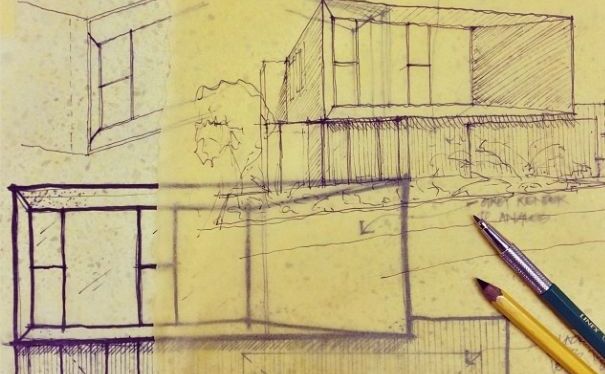
Firstly, there is the earnest discussion and then the actor performer steps in. Secondly, they reach for the holy instruments and sacraments of drawing. These are often at hand, the fine liner pen, the pencil of various grades, sometimes coloured pencils, a scale ruler, the tracing paper and of course the holy yellow trace. The drawn gestures are often crude but imbued with meaning and there is normally an associated commentary that has always struck me as being slightly creepy. A constant refrain in this ritual is ” let me try this” or “it needs to be bigger” or “we need more of a shape here” and of course there is the  “yes, thats almost it, hmmm, yes a bit more, yes, thats good.”

The gathered throng of observers, architects, students, sometimes clients are forced to watch this onanistic ritual as they watch each gesture, each line each tweaking of the elevations or plans, each seemingly mind blowing solving of a particular design problem. The more sycophantic of the onlookers will um and ahh. The less intelligent will unquestionably subscribe to the solutions which, despite the trivial nature of these gestures, are after a few minutes set in stone.

The horror of poetic ambiguity

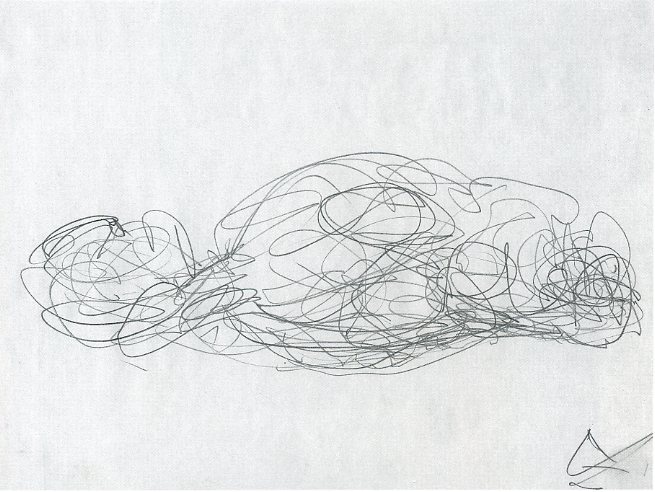
Some architects will do a few conceptual drawings and gestures and then just hand them over to the adults and grown-ups in the studio to implement. I know one architect who has created an entire career out of a few flexible sketches produced in the early to mid 90s. These sketches are now enshrined in an archive that shall remain nameless. In tectonic terms these sketches are barely legible, expressionistic scribbles which may have taken perhaps 30 seconds to a minute to have produced. They are of course poetic with a capital fucking-P (apologies to my more genteel readers). This is poetic ambiguity at its maximum. A creative impulse directly translated from the deeper consciousness of the architect’s brain to the appendage of the hand grasping the holy pencil that squirts its line of graphite or ink onto the yellow trace. Remind you of anything? It is uncomfortable to watch. Give me the safe refuge of the computer screen any day.

The digital outline

frederick-kiesler-endless-house

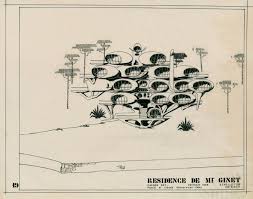
But sadly, the computer screen has itself also succumbed to the crude gestures of performance. Of course, what is really disturbing is that these often careless and trivial gestures seem to be linked to and transformed into the norms and forms of parametric culture. The parametric computer generated diagram has now supplanted the hand drawn sketch. But the performance around the screen is little different. It’s like in front of these screens everything is new again and the sketches and biomorphic forms of Frederik Kiesler, Pascal Hausermann, Chanaec and Archigram never existed.

images

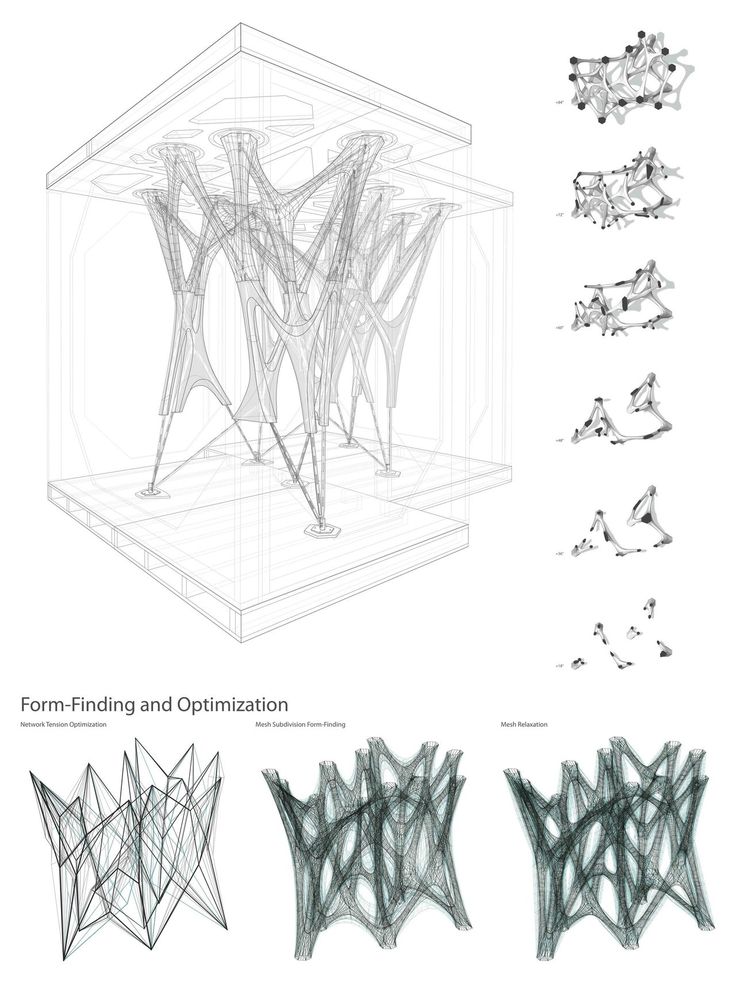
 The sketch has been supplanted by the printout of a generic and outlined parametric diagram usually with a honeycombed or diatomic, geometry. All you have to do is use the computer to fill in the detail between the lines. Its called form-finding optimisation. What would happen, if Scarpa-like, you started designing from the parametric details up rather than from an overall all outline down?

9950cbcadfd86622f0a53d3049588baa

Working in an office or studio and having to watch this performance is excruciating. It really is. I think drawing is both an analytical, investigative and generative tool. The best design architects know this. They know when to employ a hand sketch or drawing, employing different modes. They are interested in the design and not the flourish and the poetic mystery of the performance. They work to produce a design once the sketch is done. The initial sketch generates further sketches. The original sketch is not enshrined as art representative of male genius. Less infantile architects use drawings to observe as well as solve problems and develop a design. Simply put, design drawing and sketching is work. 

Yellowtrace fiddling

Once built you can tell the buildings that have been designed via this type of yellow traced performance. You can see the little tweaks and fiddles that have been added to the Revit or Microstation model. The adjustment and shifts in facades and window elevations. The added bits of architectural figuration. The big ideas, first conceived as sketches, that remain as vestiges in the built form, around which an underling has desperately tacked on the rest of the spaces. The shaping and skewing of plans that are knee jerk reactions to the immediate urban or heritage context. The problem is you have to walk through this slop.

Maybe that’s why I like Rossi’s drawings because they are the same elements and forms repeated and re-presented over and over again. Rossi’s drawings are in obvious contrast to those architects who create poetic art each time the squirt the graphite onto the yellow. Maybe thats why Rossi writes about the process of “forgetting architetcure.” John Hedjuk’s drawings represent a different and more subtle kind of poetry than the crude performances described above. There is a humility in the best architectural drawings and design sketches where it is less about the gesture and the performance in place of an almost animistic presence in the drawing itself. Hedjuk’s sketches contain an Archipelago of ideas not content or seduced by their own gestures of making. I think that there is a kind of frenetic desperation in Hedjuk’s, or even perhaps Alvaro Siza’s, sketches. At least Siza looks like he is trying to work some things out. But, the performers and actors in architecture always make it look oh so easy and individuated to their own personality.

alvaro_siza_sketch_5

I am not sure if this is true but, I always had the idea that the great, and syphilitic, architect Adolf Loos burnt all his papers and drawings. I think that to forget architecture is probably best and most courageous thing any architect can do. All architects have to do that at some point.

In Praise of Drawing: Six design things you cannot do in a computer.

Digital computing has destroyed essential elements of architectural design. Digital software is killing our architecture schools and the profession. When I read about Schooomaker (king of the market processes) or the other dudes in the parametric digital tribe my eyes start to glaze over when I hear the same old stream of consciousness about how the, fill-in-the-word-space-with-a-Zeitgeist-word, is going to change fucking everything. This Zeitgeist word is sometimes computers, robots, VR, AI, AR, smart infrastructure, 3D printing or some alliance of technology with ecological systems. But then, when I look at the productive design work spat out by the adherents of the digital tendency, in the words of the former FBI chief George Comey, “I feel mildly nauseous.”

Limited learning

At the level of design practice the digital impetus has wrought much damage in our schools of architecture. A focus on digital practice has limited the range of what emerging architects learn. This has been compounded by the ongoing development of  performance metrics related to financial outputs in our university sector. Much easier to teach a narrow version of architecture via digital computing and then dazzle everyone by pretending the design outputs are great. Usually, and on closer inspection, these outputs too often seem to be riffs on the orthogonal frame with plug-in boxes: straight jacketed versions of Cookie’s Plug-In-City with none of the fun. Too often the allure of the computer limits an understanding and practice of the design process.

Craft Beer

So let’s raise a unique and handmade crafted beer to the old ways: to sketching, drawing, to typology and composition, and to a more mindful consideration of ecologies than just making stuff look like bones, or aortas, or slimy mucus with aerated bubbles. The best architects draw on all available media to design. and here is my list of 6 design things you can do better outside of a computer.

1. You can annotate

You can actually write words on a drawing. Its true. You can use words like “maybe” if you don’t really want to do something. You can add room names, colours, and even thoughts (yes, actual thoughts) about the design’s next iteration. A great thing to annotate on a drawing is to denote different design options and iterations. Even better you can write numbers on drawings. Annotations can help bridge the qualitative and quantitative aspects of a design.

2. You can diagram quickly 

Architects love diagrams. They help to structure concepts and help you bridge the gap between a conceptual arrangement, or relationship, and an emerging form or figure. A flow chart, a graph, a complex social structure, a landscape or a site can be quickly mapped and diagrammed on a bit of paper. The smaller the better (joke).

Design diagrams can help you to remember what the fuck you are doing. Digital deisgn gives the impression that the designer is in control. But design is really about exploring the limts of control. It is about always skirting the line between the chaotic “what the fuck am I doing” and a stable and controlled order.

3. You can scribble and smash things up 

Yip, smashing up your digital model in parts is limited by the software. Digital software just whispers in your ear and urges you to extend and grow things. But with a small drawing you can easily and quickly smash something up into its constituent parts or fragments. You can scribble and cross things out. You can erase things. You can do this in a sketch to test and then see what something might be made of.

There is no point producing prototypes if they aren’t dissected and smashed up. Drawing allows you to draw prototype after prototype after prototype. The problem with digital and CNC computing is that the resultant prototype are too often the result of a linear and step-wise series. With sketches you can do the prototype first and then work back from there.

4. You can stick your head into the models

There is nothing like the joy of a physical model you can hold up to your eye, stick your head into and even place your whole body into. With a physical model we can easily and very quickly apprehend the design from different scales and perspectives. We can get both in and out of the physical model.

Will  VR be the same and supplant the physical model? I doubt it. This is because, we can easily get inside a VR environment, but I am not so about viewing a VR environment from afar or at different distance or scale. Moreover,  physical model’s models, depending on the material they are made from, have an abstracted presence that conveys information that may not be communicated through VR.

5. You can really get fuzzy

There is a tyranny of precision inherent in digital practice. Design precision is not something architects should necessarily value all the time. But with a sketch or drawing you can draw two, three or four or more lines over or near an initial single line. Linework in preliminary sketches and drawings are iterative and help the designer explore the tolerances and limits of a design in a given context.

Its fun to  put icky bits of paper over a sketch, and through further drawing change the design, ever so slightly.

6. You can colour in a lot

Colors are evocative. But, I fear the digital tribes have no need for the evocation of memory or tone. This because, colour is actually a real thing and there are a lot of colours in the world. More colors in a box of Derwent’s than there are on a colour wheel or pallete in a computer. It’s great to color code sketches to denote and then explore different tones, spaces, materials, or functions. Maybe in the digital world we forgot that real colours, like real fragrances,  are actually derived from the natural world.

Spin me around and around

How did architecture become a race to spin the model around and around, to zoom in and out, How did it become such a stylistic cliché and banal mix of Frei Otto structures, Darcy Thompson geometries, Penrose tiling and fractal geometries that look like unconvincing Origami. This stuff was boring in the late 50s and early 60s and it is still boring now.

The digital tendency masks the social constructs of architectural production and privileged taste-making. Whenever, I see the parametric polemics I always think of the original Futurists Manifesto. For a few minutes, Marinetti and the other Italian Futurists, were the brightest stars in the architectural firmament. The digital tendency is worryingly a re-enchantment of the Futurist trope: an impetus that seeks to legitimise itself with a universal history, and then simultaneously populate our shimmering screens with new figurative angels and demons. A polemic with an underlying passion for imagined enemies and the technologies of war (e.g. Drones).

Despite its claims to the opposite, the digital tendency abhors ecological memory and masks this loss with a belief in a universalising human agency. The digital is the contemporary engine of the Anthropocene.

For some of us architecture is still, and should be, a generalist pursuit. By this I mean that, it is a field of knowledge that spans between disciplines as well as media. But the worst of the digital tendency is rapidly turning it into the domain of techno-nerds with no memory for politics. After all, who needs politics when you can convince yourself that the parametric gesture, through its common and seemingly literal organic images, will bind the human species to nature. This unifying concept has always been a little paradoxical because it has facilitated the project of modernity in its orgiastic destruction of the earth.

So given all of the above, what’s wrong with designing outside of the computer?


So you think you can Design: 5 Nextgen rules for emerging designers.

If you think you can design, or think you are a designer, in this modern and contemporary Trumpian age read this. The traps you should avoid and what you should know is very different from older waves of architects. In practice and in your own career here is what I think is vital if you are to call yourself a designer. Certainly, if you are different in any way, and consider yourself to be a designer, I think it’s better to avoid putting all your energy into the traditional career pathways of architecture.

Each year you have been an architect you can multiply your age by 3-4. It’s a gruelling and demanding profession and that formula makes my architectural age a lot more than 100. Yes, in architectural age terms I am as old as Methuselah and this may be why I am both envious and in awe of newly emerging architects. Better educated, more technologically savvy and also young. Some of my much younger architectural colleagues have done things I only dreamed of doing when I graduated. I think this is because the more recent waves of architectural graduates are not paralysed by the old ways of the lone genius and the some of the moribund norms and traditions of the profession. So here is a few thoughts form my vantage point.

1. Designers don’t need  “the one” path career.

I once landed in Phoenix Arizona whilst travelling with a friend. I was meeting my Aunt and Cousin. Three minutes after we met my crazy American relatives whispered to me about my friend “Is she the ONE.” I just thought, OMG I cant believe I am actually related to these people. These days there is no “ONE” absolute career path for design architects. Maybe, there used to be a very simple career path for architects. Or it seemed that way anyway: Go to architecture school, work part-time for a few people, graduate and then get more experience, sit the accreditation exams, and then either end up in a firm or go the crash and burn option of starting your own practice and then crash and burn.

This particular career path was, I think, largely illusory. Yes, I do know people who have crawled their way up the practice ladder to become project architects, associates, associate directors and then maybe partners. It has taken some of them 25 to 30 years to do it and not everyone has the temperament to stay in the one place without going insane with boredom. Architecture takes a long time to learn but once it is learnt things can become routine and dare I say it boring. Others I know have done the hard yards in their own practices. But your own practice can take around 10 years to establish to a point where the cash flows are not volatile.

Compounding all of this is the nature of the construction industry which is based on an adversarial, project to project, and contract to contract culture. Gender discrimination is only the tip of the iceberg and there is a work life culture which is not as balanced as it should be. Career pathways are more ad hoc than planned.

So as a designer I think its best to avoid the pitfalls of putting all your energy into the traditional pathways. You need a few more career options. The might include non-standard ways to design and practice in and between academia, pro bono work, unique collaborations, competitions, as well as developing design expertise and research in a particular area.

2. Designers create new teams 

The role of the single designer who is the repository of all knowledge is a deadweight that hangs over the profession. A figurehead that everyone reports to or extracts design knowledge from. A taste-maker and arbiter.

Under the new rules new designers create teams rather than being the centre of a team. These new designers know that team diversity, collaboration and team processes are vital if they are to create design knowledge. The next generation of designers will be able to actually design and craft the teams they need for each project.

3. Designers communicate in new ways

The old school designers were not that great at communicating. Mostly they grunted a lot and said unfathomable things that sounded deep to the ears of young architects. Mostly this style of communication was to maintain and foster a kind of designer mystique or aura. There is still a bit of this about.

But in contrast contemporary designers need to communicate. They need to do this firstly with the teams that they manage. But they also need to communicate across boundaries with other disciplines and even more widely. In fact one of the key roles of the designer these days is to communicate across a range of social media channels (just like Trump and his Twitter account). Understanding these channels and doing this effectively is critical to positioning, debating and contesting design ideas in the global system that constitutes architecture.

4. Designers actively blur the boundaries 

Sitting in a Silo and pretending you are a designer doesn’t really work. Pretending you can design by, hanging out in your computer with the BIM models, the CNC machine, 3D printer or jiving with the robots, doesn’t really cut it for me. Architectural Design never was just about technical mastery. That was only part of the equation.

New designers nowadays are indeed skilled in and adept at the technological crafts. But they don’t sit in the silo of technology. They actively blur boundaries between domains of knowledge, systems and technologies; as well as theories and histories sub-cultures, groups, and teams. In fact designers are the ones shaping the boundaries between different fields of knowledge and groups.

5. Designers understand that Knowledge is the new currency

It  used to be all about the object, or materiality or presence. I would be rich if I had deposited a dollar in my Acorn’s account every time I heard the word materiality. In the 20th Century olden-times  of architecture  it was all about chasing the next big physical and large-scale commission. For many designers the physical object is where it is at. For many this remains the case.

These days I worry that this is emphasis on the object is just a little too phallocentric and limits the range of what we can do as architectural designers.

These days data, information and knowledge are the real currency of design. Designers now need to understand data analytics, advanced, diagramming mapping and coding. They need to understand these things in order to produce design knowledge and this knowledge may not necessarily be that archetypal prestigious institutional building or commission that every designer wants to design. It may also be a competition entry, a system, a strategy, a policy, a research project, a consultative process, an activist campaign and dare I say it a life.


Q: Is Architecture Inclusive? A: No.

In my part of the galaxy architecture is in a dire state. I think this is the same everywhere. Most architects are either individual scavengers or living in tribes scrabbling to survive on scraps from the big tables.  In sociological terms an institutional logics of survivalism reigns. Architectural knowledge is being increasingly commoditized in a global system. This commodification will eventually erode design knowledge to the point of where it’s domain and practices will have merged into other networks of knowledge.

For many architect’s architecture still remains a coherent and unified discipline. It certainly seems like it might be if you have the privilege of being able to access and pay your social media subscriptions. Everyone on Instagram is doing the Architectty influencer thing (me included). The digital viewpoint — all the images, the hashtags, the digital spin, the groups, the likes, — can easily seduce us into thinking that architecture is a multi-faceted, idealistic, humane, reformist discipline.

But when I think further I am not sure any more. There is something monstrous at the heart of architectural practice. The fundamental issue that hampers architecture’s survival, despite digital appearances, is that: architecture is not inclusive.

If architecture is to survive then it must embrace diversity and envelope in our ecologies of practice: gender, LGBTQIA, first nations and indigenous peoples; different ethnicities, minor literatures and the Subaltern; the disabled and the insane. As architects we need to have this conversation. But it needs to be a broad conversation and one fostered, but not dominated, by our professional associations; or by the new associations and networks that will replace them in response to architecture’s current lack of diversity.

This lack of diversity is killing the profession and exhibits itself in myriad seen and unseen ways. Mostly, it is an exclusion through quiet and passive silence. The woman who goes to the robot-in architecture-conference where there are not peers like her, the gay person who can never quite make the Associate Director grade, the transgendered person who is shunned from studio teaching, the indigenous person whose seemingly radical views are wanly smiled at by the senior management academic but never truly engaged with, the study group of international students that no one wants to join at architecture school. Of course, I myself can’t speak for these other voices. But how often do we as architects silence them? It’s our role as architects to make our design research, networks and practices inclusive so that these other voices are prioritized.

Architects need to understand intersectionality, the idea that intersecting identities compound to make a whole, in order to understand how regimes and flows of power have structured our discipline and the symbolic capital that circulates within the global system of architecture. An intersectional approach is different to the diagrammatic description, segmentation and distinctions made by the taste-makers of our discipline. As Gary Stevens notes in The Favoured Circle: The social Foundations of Architectural Distinction. “Taste is the primary notion by which privilege groups can maintain their cohesion and separate themselves from outsiders.”

It never ceases to amaze me that even in the field of Construction Management, a seemingly “backward” field, for architects that extensive research has been undertaken in notions of inclusiveness, identity and ground up ethnography. All we seem to talk about is Design Research. There are of course some glimmers of hope as last year’s November 2016 AHRA conference in Stockholm indicates. At the conference the aim was to address “connections between architecture and feminism with an emphasis on plural expressions of feminist identity and non-identity.” There were some notable papers from local colleagues Gill Matthewson questions the existing notions of “meritocracy” in architecture and the need to forge new modes of practice and identity in architecture. Janet McGaw questions, what I call the Boyo-ness, of recent biomorphic inspired digital production in architecture. She asks to what degree digital experiments and design research in architecture are “simply new practices of anthropogenic subjugation of non-human material systems that continue the environmentally destructive modernist industrial project.” Nicole Kalms examines, so-called safety technologies, their corresponding digital apps and sexual violence in the city.

The lack of diversity shapes both architectural history and the current dilemmas of architecture’s global system. A system dominated by a charmed circle of masculinities. As Martin Hultman has suggested this charmed circle — of tribes, warlords and transformers as I have called them– are intimately involved in the production of the contemporary city. The production of new and renewed cities, and the ecotopian dreams associated with them, are intended in theory at least, to be our salvation in the face of environmental catastrophe. Yet, as Simona Castricum noted at the same conference our current cities are riven by fear and a lack of safety for those who are different. Fear is embedded into the core of our cities. Cities have largely been designed through privileged masculinities that have produced spatial configurations that now need to be challenged; and in any case, hasn’t it always been the subaltern at the centre of the cities actual history.

Architects need to recognise they are a long way from being an inclusive profession. The silence of the smile that elides and silences difference is not really an option nowadays.

The full image of Leigh Bowery in this post can be found here.

Tribes, Warlords and Transformers: Which architectural practice are you?

After the last post, which focused on Australian Architects, I thought I would expand some of this apocalyptic thinking to the global system of architecture. Arguably, architecture is at an end because of the commodification of the services that architects provide. But the effect of neoliberal policies and market competition is more insidious than that. I think that this global system has also come to condition the very types of practices that operate within it. In the late 20th Century the heroic architect of the 20s morphed into the star architect of the late 90s and the early 2000s. But I think we also have some new practice types.

The Three Types: Tribes, Warlords, and Transformers. 

I have named the three types of practices as Tribes, Warlords and Transformers. These practices are conditioned by a survivalist mentality that accounts for architectural competition in the global system. Architects are desperately trying to survive as their knowledge and workflows are being simultaneously digitized and commoditized.  The work of Sklair, examining star architects and the work of McNeill which looks at the political and cultural economy of globalization and cities. No doubt there are others.

This impetus of market survival is evident as a result of global flows of capital pertaining to: neo-liberal policies, service disaggregation and fee for service competition. Despite its allure and heroic mythology in architectural traditions architects have in reality abandoned the old binary logic of Creative vs. Suit. In this global system there are recognizably three types of architectural firms:

Tribes 

Tribes are small community based and local practices. Their territories are local. These firms create a design knowledge ecosystem around their own local field of practice. These are small firms which develop linkages both within their teams and the communities that surround them. These firms inwardly focused and are bottom-up in they way they create design knowledge. They are collaborative and community orientated. Whilst a single designer may dominate these tribes the emphasis is on consultation. As many of these firms feel they are struggling to survive these Tribes will sometimes form together to make bigger firms.

Examples: Assemble Studio, RCR, Grupo Toma in my town we have Architecture Architecture and our very own Assemble.

Warlords

Warlords: Warlords are best exemplified by the so-called star architects. Their territories are media channels. They dominate both national and global systems. These firms create a knowledge ecosystem around themselves that is dominated by a single, style, aesthetic ideology or person. These firms create design knowledge on a project by project basis. However, the creation of design knowledge is secondary as the firm seeks legitimacy through media hits. They are focused on winning prestigious commissions and often create conflict in order to win media presence.  They are intent on creating seminal projects that build their reputation in the architectural canon.

Examples: Schumacher, in my town we have you know who, Aravena (star or tribe?) and of course the older generation of people like Gehry and the remnants of the New York Five like Meier and there is of course Rem (but I think OMA is a Transformer)

Transformers 

Are large multi-disciplinary and networked mega-firms firms that work within the global system and often across borders. These firms are predatory. They need to be to survive. Their Territories constantly captured, expanded and rebuilt. They resolves conflict in order to govern. In these firms design, knowledge, systems and governance are integrated. These firms create highly specialised design knowledge which is integrated into their own systems.  As a result these firms are large enough to anticipate, create, design and deliver large mega-projects such as urban infrastructure and cities; whether or not we need these urban products. These firms are intent on building projects that enable the firm to be continually self-sustaining. They transform as they their constituent networks ebb and flow. They are often surrounded by tribal firms that act as a Remora fish.

Examples: RMJM, Arup and Aurecon. So whats BIG, tribe, Warlord, Transformer or Mega-firm? Probably a hybrid tribe-star on the way to becoming a Transformer) Some firms are hybrids and we can see  them changing  from one type to another.

Its all about the Brand 

Certainly, an overarching institutional logic of survivalism is arguably the result of a number of factors. The changes since the 1970s in professional status as a result of neoliberal policies leading to trans-national and market competition. The loss of traditional services to other disciplines and subsequent disaggregation of full fee-for-service regimes. The rise of new technologies alongside new procurement systems have also led to the commodification of design activities and knowledge.

In this system design knowledge has been confused with branding. So I guess Tafuri, and perhaps even Guy Debord, may have been right about the intellectual work of architects after all.

Architecture as Knowledge Design vs. the Low Fee Mentality.

 Architecture is about ideas and what I call Knowledge Design as compared to that oh so icky cult of “DESIGN.”  This is a more developed and modified version of a talk I gave at Denton Corker Marshall my piece at the ACAA website.

Architecture is an endeavour focused on the creation of knowledge. It’s about Knowledge Design as compared to just being about Design. Architecture is about designing processes that create knowledge. I guess, I think that this stem’s from the fact that architecture is essentially about ideas. In the same way that a work of literature or political philosophy is also about ideas.

Don’t let anyone tell you any differently. Too often we are bamboozled by the architects as salespeople who tell us that architecture is about all sorts of things: architecture is about BIM, architecture is about Green Roof’s or Resilience or Sustainability or Parametrics. Thats all fine, but I think seeing architecture as idea and knowledge driven might help to resist the urge to simplify everything in this so called Post-Truth world.

Architectural knowledge is generated via the design process and then – if you are lucky and get something realised – it is embedded in both built and spatial forms. This knowledge created by architects, and the professional services through which it is delivered, makes architecture valuable to society.

If architects are to prosper as a discipline in the future, they need to make Knowledge Design a central platform of their practice. Recently, I became interested in how UN Studio conducts its own research. They focus this through what they call Knowledge Platforms. In short, each platform is a different area of specialised knowledge – UN Studios explains:

“the objective of the Knowledge Platforms is to distil knowledge from within the practice of architecture in order to propel design thinking and innovation.”

Of course, proposing that knowledge is central to architectural production is a more complex model than simply saying that architects design buildings. This model of practice places ideas and knowledge, rather than the delivered object, at its centre. Yes, this approach is quite different to seeing architecture as simply being about the design of physical buildings (as, unfortunately, too many people do). But, in the digital age the Vitruvian tenet of firmness, commodity and delight is a little bit harder to apply to something as seemingly intangible as knowledge.

For the anti-design types, and anti-elites and anti-intellectuals in our world the intangible always seems to a struggle to understand.

Architects as knowledge workers. 

Seeing architects as knowledge workers is more commensurate with our wide-ranging education, our role as systems integrators, and with the ambiguities of living in a networked global system (a global system now beset by the spectre of nationalism). Moreover, architects are now working in cities saturated by a combination of ‘wicked’ problems such as inequity, incessant conflict and climate change. Cities themselves can no longer be understood as stable entities that, through patronage, architects adorn with the symbols of power. Do we need more Bilbao’s or Dubai Palm’s or ghost town MASDARs?

Notions of future proofing practice should not be about jumping on the latest technology bandwagon or getting excited about the latest procurement method. New developments in both technology and social organisation need to be thought about and strategised by architects. In the future, thinking about architectural services in terms of knowledge will be more and more important. Excellence in architecture has to be about ideas and the design of knowledge and not just about the time and cost, or even zero carbon, outcomes of project delivery. Dare I say it but architects need to abandon the cult of design to do this. I am beginning to wonder if the “design” is a paradigm, or episteme, that actually cripples radical ideas and innovation.

An Upstream Knowledge Future

I am more optimistic about what I call an upstream future for architects. In this future architects will create upstream knowledge that downstream clients, and others in the industry, can utilise. In the upstream future knowledge creation and management is placed at the centre of the practice. In this future architects will be at the centre of creating new knowledge across all aspects of the built environment. After all that is what our long training equips us to do.  This knowledge will enable architects to charge more for their services in markets that have traditionally been beset by price competition, pseudo cartels and the lowest common denominator of service to clients.

In the upstream future each practice will look at advanced methods of collaboration between and across practices. Architects will no longer be bound by traditional practices centred on a ‘name’ or star architect. Much larger collaborations of small practices coming together with effective governance will help architects be more competitive and gain larger commissions. Moreover, architects will collaborate and form knowledge ecosystems with a full range of other consultants with specialist knowledge: engineers, academics, economists, urban planners and even financial analysts.

Research will be the central driver to what I call an upstream knowledge future for architects. Every great practice, no matter how large or small, will have a research plan and function embedded within it.

I was pretty disturbed and amazed when I presented a contracted research proposal to a consortium of architects. The aim of the research was to understand the degree to which architectural design added value to property assets. It was a modest proposal. To get the feedback that the research itself was going to cost too much made me wonder. It made wonder if architects themselves are not able to value research, into our own industry development and its development, then it is little wonder that no one else in our communities and sector put a value on our services.

I guess I am really over the low fee for service mentality. It’s a mentality that is slowly destroying our profession.

This is my last   blog post for the year and I need to recharge. As we are now well and truly in the festive season and I am thinking I shall return in to blog sometime in January.

I started this blog a year ago and I have had over 10,000 views now.  I would like to thank all of you who have bothered to read my posts and indicated support for my efforts in person.  As a result, I am really looking forward to the 2017 blogging year.