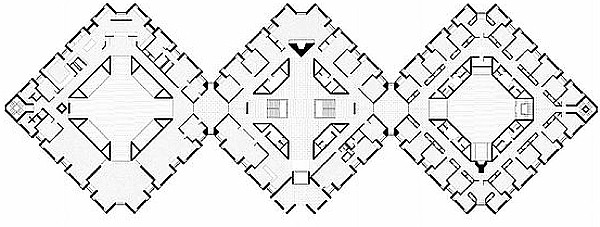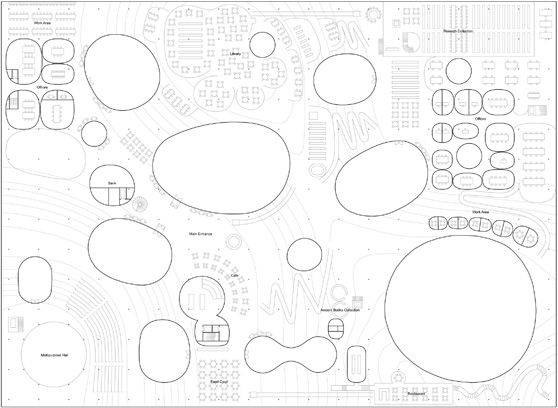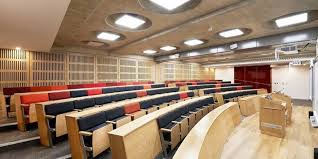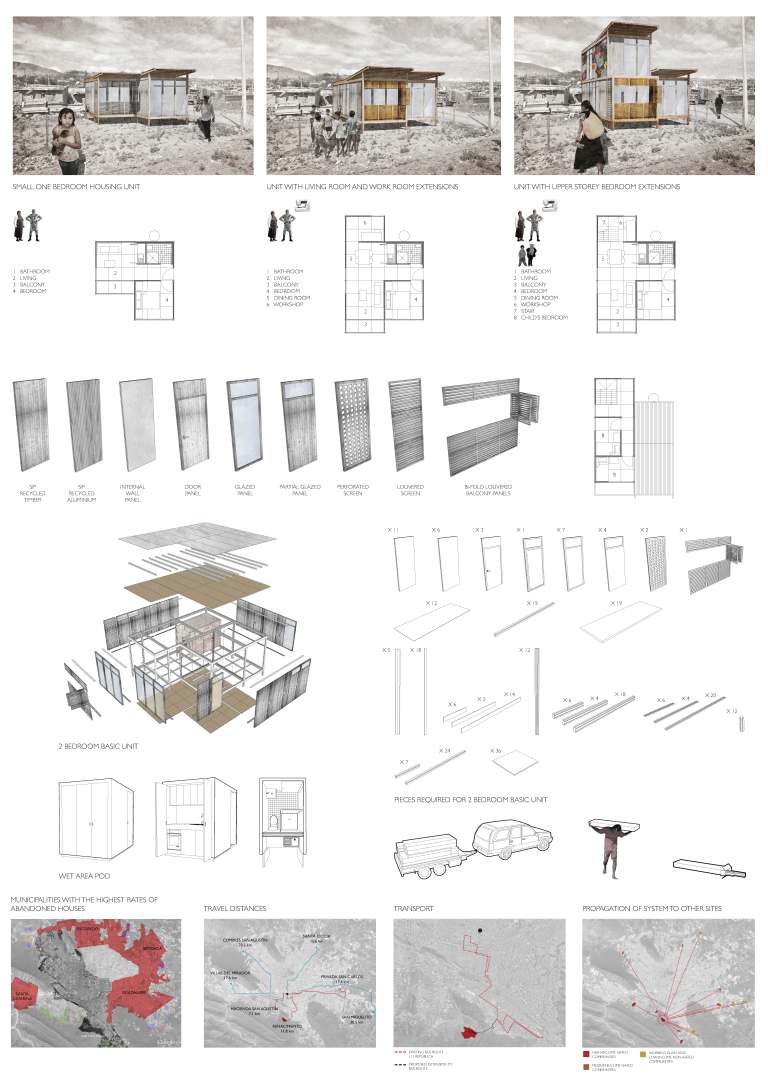

Surviving the Design Studio: 5 ways architecture students can avoid a mental health meltdown.

As an architecture student I was a miserable wretch and I was treated as such by my design tutors. At my part-time architecture job I slept at nights under the dyeline machine in the back of the office I worked in. Every week when I presented my studio work at the crits it was torture. My tutors either said nothing at all or said things like, “I am not really sure this is a 4th year (fill in the year) project”or worse still, “you cant put a fucking toilet (fill in the function room name) there or even better, (although often said with some laconic humour) “that is the worst model (drawing, axo, plan) I have ever seen in my whole life” which I think may have often been true. I was a pretty ordinary student and for the most part I was a sullen martyr who just sucked it up.

It was worse for my colleagues the female architecture students. No matter how hard they tried they couldn’t seem to get anything right. They were never going to be golden boys because the were simply not boys. At times it was an exhilarating but also brutal environment. I learnt a lot but I am not sure it did a lot to foster my confidence as a designer or even as a person. Supposedly, in the modern digital age things are better now in architecture schools and  architectural education is a fairer, kinder and less misogynist enterprise. But are things now any better? A recent survey in the UK magazine The Architects’ Journal suggests otherwise.

The Architects’ Journal surveyed 450 architecture students in the UK that just over a quarter of them  (26 per cent) of “architecture students had received medical help for mental health problems resulting from their course, and a further 26 per cent feared they would need to seek help in the future.” Most disturbing was the finding that these issues were “more acute with female respondents, of whom almost a third had sought support for mental health issues compared to 26 per cent of male respondents.”

Details of the entire survey and its results can be found here. It covers working through all-nighters, student debt, working for free, practical training, discrimination and the length of architectural education. The survey identified that for the student respondents the primary stressors are issues related to increasing debt, a culture of crazy working hours and the anxiety about acquiring effective skills in order to be employable at the end of a long course.

As Robert Mull the former Dean of The Cass Faculty of Art, Architecture and Design, noted in Dezeen  “High fees, debt, the fear of debt, low wages, poor working practices and educational models that reflect aspects of practice based on individualism and competition rather than collective action and mutual support have put intolerable pressure on those students who can still study and has excluded many more.” Mull (what a great name) is a noted critic of homogenised and commodified versions of higher education.  In response to the survey the head of the Bartlett Rob Shiel argued that new models of architectural education were needed in order to increase access to architectural education from different backgrounds and to reduce the mental health pressures on architecture students.

Mental health of the emerging generation of architects should be taken as a serious issue in architecture schools and by the profession. Larger studio sizes (recently shocked to hear of one school with 25 people in each studio; 12 to 14 is best) are one significant pressure point in the mix of fee paying higher education, poor and entrenched working cultures in the profession and the need to teach an increasing complex architectural curriculum.

For architecture students mired in the above circumstances there are probably a few things you can do to avoid a meltdown and manage your mental health through architecture school. As I am not a trained clinical psychologist I will keep my suggestions short and simple. They cover the most common things that I have seen in my experience as a architectural design educator.

1. You are not invincible 

Sometimes things happen. Health issues, family issues or even accidents. In my experience it is often not great for those who are grieve. When stuff happens its best to take the time out or at least to change your expectations or aspirations to manage it. Too often I see students think they can just work or push through the rough bit. Only to find later, usually towards the end of semester, that they just can’t do it. That is usually when it may be too late to compensate. No one is invincible.

2. Timing 

Timing is crucial. Design studios are as a much a project management exercise as anything else. Managing and organising your time is critical to your own mental health. You should not have to work all night either in the studio or in an office. This opinion piece on unpaid overtime speaks to some of the complexity of these workplace issues. Architects should not be working 60 hours a week.  Unfortunately bad working habits often start at architecture school. If you think your tutor is mismanaging your time or you are putting in all nighters and not getting much traction then you need to rethink how you are managing your time or speak out.

3. Dont procrastinate 

Don’t procrastinate. As I have mentioned elsewhere on this blog the sooner you get started designing and the more  consistently you work on a design the better. If you get stuck or need help get it from your friends or your tutor. Tackle the hard design task’s first and don’t leave things to the last minute. Dont get sucked into doing text based research and no drawing or thinking that you are working by spinning that 3D model around and around in the computer. Too often I see students putting pressure on themselves by procrastinating, week after week, and then letting it build up and up to the point where their stress levels almost prevent them from actually working.

Procrastination leading to the all nighter, or last few days, in the last few weeks of semester only reinforces this culture.

4. Get help sooner rather than later

Depression, anxiety, grief, and illness can all take its toll. All design tutors are usually extremely sympathetic to these issues and more than happy to help you adjust and get through the crap moments in life. There are lost of resources on the web to help you get through things. Its better to seek help or talk to someone rather than doing nothing at all.

5. Take a break 

Know when to take  break rather than beating your head against a wall. A break no matter how short will help improve your productivity in the long run.

Doing and considering the above will help you develop the resilience you need to survive the design studio. Of course, the best architects, and architectural teams, are kind of crazy in their own way. Some of my best and most successful students have been the ones who have worked through and come out of other side of serious mental health issues. It happens to everyone at some stage in life. As a profession we need to harness and foster the creative aspects of craziness that makes our profession unique rather than the toxic craziness of overwork and sullen martyrdom. Our profession deserves better.

 

Surviving the Design Studio: 7 things to do to hit the ground running.

The first few weeks of any project or new graduate studio are critical to the success and delivery time of the project. Too often I have seen both architects and students waste valuable time by not quickly setting up the research, design research and design production process. Whilst, I am all for mulling ideas around in ones head this is not all one should focus on early in the project. Too often procrastination or a laissez faire approach in the early stages of a project can ensure problems with the design further down the track. Timing is critical and what follows are a few ideas about getting started in order to hit the ground running.

1.Curiosity

One of the key things any student or architect needs to do at the start of the project is to ask questions. These may be tacit questions one may ask oneself or questions you might ask a studio tutor or team leader. Critical questions about the site, the program, the brief, design approach or timing can all be asked at the project or studio’s outset. The purpose of these questions is to begin to set out the parameters and limits of the project. What can be done? What needs to be designed and what is possible? Are there special site conditions? What kind of density of building does the project parameters suggest? What are the critical things that need to be designed? What is ambiguous about the project; what new information needs to be ascertained prior to designing? What still needs to be researched?

Of course some architects or students never ask questions. There are often different motivations for this. But in my experience the student who has asked the most questions in the studio over the semester usually get’s the best design result. In design studio no one is going to tell you the answers. Unless you ask.

2.Traditional Research

I hate it when I hear about studios or teams that have spent weeks or months researching and not leaving enough room for design. Inevitably no time is left for actually designing and the results are usually mediocre. It’s great to be methodical. But, a good studio leader or team leader will recognise this and get the balance right between conducting traditional research activities, urban or precedent analysis and actually designing. I think it is a myth to not feel that you can’t design something until all of the parameters and research information (site topography, history, regulations, precedents, urban context and briefing notes) have been fully researched and documented. Given the internet this kind of research should not take that long. Of course it needs to be done. But it needs to be done quickly and efficiently and in tandem with early diagramming and conceptual design.

3.Design Research Parameters

A lot of architects these days talk about design research. As some of you may have guessed, it is not the same as traditional research although the two are linked. Good textural or theoretical research will underpin your design concerns. I worry that the activity of designing is too often conflated with this more recent notion of design research. Simply designing or thinking that because what you are doing is design doesn’t neccessarily make it design research. Design research is what it is you are trying to find out through the activity of designing. Are you trying to find out more, or ask something about, about a particular site, or brief or typology or cultural context? Is there a design research question underlying your design efforts? You also need to ask how your design process can contribute to knowledge. For example, in our recent proposal for the Pilbara we asked if Australia remote regions were a viable place for new settlements. We explored this via the design and strategic design of a autonomous settlement around an iron ore mine. Our contribution to knowledge was to establish how important notions of country are to new regional settlements. Moreover, the Planetary Urbanism brief was a good design research summary of the issues, the questions and the ground to be covered.

It may sound simplistic but design research should be structured around these questions and conclusions. The why, what, how and so what questions are important in generating design research solutions. To reiterate, design research parameters need to be clearly set out. What is the critical contribution to design knowledge that is being saught? What is unique about the project? What will be explored and how is this different to other similar or related projects.

4.Design

All I will say is why wait. Design is best explored by designing. It is not simply a matter of being creative or spinning that digital model around and around and around. In the early stages it is about exploring the parameters of the site, the brief, and any other things. In more conceptual projects it is about finding the right abstract structure or process that best represents and solves (in a sense) your design question. Procrastination only delays your ability to reiterate and explore different design options at a later point in time.

5.Avoid the delusions of technology

There is a lot I can write about in regards to design and design processes. Mostly, it is about the evils of computers and the need to respect traditional orthographics. I won’t bore you here as I am sure many of you know architects, or have tutors, who know more than I do about architectural computing and software. Needless to say, a computer model can easily lead you to believe you are designing when you are not. Just being technically adept at producing a digital model is not the same as designing.

6.Design production

The end result is important. It’s a good idea to think about it at the beginning of the process. What kinds of outputs in terms of drawings or models does the project suggest. It’s not good just making it up as you go along and lurching from graphic communication crisis to crisis. Having a vision of how you want to represent or draw your project at the end is actually really important. Considering this at the beginning will help you to design the most important parts of your project and help you to structure your time. Time is so important in the design process. Mismanage it and this will show up in the design. The last minute design effort, or the quickly found new concept a week before the hand in is usually obvious to every one. Client’s and jury critics can usually tell when they are looking at shit presentation.

7.Make space to design as much as you can

There are those who still think that design is all about being creative. Some innate force of ego or the will and innate talent is born into us at birth and the world is occupied by those who design and those who cannot. It is a view about stereotypes. It has helped to perpetuate the culture of star architects, gender and class stereotypes in the profession. It is a view that should not have any place in studios or graduate schools. This is one of the most damaging myths to prevail in architectural culture and discourse. Not unlike public speaking or politics or formula one or airline pilot’s designers are made and not simply born. Which is why we need to design as much as we can in our studios and graduate schools. Avoid being your own worse critic to the point where you can’t do anything. Everyone can design but like most things it requires a space to practice in. If you want to design, either in an office or at architecture school, then the above suggestions should help you to make that space.


Architecture Students as Customers: How not to measure the value of architectural education

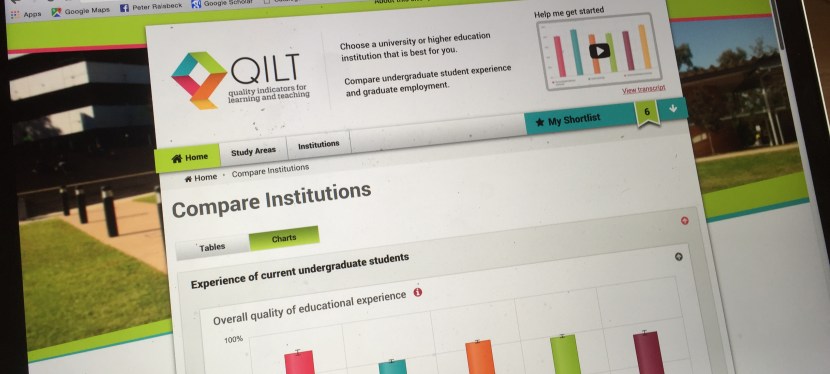
Whilst we are waiting for the outcome of our federal election it is worth noting that The Abbott-Turnbull  government has increased funding to a new project that measures quality in tertiary education. This initiative is called QILT: Quality Indicators for Learning and Teaching. QILT is a ranking system that relies on independent data based on the 2015 different Student Experience Surveys. In September the survey will add in graduate employment data as well. On this basis your architecture school is a great architecture school if you graduate (in order to do the survey), love the experience (no matter how little you learn) and earn a buck. Yes, as a customer you will need to earn a buck to pay down your Higher Education student debt. But as we all know nowadays everyone pays to attend. Some more than others.

Architectural education is now well and truly a part of this increasingly global “business” of education. Although, architecture is not a large part of the “business”, or as large in revenue generation as law, commerce or biomedical sciences, it still seems to tick over nicely. For some university executives architecture is a commodified cash cow. You can thrash it like an old Holden via lot’s of short term contracts and  high staff-student ratios in the studios. It doesn’t really matter who you take in as students, or how you treat them, just as long as they pay.

QILT

Data measures such as QILT only seem to reinforce these “customer” orientated tendencies. The architecture student is now a customer; student’s get the branded degree they paid for; and they aren’t challenged too much or they might complain (tell me about it); and they learn a few technical skills (throw in a bit of of CNC, Rhino and Revit) that enables them to get a paying job (maybe).

The first flaw of QILT in relation to architectural education is is that it  aggregates data from across number of different disciplines.  This includes Architecture & Urban Environments, Building & Construction.It slums together Architecture, Urban Design and Regional Planning, Landscape Architecture and Interior and Environmental Design, Building Science and Technology, Building Construction Management, Building Surveying and Building Construction Economics. How any one could lump together architecture construction management and economics with urban planning is astounding. The built environment design disciplines should be in a separate dataset.

QILT uses data that is based on university Student Experience Survey (SES) which, as most committed tertiary teachers will tell you are notoriously flawed for reasons too long to discuss here (this is a good introductory paper on the issues). In architectural education a brief example might suffice: In architecture design students respond to the surveys prior to their final studio presentations. The administrators of the SES view these crits as an examination but do not realise that getting students to respond prior to the crit distorts the figures. Fewer architecture students respond, they are to busy preparing for the crit, and more importantly, the end of project design crit is one of the significant learning points in the semester.

QILT is also based on data gathered from the The Course Experience Questionnaire (CEQ). This is completed by graduates of Australian higher education institutions four months after completion of their courses measuring: Overall satisfaction, good teaching, generic skills. QILT also measures data gleaned from the Graduate Destination Survey. Which includes the median salary of graduates. This is one reason why the discipline data should not be mixed up together as every one is on different pay scales. The QILT data jockeys are also developing a “The Employer Satisfaction Survey (ESS)” which  is being developed as part of the Quality Indicators for Learning and Teaching

The QILT website allows you to compare between universities. Using the quick comparison I did it would seem that one architecture school in Australia appears to outshine all of the others in terms of graduate satisfaction, skills learnt and median salaries. There is not a lot I can say about this; except I don’t think much of the QILT methodology or its comparative results.

What makes a great architecture school

Of course, we all want to say that we went to a great architecture school. The one I went to is now argued to be, by some at least, one of the best in the world (it did not rank as well on QILT). The one I teach at is also ranked highly across global research measures. Of course when I went to Architecture school in the pre-digital dark ages there, some of us much longer than others, we thought it was a shambolic and chaotic mess. That was part of its charm and that’s probably what you get when you have architects running the whole show. Of course now that we have left architecture school and look back on it it doesn’t seem so bad. Compared to other schools in Australia at the time, or even elsewhere we had a pretty good deal.  In fact I would argue that because the architects were in positions of leadership in the faculty and the school this contributed to it’s burgeoning global reputation at the time. Sadly, one architecture school I know of is governed almost entirely by administrators.

Measuring architectural culture

QILT doesn’t really measure the value of an architectural culture or how students may be involved in current global debates. It is  a one size fits all approach to running the “business”. As a student I was actively involved and close to the architectural debates, controversies and conversations of the day. I had the opportunity to be taught by the best practitioners and academics of the day. As students we were challenged by our studio tutors and we did not mind this. As students we helped to create the culture that made the school better. Moreover, thanks to Whitlam I didn’t have to pay a cent and in fact I even got paid an allowance to escape my outer suburban bunker and go to architecture school.

Measures like QILT are easy tools for the administrators to bludgeon university academics with. Its a misleading tool to guide the potential customers. Fostering the link between teaching, research and industry in architecture schools is essential for the future of the architectural profession. This is not measured in QILT. Just giving graduates a technical skill set or measuring output by how good the graduate feels during the course or their employment and salary outcomes really misses the mark.

In the future most architectural graduates will have to cope with the firestorms of technological change, climate change, political volatility and perhaps worse. Being narrow technologists who cant think across disciplines, or graduates who have never been challenged by inspired teaching to think doesn’t really cut the mustard with me. Bad shit is coming down the pipeline and our architectural graduates really need to be able to think rather than consume.

 I am almost out of the country yet on annual leave. So watch out for next week’s blog which might even be written in road trip style. 


Surviving the Design Studio: Getting through the last days before the submission deadline.

Architecture is a desperate enterprise. This is because in many ways designing is a race against time. As a designer you are always time poor. Deadlines are imposed externally. The more time you send on the design the more you burn up your fees. Fees that sometimes have already been cut to the bone. Whats worse is that it takes time to design properly. It is a labour intensive exercise that involves the consideration of different options and the exploration of different design pathways.

Most architects are always designing in a blind panic and this is what you need to get good at. But: too many architects procrastinate and too many architecture students leave things to the last minute. Finally, the procrastination can inevitably give way to blind panic.  Its 5 days to go and you still need to do the layout and print ! OMG !!

As it is almost the end of semester here in my hemisphere I thought I would do a special Surviving the Design Studio blog outside of my normal weekly blogging routine. So here are a few last minute survival points to think about. Enjoy.

1.Dont Panic

Hyperventilating and multitasking and not knowing where to start can lead to conflicted priorities. Its best to sit down and to methodically  plan you way out of things. Make a list. Write down all the things you need to do. Prioritise the list. Decide what you can’t do. Yes everything is interlinked but you can only do one thing at a time.  Put the prioritised list next to you computer and every time you start to panic look at it and stay calm.

Avoid anxiety and your own inner critical negative voice. Be mindful as much as you can.

2. Work back from the end

Know what your layout is (and I don’t mean the layout of your plans). Know what drawings you are going to pin up or publish at the end and how these drawings contribute and support your argument. If you know what you are going to present at the end then you will know more accurately what you have to do. Do an actual mock up and stick it on a wall and see how it looks.  Read this previous blog of mine on layout and this one on verbal presentation.

Timing is critical and working back form the end helps. Too often architects forget to allow for the print queue. There is nothing worse than having a great design but missing the deadline set by the project manager or the studio submission.

3. Plan and resolve your way through problems

The quicker you can resolve issues around your design the better. At the end of the project it usually the medium and little things that need to be resolved.  What is the profile of the roof or volume, where should openings or windows go, what happens at the entry conditions, is the circulation pattern easily communicated. Resolve as much as you can and as quickly as you can.These are design development decisions.  If you think you are getting into a bind about anyone decision. Just make a choice. Its your design.

Know when to design and then when to just produce the images.

4. Figure out what you can and cant do

You cant do everything. Use a prioritised list and a final layout plan to figure out what you need to do.D hat way you won t get sucked into the computer finessing things that you don’t need to worry about and making design development decisions. Concentrate, and complete, the hardest and most time consuming elements of the design and presentation first. Leaving the hard and time consuming things to last is just another form of procrastination.

Your mantra at this stage should be. Resolve, Resolve and Resolve; one issue at a time.

5. Look after yourself

Staying up all night to 5 in the morning hyped up on mother or red bull or coke or amphetamines is really really bad. After 1 am your productivity will drop. It doesn’t matter if you are in your twenties. Take breaks, eat properly and know when it is time to sleep. Get some exercise.

If you are really strapped for time the best you can do is work form 9 am to around 1 am with an hour for lunch and hour for dinner. Then make sure you get 6, maybe 7 to 8 hours sleep. It will help you to make better decisions.

Know when it is not worth it. At the end of the day it is not worth sacrificing your mental health for a better than average pass or wining the selected competition. There will be other design studios and other projects. Stop and get help if you feel your mental health is suffering.

6. Get help

Get your friends in. Get them to do stuff. Get them to lend you another eye when you are not sure about things. Ask your tutor, or a team member, about design and design development decisions. A good tutor or team member will relish the questions and help you to resolve issues more quickly rather than you agonise over something for hours.

Discussing your project s concept and design process with others even at this late stage will help you to clarify and prioritise what you need to do to finish it.

7. When bad things go wrong problem solve and replan again

There will be glitches of course. Once I printed out all of my final thesis drawings and looked at them only to realise they were all wrong. The line weights combined with the particular experimental printing process I employed led to unreadable drawings. It was a total disaster. The best thing to do was to have a sleep and not to panic.

After the sleep I could think straight and look at my drawings with a more evaluative eye. I then replanned my production technique and after a few days had reprinted my drawings. I lost time, but on the second print run my drawings were much better (see 2 above).

8. Don’t sit on the computer for the sake of it

If you are sitting there looking at the screen and not getting much done it’s time to move. Efficiency is good and sometimes that means taking breaks every so often. Don’t deceive yourself by thinking that all because you are sitting in front of the computer you are getting things done. Move on to another task.

9. If it looks good it is good

The above statement is my cardinal rule for deciding when to move onto the next task or micro task. If you are running out of time you need to suspend your own inner critic and inner perfectionist. If it looks good then use that and move onto the next task. There is no point having a great and perfect render if the rest of your drawings and images are awful.

Getting the balance right between different images and representation of your design at the end of semester or project is what will count. You are producing an integrated and wholistic design vision. Making one thing superbly refined at the expense of everything else is always remarked upon by the jury critics. But you will never win the competition if you do this. Jury critics usually want to see that how well your design proposal relates to everything.

Of course it may be too late for you to get the balance right. between the design of different elements on your final images. You may have just run out of time or read this blog too late in the day. If that’s then case you may need to make sure a couple of things are so good that you cant fail. This is what I would call a salvage operation.

10. Take notes

Take notes as you work and different justifications, rationale or aspects of your project spring to mind. Use these notes to frame and articulate your own arguments if and when you have to stand in front of your project and discuss it. You can also use the notes to help you include any explanatory or annotative text that may need to go onto the drawings. These notes will also help you to take lessons and insights onto your next project.

Don’t try and constantly second guess your tutor or the critics. Consider what they might want and then craft your response to it. Use the working notes to do this.

Finally 

All of the above should help if you are in desperation mode and you have kissed your significant others goodbye. You may think you will never see them again  as you go into the vortex of the final days of a design project.  But it will soon be over and then of course there is always the next project and it is actually the next project that all architects yearn for.

Surviving the Design Studio: 10 ways to fix the plans before the final deadline. 

Ok so it’s the end of semester or the project and you have spent your life deep in the Rhino, or the other R model, and it’s time to do your layout. But hey you forget about the plan. The what? Oh yeah, the PLAN !!!

The problem is the plan is the first thing any critic or competition judge will look at. Sure they might glance at the crappy 3D render you have done; so hastily crafted the night before. But it’s the plan they will use as the co-ordinating point of reference for the rest of the drawings. Its probably the thing they will look the most at. In fact an excellent plan will mean that the design jurors or critic (or perhaps even a client) will more easily forgive how bad the rest of the project might be.

The demise of the plan

In this digital word it is easy to forget about the plan. You may have sketched something early on; quickly outlined it in the computer and then constructed a model from that plan. By the end of the project you have actually forgotten about the plan.

We no longer read plans because we are too busy watching the future stuff. This is because everything nowadays is three dimensional or even four dimensional. It’s all about AI, CNC fabrication, robotics, autonomous agents and swarmies (I think I mean swarms). Patterns, processes and parametrics reign supreme. Plans are pretty dull compared to the latest YouTube clip or article on Architizer or Dezeen.

In the age of big data, global analytics, digital diagramming and planetary urbanisation the plan has lost its power to seduce our eyes. The network diagram and digital clip is king (and queen too). Born in the computer the global diagrams of networks, animations of swarms and simulations of a flooding cities are more compelling to watch than those old planny plan things. There are some excellent exponents of these new must-be-watched diagrams: Michael Batty at UCL, Neil Brenner’s mix of geography and global flows at the Urban Theory Lab, Eyal Weizman’s forensic architecture. In the work of these contemporary image proponents its like the ideograms and diagrams of the Smithsons’ have been sped and given life through the joys of accelerated computerisation.

In the past, like today’s digital clips, the plan was a seductive artifice in its own right. It could simultaneously be read as a conceptual diagram, a spatial condition and the history of  place. Plans are stratigraphic in their ability to embody layers of meaning and different narratives; no matter how abstract those narratives might be. But, in the current real world, I fear that plans don’t mean that much anymore. For the merchants of neoliberal architecture slapping up the apartment towers its all about the skin bae. These days the plan no longer seems like it means anything at all.

Ok, so much for the ranting and raving about the lost world of plans.

More importantly, when the critics come in, all jackboot like, and start criticising the plans you know they have it in for you. A good critic can demolish your entire scheme just by looking at, and asking questions, about the plan. Here are some tips to get that plan in shape ready for the submission and the critical onslaught.

1.The plan demonstrates the size of things 

The plan and measuring the size of things is extremely critical in housing schemes. A few years back I ran a studio in to we tried to teach the students all the things they didn’t know about plans and unit planning. Basic stuff like how big is a bathroom, or a bedroom and what’s the best way to design a kitchen. How big is a bed or a table?  How do you do a carpark what do you need for turning circles?  You know when a critic is really out to get you is when they start asking you questions like these. So be prepared this is the sort of stuff you need to know. The plan is the best way to control and convince others that you have handle on the dimensions. If you don’t already you need to get one of these books.  

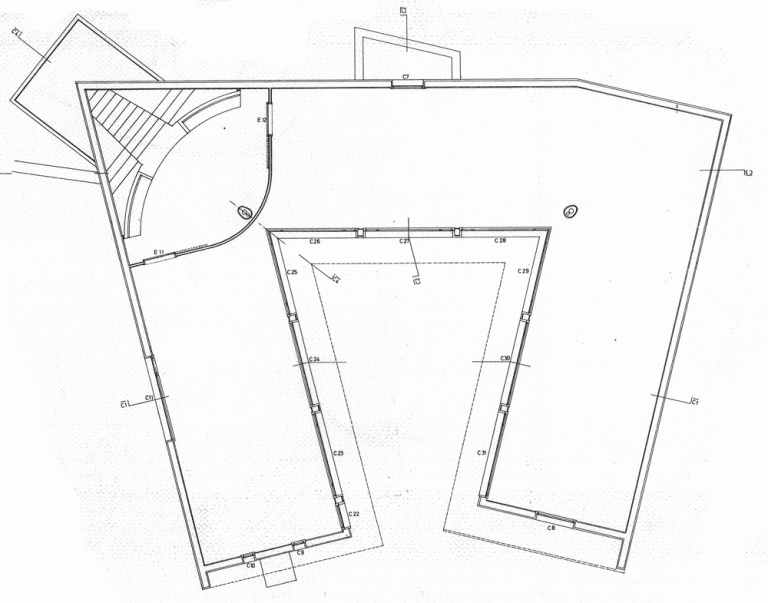
1325821016-lower-floor-plan-1000x587

2. Conventions 

Don’t forget the drawing conventions. Scale and North points; North up the page. This goes without saying.  The same goes for other things like windows, doors and stairs. Draw them correctly. If you don’t put these on your plans, or get them right, you end up looking moronic. Get the measurements right.

3. Spelling

Spell the room names properly. This goes for just about everything on your drawings. Use a dictionary if you have to. Choose a lettering font that isn’t going to be confused for your actual building or prevent it form being understood. Try and avoid using the standard fonts straight out of the software program.

dezeen_Carlos-Ramos-Pavilion-by-Álvaro-Siza_10_1000

4. Draw it like a section 

Draw it like a section. Yes, for those of you who don’t know, a plan is really a section. But it is a section where you are looking down about a meter above the ground plane. Hence it is good to draw it as if it sis a section. Line weights, whilst seemingly subtle are critical in conveying planimetric depth.

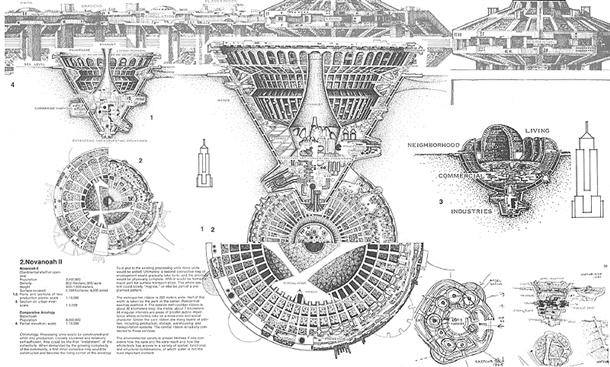
Soleri

5.Show the levels 

Use the plan to design your levels and level changes. Stairs and steps should be drawn in a way that is well crafted and shows that you know that a plan is not simply a flat plane.

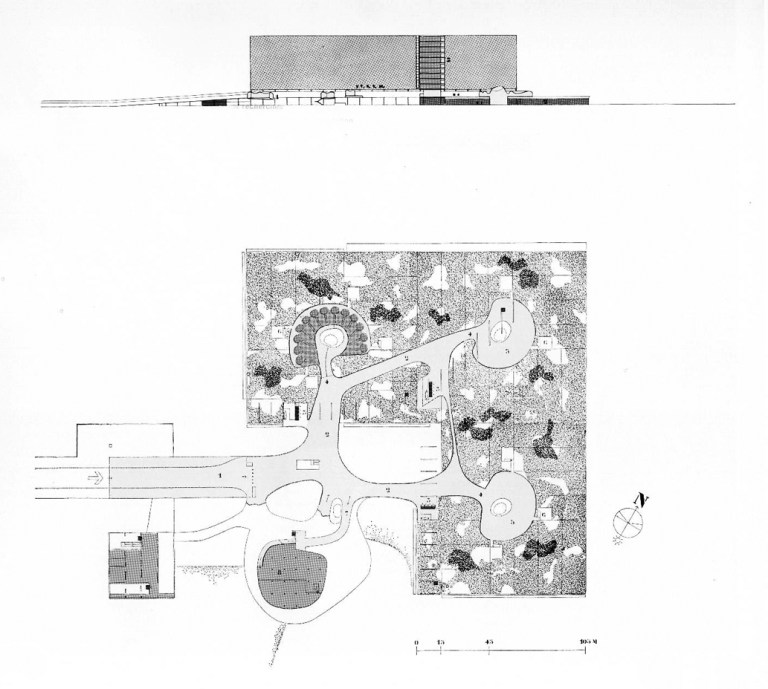
LeCorbusier_Olivetti2a

6. Don’t fill your plans with crap 

Don’t fill it full of standard library furniture. It always looks like shit and makes you look like an indolent and lazy idiot.

CAFEplan

7. Plan composition 

After the horrors of the image above it is good to remember that the plan is a composition in its own right. Recognise and emphasise the patterns, shapes and figures in it. It doesn’t matter if these elements are abstract or figurative. Counterpoint and contrast these. Exploit these to generate further design elements, details and iterations of the plan. A plan is in fact a series of plans within a plan.

1579d8d32dd73404c5e5d7341cbe62f3

8. Inside and Outside 

Pay attention to the plans interfaces both within itself, between rooms or spaces, and where it’s edges meet the outside world or other conditions.What lies just outside of the plans walls. What is its context? How do you get to your plan? What is its realtionship to its surrounding urban context? Or it it just another one of those plans sitting in a kind of blank ether.

dezeen_Carlos-Ramos-Pavilion-by-Álvaro-Siza_07_1000

9. Draw in the detail 

Draw in structure and floor patterns and as many detailed elements as possible. As explained above that is the same as filling it in with stock library elements or banal patterns.Floor patterns well done and with the correct line weight are always good.

kahn-bryn-mawr

10. The plan is a spatial field 

Never forget this: the plan as a diagram, that describes and implies a three dimensional spatial field in which points, lanes, planes and dare I say to volumes are located.

A well drawn, represented, or crafted plan, can hide a multitude of sins if the rest of the project is a pig-dog.Of course sometimes its too late. No matter what you do the plan is still a pig-dog. Remember Raisbeck’s number 1 rule. If it looks good it is good. In other words if looks good to you it will probably look good to the critics or jurors as well.

82f21ab9b7abf079f73ed2dfcd52b961

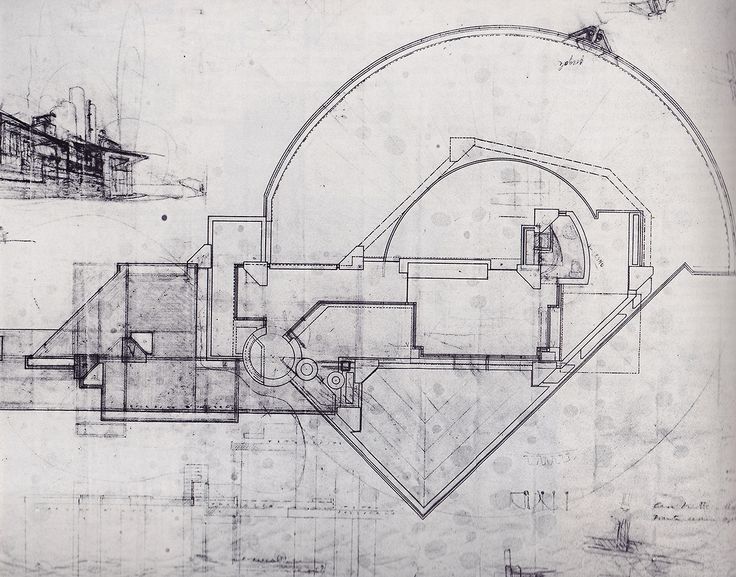
Finally, the plan is never really finished 

For the Italian Architect Carlo Scarpa the plan, such as his plan for Castelvecchio in Verona, was in a way never really finished. The most powerful plans, the ones that will burn a hole in your brain, are those that are iconic and compelling images in their own right. They may look finished but in fact they are not and they are usually the result of numerous iterations. It is best to remember a plan is never complete and even when the project is finally constructed it is still good to remember that the plan, even across the digital archive, has a life of its own.

Surviving the Design Studio: 10 things to do when your design tutor is always critical negative. 

Here at “Surviving the Design Studio” I wanted to title this blog “What to do when your design tutor is a bit Psycho”. But, I thought better of it. Then I softened it a bit and thought I would title it “What to do when your Design tutor is kinda crazy.” But maybe those titles don’t really do anyone justice. Especially, those people with genuine mental illnesses or personality disorders.

Anyone who has graduated from an architecture school would  like to think they have had Psycho or crazy design tutors or leaders. You would be surprised to know some students think I am pretty crazy. But seriously we of the old Archi-school studio world all have our stories about the jumped on model, the swearing, the tantrums and all of this followed by all the students crying. Not to mention the cronyism and the sexcapades: Architecture school is not what it used to be. But the real problem is not so much the mental health of our design tutors or team leaders. The real problem is when the design tutor or project team leader is actually not that good at teaching design or mentoring our design skills.

Bad design tutors or teachers abound. They don’t neccesarily have to be an architect. Nor do they have to be working in academia. Yes, they could be running your design studio at Archi-school, or embedded in your practice studio. But, they could also be the project architect leading your team. They could be in any of the design fields, architecture, graphic design, interior design or even advertising.  Worse still they could even be a client. In other words a  client who thinks they no something about design.

Bad design tutors normally share a few common characteristics. The key site of contention is how they give, receive and foster criticism in the design studio.  Contrary opinions from week to week is a primary attribute of this type. Always critical negative about your work. So much so you wonder if they were actually your parents in a past life. Hence, you can never be right or never know if what you are designing is right.

Mismanaging your time during studio is another. The tutor has no respect about other people’s time and will mismanage your time if you let them. The night before the hand-in, tender or the pitch they will berate you for getting the smallest detail wrong and thus getting everything wrong. They will change their mind just before everything is due.  In studio’s they will humiliate you in front of the others (especially in the crits).  When this happens you will unfortunately perceive how their lackeys and acolytes will stand by and applaud.

Before you quit your studio or job or wallow in misery by reading DSM-5. Here are few ideas to help you cope with the design tutor, project leader or creative who cant actually teach design or effectively mentor you. The person who never has a good thing to say about your work.

1. Zero Tolerance Issues

Firstly, dont put up with bullies, racism or discrimination. Check your organisation or companie’s policy on these issues. Understand who the right person in your organisation is to talk to if you think this is happening to you. Don’t keep things to yourself. If there is a pattern of behaivour take notes and record these. If necessary seek legal advice. You have to protect yourself in the first instance.

Make sure you are not being set up to fail. 

2. Personality matters.

But more often than not things are more subtle than what is suggested above. If you are having differences with your design tutor. It could be about personality differences or maybe different learning styles. I think all students of architecture should be self aware enough to do a Myers-Briggs test and figure out where they are positioned. It is always helpful to know if you, or your team mates, are a INTJ or an ENTJ or whatever. It is a good ida to be self aware of other peoples personality types. Especially your design tutors, leaders and mentors. 

3. Culture

Your differences with your tutor may well be as a result of cultural differences. In the globalised education market and contemporary workforce this is more of a factor. You need to think about negotiation style in different cultures. What culture is your tutor or project leader from and how is this different from your own culture or sub-culture. Mannerisms, vocalisation, gestures, status, and even dress codes are all communicated differently, and mean different things, in different cultures.

Once you understand some of the differences between you and your tutor it will make it easier to work with them. 

4. Keep producing. 

You might hate your design team leader or tutor and hate the project and wonder why you picked that studio or job. But that is no reason to just close down. The first thing you need to do is to focus on your design and not procrastinate. Keep producing what you think the right solutions or possible options are for your design. Keep talking with your tutor no matter what you might think of them. If you hide a way or become to fearful to produce you will not get anywhere.

5. Do the work 

Then really important thing you need to listen to is if it seems like your tutor is continually nagging you to do more work, week after week after week. I would take that as a warning sign. As a design tutor I hate nagging postgrad architecture students to do more work. My tactic is to say it a few times and if it then doesn’t happen not to keep saying it (until the end of semester of course). By then it is too late. More often than not students fail design because they have not done enough work.

The best thing to  do that is to design, avoid procrastination, and design and redesign. Design confidence is built up via practice. Even if you think your work is awful there is nothing like learning how to polishing up a pig-dog (as we used to call bad designs at Archi school).

6. Listen 

Listen to what your tutor is saying about your design and your design processes. Is it reasonable? What is that they are suggesting? Do they have insights into the project or your own design processes that are valuable or helpful. Part of learning how to design is quickly, and I mean quickly, being able to take on board criticism, evaluate it and feed it into your design processes. If you can do this you will be ok. In fact if you can do this you don’t really need the bad design tutor or project team leader. Which leads to the next point.

7. Criticism

Good design tutors and project leaders create an atmosphere within the studio or the team where it is safe to criticise without fear or favour.  It’s probable, if you tutor is really bad, that whatever you do will be criticised. But if your experience is limited it is sometimes hard to figure out what to do. If you feel that your work is being unfairly criticised seek other opinions form your peers and friends. Create your own design crit circles and networks. Chat about it at lunchtime with your co-workers. Sharing the pain of unfair criticism gets you thinking about what is good and not good in relation to your design process.

8. Get help 

Who needs a design tutor when you have friends and all your friends are other architecture students or architects. Use your friends to try and sort out the good from the bad aspects of your design. Use them to help you judge what your tutor may or may not be saying to you.

9.Do the alternative design 

Do the alternative design either by stealth or in your head. Think about the things that will drive that overly controlling modernist parametric purist you are working for into a design rage. Build those elements into your design and then sit back and watch the fun when you turn up for the crit.

Producing the the alternative design is always a good way to test and explore your own design processes.

10. Remember it maybe not be you that is the problem 

Don’t let a bad tutor destroy your confidence. Protect and nurture your own sense of design, design skills, always try and improve your own design processes.

You should not rely on the good or bad opinion of a tutor or your star-architect employer to bolster your confidence. Work through the issues if tutor feedback is bad. The purpose of architecture school, or any school for that manner, is for your to develop confidence in your own abilities independently. Being overly reliant on tutors to give that to you is fine up to a point but at the end of the day you need to stand alone.

The best way to gain your own design confidence is to be responsible for your own design education. This is a life long process and no architecture school, or the star architect you are working for is going to give you that confidence.


Face to Face vs. Online Teaching: The destruction of culture in architectural schools.

Why architecture students and even university managers should go to design studio. 

I went to my Archi school reunion recently. It had a kind of 80s theme. It was great. The pitch for it went like this:

If you remember the days of set squares, Rotring pens, dyeline machines, compulsory Charles Jencks text, cardboard models and scratching out your mistakes with a razor blade….

Today it is all different of course. No more adjustable set squares covered in masking tape, no more broken 0.18mm Rotring nibs, no more inky hands (with ink smudges all over the house), no more sleeping under the dyeline machine at the back of the Master’s office, no more sniffing the dyeline ammonia to get high, no more scratching, scratching and scratching on thin tracing paper. Worst of all  Charles Jencks and the Language of Post Modern Architecture is now a weird curiosity piece.

Digital and mobile computing has changed everything. Of course, we all love our mobile apps. The speak directly to us.  They deliver content and information specifically tailored to our needs and personal pathways in life. Weather, traffic, entertainment, personal fitness and even relationships (tell me about it). I even did a online Coursera MOOC last year delivered on my mobile phone. Although, I did not finish it. But it all seems a good reason to skip class and opt for the online lecture. Its easier, you can raid the fridge and hang out in your pajamas and watch the course online.

Nowhere is technology  and so called disruption innovation more seemingly apparent than in tertiary education.  For those of us who work in tertiary education the spectre of so called disruptive technologies in the sector is real. There is even a book about it. All the executive managers and Dean types have read the Innovative University by Clayton Christensen which discusses the issues around innovation in the sector.

The narrative is a little predictable and hence easily taken up. As it states in the book:

The downfall of many successful and seemingly invincible companies has been precipitated by a disruptive innovation—that is, an innovation that makes a complicated and expensive product simpler and cheaper and therefore attracts a new set of customers. 

Of course its all about “customers”:

In higher education, online courses now typically offer lower-end and more convenient access to courses that can improve students’ credentials or help them switch careers, which is often precisely what the students customers want to accomplish by enrolling.

All of this is about doing things cheaper and the book claims to establish:

How universities can find innovative, less costly ways of performing their uniquely valuable functions and ensure their ongoing economic vitality, thereby saving themselves from decline and possible disruption.  

Thats enough to scare the pants of any university corporate manager or strategic executive in the ivory tower.

So what does all this imply for architecture? Should architecture students go to class? Or should they work at their low paying retail and hospitality jobs and catch up online on lectures when they can? Why even go to class when you can earn a part-time income and get a qualification from a premium branded institution?  How will architectural education fare given the rise of these so called online disrupters and lower cost educational innovators. Should universities migrate architectural studio teaching, or any of the architectural syllabus, to online platforms and delivery? Will this diminish curricula?

I think architects and architectural educators need to resist and question simplistic calls for whole-of-subject shifts to online teaching. Design studio teaching and design thinking is best taught face to face. I think future architects get more out of face to face teaching for the following reasons.

 Design studio teaching is unique 

For a start, studio design teaching is a mode of teaching that is unique and particular to architecture. It is one of the central elements of architectural discourse and its associated canon. Face to face studio teaching is the strong intermediate link between local and increasingly global architectural practice. The design studio is the crucible of design research. It is also itself a place of disruption where desires, expectations, and ideas are generated, regenerated, critically considered and creatively destroyed. The architectural studio thrives on creative destruction.

With all the talk of customisation via marketing channels and delivery portals its good to remember that face to face studio teaching is already customised to the individual. Nowhere else can individual gestures, vocalisation, tone and temperment be part of learning and the teaching equation. The teaching and learning of design processes is very much an individual, and even emotional, exchange between teacher and learner.

 Face to face collaboration teaches leadership

It is essential that we teach our future architects about face to face collaboration. After all that is mostly what architects do in the real world outside of the academies.  At the moment there are a variety of Project Management and web tools which enable collaboration in the virtual realm. But, in advanced procurement research there has also been a return to physical co-location and face to face relationships. For example, an increasingly popular tool for scheduling collaboration in the new Integrated Project Delivery (IPD) projects are physical maps which allow project teams to discuss schedule sequencing as an integrated team in  large ‘Big Room’ environments as they are denoted. These maps appears to be closely related to the lean construction philosophy where construction processes are conceptualised as “flows.” In the IPD model “value stream mapping” appears to have been borrowed and adapted  from Toyota’s lean manufacturing process. It all hinges on in person collaboration.

NASA’s Team X at the Jet Propulsion Lab is another example of advanced design processes and face to face design innovation. JPL created the first concurrent engineering team in the aerospace industry. Team X as it was called started in 1995 and since then it has carried out over 800 studies, dramatically reducing the time and cost involved, and has been the model for other concurrent engineering teams both within NASA and throughout the larger aerospace community. Team X relys on the physical co-location of different engineering disciplines; alongside, an advanced  networked spreadsheet intensive system with real time parameter updating ( See here and Warfield & Hinh 2009). Architects are not rocket engineers or scientists but again problems are very often solved face to face on building sites and on manufacturing floors directly with craftspeople and tradespersons.

Whether it be done using technology or systems such as those borrowed from Toyota, JPL, or a Building Information Model and rapid prototyping, these tools shift the decision making to integrated teams. These teams, at some point, rely on face to face collaboration. Educators and managers who wholly opt for the virtual dream are doing just that: dreaming. I fear that the current fashion for online teaching and so called university innovation is just another version of corporate managerialism gone wrong.

Mostly, these days my students like to watch the lectures online at a time of their choosing after it is recorded. In this nice new neoliberal age of tertiary education they are too busy to come to class.  That’s because they are probably also working hard to pay their fees. This has destroyed and is destroying the culture of architecture schools.

If as a student you want real value for money then its best to come to class and engage with face to face. You will end up being a better architect.

The same goes for university managers. Most of the university managers I know, with a few exceptional exceptions, have never been to a design studio crit session. Yet they are intimately involved in architectural education. My experience is that often they don’t appreciate, and frankly whilst it sounds harsh, I wonder if they even care about the value of building a culture around a discipline or a cohort. It’s too hard to build a culture, in a discipline you are not trained in, when its is so much easier to cut costs, outsource staff, manage up and apply rules and policy regimes.

For strategic and executive managers further up the food chain in universities it’s easier to opt for the new cheaper lecture delivery technologies and spout off mantras about “innovation” and “disruption” and the “future.” If anything Christensen’s earlier work would show that simply adopting the latest technology does not necessarily ensure success.

Interestingly, enough, Frey and Osborne’s seminal paper on AI and which future professions will be “least (probability 0) or most computerisable (probablity 1) ” ranks Teachers at 48 (.0095) something that is not easily computerisable. Architects are ranked at 82 0ut of 702 (.018) employment categories (Telemarketers are last of the 702 occupations modelled in this study).

In more practical research a recent paper in the Journal of Applied Research in Higher Education asks if  “the use of online video mini-lectures, intended to complement in-class teaching by allowing students to review the more technical aspects of the course (in this case a Washington USA micro-econ0mics course). It is concluded that:

“online lectures improving student achievement, but that this improvement is mostly achieved by the lower achieving students, and exhibits significant diminishing returns to the number of times the videos are watched. As such, the videos are shown to help students who were struggling with the material, but that there is little value to exclusively watching the videos multiple times.”

A cynic like me, would again say, that the students are probably struggling with the material because they are too busy working part-time to pay for their degrees.

As Frey and Osborne argue creative intelligence and the processes of creativity are difficult to specify. Indeed, the ability to formulate architectural ideas, concepts, schema, systems, forms, compositions, theories and ways of knowing in practice is best taught through a vibrant educational culture. A culture which understands and puts face to face teaching first is central in this endeavour. In our universities and architecture schools architects will need to fight to preserve the integrity of their education systems and their canon against the onslaught of mindless managerialism disguised as “innovation.”

Authentic innovation as most architects will know is about destroying any idea just before it threatens to become a commodified and generic product.

The Zaha Grandparent Test: Turning your design into a great visual presentation.

A colleague told me her final year Masters design students asked her what the format requirements were for the final submission. What is the template they asked? She told them, as they were all doing individual projects, there were no right answers. There was no template. They were horrified and disturbed.

She suggested  that they each needed to design their own layout and graphics for their project. Of course, as all experienced architects know, by the end of architecture school students should know that there are no rights answers. Full stop.

Of course, such stories make me wonder about the power of computers to seduce young minds. Yes, I know this sounds cynical. But the computer is a highly controlled software environment ruled by algorithms producing another set of rules, graphical user interfaces and templates that are stable and static. Unfortunately, outside of this pleasant world of the rule regulated shimmering screen there are no rules. So here are a few ideas about making that design shine on the printed page or on some other digital platform. At the end of the day, or studio, your work needs to pass the Zaha Grandparent Test.

Drawings are read 

In the real world people “read” drawings. What do I mean? It is not like reading a book; nor, is it like watching  a television; or like looking at the screen of a mobile device.

The key to a great visual presentation is to understand that reading drawings or digital models is about getting inside the head of the person, or people who will look at our drawings and digital images. It is like a novelist who writes words in order to evoke images, sensations and thoughts in the person reading the book. Your drawings and visual images are “read” in this sense. If you do not prepare your presentation with this in mind you will fail to communicate your project ideas.

Approach it from the viewpoint of creating memorable images for your audience. What are the images that you need to produce that your audience of critics or clients will never forget? In other words create images they will think about even when they are fiddling around on their favourite app on their mobile phone.

RACHEL JONES FINAL LAYOUT_BLACK_Page_5

Layout is crucial 

When I look at architectural drawings or images on the wall. I don’t often read the text. I want to look at the images and get a sense of what the project is like. The layout of the drawings in the pdfs. or on the posters on the wall need to tell a story; in other words a narrative needs to be created that guides a “reader’s”, in other words a critic’s, “eye” through your architectural or urban design. In two dimensions either digital or physical you will need to describe and guide this “eye” through a three dimensional project.

What the project is like as a spatial entity, object or series of spaces is important. The spatiality of the design may need to be described and explained at different scales. At a urban scale in relation to a city or neighbourhood. How it is approached is important. At the scale of the street or its immediate neighbourhood. Entry conditions should be described. How do you enter the building and what are the spaces you first encounter when you are in it? What will a person see as they move through the building? What is it like at the scale of rooms? One way to do this is to organise your layout around these different scales or even the circulation routes around and through the building.

Layout is crucial to convey all this. It should not contain too much text as people want to see what the design is like. Too much text is confusing. Give your layout a heirarchy. Consider which information is more or less important. Structure it so that supporting diagrams, text and research information is adjunct to describe the spatiality of the building.

It is no good having one big aerial fly through or overall image if you then do not show the other spatial aspects of the project.

Always test your layouts with mock-ups and then refine them. Physically print them and pin them to a wall and then stand back and see what it is like. A bad layout has usually been done in one hit.

RACHEL JONES FINAL LAYOUT_BLACK_Page_4You don’t have to show everything. 

A good layout is a sequence of well organised images that convey a story and give an overall impression of the design. You do not have to draw everything. Tutors or critics who insist that you draw everything or you need to consider every detail are pedants. In the dark days of the 1970s I visited the architecture school up the road from my architecture school. I remember coming to the final year pinup and seeing sheets and sheets of plans, elevations, roof plans and sections. Every internal elevation, every external elevation and numerous sections. Line after line after black and white line of two dimensional drawings. There were even a few details. By the time the students had done all of these there was then no time to do any 3 dimensional drawings. The whole enterprise was as boring as batshit.

Drawing everything is a waste of time. Draw and translate into other media your digital models the  aspects and qualities about your design that are the most important. Architectural design communication is not about naive realism or trying to representing reality. You are not a failure if you haven’t drawn every elevation. In fact you can convey more about a design by just producing sections. After all plans are really sections anyway.

Only draw and present those images that convey the spatial, emotional or material narrative of your proposal.

RACHEL JONES FINAL LAYOUT_BLACK_Page_2

Design with the end image in mind 

Smart architects, at some point in the design process, plan their images, drawings and layouts ahead of time. They then put more design effort into those aspects of the building that will be presented and end up as images for others to view. In other words they start to design with the end visual product or presentation in mind.

Once you have a design up and running its always important to think that this will be presented and then work backwards from that. The worst presentations are those that desperately pop out at the end of the digital design process and get slapped around in Photoshop and slopped into InDesign.

RACHEL JONES FINAL LAYOUT_BLACK_Page_1Avoid excessive realism.

It’s not about copying reality. If your were going to represent your design as reality then you would build it at one to one scale. But, creating architectural images, particularly in the early stage of a project (sketch design),  and representing your design is not about making it real. It is not about filling in the dots with material likenesses, textures or colours of the real thing.

Yes, the sky is blue and bricks are red and concrete is a kind of grey. But that doesn’t mean we have to make everything look like its kind of real. Usually it just leads to really bad visual images that are oversaturated with colour and that reek of naivety. Drawings are not real, (look at Zaha Hadid’s early work for example), digital images are not real, 3d printed physical modes are not the real thing. So why try and pretend they are real? The best and most powerful architectural images are those that recognise this fact. Your images are representations and translations of your design. They are not the real thing and as such your images should represent the essential ideas of your design in the very manner in which it is presented.

Understand your media

We don’t all have Oculus VR set ups. So in the meantime we have to be able to translate our models from the computer to other formats. Sometimes these formats are actually physical. In the past we had a limited range of formats to translate or describe our projects in. Mostly just pens and pencils a and ink and limited range of reprographic techniques. I was an expert on reprographic techniques and using pantone for colour on drawings.

Today the techniques are different. Today with the proliferation of different platforms, software  and mobile computing your project may end up in a powerpoint, in a .pdf file, as a poster on a wall, on a web page or in the screen of an ipad or mobile phone. Its a good idea to remember which media you are translating or representing your design in.

Finally, the Zaha Grandparent test

Your images need to pass the Zaha Grandparent Test. Put your grandparents in front of your final Zaha like outputs and see what they say. They should both be able to understand what you have done and also be blown away as well. All of the above survival tips are another way of saying that to a large extent architecture is about image making. Of course how these images become a material reality is the topic of another blog. If not a few thousand blogs. Again, there are no right answers and after all isn’t that what architecture is all about.

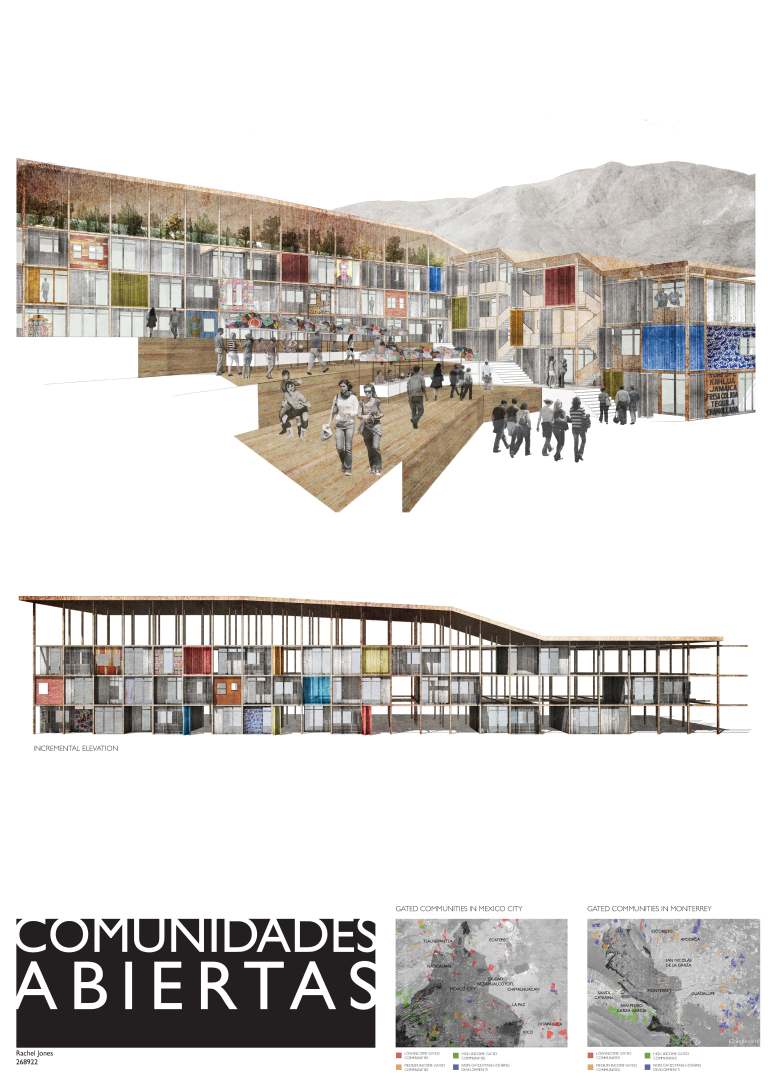
(The images are from Rachel Jones MSD MArch thesis from 2011.) 


Surviving a design jury presentation: The essential guide. 

Design juries can be terrifying. It doesn’t really matter if you are an architect or a student the experience can be soul destroying. Get it wrong and you can lose the job or fail. Get it right and you live in order to fight another day. Standing in front of a group of critics can determine if you get the job; or the prize; or if you are at architecture school, a pass in  design studio. It’s much harder to present if you haven’t done enough work or you don’t really believe in the project. But speaking well in public and knowing the essential lessons of presenting a design can be the difference between passing or failing.

I have sat in on numerous design and award juries. The awards or the commissions don’t normally go to the architects who talk too long, speak in jargon, or bore the jury with an explanation of the stair and or toilet details. So here are a few essentials that will help calm the nerves and get you through if you are not used to public s peaking or always find presenting to a jury harrowing.

Timing 

When you are presenting to a jury. Get the timing right. Don’t run over time or drone on. Architects are notoriously bad at timing there talks. As a student I went to the old AIA International Lecture series. All I  remember is Hans Hollein talking for around 3 hours straight. Aldo Van Eyck was the same. Will Alsop did it to us as well. Each time it happens to me it is excruciating. It doesn’t really matter how good the work was an overly long talk will kill any audience interest or curiosity. But, at least Will Alsop was kinda interesting because he was long winded as well as being drunk. But I still would have given him an E for going over time.

A picture says a thousand words

If you are smart, or English is your second language you don’t have to say a lot. The more diagrams, images or other representations you have to present the less you have to say. The less visual material you have on the wall the more you have to explain what is not there. There is nothing worse for a jury than seeing an under designed scheme that is then talked up, explained and elaborated in words.

In presenting to a jury architects need to remember to right balance between about talking and what is on the wall or on the digital files. Architects are visual and jury members like to look at images. I tend to think it is better to have more visual material than text on your drawings or images. There is nothing worse than having a few thousand words of detailed and so called explanatory text on architectural presentation pdfs. A short summary of the concect is good. Like an abstarct it should be no more than 300 words or so. The rest should be diagrams including, charts, graphs, flow charts and conceptual diagrams explaining the concept. Minimal text is good. As well as two and three dimensional views that explain the design.

In short there should be enough visual material on the wall to make your life easy explaining it. You wont always be there to explain you work. This is particularly the case for competitions and when a jury member or critic reviews the project later. So the layout and the visual argument of the design with any supporting diagrams is very important. This is why clear and communicative graphic skills are important.

Just cutting and pasting the renders out of the virtual world into photoshop and then sending them straight to the printer doesn’t really work. Slapping together a layout doesn’t really work. Keeping it in the computer up until the last minute doesn’t really work. Over-talking or over-texting the project doesn’t work.Filling your drawings with slabs of text doesn’t really work.

As a presenter of a design the aim is to lead the juror’s and critic’s eyes to the drawings. The aim of what you say is to get them to understand the visual argument and, in the minds, to inhabit the space. What you say to a jury in words must be linked to the images.

Don’t avoid talking about the concept 

Some architects find it difficult to talk in conceptual or theoretical terms. This may be in apart training and it is usually because for some architects it is easier not to talk about history, aesthetics, compositional processes, form, critical theory or the politics of urbanism. But this is exactly the sort of thing a jury wants to hear.

Bad presenters or architects, or students, who have not got a great content on the wall talk a lot about the other stuff. Like, what they had for breakfast. How their semester shaped up in terms of blow by blow and sequential description of how the design happened. Usually the easiest way to do this is to talk about everything that doesn’t matter. There is nothing worse than hearing a long winded talk about the pragmatics of  project. Siting, briefing, sustainable technologies, construction and materiality, client and user preferences can all too easily dominate any presentation. A great design is not simply a response to these factors; nor should it sound like it.

Most jury members and critics are architects who know a lot about that kind of stuff. Good architects have mostly spent there life trying to escape from the contingencies of pragmatic design. Mostly they are there because they have an interest in the strategic issues, problems and broader views not the details. Jurors and critics want to hear and talk about the big ideas. For a jury member going to an awards presentation is a bit like going to one of those TED talk thingys. As a jury member you want and expect to hear about life the universe and everything in relation in a very focused way.  Design Jurors and critics like to debate ideas in relation to the design. Give them what they want and don’t avoid talking about the conceptual apparatus and how it has shaped the building.

Of course, if you just talk about life the universe and everything and not the project design then you should be doing philosophy.

Structure 

Guide the jurors eyes to the design. The way you structure the presentation should reflect this. Avoid the “this is what I had for dinner” or the “passage through life” syndromes. Get to the point. The first thing a jury wants to here is about are ideas. This will give them the context from which their eyes will begin to apprehend and understand the design and inhabit the building in their imaginations.

Do it as an elevator pitch. In three or four sentences you should be able to say what the project is about. What is it’s over riding concern or concept? The sooner the jury is familiar with this the more they will feel comfortable with looking at the design. Don’t leave the concept to the last minute. The best way to present to a jury is as follows. The improtant thing is to guide the jury to the design and the images which describe it.

You also need to lead the jurors thought the building. You can do this by describing how they enter the building, how they circulate thought it and what qualities of light or spatial qualities it has once they are inside or moving through it. The point is that you need to guide, not unlike a tour guide, the jury members or critics through your design.

  1. Introduce your self and the concept
  2. Quickly describe 3 or 4 ways that the concept has shaped the design of the building.
  3. Lead the jurors through the design quickly discuss: Siting, main entrances, circulation and spatial qualities of different spaces.
  4. Summarise what the design contributes to design knowledge and what you would do to evolve the design further.

And then you can be ready questions. Of course you in the above scenario there are whole lot of things you have not spoken about. Like materials or what or how its constructed or where the toilets or parking are. Some jurors like to ask these questions and by not mentioning them and yet being prepared for them. You will end up sounding knowledgable and thoughtful. Nevertheless, the main aim in the question period is to get a discussion going about the design, its associated concepts and what it says about the designers attitudes towards the particular type of architectural or urban problem the design encapsulates.

Public Speaking 

Don’t speak as if you are channeling a bad power point slide. A badly formatted template with crap images and too much detail on each slide. Keeping it simple is best.

I once saw the director of an architectural firm destroy his firm’s chances of getting  a $150M project by the ineptitude of his presentation. After 10 minutes everyone in the audience felt the same. After 10 more minutes I wanted to stab myself in the eye with a biro. The problem was that the presentation went on for another hour. It was scheduled to be only 35 minutes. The firm did not get the job and the primary topic of conversation in my email inbox, by other attendees, the next day was how bad it was. I just hope someone told him.

All the rules of public speaking apply. Don’t forget to wear your bow tie or best shoes. Get a good nights sleep before hand and rehearse, rehearse and rehearse. Practice in front of your grandmother or your non-architectural friend’s. See if they get it. After all it could mean the difference between getting the architectural commission or doing the Uber thing: Who wants to be an Uber driver after seven years of study?


Surviving the design studio: 6 golden rules for architecture students and architects. 

You are half way through the design project or the semester and things are dragging. A few weeks or months ago you were enthused about the project and now it doesn’t seem like things are good. You are worried about your own skills, your research is going on and on, you don’t understand where your are headed and the studio leader, or your boss, or client, keeps looking at you quizzically. Most of all the design is stuck and you are running out of time.

This is not an uncommon situation.

It is important to understand how to avoid this malaise both from the perspective of studio or team leader as well as from your own viewpoint. Everyone can take heart that architectural teams are potentially the most creative, productive and innovative teams on the planet. Why would I say that? Firstly, archi-teams are able to conceptualise and visualise things in three dimensions. Secondly, these teams are not afraid to to conduct processes of creative destruction in order to reiterate or refine a concept or element of a design. That is why the design studios are great laboratories of design. Thirdly, in an architectural studio you can tolerate high degrees of ambiguity; in other words, you can work along multiple and possibly contradictory lines of design. To achieve all this however requires effective leadership and committed team members.

Architectural teams or architectural school design studios are not about sequential or linear lines of thought. It is not about ticking the boxes in sequence. Or swiping right or left on an app. Sometimes, this is not easy for the rest of the world to comprehend. Sometimes this is not easy for architectural students to comprehend as they undertake their first studios at graduate school.

To survive and prosper there are a number of golden rules for both architecture students, design architects, project architects and architects leading or teaching those teams.

1.Studio leaders are human and every team member is different.

It’s a good idea to get to know your design studio leader or the architect leading your team. What are their interests? What are they passionate about? Where do they think the cutting edge of architectural practice is? What kind of design research are they involved in? More importantly, how do they propose to approach the projects design. What is the design pattern or structured process that they seem to be advocating? What characterizes this pattern? Is it orderly or more chaotic and intuitive?

For studio leaders this means sharing and imparting with students or team members the travails of your professional life. What are your points of view on the most recent urban controversies? Who has inspired you as an architect? What are your areas of expertise? How would you characterise your own education and what would should have been different about this? All of this requires a proactive approach to the design process and recognising diversity in the team. Everyone in the studio or team will have a different style of communicating it is up to the studio leader to recognise this in order to foster an ongoing culture of design discussion across the project.

The uncommunicative or passive-aggressive team leader or team member who is reacting and lurching from crisis to crisis is everyone’s worse nightmare. Communication is the key. If you cant do anything else else talk to your friends about the project. The more you talk about a design project during the process the better it will be at its outcome.

2.No two studios are alike. 

Architectural Studios on the inside never seem like the brochure or presentation. So don’t be dissapointed. The particular dynamics of  every studio is different. Different leaders, people with different skills, different styles of leadership and a conception of architectural design. Every design team is different and every design studio experience is different.

Don’t think all because your last studio or project was great the next one will be as well. My rule of thumb is for every 5 studios you teach one will be great, 3 will be ok and one will be a disaster. A few years back I set up a new syllabus for a studio. A lot of research and peer consultation went into it. In the first semester of teaching it was great. The second time it was ok and the results were almost as good. The third time it ran it was a total disaster. The students hated it, my peers were not convinced and the admin staff thought it sucked.

So, don’t expect it to be the same as last time. As a team member its good to clarify to yourself what you think the design process will be. Ask yourself, is it linear problem solving or is it about producing a series of varied solutions? What is the tone of conceptual thinking that is being promoted in the studio? Is it about historical or typological analysis, urban analysis, semantic meaning, abstraction or the technicalities of parametric design? What weighting in the studio is given to aesthetics and graphic communication? A key question to ask an understand is what model of design generation is being promoted in the studio or team? How are you expected to produce design solutions?

3.Engage by asking dumb questions.

Ask dumb questions. This is the easiest way I know how to start the process of communication in a design team or studio. Because the obvious and seemingly dumb question is the question that usually needs to be asked in the design team. Designing is about testing, and indeed stress testing, propositions, arrangements, aesthetics, processes and details. Usually this is done via the question. Usually, it is the obvious question that everyone’s as been thinking that really needs to be articulated.

Admittedly not everyone is an extravert and some people find it difficult to ask questions. For design leaders this means encouraging questions, as they are asked, and not being dismissive. I like to ask my own dumb questions. This helps to break down any barriers of communication between team leader and team members. I know it may sound trite but encouraging or developing a feedback loop of dumb questions speeds up the evolution of the design. It also increases the ability of team members to feel comfortable in voicing their opinions and again this contributes to a design culture within the group.

More often than not it is the seemingly dumb question that can unlock the key issues and complexities of a design concept.

4.It’s not about the mark and nor, is it about winning the award.

Its not about the mark, and in the real world it is probably fair to say it is not about winning the award. Unfortunately, architecture schools have been corrupted by university fee regimes and the brand cache of a degree. Architects as a global profession have been corrupted by the peer distinction and star architect system.

A focus on the marks or awards never really got any one anywhere. I think it’s about packing as much design thought into a design project as you can. The design thinking embedded in the project needs to be robust enough to weather the storms and criticism of conceptual logic, value management, client whims, regulations, constructibility, politics and peer criticism. Trying to appease –by balancing out and juggling too many different factors–the awards judges or your tutors in terms of a imagined assessment regime only gets you in a mess. It usually only leads to design indecision and not knowing what is important amongst a range of factors.

For studio leaders it means getting the team members to focus on the process of the design research, design generation and production as the primary goal. Peer review juries and competition panels are notoriously fickle. Of course, regimes exist in architecture schools for marking and should be thought about and taken seriously. But, an incessant focus on trying to second guess a marking regime or a jury always detracts from the design process.

The good news is that anyone focusing on the design as a foremost priority never really loses out. Even if you don’t win the billion dollar project through a competition it’s still great to have a design that embodies your own design values.

5.When stuck get unstuck and hack yourself and burn your computer 

Let’s face it any design project can get stuck. We all get stuck for ideas or are unsure about the outcomes as a design evolves or progresses. All it means is that you need a fresh perspective. If you re stuck you can usually try anything. Have a break from the project for a day. Get your friends or others in tothe studio crit. Design an alternative concept and compare it to what you have. Throw around a few new crazy idea. What is the most bizarre and idiosyncratic idea of concept you can throw at the project. Is there something new you have not tried?

Hack your own design. You can do this by changing media: making a model, doing a sketch a different style of drawing; a section instead of a plan. Burn your computer and do some sketches. Take a stick and draw in the sand.

Hack yourself, to get out of the design studio grind. Go to a party and think. Take the road trip option. After you have undertaken some of the above methods you can reassess.

For studio leaders getting your students or team members to try out new ideas or new approaches when they are stuck is critical to successful outcomes. Usually designers get stuck when they find the path forward limited by pragmatic considerations or they are overwhelmed by their own self criticism. Designers are usually their own worse critics. A good team leader will understand this and support those team members prone to endless self criticism.

 6.Leaving it to the last minute doesn’t really cut it.

This is probably the most important golden rule and point. This is a real trap for the unwary, for those leading and for those being led. I call it the: a lot of research and too little design syndrome. Studio leaders should be constantly challenging team members to avoid procrastination and design via physical or digital means. research takes place in paralell with research. Make diagrams of your research instead of just reading it or writing about it. Design is not about thinking and researching and thinking and researching and hoping that a spatial entity will all come together in your head and then then translate exactly into the computer.

Design is about trial and error. For this reason designing a project is a race. The more trial and errors the more you can iterate a design. I can tell when I am in a building where the elements have only only been designed once. The second or third pass is where great design happens.

Architecture is too important to leave to the last minute.