Surviving the Design Studio: On NOT Seeing REM when he is in town.

Rem Koolhaas is in my small city on the outer edges of the global architectural galaxy and his upcoming lecture at MSD is so popular I can’t get a ticket. Thankfully, there is a live stream. Not that I tried that hard to get a ticket, but now I feel a bit guilty, shouldn’t I be hanging out and rubbing shoulders with the celebrity architects like REM? Last night REM opened the M Pavilion and my Facebook and Instagram feeds were suddenly full of Rem, the pavilion and his partner in crime. I missed out on seeing Ai Wei Wei in person at our National Gallery last year and it was like everyone I knew had a selfie with him.

Hopefully, NOT being seen, in the same big M Pavilion or in the same lecture theatre as REM would not kill my own cult like status as a blogger or researcher interested in the socio-material practices and histories of architects . For a moment I thought that, given that I am increasingly keen on ethnographic studies and sociological perspectives on the architectural profession, maybe I could do a kind of ethnographic study, of trying to meet the big star architect who comes to town. But I am thinking it’s now too late to do that.

I told myself to forget the angst, envy and the hand wringing and to calm down about not seeing HIM. Not seeing REM in person wasnt the end of the  world. Besides, I was just coming off a teaching intensive, needed to get a few research projects actually running and worse still: it is the school holidays, and I feel I have to keep an eye on the teenager, lest he indulge in anti-social activities whilst he is waiting for his enlistment papers from the ADF.

I took a few  a few deep breaths and began to think about the tropes and characteristic images that we seem to follow in our feeds, and give authority to in our profession as architects. I began to wonder if we were stuck I some kind of media cycle which has a recurring narrative when a global brand comes to town.  This loose assertion of course is based on my own experience and when I was a student, in the 80s, we had this thing called the International Lecture Series it was great and we saw lectures by amongst others: Eisenman, Ito, Hasegawa, Stern, Shinohara, Prix, Cook and even Graves. After seeing so many I figured out that the general order of events for the star architects visit goes something like this:

  1. Arrival.
  2. Public Lecture.
  3. Dinner with notables.
  4. Visit to see architects buildings.
  5. Round table seminar.
  6. Studio Crit
  7. Everyone goes home.

There was usually some kind of controversy with each visit either a salacious scandal (leg propositions under the table) or clash of egos between global shark and provincial fish (It’s also good to make sure your star does not get run over).

But of course bodies, and gestures and fashion is a big part of the star’s visit. What are they wearing? How thin are they? Is it Comme de Garcons, or the last gasp of Marithe and Francois Girbaud, or Gucci shoes? Thinking all this, made me think about the recurring images and tropes or architects that seem to appear in our feeds in this media age of Trump. In order to promote media literacy here are here are a few recurring images for your amusement:

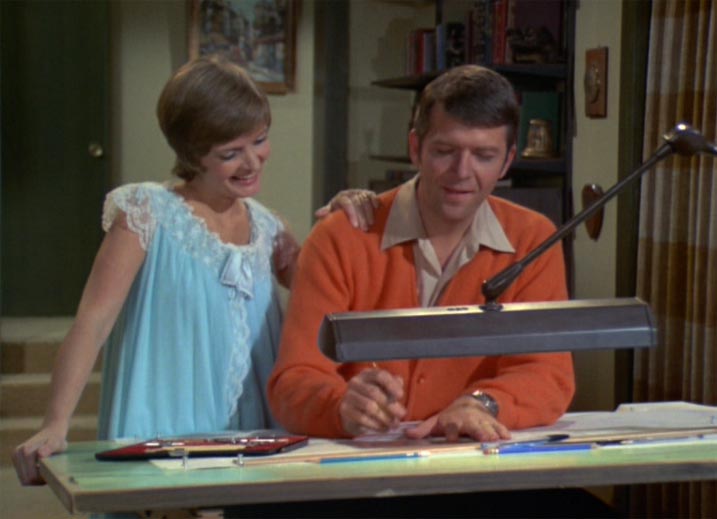
1.The architect at the drawing board 

TV series the Brady Bunch really set the tone for a whole lot of misconceptions and myths in popular culture about architects.

brady_den_16

2. The architect as rock star 

FLW and RW


3. Architect as James Bond 

DC and PS

4. Looking right at you architect visionaries and composers 

MB, DC and PC.

5. The olden days architectural project meeting

Brady Bunch, Corbusier at UN, FLW and NASA Engineers for comparison.

6. Project meeting’s now

BIM meeting, “inclusive” meeting and normal meeting.

7. Architects all over it 

Bjarke and WorldCraft

493122029_640

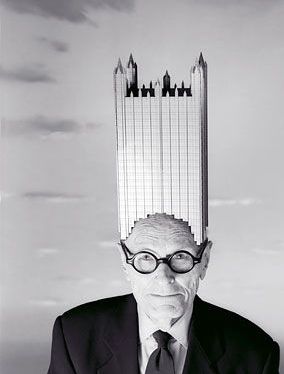
Most of us who can’t see REM are maybe  too busy at this time of year with the kids in the school holidays to see him. But if I did go and see REM, and yes I am going to look at the live feed, it would be great if he came to town wearing an an outfit like Leigh Bowery below. Or at the least a special royal and kingly crown, as Philip Johnson, that most subversive of architects, managed to pull off. Maybe then, I might take the global system of our discipline more seriously.

09-Fergus_Greer_Leigh_Bowery_Session_III_Look_11__August_1990__From_the_series_Leigh_Bowery_Looks

Mental Health, Burnout and Architects: Starting the conversation

RUOK day has come around again in my peripheral part of the global architectural galaxy. Recently, I met an architect who was having a few really bad weeks in her practice. She said it was the worst time she had ever had in practice. After a series of particularly gruesome negotiations and risk management issues she decided to take, what is known as, a mental health day.

Survey Invite for Architecture Students

Anecdotal evidence suggests that there is a widespread issue regarding mental health the both for practitioners and students. If you are an Architecture student reading this you might like to complete our survey.  We are investigating how undergraduate and postgraduate students’ experiences of psychological wellbeing and distress relate to other aspects of their university experiences. Understanding these relationships is important for supporting students to develop strategies that enhance their wellbeing and overcome experiences of distress. The survey link is here.

The Stress Factors Practicing Architects Face 

No matter how hard architects try to manage risk it doesn’t take much in practice, for things to go awry. In the last year I have been witness to some of these things:

  • A builder who misrepresents his financial position because he is not getting paid on another project.
  • A  bullying project manager who can’t make decisions on prestigious government project and then blames everyone else for time delays
  • A client who moves in and then vociferously complains about every detail despite extensive prior consultation.
  • The bad advice from the product manufacturer combined with sloppy installation resulting in the necessity to replace all the floor coverings.
  • Every minor planning ambiguity or skirmish that architects have to deal with.

All of the above situations is enough to put extreme pressure and stress on any architect, regardless of how experienced they may be. Running and directing an architectural practice can be gruelling. No matter how big or small your architectural practice, or even if you are a student of architecture being an architect can take a real toll on your mental health.

Speaking from my own personal experience burnout is common factor amongst architects and academics.  I came to the conclusion that the “grin and bear” it school of working, doesn’t really help anyone. It is too easy to sweep a culture of out of balance work practices under the carpet. Run for the exit if you here your overlords telling you to “man up” or just “just grin and bear it” or it “is what it is” when unreasonable work expectations are made and you start to burn out.

Contributing Factors

In some practices staff are subject to long hours, relatively low pay, entrenched cultures of discrimination and worse still bullying. To what extent are these issues systemic? I guess, no one really knows as there have been few studies looking at these issues and the mental health outcome of architects (there is a PhD there for someone). Some of the contributing factors in regards to mental health and architects as noted by RIBA recently are:

  • Lower pay relative to other professions
  • A culture of long hours
  • Adhoc career pathways
  • Gender and other forms of discrimination.
  • “Boom’ and “Bust” workflows
  • High personal investment in the actual work
  • Lack of union protection
  • And a working environment where HR support is not a part of the working landscape

This is not to say that every architectural practice is exhibits all of the above attributes. But architecture is hard enough any way so why make it worse?

Discrimination

But, it also needs to be said that all of the above is relevant to those architecture students and architects who experience discrimination as a result of their sexuality, gender identity or ethnic differences. (You can read some of my thoughts on this here). Thankfully there are more, although not enough, community support groups for these people than there where in the past.  My previous blog on some of these issues can be found here.

For me personally, that many of the problems, is because of an entrenched culture that gives primacy to the architects as singular genius with loyal followers. Slowly but surely, architects are waking up to how much this has damaged our profession. Anyway here a few points for your consideration:

1. A Few Online Resources.

There are lots of online resources these days so here are a few.

In my country RUOK day is coming up and this can be found here.

There are plenty of online resources in Australia Usually a good place to start. Some of the resources again the ACA is on top of things here.

The AIA in Victoria currently has a health in the workplace module.

Tim Horton’s the NSW registrar’s article about this is also worth reading here.

2. You are not invincible.

We all need help sometime. For younger architects, it is easy to think you are invincible. But like everyone else life events, for example grief, can easily take their toll. So, don’t be afraid to seek help from a trained psychologist or counsellor.

In Australia, you can start to find someone who might be able to help at this link. There are also plenty of places where you can go to for immediate and urgent help such as Lifeline if you are having an immediate personal crisis.

3. Getting a coach or mentor.

As architects, we need all the help we can get. No matter what kind of practice you lead or are in it is really important to develop your own support groups or find yourself some mentors further up the food chain. One great group is EMAGN and also the young architects group in Victoria. There are also various groups for small practitioners around.

If you are in a position of leadership, or decision-making is crucial in There is also a lot to be said for getting a career coach. Leadership and Decision Making is not taught in architecture schools so executive coaching may help you develop and fill the gaps. The best design leaders are the ones that are reflective and can evolve.

4. Take a Mental Health day

Yep, just go for it. Turn the smart-phone off. Get out and party, or shop, or as suggested by the blog image go for a spin down the freeway. Go for the Yoga thing. Sleep in or hang out with the Baristas. Do nothing. Go to Burning Man 2018 as my friend did in 2017.

Sacrificing your mental health for architecture does not really help anyone. As a local, regional and global community of architects we will be stronger if we start to have this conversation. As a profession, no matter our roles or where we are situated, not talking about this stuff is toxic to architectural culture.

Surviving the Design Studio: Don’t be a Lemming when choosing a design studio.

Yes, it is almost that time of year (at least in the Southern Hemisphere) when architecture students begin class and go about the business of choosing their final semester design studio.

This blog is a repeat of previous blog I did last year. In that blog I argued that the four worst reasons for choosing to be in a design studio are related to a cluster of common syndromes. But I have now added more syndromes to the original list. This is as a result of countless millenia watching architectural student lemmings jump off the cliff  and choose the wrong studios.

So here is the latest list of Lemming like syndromes:

1. Everyone passes this studio (Degree of badness 9  out of 10)

Choosing a studio or a design tutor because you think that everyone who takes that studio will pass. That’s great until you work out that it’s not exactly true and you fail the studio. Never take passing for granted.

2. My friends told me to do it (Degree of badness 10 out of 10)

Another bad reason and indicative of someone who can’t take responsibility for their own architectural education.

3. My friends are in it (Degree of badness 8 out of 10)

Time to cut the umbilical cord from the friends you met in the enrolment queue or at orientation. When you leave architecture school you will be working in teams, yes I am serious, actual teams with different people in them. A good idea to get used to it now.

4. It sounds too theoretical (Degree of badness 10 out of 10)

Sure that’s fine if you never want to think about architecture’s place in the world as a critical practice. that’s the path to CAD monkey and BIM monkey mania. If you want to be valued in a practice, when you graduate, then you need to have a handle on theoretical and conceptual ideas.

5. I already did that kind of project before (Degree of badness 7 out of 10)

Maybe. This is a legitimate excuse for not doing a studio. But it may also be a good reason to get really good at something by doing the same kinds of over and again. Going into greater depth might be good.

6. Running with the pack syndrome (Degree of badness 8 out of 10)

This is a variation on, “my friends told me to do it”. It’s great to get into a popular studio and “run with the pack s” at the beginning of the semester. But, it is not so great at the end of the semester when you realise how unsuited that studio was for you. It’s even worse when the studio outcomes semester end up being the most mediocre at the end of semester.

All because it is popular doesn’t mean the studio will be good.Popularity is the most misleading reason to choose a studio on. Don’t succumb to  peer group pressure or groupthink.

7. Charisma syndrome (Degree of badness 10 out of 10)

The seemingly charismatic tutor or architect may not be the tutor that you need to foster and build your design confidence. Charismatic architects, especially the alpha-male variety, do not necessarily make good studio leaders or teachers.

Of course they looked great at the studio presentation, they have been published a lot, won a few awards and have a great website. But, that charismatic architect or the person who gives a great presentation to students about the studio may in fact be one of those woefully inadequate studio teachers. Woeful studio teachers are the ones that are potentially narcissistic, lack the humility needed to teach, mismanage your criticism time, develop favorites in the class and give contrary and contradictory advice to students from week to week.

8. Interesting project syndrome (Degree of badness 7 out of 10)

This is when students choose because it seems like an interesting project. What do you mean by “interesting” and how do you know it is actually interesting? Will the design outputs of the studio make a contribution to design knowledge.

What architectural or studio project isn’t potentially interesting? Good architects are the people who  make mundane and ordinary programs and problems into something cogent and culturally powerful. So just choosing a studio because it sounds like an interesting project is a really unthinking way to choose.  I learnt the most from the worst and least interesting projects that I did at architecture school. The bourgeois house, the outer suburban primary school, the kindergarten the social housing on the large site. You don’t need an exotic landscape, location or intricate program to learn in a studio.

9. Sounds easy syndrome (Degree of badness 10 out of 10)

Unfortunately, it is easy for students to think they are learning something when they are having a great time in a design studio. In fact the converse is probably true. When the student is challenged by a tutor or a design problem that is probably when they are actually learning something. By doing studios that are personally challenging an aspiring architect is able to learn design resilience, not just in the face of critical indifference or negative criticism, but also learn how to pursue a design proposal from start finish with all the various steps and missteps that this normally involves.

After all, once outside of architecture school, the aspiring architect must rely on their own reserves in the face of trenchant indifference to architecture.

10. Bogged down in research (Degree of badness 7 out of 10)

Of course, it’s not so great when you get into that “interesting project” studio and find there is no established brief and you spend so many weeks researching the project that you don’t get enough time to design it at the end. This is a common syndrome. Make sure that the tutors have a handle on the research component of the studio. A clear time schedule usually helps.

A few guidelines to help 

Choosing a studio for  a postgraduate architecture student is a personal one. It’s a personal decision. In choosing a studio students should firstly ask themselves the following questions:

  1. What technical skills do I have and what skills do I still need? Which studio or studio leader help me develop those skills?
  2. What am I yet to do at architecture school? What projects or types or scales of problem should I get experience in?
  3. What do I need to learn about in relation to design processes? Do I have the confidence to experiment? Should I do a studio that allows me to do this? SHould I do something is right outside of my comfort zone?
  4. What do I need to learn or in what kind of studio do I need to be in to grow in confidence as an aspiring architect?

Finally

You cannot rely on Architecture school to learn what you need to learn. Learning and and becoming an architect is kind of like any race in many respects. Preparation is important, practicing on different types of tracks, constantly refining your own training regime and above all taking responsibility for your own education is vital.

The best architecture school’s, like the one I teach in, offer an impressive range of diverse studios and teaching approaches.  The best architects in the future will always be those architects who are self-taught. The ones who made the most of the diverse opportunities available to them at architecture school.

At the end of the day, the best and most employable graduates will be the ones who took the harder path at architecture school rather than the easier one.


Surviving the Design Studio: Symptoms and cures of design jury anxiety.

Archigram and Anxiety

I am pretty busy this week (conference paper writing) and mid-semester crits are looming at my graduate architecture school on the periphery of the global architectural system. So I thought it timely to republish this blog from last year.

The above Archigram image is mean to soothe even the most anxious architecture student.In fact whenever I get tense or uptight about architecture I pop out, have a cup of tea, and look at a  bit of Archigram. They were a pretty relaxed bunch of dudes. (doods being the operative word). In fact Peter Cook’s recent exhibition at the Bartlett has just closed last week celebrating his 80th. Rumour has it that somewhere in the archive of the 1960s there is a picture of PC in a kind of Emma Peel Avengers style PVC jumpsuit. I would give my back teeth to see that and it would it would make a great paper on taste-making and gender in the architecture of the 1960s. Of course such a paper would have to discuss Reyner Banham’s rants about Jane Fonda in the Barbarella film. There is a it about it here. Maybe those smart-arse and well funded researchers at Princeton should examine this stuff.

Cookie and the other GUYS in Archigram never really got too anxious  as they were all to busy playing footsies with the girls under the table, drinking tea, and smoking huge spliffs. Not surprising that the girls in the back row never really made the club.

Looking at Archigram projects, and following in their anxiety reducing practices,  may be one way to cure anxiety. But Anxiety is one of the most debilitating things that can beset you prior to the design jury or a crit. It’s hard enough being an architecture student. No money, long hours, and the struggle to learn a complex discipline. Pre-design crit anxiety can be crippling. It can certainly stop you from working effectively and it can prevent you from communicating your ideas and what you have done effectively in the actual crit. You are not alone almost every architect or architecture student has had to face this anxiety.

The Looming Deadline 

Of course, it is worse if you are approaching a project deadline or the end of semester. It is worse if you do not think that your tutors, or the client group, or a consultant, is not on your side. It is also worse if you feel that maybe you haven’t done enough work and it is even worse when you are earnestly struggling to build your skills, design confidence and resilience.

I am writing this from a number of perspectives. Firstly, as someone who knows what it is like to be anxious about a studio crit or a meeting. But also as someone who is on the other side as a critic who has seen the anxiety of architects and architecture students. As a young design tutor straight out of my cultish architecture school I was a somewhat fierce and unreasonable critic who developed a reputation for making students cry and jumping on models. Thankfully, after 30 years those people have forgiven me and I now realise how reprehensible and disgusting my earlier behaviour was.

There are of course a number of things you can do to manage the situation and manage your anxiety before that terrifying crit or design jury. Here are my suggestions:

Sympton 1: Thinking the worst

 Your imagination can run wild, you can think that the worst will happen. You will be cut down by other architects, the client or jury members, and you will be humiliated amongst your peers. I suffered from this and it can be debilitating. Don’t replay in your imagination the worst things that people might say to you.

Cure: Remembering most critics are interested and want to help.  

Thinking that the worst can happen is never good. I have been in and seen some pretty bad crits in my life. But, nowadays days these are extremely rare. Most design jurors and critter people in the 21st century are a pretty decent lot. Find out from your tutor who they are and do a bit of research. Usually, they are attending because they are either a convenient friend of your tutor or they have some kind of special expertise that is relevant to the studio.

They will probably not tell you that your work is appalling or rip the prints of the wall or jump on your model. It is unlikely they will belittle you or humiliate you.

They will tell you what they think and usually they try to be honest. Mostly, they will be interested in what you have done.

If you feel anxious before the crit try imaging the sort of interesting questions they might ask you. Make a plan for what you will do before the crit and what you will say. Don’t just turn up and wing it. Be prepared. Making a plan of what you will say and even practicing it in front of a mirror before hand will help you minimise your own anxieties. In other words, imagine them asking you the questions you want them to ask. Imagine the crit going well rehearse what you a going to say using this formula set out in my previous blog.

Symptom 2: Over work anxiety, 

 Anxiety feeds off overwork. Not enough fun or enough rest will fuel it. After my own architecture thesis I went camping on a river and just sat in a camp chair for about ten days and did not move. I was so burnt out from overwork. This can happen to anyone no matter how old you are. I have known student’s who haven’t stopped working hard since high school. At some point they discover they need a break because they are really burnt out.

Working all night will fuel pre-crit anxiety. Not getting enough exercise will make you more anxious. Or just have a rest or go out and play with your friends. There is no point working and working and working and getting so tired. If you are tired before the crit your anxiety will be harder to manage.

Cure: Have fun and get balanced.

If it gets really bad go for a walk. Go to the pub. Go shopping. Go out with friends. Sometime you can overdose, and burnout, on a design project or a studio or even a course. Read this.

Be mindful, try meditating, there are some really good apps you can get that will lead you through some great mindfulness exercises.

Symptom 3: The best friend of Anxiety is procrastination.

I might have said this here before on this blog, but procrastinating, by deferring the activity of design and design gestures, will only make your anxiety worse. Designing is a labour intensive exercise (especially if you are using a computer). Putting it off only means you have to do the same amount of work in less time. Designs are not made and fully formed in the brain and then exactly transferred to the computer or paper or the physical model. If only we could do this life would be so much easier. Designing takes time.

Cure: Work constantly.

Reading, researching, writing little notes, thinking while drinking that batch brew or Aero press coffee, going to the fridge and eating, web surfing and Google searching are all the fabulous ways to defer the actual act of designing. The problem is designing is about either physical or digital drawing and the sooner you start the better. You will be less stressed if you work constantly throughout the studio and avoid procrastination. If you do feel stuck get help or advice from your tutor to get unstuck.

Symptom 4: The other people are always better

 There will always be someone in your studio who seems better, smarter, more creative and more like one of those over-confident alpha-male architects. Thinking this is real recipe for anxiety. You will always be your own worst critic and these other people will always seem better. I mean who needs design tutors or guest critics when you are so good at demolishing your own design thinking and ideas?

Cure: Run your own design race.

It’s best to solve your own problems rather blaming others or being focused on your fellow studio members. Run your own race. Believe me you will actually end up doing better. Focusing and comparing yourself to others is waste of energy. They will always seem better and if you think like this your anxiety will easily be fuelled.

Symptom 5: Critical negativity

Also, don’t compete against yourself. Know when to give yourself a break and when to be critical of your own judgements. Too often I see students tied up in knots and paralysed by their own critical negativity. As designers we need to question. But we don’t need to question every single tiny thing related to a building design. The worse architecture schools on the planet are the ones who promote this kind of claptrap critical negative method.

Cure: Remember there are no right answers

Sometimes it’s often better to design something, anything really, even if you think it might be “wrong”. The alternative is always to be searching for the “right” or correct idea and that is an ideal that doesn’t exist. Or after you have developed an idea for a while in your design its thrown it out and everything else with it. Because it is not correct. I see a lot of this. To develop design confidence and resilience you need practice in developing a design.

Symptom 6: Don’t kick the cat; or anyone else for that matter.

This is a rare, but not uncommon, symptom of anxious students. People and indeed architects under pressure who get extremely anxious sometimes release that pressure by lashing out at their pets or others. Please don’t kick your dog or cat when you get anxious about the upcoming crit. It is also really good idea to not lash out or blame your tutor, or your fellow classmates, for your anxiety. Usually your design tutor is trying their best to guide you and get you through.

Also, speaking from experience, your tutor will not think highly of you if you do this. I am usually relatively understanding if someone lashes out at me when they are under pressure during the studio. There is not a lot I can do when it happens. But, as a tutor it is not pleasant and usually it means that after the studio is finished I don’t really want to have much to do with the lasher-outer type.

Cure: Don’t bottle things up and build ongoing relationships.

Instead of lashing out talk to your tutors and your peers about your fears and anxieties. You might find everyone, tutors included, are just as worried as you are. Try and remember that after the studio has finished the most important thing you can do as an architecture student is to retain and have a continuing relationship with your peers and those who have taught you as an architect. Each studio is an opportunity to build your future professional networks.

Symptom 7: So maybe you haven’t done a lot of work and that’s why you are anxious.

 Yep. You realise there is only two weeks left in the studio and the deadline is looming. You are definitely going down the tubes because you did not do enough work earlier in the semester. You are running out of time. You have been too busy having fun or you haven’t really been thinking about the time. You are not sure how you are going to actually get everything done. Even if you work all day and all night you think that you are going to fail.

Cure: Get help

Symptom 7, along with just about everything symptom above, is best cured by getting help.

Tell your tutor your predicament. Most tutors will be sympathetic. Most tutors want you to pass and even if they recognise that you have done no work they will still help you. But to do that you need to get their help and you need to be honest and realistic about what you need to do. Talk to your friends try to enlist their help as well.

Finally

If of course your anxiety is becoming to much of a burden you may need to get help from a counsellor or your GP. Most universities and architecture schools have avenues and contacts that can help you overcome anxiety. Sometimes the worst thing you can do is to think you can just push through and ride out the anxiety. It’s a lot easier if you always get help and remember that you are not invincible. The most important thing to remember is that you are not the only one to ever feel anxiety prior to a design crit.

It could always be worse imagine if it was Cookie and his crew you had to present to.
Surviving the Design Studio: Architectural Practice as a Design Knowledge Ecosystem.

For some practicing architects, there is the prevalent fantasy that they are valued for their knowledge. In this utopian world architects, with their unique generalist knowledge alongside an ability to drill down and easily grasp disciplinary detail, are employed just like management consultants. In this scenario, all the practicing architect has to do, rather than slaving over CAD drawings, is to sit back and relax and dispense valuable knowledge to the clients. In fact, in this oh so wonderful scenario, architects get paid lots of money for it. But maybe this is dream, is the dream of a discipline slowly losing its currency, moribund by the fact that architects are hung up by the building delivery paradigm.

The best way to get anywhere near this dream is to operate an architectural practice as a Design Knowledge Ecosystem or DKE.

Ecosystems as a model, and a theoretical view, of practice are well known and prevalent in the world of big software development. For example, Google’s ecosystem has been described in the following diagram from HBRgoogle-designed-for-innovation-24-638

Some business commentators have even argued that Apple is no longer a hardware or a software company but an ecosystem. In construction management Chris Harty and Jennifer Whyte discuss what they call ecologies of practice. One of my favourite sociologists is the Bronfenbrenner who has developed Ecological Systems Theory. Bronfenbrenner’s theory contributes to our understanding of individuals in organisational contexts. Check it out if you are interested.

Thinking of the practice as an ecosystem of design knowledge is a much better way to conceive of and create new architectural theory, new modes of architectural education, and practice management. So what does the above mean for the practicing architect? For me organising a practice as an ecosystem of design knowledge implies the following:

It’s all about the idea and not the building

 A practice needs to be organised around the generation of knowledge. In other words ideas. The design of buildings are a by-product of these ideas. For a start this means that the practice must embrace research, research and development and even in some cases strive to produce innovative intellectual property. Dare I say it, Intellectual Property that might even be commercialised. This will mean that architects need to better understand and even be taught the dark arts of entrepreneurial pathways, innovation systems and associate policy contexts.

What is important for practices is not so much the creation or delivery of buildings, or representations of those buildings for that matter, but the creation of design knowledge. Managing the Design Knowledge Ecosystem is about constantly creating new ideas and managing a system that is in flux. Knowledge ecosystems can take on a life of their own and architects need to be comfortable with the ambiguity this can create.

Leadership 

Within practices new decision-making process and modes of leadership will be required. In the past, far too often knowledge was centred on a single designer or figure within the practice. Too often this knowledge was by its nature was tacit and for the most part hidden. Knowledge transparency is the key to creating better designs; designs that have been subject to rigorous process of design testing and re-testing. In the future leadership in the best practices will be those that are able to harness in an inclusive way all the members of a diverse team. The best leaders will be those with an intimate knowledge of design processes and different modes of designing. These leaders will understand that

Diversity

The purpose of having a diverse team within a practice is not simply about giving people opportunity. Although that is really important. Practices that recruit in their own image or through existing intern networks (really, how many interns from Columbia or the AA can you get?) may miss the opportunity to create teams that spit out a range of ideas and perspectives. The Management Consultants are the same and possibly worse. Worse because consulting is an industry that constantly espouses its creativity. But, whenever I get in a room for management consultants I usually shrivel up from the stench of conformist boredom (harsh I know). Diverse teams, is about having team members with contradictory and diverse perceptual, and conceptual thinking skills. It’s also about having diverse age groups and backgrounds. Tell that tot he management consultants.  To put it cruelly who needs a team entirely composed of “big Picture” people or only the under 30s.

Boundaries

Building a robust knowledge ecosystem, means not limiting information to the closed boundaries of the firm. In the design knowledge ecosystem, clients, consultants, product suppliers, sub-contractors, manufacturers and yes even academics may form a part of the way a firm gathers, produces and sifts through design knowledge. This is not dissimilar to what the software developers do.

Hybrid practices

One of the problems of the current system of architectural production is that the focus on the built object has been aligned with the digitisation of design processes and workflows. And whilst the delivered object is physical, hopes for its efficient realisation has increasingly led to the myth that this realisation is entirely reliant on the virtual processes. In the design knowledge ecosystem is an immanent system where both digital objects and practices are seen to be equal with the physical. As Harty and Whyte designate the real practices of the firm are hybrid practices.

The tyranny of the commission

I suspect that for some architects the idea of a Design Knowledge Ecosystem goes against everything they were taught at architecture school. At architecture school, many of us were inculcated with the idea that architecture was ONLY about designing buildings. I think a pedagogical approach focused on building design is far too narrow an objective. This unduly puts the focus onto gaining, and then delivering, an elusive built commission. This leads to the physical object, or building, rather than the knowledge or ideas embedded in that object, being debated. Don’t get me wrong as I am the first to argue that architecture’s presence, as well as architectural aesthetics, is an important component of architectural debate (As I say in the studio, “is if it looks good then it is good”). But what interest me more than anything else is the link between architectural aesthetics and ideas. It is the ideas that architects create through design knowledge ecosystems that gives rise to the ideas that are of most interest to me. Not necessarily the completed building itself.

However, the crude emphasis on the built and completed object has helped to create a global system of architecture that is overly bound to educational pedigrees, the clustering of architectural brands around star architects, a discriminatory intern system and worst of all a clustering of theory around crude ideologies focused on the latest delivery technology. I thought we had gotten rid of those, banal notions, of a historical zeitgeist driven by technology in our discipline and discourse.  Since when was architecture just, and only, about technology: in particular delivery technologies like CAD, BIM, the gymnastics of coding and CNC fabrication? Of course the contractors and the Project Managers will flip out when they hear it’s not about the building. But maybe that’s the point of the exercise.

So, next time someone tries to tell you it’s all about: getting actual stuff built, the big brand star architect or some new technology run for the exit. It’s time for architects to stop being content with both a local and global system of practice that is entirely inflexible and increasingly redundant.

The 2017 list: What architects and architecture students should try and do over festive season.

Happy New Year. 

As I noted in my first post on this subject in 2016. Architecture school does not necessarily teach you everything there is to know about architecture. I am constantly astounded by those architecture students who think that by completing all the subjects at architecture school they will know everything there is to know about our complex field of knowledge. Unfortunately, the tick the boxes mentality is all to prevalent in our universities and is at odds with real education.

A good architecture school, like the one I teach at, is only an introduction to architecture. It’s up to all of us, regardless of our position in the profession’s career path, to be responsible for our own architectural education and educate ourselves as architects. Without wishing to sound overly didactic or clichéd architectural education is a life long process. Observation and experience are central to this process. Observing, experiencing and recording the world as we encounter it is central to this process. To a larger extent, rather than a lesser one, I think all great architects are self taught to some degree. That was certainly the case for the 20th C modernists. The oldey-worldy apprentice system, the Beux Arts, even the Bauhaus all seemed to encourage the singular and self taught autodidact. In the modern age the rise of the pedigreed architectural education has perhaps eroded these older norms. Being responsible for your own education is vital; and in saying this, I don’t wish to privilege the singularly focused auteur or genius. Collaboration with others is just as much a part of the self-education process as anything else.

The festive and holiday season, especially in the Southern Hemisphere, is the time for all good architecture students and architects to get out and experience life beyond the digital screen of the studio or the office. So here are my tips for what to do over the holiday season in 2017.

Go to a party.

The Cambridge architectural educator Peter Carl was infamous for telling young architecture stduents what they needed to do to expand their realm of experience. Decorum prevents me from saying exactly what it is he is said to have often said. But I can say its great to get out and party. I dont mean one of those pleasant instagrammy Reyes filter in the garden hipster-style picnics. I mean a real party. The kind of nasty snapchatty VICE and vodka filled borderline legal substance party. A selfie in the bathroom over the faucets party. The kind where everyone gets trashed and you get talk to and know people you would not ordinarily meet. Its little wonder I havent organised for myself a birthday party after my 4oth.

If all else fails go and see a band or Simona play. She is great. Of course some of you will already be recovering from the Falls festival and  Woodford.

Read a book

Yes, as with last year’s list reading a book is a really good idea. I know this is hard for architecture students  and perhaps harder for busy parenting architects. So my suggestion is to not read  any old book like one of those middle brow crime novels or historical dramas. I dont want to sound pretentious, but try to read a really difficult book like Finnegan’s Wake, or De Sade or Debord, or light up a few big ones and read Deleuze and Guattari; try and stay away from reading anything by Heidegger (a Nazi after all) and Kahil Gibran.

All of my above suggestions have ideas to convey about architecture, place and spatiality.

Poetry, which I have recently discovered thanks to Susan Fealy, is also good thing to read. As some of you may know about me I am fond of the poetics of place. This year reading the poems of Cafavy I was reminded how a city can be rewritten as poetry.

Go on a road trip

Yes !!!! My recent road trip to the Ngarrindjeri lands of the Coorong was great. Indigenous history, a unique ecology, sand, water and total adventure in my efforts to avoid getting my vehicle bogged or washed away. Whilst I suggested in last year’s list that architecture students should go on road trips where they see buildings. this year I am suggesting that architects go and visit the great landscapes that inhabit the interior of our nation or any nation for that matter. Landscapes are also cities in their own right. Like cities landscapes are also usually layered with the culture of occupation.

Of course you may be thinking that there is nothing worse then being stuck in a car with your friends from Architecture school. I always had fun with my friends doing this and we had crap cars. Not like the Tesla’s which most students seem to drive these days.

Look at Art

Yes, the art gallery at in your local city is always a good place to hang out on the holidays. In my home town I just saw the Victor and Rolfe exhibition and I am bracing myself to see the Hockney spectacular.  I also visited the latest NGV pavilion (dare I write what I think of this?) Further afield, if I was following my son the young prince to the Paris Cy Twombley is on at the Pompidou. James Ensor is at the Royal Academy in London. I wouldn’t bother going to the States at this point in time so you can forget about that.

I am sure there is more to see across Europe. The contemporary architects of Spain and Austria beckon.Get in there quick whilst there is still a thing called Europe.

Finally, get Organised

I think that this year more than others will mean we need to organise collectively. Get your friends together and start your own social enterprise or activist group. I fear, and indeed hope, that the coming Northern summer will bring new movements and tendencies. More and more, architectural design is under pressure to become a lap-dog of  those who seek to diminish our civitas (whatever that may be). Simultaneously, the new strongman Fascists and Baathists are inflaming schisms and then, after that mean handiwork, are ramming the security card down our throats. The situation at Parliament House in Canberra being a case in point. On the other hand the neoliberal project continues to run amok and privatise every bit of public space that isn’t nailed down.

Given all of this it’s probably a good time to join the Pirate Party or hang out with Anarchists and Blackfellas.

Surviving the Design Studio: Seeking MSD Architectural Practice Tutors

We are looking for architects with a commitment to architectural education to tutor, guest lecture or join our weekly discussion panels, in Architectural Practice in Semester 1 of 2017. The subject aims to develop a strong connection between MSD MArch students and architectural practice. The tutors are a key part of helping us to make this connection. For many of the students in the class this will be their first introduction to practice.
Using the traditional practice syllabus as a platform the subject covers strategic thinking, emerging forms of collaboration, foresight and forecasting, negotiations, gender issues and knowledge futures.
In 2017 lecture content will be delivered online and via lecture based panel discussions as well as structured tutorial case studies.
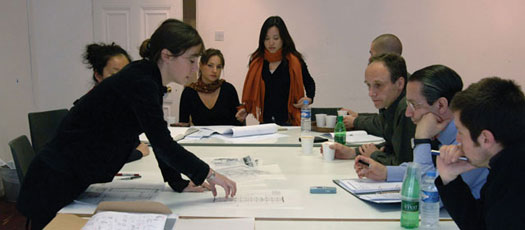
Ideally tutors in this subject will be registered architects or practitioners with post registration experience who are currently working in their own practices or as project architects in medium to large firms. It is expected that tutors will meet the challenge of teaching in a cross-cultural and diverse context (perhaps unlike the people in the photo above)
We would also welcome people currently in leadership positions in practice who wish to contribute to the subject either as a tutor or as a guest lecturer and discussion panel member.
Time commitment for tutors is significant and this will be: 11 x 90 minute tutorials plus 4 x 1 hour moderation sessions during the semester. As well as attendance at 2 x 1 hour lecture panel presentations. This is an opportunity to make a direct contribution to current debates about architectural practice.
Tutors will also need to view the online lectures. There is approximately 32 hours of marking during the semester. Tutorials are generally either Monday and Tuesday evenings.
To give students a sense of the reality of practice each tutor will also be responsible for posting “a week in the life of the architect” content to the subjects Instagram account for one week of the semester.
I am happy to talk with you further if you have any further questions about your contribution as tutor to the subject. I look forward to your application as a tutor via the MSD’s Session Staff Recruitment System at the following link.

Surviving the Design Studio: 10 things design tutors really really hate (and like) about Archi students.

This week I discuss how to make the most of being in a design studio at architecture school.

I will keep this one short and simple. The following is based on my own experiences and I was trying to figure out how many design studios I had actually taught over the years. I think it is around 30. Maybe more. On average about one a year since I graduated. Most studios have been pretty good and my current students this semester at MSD are awesome. Some studios have been bad; usually as a result of a bad combination of mismatched expectations (usually: tutor expects students to do work, students not motivated to work). Of course some studios I have done are great and memorable. A few studios and moments spring to mind “The Springtime for Hitler Studio” (Speer’s classicism), the studio when I jumped on the student’s model ( a really bad move), the Situationist studio when all the students hated me and I pretended to be Debord, the fire station studios, the tower studios, the Mexico Studios and the summer studios both at RMIT and MSD. Studios with friends or colleagues too numerous to mention although the early studios I did with Neil Masterton of ARM were great. The ones I did with Dr. Karen Burns whilst doing my PhD were memorable. Now I am sounding perhaps all too nostalgic. But, nostalgia for past studio glory means nothing. The real point to remember for architects, design tutors and architecture students is you are only as good as your last studio or project.

So here is the list of the things we as tutors both like and of course hate, and I mean really hate. If you are doing more than five of these hate things then maybe you should not be at architecture school.

10 things that design tutors really like/hate.

1. Turning up 

Hate: Not turning up without a prior email or message. It’s always best to turn up to the crit than not turn up. The one thing a studio tutor hates more than anything else is a student who does not turn up.

Like: A courteous email or text to say you are not turning up.

2. Being on time

Hate: Turning up late after you have had the main discussion with everyone else in the studio.

Like: Being on time

3. Being present 

Hate: Spending the entire session looking at you from behind a PC or multi-tasking on a phone (of course I am being a little hypocritical in mentioning this).

Like: Being present to interacting and listening to all of the conversations in the studio.

4: Listening when other students present their work.

Hate: Just turning up for your presentation. Not engaging with the presentations of other students.

Like: Engaging with and asking questions when other students present. Most good tutors like to hear questions from other students when someone is presenting. After all the reason we have studio groups is so that individual students can see and learn from what other students are doing when confronted with the same problem.

5. Working consistently

Hate: This is really a bundle of syndromes. Doing a lot of work at the end of semester or just doing enough work to get by each week. The tragedy of this is that a design project could have been so much better if the work did not happen in short bursts. Students who consistently do this often wonder why there marks are lower or the get bad crits at the final.

Like: Students that work consistently and produce something no matter how seemingly minor each week.

6. Doing a lot of work. 

Hate:  Getting the project up to a reasonable point for mid semester and then just stopping work for a few weeks until the end.

Like: Doing lots of work each week. Letting your tutor know when you have other time pressures.

7. Seeking help when stuck 

Hate: getting stuck after a 1 hour of design work and then waiting a whole week to see a tutor. Worse still employing “getting stuck” as an obvious excuse to do no work.

Like: Student who contacts tutor or friends as soon as they are stuck in order to get unstuck.

8. Avoiding print queue excuses. 

Hate: Making excuses. The more common ones being: Print queues, IT problems (May variations on this one) and Laptop stolen. Problems printing seems to be an affliction that strikes a small but significant minority of architecture students.

Like: A student that seems to be constantly reflecting on and improving their own design and project workflow. A student constantly checking in with the tutor about this. A student organised enough not to print at the last-minute.

9. Drawing it rather than talking it up. 

Hate: Minimal drawings or diagrams on the wall or the screen and then a long, long intimate description of the concept, what the design will be like and the student’s semester narrative. It’s really annoying when this style of presentation is repeated each week with little or no design development.

Like: Students who talk succinctly and have  drawings  on the wall that describe the current state of their projects development.

10. Students who know architectural history. 

Hate: Students who look at you blankly when you mention famous 20th C architect, 21st C architect or iconic project’s constructed in the last 10 years. As tutors in the modern era we need to respect our students as “customers.” But it is pretty hard to know what to say, apart from a non customer-centric  profanity, when the occasional student does not know who Corbusier (let alone Terragni or Libera) is. The crazy thing is most students at architecture school do history but there are still some who don’t really get it.

Like: Student’s who know something of architectural history and read actual architecture books as well as following architectural discourse on social media.

Finally 

Mostly, as design tutors we want to be generous, we want to help people, we want everyone to do well and produce great projects. We want great students in our studios, we want to teach  in the best way that best prepares architecture students for the real world. Moreover, tutors want all their students to be resilient, successful and great architects. Sadly, in the managerialised and “customer” orientated university the above is getting harder and harder to do.

I have survived the week back after the teaching break, recovered from my painful sinus infection and now my MSD MArch students have about three weeks to get their projects complete. Yesterday in the studio we had  sustainabilty, structural and mechanical consultants from AURECON come in and enage with the stduents designs. It was a great session. 

Surviving the Design Studio: Symptoms and cures of pre-design crit anxiety.

It was RUOK day in my part of the world last week and this got me thinking. I also spoke to a friend who told me how much she dreaded crits in architecture school. Anxiety is one of the most debilitating things that can beset you prior to design jury or a crit. It’s hard enough being an architecture student. No money, long hours, and the struggle to learn a complex discipline. Pre-design crit anxiety can be crippling. It can certainly stop you from working effectively and it can prevent you from communicating your ideas and what you have done effectively in the actual crit. You are not alone almost every architect or architecture student has had to face this anxiety.

Of course, it is worse if you are approaching a project deadline or the end of semester. It is worse if you do not think that your tutors, or the client group, or a consultant, is not on your side. It is also worse if you feel that maybe you haven’t done enough work and it is even worse when you are earnestly struggling to build your skills, design confidence and resilience.

I am writing this from a number of perspectives. Firstly, as someone who knows what it is like to be anxious about a studio crit or a meeting. But also as someone who is on the other side as a critic who has seen the anxiety of architects and architecture students. As a young design tutor straight out of my cultish architecture school I was a somewhat fierce and unreasonable critic who developed a reputation for making students cry and jumping on models. Thankfully, after 30 years those people have forgiven me and I now realise how reprehensible and disgusting my earlier behaviour was.

There are of course a number of things you can do to manage the situation and manage your anxiety before that terrifying crit or design jury. Here are my suggestions:

Sympton 1: Thinking the worst

 Your imagination can run wild, you can think that the worst will happen. You will be cut down by other architects, the client or jury members, and you will be humiliated amongst your peers. I suffered from this and it can be debilitating. Don’t replay in your imagination the worst things that people might say to you.

Cure: Remembering most critics are interested and want to help.  

Thinking that the worst can happen is never good. I have been in and seen some pretty bad crits in my life. But, nowadays days these are extremely rare. Most design jurors and critter people in the 21st century are a pretty decent lot. Find out from your tutor who they are and do a bit of research. Usually, they are attending because they are either a convenient friend of your tutor or they have some kind of special expertise that is relevant to the studio.

They will probably not tell you that your work is appalling or rip the prints of the wall or jump on your model. It is unlikely they will belittle you or humiliate you.

They will tell you what they think and usually they try to be honest. Mostly, they will be interested in what you have done.

If you feel anxious before the crit try imaging the sort of interesting questions they might ask you. Make a plan for what you will do before the crit and what you will say. Don’t just turn up and wing it. Be prepared. Making a plan of what you will say and even practicing it in front of a mirror before hand will help you minimise your own anxieties. In other words, imagine them asking you the questions you want them to ask. Imagine the crit going well rehearse what you a going to say using this formula set out in my previous blog.

Sympton 2: Over work anxiety, 

 Anxiety feeds off overwork. Not enough fun or enough rest will fuel it. After my own architecture thesis I went camping on a river and just sat in a camp chair for about ten days and did not move. I was so burnt out from overwork. This can happen to anyone no matter how old you are. I have known student’s who haven’t stopped working hard since high school. At some point they discover they need a break because they are really burnt out.

Working all night will fuel pre-crit anxiety. Not getting enough exercise will make you more anxious. Or just have a rest or go out and play with your friends. There is no point working and working and working and getting so tired. If you are tired before the crit your anxiety will be harder to manage.

Cure: Have fun and get balanced.

If it gets really bad go for a walk. Go to the pub. Go shopping. Go out with friends. Sometime you can overdose, and burnout, on a design project or a studio or even a course. Read this.

Be mindful, try meditating, there are some really good apps you can get that will lead you through some great mindfulness exercises.

Symptom 3: The best friend of Anxiety is procrastination.

I might have said this here before on this blog, but procrastinating, by deferring the activity of design and design gestures, will only make your anxiety worse. Designing is a labour intensive exercise (especially if you are using a computer). Putting it off only means you have to do the same amount of work in less time. Designs are not made and fully formed in the brain and then exactly transferred to the computer or paper or the physical model. If only we could do this life would be so much easier. Designing takes time.

Cure: Work constantly.

Reading, researching, writing little notes, thinking while drinking that batch brew or Aero press coffee, going to the fridge and eating, web surfing and Google searching are all the fabulous ways to defer the actual act of designing. The problem is designing is about either physical or digital drawing and the sooner you start the better. You will be less stressed if you work constantly throughout the studio and avoid procrastination. If you do feel stuck get help or advice from your tutor to get unstuck.

 Symptom 4: The other people are always better

 There will always be someone in your studio who seems better, smarter, more creative and more like one of those over confident alpha-male architects. Thinking this is real recipe for anxiety. You will always be your own worst critic and these other people will always seem better. I mean who needs design tutors or guest critics when you are so good at demolishing your own design thinking and ideas?

Cure: Run your own design race.

It’s best to solve your own problems rather blaming others or being focused on your fellow studio members. Run your own race. Believe me you will actually end up doing better. Focusing and comparing yourself to others is waste of energy. They will always seem better and if you think like this your anxiety will easily be fuelled.

Symptom 5: Critical negativity

Also, don’t compete against yourself. Know when to give yourself a break and when to be critical of your own judgements. Too often I see students tied up in knots and paralysed by their own critical negativity. As designers we need to question. But we don’t need to question every single tiny thing related to a building design. The worse architecture schools on the planet are the ones who promote this kind of claptrap critical negative method.

Cure: Remember there are no right answers

Sometimes it’s often better to design something, anything really, even if you think it might be “wrong”. The alternative is always to be searching for the “right” or correct idea and that is an ideal that doesn’t exist. Or after you have developed an idea for a while in your design its thrown it out and everything else with it. Because it is not correct. I see a lot of this. To develop design confidence and resilience you need practice in developing a design.

Symptom 6: Don’t kick the cat; or anyone else for that matter.

This is a rare but not uncommon symptom of anxious students. People and indeed architects under pressure who get extremely anxious sometimes release that pressure by lashing out at their pets or others. Please don’t kick your dog or cat when you get anxious about the upcoming crit. It is also really good idea to not lash out or blame your tutor, or your fellow classmates, for your anxiety. Usually your design tutor is trying their best to guide you and get you through.

Also, speaking from experience, your tutor will not think highly of you if you do this. I am usually relatively understanding if someone lashes out at me when they are under pressure during the studio. There is not a lot I can do when it happens. But, as a tutor it is not pleasant and usually it means that after the studio is finished I don’t really want to have much to do with the lasher-outer type.

Cure: Don’t bottle things up and build ongoing relationships.

Instead of lashing out talk to your tutors and your peers about your fears and anxieties. You might find everyone, tutors included, are just as worried as you are. Try and remember that after the studio has finished the most important thing you can do as an architecture student is to retain and have a continuing relationship with your peers and those who have taught you as an architect. Each studio is an opportunity to build your future professional networks.

Symptom 7: So maybe you haven’t done a lot of work and that’s why you are anxious.

 Yep. You realise there is only two weeks left in the studio and the deadline is looming. You are definitely going down the tubes because you did not do enough work earlier in the semester. You are running out of time. You have been too busy having fun or you haven’t really been thinking about the time. You are not sure how you are going to actually get everything done. Even if you work all day and all night you think that you are going to fail.

Cure: Get help

Symptom 7, along with just about everything symptom above, is best cured by getting help.

Tell your tutor your predicament. Most tutors will be sympathetic. Most tutors want you to pass and even if they recognise that you have done no work they will still help you. But to do that you need to get their help and you need to be honest and realistic about what you need to do. Talk to your friends try and enlist their help as well.

Finally

If of course your anxiety is becoming to much of a burden you may need to get help from a counsellor or your GP. Most universities and architecture schools have avenues and contacts that can help you overcome anxiety. Sometimes the worst thing you can do is to think you can just push through and ride out the anxiety. It’s a lot easier if you always get help and remember that you are not invincible. The most important thing to remember is that you are not the only one to ever feel anxiety prior to a design crit.

Surviving the Design Studio: Bjarke Ingels is evil because he has hair.

It never ceases to surprise me that other architects, and indeed clients, would continue to promote the cults of identity  that beleaguer the architectural profession and our discourse. It has been exacerbated I think by the celebritization of social media. Maybe the phenomena surrounding identity cults make it easier to brand architects in a global setting.

Be like Bjarke 

Last week or so a fellow blogger whom I follow, and have great regard for, lamented how his studio tutor had told him “to be more like Bjarke.” My friend took the advice wholeheartedly and earnestly and whilst there was for him some merit in being told to be more like Bjarke. I wondered if he was being encouraged to join, in yet another architectural identity cult, centred on Bjarke Ingels.

The cults 

In the 50s and 60s in my city it was the cults of Robin Boyd and Roy Grounds that caught peoples imaginations. Their enmity, if that is what it was, is the stuff of legend. By the time I was at architectural school in the 80s there were quite a number cult’s available for archi-students to join. Firstly and fore mostly there was the Australian Venturi Scott Brown suburbs cult (although Scott Brown was usually never mentioned)? Lesser cults, each with their own local deities that architecture students could worship at where, the mud brick cult (think roll your own cigarettes and Confest), the humanist brutalist cult, and the beginnings of burgeoning  postmodern eschatalogical absurdist architecture cult (which became very successful; and which I was a fully subscribed member of). Another one was the smaller cult centred on the work of Christopher Alexander. Then there was also a kind of offshoot of the AA’s Roxy Music architecture cult (the Raisbeck archive is pretty much sealed up on that one). As a cult member one a few of these cults I felt like I belonged to something, that I was learning about architecture and that the cult leader would keep me safe.

When Peter Eisenman came to our architecture school I remember shouting at the Berkeley trained Christopher Alexander adherents. I was pretty obnoxious thats for sure. At the other main  architecture school the cults seemed to congregate around the Miesian shearing  shed aesthetic (which came to represent Australian architecture’s global brand).  Often these cults were adaptions of overseas trends to the local cultures and layers of Australian architecture. But these days the identity cults now are often global and the poorly mirrored by the local adherents.  Of course its great to have architecture schools were different cults, or traditions, emerge and architectural debates are fostered as a result. But, in hindsight I think the problem is that all of these cults seemed to coalesce around particular figures and identities.

I have nothing against Bjarke himself having never met the man and whilst I might quibble about the simplistic and descriptive dreariness of the “Yes is More” book (not enough room to go into here) and as some of you know I liked this year’s Serpentine Pavilion designed by his firm BIG.

Calling out Bjarke’s hair 

But, I really wonder if it would be better for architecture students and architects to be less Bjarke-like and I thought about it a lot and I think that in some ways Bjarke is evil because he has hair.

Of course, it is not really Bjarke himself who is evil (although he might be if I knew him well enough to make that judgement). It is  and the way that architectural discourse seems to privilege hair. Of course for those in the Bjarky cult he must be great because he has hair and also he did a TED talk. Which you can see here.

But then again maybe TED talks are just another artifice as so described here by Pat Kelly.


I guess it is the cult of celebrity that goes with the hair that I am railing against. It is the politics of identity in architecture that leads me to say that Bjarke’s hair is evil and makes me want to Bajrke.  It is a look that says: You will never achieve architectural fame yourself unless have hair that can be styled in a cool photoshoot. Thick and boyish, sometimes parted on the side. A few shots have it flattened down. But mostly it is tossled. He looks like he just got out of the bed of his NYC apartment. An architect who can afford to hang out in bed all day playing Pokemon Go. What a great image for an architect.

Silverfox or Moptop? 

Unfortunately, identity politics tends to coalesce around those architects with hair. Have you noticed that all, I mean a lots and lots of them,  of the star celebrity architects have hair. Gehry has hair (silverfox), Ando has hair (beatles moptop), Libeskind has hair (kinda spikey, but sometimes kind a flat) and of course Patrik Schumaker has hair. The Californian Tom Wiscombe has a great head of hair. His is a kind of swept back and lion like. Together with Schumaker they make a great couple. Patrik is looking at you and I wonder what he wants? Tom is looking into the distance and I wonder what he is thinking? Its slick versus Wild West. Central European, kinda F1 racing with that little stripe,  vs. American Bruce Goff optimism.

PatrikSchumacher_TomWiscombe

Whilst I was writing this blog I did a count at this site in the web swamp lands I found entitled “40 famous architects of the 21st Century” 37 of the 41 pictured architects were men; one firm (Massimiliano and Doriana Fuksas )with a male and female director was counted only as one and not two people. Oddly, Zaha is the last image on the bottom right. At least 24 (60%) of these architects have a lot of hair. Notable studio photos are from Portzamparc who has a kind of wavy silver fox look. Steven Holl has hair. De Meuron has hair. Heatherwick has hair. He has kind of curly hair. Viny Maas has hair. Fuck, all the guys are probably using luxuriant hair conditioner.

Of course, you might say I am jealous as I dont have hair. But I am not worried. Because, yes, there are those architects on the list who are cultivating the Raisbeck look. It’s a look that is a little bit Italian, I picked up from the style influencer guys working in the Ministry of Finance in Rome. Closely shaved head  a bit of a stubble.  Herzog and of course Koolhaas and Rogers are all following my lead. It works for the ageing male architect. But Nouvel has taken the Raisbeck look further, perhaps too far,  and has a shaved skull (Recently, whilst on hols I spotted him shuffling out of up market restaurant in the hills behind Nice, he waved and thanked me for the fashion tips).

All of these so called famous 21st century architects are mostly white and generally european males. There are no tatts, there are no peircings, no mohawks, or mullets, no Trump-like toupees or much gender diversity of any kind (as far as it is portrayed in these shots).  Perhaps, these are the architects smart enough to get the stylists, the photographers and the interns from the “elite” architecture schools pumping out the stylised and identity driven content. Maybe there isn’t much hope for the rest of us, we cant all live the dream in NYC as Bjarke does, and maybe this is why so many people rejoiced when Assemble won the prize.

The construction of the architectural identity should be regarded as being problematic and contested rather than being seen as a singular, wholistic and a stable domain. As architects in this age of celebrity we need to foster debates around the real laws,  and dilemmas of architectural design our cities. It perhaps goes without saying, but it keeps needing to be said, that the identities that we privilege in architectural discourse need to be more inclusive of difference. The recognition of collaborative practice is one way forward. But in the swamplands of social media a constant critique and dismantling of the rhetorical images that are presented to us is essential and necessary. Otherwise, the rhetorical idealisation of the architectural identity will continue to corrupt our discipline and architectural education.

This week I am the Parlour Instagram guest. You can find me at @_parlour on Instagram and of course more usually at @archienemy.