
Architectural Branding: Architectural Identities and the Digital Super Hero Syndrome.

The individual architect and small architectural firm is constantly searching for strategies that help identity formation. Sometimes it takes a long time to form our own identities as architects and find our own voices. This was certainly my experience, the particular architectural education I received did not seem to have the aim developing independent architectural voices. There were too many hierarchies, cults and cliques, rivalries, intellectual fashions, egotistical role models, star-sycophancy and small minded tribal dogmas at the time in the culture of the school I went to. Given my own personal dilemmas all of this only confused me as a I also sought my own architectural identity through my own methods of self-education. It took me a long time, but eventually I became more or less comfortable in my own skin as an architect

For many architects identity formation is seen as a central mode of survival. For some architect seems easier, and may be either as an individual, an auteur or as an architect with a brand name is more effective, and I say this without bitterness, a pedigreed and branded architecture school, seems to help. Yes, in this day and age its all about the brand.

Fluid Identities

However, rather than ebbing stable, identity, which underpins branding, is largely socially constructed and fluid. In work at Delft by Marina Bos-de Vos and Leentje Volker (2017) studying the strategic management of architectural firms the establish how articulating how professional aspects of identity enable and constrain practitioners to shape and be shaped by their strategic actions and decisions. They conclude that a construction of identity in architectural firms is at odds with the need to develop new business models of practice. Alvesson, an organisational sociologist defines how identities “are constituted, negotiated, reproduced, and threatened in social interaction, in the form of narratives, and also in material practices”.

Architectural identities are constructed and shaped as a result of the social and cultural contexts that architects find themselves in. For the small firm architect the mission to survive in a unstable and chaotic environment leads to creating an architectural self that contributes to both sense-making in this environment as well as the attempt to make, maintain, construct and consolidate an identity that provides a stable reference point. As noted Bos-de Vos and Leentje Volker note “Identity work links individual agency with the broader social context (Kreiner and Murphy, 2016).”

Brand dilemmas

All architects face the dilemmas of branding an identity in a shifting landscape and social context; and in the current digital age, with its cycles of outrage, and pervasive media, identity is more than ever important. Or, at least that is what we are told. Architects are told to market ourselves, brand ourselves, and to get our social media acts together and to expand out networks. But the danger, in all of this marketing and branding advice, is that it is all too easy to latch onto the nearest template, figure or pre-existing identity that comes to hand. Our profession is a swamp of firms specialising in sustainability and housing with very little differentiation between each firm.

For many architects identity formation is often refined to a few prevailing stable identities and reference points.  This is a consequence of the economic context in which these architects find themselves within the disciplinary discourse of architecture. With the convergence of new design and construction technologies, social media and the celebritization of politics in the media a new identity has in the architectural firmament has emerged: The Digital Super Hero. The idea of an archetypal hero has shifted from the stereotype of the heroic modern auteur, as exemplified in Anne Rand’s Fountainhead novel, and played by Gary Cooper in George Cukor’s movie, to a new kind of identity. This new figure, which nonetheless retains many of the personality layers of the heroic modern auteur, has come about as media and digital technologies have transformed the global system of architecture.

Turbo-Man-Jingle-all-the-Way-Schwarzenegger-c

Numerous star-architects, both global and local, seem to exemplify this new stereotype. It is a predominantly, if not solely, masculine stereotype. For the small architect, beset by volatile macroeconomics and diminishing returns, the promise of and role of the superhero is seductive. This particular identity pervades much of architectural discourse, and it is perhaps more technological, and less ideologically bound to a style, than the early moderns.

Patrik Schumacher  with all of his bluster is an example. Alongside the digital super-hero identity goes a rhetoric masks and mystifies the real socio-material conditions of architectural practice. In other words, for the small architect the idea of the digital superhero helps to mask a real situation, the commodification of architectural knowledge, by providing a convenient and easily mythology to either aspire to or cling to.

PatrikSchumacher_TomWiscombe

Two Digital Super Heros 

Digital Masculinities

These arguments around identity and its social construction, have shifting biases, As Martin Hultman notes in his study of “Ecomodern Masculinities” (think Arnie Schwarzenegger and Al Gore) gender configurations are important in shaping the “planning of sustainable cities, taking part in climate negotiations and as top managers in global companies, and working as designers geo-engineering planetary solutions for environmental problems.” The same configurations, as identified by Hultman in relation to climate change, are also evident in the way in which technology, both parametric and BIM, have come to be incorporated in architectural discourse, practice and firm workflows.

Digital-technical masculinities easily, and perhaps all too easily, applies to the existence of this new kind of digital superhero in architecture; who, through a immersive engagement and devil’s pact with future technologies, will eventually overcome the volatile economics situation that most small firms are subject to.

In Hultman’s own words “Masculinities are understood as always-in-the-making and part of material semiotic antagonistic discourses, which are an embodied nature of knowledge, materiality and meaning.” This sounds very familiar to me: The digital super hero is always in a state of “always-in-the-making” ; both a part of and producing embodied and material technical discourses; always antagonistic to traditional workflows and other perceived enemies.

General advice

The construction of the architectural identity, too often than not as a reactive response to the need to survive economically should be regarded as being problematic and contested rather than being seen as a singular, holistic and a stable domain. Architects have always been vulnerable to vagaries of fame and not immune to the digital celebrity, influencer and thought leader. As a small firm steer clear of the prevailing fashions and the obvious. Don’t opt for easy, or naïve, off the-shelf-ideas branding. Strategic branding for the longer term of a practice is a difficult issue. Your brand needs to be both authentic and memorable; It also needs to burn a hole in the brains of those who have no regard for design.

Finally, and perhaps this goes without saying, but it keeps needing to be said, that the identities that we privilege in architectural discourse need to be more inclusive of difference. The recognition of collaborative practice is perhaps one way forward. Simply recognisi Read more

Surviving the Design Studio: Why architects are the Design Thinking Misfits we all need.

Design Thinking has become all the rage for the corporate, consulting and media organisations. Since the 2015 Harvard Business Review on Design Thinking everyone is jumping onto the bandwagon. There has even been a documentary and as I noted in an earlier post there a now graduate schools and courses devoted to this. Design Thinking is seen as an efficient way to configure new digital workflows and processes. For some people working in this area, Design Thinking as architects know, it has a lot in common with User Experience design, or as some people call it UX.

It’s great that these things are starting to emerge. But as architects we need to be aware of these developments, and start to build these things into our curricula and to promote ourselves as the foremost exponents of Design Thinking. The range of design techniques we learn at architecture school, and our understanding of both digital and physical spatiality at different scales are things we don’t want to lose to others.

I was once invited to a corporate “Think Tank” workshop thingy about 10 years ago and started talking about “creative destruction.” This is a key mode of design thinking. I argued it as a great way to help solve complex business process problems. You can just imagine how those exact and actual words went down: in that room, of hard core line managers, country club styled corporate execs, and shiny suited consultants I felt like a TOTAL misfit. It didn’t help that I was wearing my black architects drafting coat.

I started to think about and remember this experience, when a friend of mine working in the UX consulting space said to me that the best people to do this kind of work are architects. She said this was because architects are able to think across different knowledge domains; as well as quickly drill down into the detail of one particular area. Then at lunch this week, another person involved in managing and reconfiguring digital work flows in a global consultancy argued that the Misfits, especially and usually the architects, are the best type of people to do this kind of work. He said it’s not just about learning regular BIM or Rhino or other routine aspects of coding. These things seem to work best with the Misfit outlook.

All of this begs a number of questions which I might leave for later blogs for example: Are we making enough Misfits at architecture schools? Also, are we as architects actively promoting ourselves as the specialists and leaders in the wider area of Design Thinking? Have the industrial and graphic designers grabbed all the Design Thinking glory? More broadly, are architects too often slaves to meeting the normative requirements of clients and regulations and money. As a group have we architects forgotten how to be misfits?

I have even developed an Acronym to help you read through the rest of the blog:  Architectural Misfit Thinking or AMT.  As an architect if you feel yourself thinking you are slipping into the mire of normalised design production; here are few mindful like Misfit thoughts and exercises you can do.

1. Link your problem to something else. Don’t just focus on the project/product.

In AMT any design problem can, and should be, quickly linked to something seemingly extraneous. Yes, it could be about the life, the universe, or everything. Anything really: The endangered species, the next scale up or the next scale or detail down. AMT can quickly get you across the emotional experience, the politics and the subaltern perspectives. In AMT there is no problem creating, a seemingly unrelated idea, throwing it into the mix,  something as an idea, testing it and the destroying it to see what’s left. Then starting all over again. To others from the outside it looks like a chaotic design process but from the inside, if well led, divergent thought helps to test and determine the best solutions.

AMT Exercise:  about a design problem you have and then think about something else completely different. Then think about how you might even try to link the two together.

2. Imagine the physical reality in your head.

Your mind is way better than any Rhino or BIM modelling software. AMT, because it is a socio-material and spatial way of thinking is a great way at helping people visualise things. AMT can help you visualise the full experience of a thing.  Not just the digital one you see on the screen. ATM relies solely on the imagination and the mind.

AMT Exercise: Design and imagine that next project in your mind. Then zoom in and out and spin it around, in your mind, as if it was on a screen. Walk through it in your head.

3. Dance across the Silos of Knowledge

As suggested above, AMT is about thinking across specialist knowledge silos and putting together lots of disparate fragments. Architects usually assemble and put together many different manufactured products. We dance across structural, hydraulic, climatic and electrical services; silos of knowledge too numerous to mention.

In some ways designing a single building can be easily linked to product or industrial design. But it isn’t quite the same. A building can be a bundle of different off-the-shelf products. But then some of it is completely one-off, innovative and purpose-built. AMT is about knowing how to make things from scratch and also how to combine very different products or pre-existing configurations together.

AMT Exercise: Think about a few different off- the-shelf industrial and manufactured products and then sketch or diagram how you might put them together to make something useful. Or better still, think how you would put them together to make them completely useless, but still look fabulous as an aesthetic.

Yes, Architects are the Misfits you need and perhaps the Misfits we all need. In some ways architecture needs more Misfits. But as architects we also need to embrace our inner Misfitness and not lose touch with the great aspects of our odd Design Thinking, weird studio education, and strange but wonderful discipline.

Surviving the Design Studio: On NOT Seeing REM when he is in town.

Rem Koolhaas is in my small city on the outer edges of the global architectural galaxy and his upcoming lecture at MSD is so popular I can’t get a ticket. Thankfully, there is a live stream. Not that I tried that hard to get a ticket, but now I feel a bit guilty, shouldn’t I be hanging out and rubbing shoulders with the celebrity architects like REM? Last night REM opened the M Pavilion and my Facebook and Instagram feeds were suddenly full of Rem, the pavilion and his partner in crime. I missed out on seeing Ai Wei Wei in person at our National Gallery last year and it was like everyone I knew had a selfie with him.

Hopefully, NOT being seen, in the same big M Pavilion or in the same lecture theatre as REM would not kill my own cult like status as a blogger or researcher interested in the socio-material practices and histories of architects . For a moment I thought that, given that I am increasingly keen on ethnographic studies and sociological perspectives on the architectural profession, maybe I could do a kind of ethnographic study, of trying to meet the big star architect who comes to town. But I am thinking it’s now too late to do that.

I told myself to forget the angst, envy and the hand wringing and to calm down about not seeing HIM. Not seeing REM in person wasnt the end of the  world. Besides, I was just coming off a teaching intensive, needed to get a few research projects actually running and worse still: it is the school holidays, and I feel I have to keep an eye on the teenager, lest he indulge in anti-social activities whilst he is waiting for his enlistment papers from the ADF.

I took a few  a few deep breaths and began to think about the tropes and characteristic images that we seem to follow in our feeds, and give authority to in our profession as architects. I began to wonder if we were stuck I some kind of media cycle which has a recurring narrative when a global brand comes to town.  This loose assertion of course is based on my own experience and when I was a student, in the 80s, we had this thing called the International Lecture Series it was great and we saw lectures by amongst others: Eisenman, Ito, Hasegawa, Stern, Shinohara, Prix, Cook and even Graves. After seeing so many I figured out that the general order of events for the star architects visit goes something like this:

  1. Arrival.
  2. Public Lecture.
  3. Dinner with notables.
  4. Visit to see architects buildings.
  5. Round table seminar.
  6. Studio Crit
  7. Everyone goes home.

There was usually some kind of controversy with each visit either a salacious scandal (leg propositions under the table) or clash of egos between global shark and provincial fish (It’s also good to make sure your star does not get run over).

But of course bodies, and gestures and fashion is a big part of the star’s visit. What are they wearing? How thin are they? Is it Comme de Garcons, or the last gasp of Marithe and Francois Girbaud, or Gucci shoes? Thinking all this, made me think about the recurring images and tropes or architects that seem to appear in our feeds in this media age of Trump. In order to promote media literacy here are here are a few recurring images for your amusement:

1.The architect at the drawing board 

TV series the Brady Bunch really set the tone for a whole lot of misconceptions and myths in popular culture about architects.

brady_den_16

2. The architect as rock star 

FLW and RW


3. Architect as James Bond 

DC and PS

4. Looking right at you architect visionaries and composers 

MB, DC and PC.

5. The olden days architectural project meeting

Brady Bunch, Corbusier at UN, FLW and NASA Engineers for comparison.

6. Project meeting’s now

BIM meeting, “inclusive” meeting and normal meeting.

7. Architects all over it 

Bjarke and WorldCraft

493122029_640

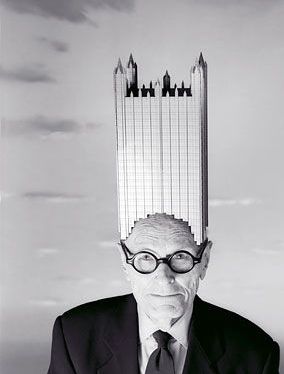
Most of us who can’t see REM are maybe  too busy at this time of year with the kids in the school holidays to see him. But if I did go and see REM, and yes I am going to look at the live feed, it would be great if he came to town wearing an an outfit like Leigh Bowery below. Or at the least a special royal and kingly crown, as Philip Johnson, that most subversive of architects, managed to pull off. Maybe then, I might take the global system of our discipline more seriously.

09-Fergus_Greer_Leigh_Bowery_Session_III_Look_11__August_1990__From_the_series_Leigh_Bowery_Looks

Design Activism and the Economy of Distraction: Do we need another pavilion?

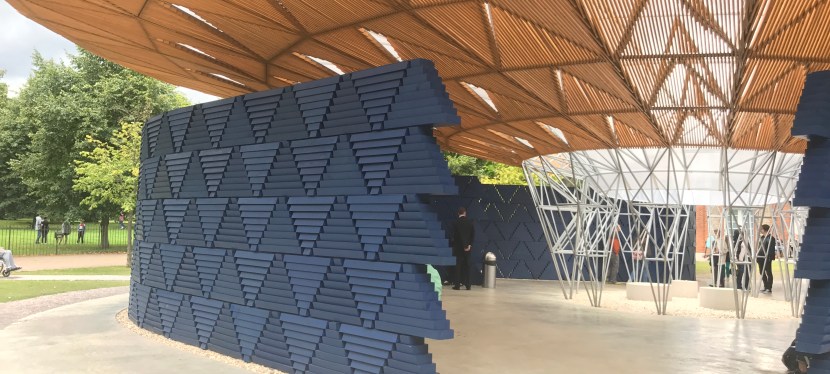
Pavilions and urban pop ups are everywhere in the architecture cult. That’s great I suppose. I recently visited the Serpentine Pavilion’s 2017 summer pavilion designed by Francis Kere. Last year the Serpentine had the big man of  Danish architecture Bjarkey. Rem (or is it REM) is doing our latest M Pavilion in my city and I am polite enough to say that I am looking forward to seeing it.

So, it seems that as architects we all love the pavilion popsicles and these days these things are built and then the images, associated lectures, talks and events are distributed out through traditional media and digital media channels. Instagram and our digital feeds are full of this stuff. Pavilions are machines for creating digital content. Within the digital economy each pavilion seems to have a media half-life. But perhaps we can ask are these pavilions simply distractions in an economy where everyone is seeking to grab our attention for a few milliseconds? Are these things really architecture?

With the rise of Trump, and the celebritization of politics, there has been a renewed emphasis on researching the relationship between technology and politics. As some have noted we are in a different kind of economy now. This new economy is primarily focused on distracting our attention. Its kind of fun to think about data analytics and all the wonderful things that architects and urbanists might do with that data. But, perhaps the real question we should be asking as architects is: how does technology translate to the politics of architecture and how does it shape those politics? This is a critical issue that architects need to face and understand. To some extent, if not totally, the political landscape of architecture has already had the Kardashian makeover treatment.

This last week or so I have been teaching Design Activism an intensive subject at MSD, the Melbourne School of Design. As a subject Design Activism explores the dynamics and effectiveness of architecture in relation to the politics of advocacy, activism and protest. It seeks to look at the ways architecture can be linked to politics, spatial practice, critical theory, activism and community development.

This time around in the subject we had a number of invited lecturers who gave the class valuable insights into the mechanics of politics and design activism. Notable amongst our guests in the subject were those who through their own practice propose alternative ways to pursue architecture including:

Dan Doricic from OnOff design collective. A Berlin based network whose experiments examine the contemporary condition in order to question, tune into and to discover new urban realities.

Targol Khoram the president of Architects for Peace a collective seeking sustainable urban development based on social justice, solidarity, respect and peace.

Simona Castricum whose research contributes to our understanding of how architectural typologies are complicit in violence, displacement and erasure through its gendered programs.

Design Activism goes against traditional models of architectural practice normally taught in architecture schools. Media literacy, digital activism, transgressive spatial practices and queer theory is not normally seen as being part of archi-school curriculum. Yet this is what I think we need to teach. This is because the predominant mode of teaching architecture is too often focused on technology, urban techniques and policy “controversies” untethered from the politics of design speculation, aesthetics and lived experience.


Making Sense of Design Research: Five questions

It doesn’t really help if the Design Research debate is polarised between practitioners, bewildered by the fact that their project outcomes are not considered research, and academics, from within and without the discipline, who say that such outcomes are “not real research.” The area is fraught with ambiguity and emotion. This is the same for both the practitioner “just doing it” and the academic trying to fit into university research metrics.

After I blogged about Design Research last time I offered up a few definitions. A few further definitions of Design Research which I came across rang true in this article.  And at the, now infamous, RIBA Research Symposia of 2007 it was reiterated that ‘“Research” for the purpose of the UK’s University Research Assessment Exercise was:

original investigation undertaken in order to gain knowledge and understanding. It includes work of direct relevance to the needs of commerce, industry, and to the public and voluntary sectors; scholarship; the invention and generation of ideas, images, performances, artefacts including design…;

OMG! That sounds like from the above definition that Design Research is in fact actual Research with a capital R! (regular followers will know what I mean: but, sometimes, I really wonder if I am living in a research coal mine).

My ironic tone above is because, some still think Design Research is “not real research.” When I hear such things, I think architects are actually on the right track in order to elicit such doctrinaire reactions. So here are few quick ideas, and by no means definitive, for how practitioners, might strengthen, that most dangerous, impure and evil of things, Design Research.

1. Consider how the research fills or pursue a gap in architectural knowledge?

Ok, just going out and designing something is not really Design Research unless you can show or demonstrate that you are seeking new knowledge. Perhaps, you are seeking to develop a new fabrication technique, or designing a building type that other people have not designed before, or designing an existing building typology with a different design approach.

But to do all this you have to know what knowledge has been previously created. What are the relevant design contexts, projects, or techniques being the reference points for this new design project? What new ideas are you trying to test or explore? How is this new Design Research positioned in relation to the canon of architectural knowledge that already exists?

2. Develop a catalogue of projects which the Design Research can refer to.

It follows from above that you need to have a catalogue of either, the projects you have done before, or projects you are interested in. This information can come in different formats: In books, (yes, strange but true), or in some kind of data storage. This information could also be in your brain. But, it’s probably best if it is explicit rather than tacit.

One practice I know produces an in-house research books or file for each new project in the office. This contains a range of things.

3. Develop a Design Research methodology.

A methodology is not a method. Don’t be confused. Understand this and everyone will think you are a Design Research guru.

Methodology was once described to me as, the arguments for the way, or manner, that the research is being pursued. This is the same for Design Research. Why is the Design Research being pursued or approached in a particular manner?

What kinds of design activities or processes are involved in the design investigation and research? For example, is it master planning, or spatial planning or is it something about materials or light or maybe it’s something about form making and coding.

You need to be able to argue, and think about, why the particular type of design processes you have chosen is appropriate to what you are trying to investigate. The resulting argument is your methodology.

3. Are new methods of designing or making involved?

This is probably an easy question to answer. But, that is perhaps the problem. Just getting out the robots or 3D printer and making something anew doesn’t make it Design Research.

All too often is it easy to be seduced by the technologies of making. It is all too easy to think that, superficial objectness or aesthetic funkiness alone means that what you are doing is in fact Design Research. All because you are designing something new (and oh-so-organic and diatomic) doesn’t necessarily mean that the thought behind it is new.

Are there steps in the process that make it unique? For example, employing or developing, anew plug-in, a new algorithm, a new geometric regime, unique patterns of design iteration.

Is the design research exploring a new or existing technology and its relationship to design process itself? How is the technology, shaping or changing the way that architects design?

Taken together how do the different methods employed in the Design Research support the methodology?

4. Does it develop or add to new theories of architectural design?

Architects should ask does the design research, or the design itself, build or develop a new theory of how architecture is made?

With fellow students, I once went to a presentation by an architect of a large and prominent downtown high-rise office building. We asked the architect how he came to make the forms he was proposing. He stated these had come about as result of “whatever just came into his head.” We were aghast.

The mysticism associated with so-called “intuitive” design has often led to the situation where any theoretical scrutiny of architectural design is greeted with ignorance, and even hostility. For some architect’s theory is always going to be bullshit.

As architects, no matter the type of work we do we have responsible to develop theories that explain and argue the general relevance of what we are doing. Is there a body of theory around your firm’s design practices?

Testing theory and building new theories is an essential part of the outcome any ongoing research. As Design Research generates new design solutions how does it help to formulate guide, or determine a theoretical framework.

5. Finally, has Design Knowledge been added to?

This is the key question. Can the architect argue that new Design Knowledge has been created? How strong is this argument? Do the foundations of this argument simply rest on intuitive designing. Or is there a logical substance to the argument based on a clear aim to fill a knowledge gap, sound documentation, a supporting methodology, established or unique methods and a new theoretical framework?

Understanding and promoting Design Research in architecture as a discipline is essential to the disciplines viability. For architect’s attitudes to Design Research need to be clearer and less contaminated by the twin evils of academic prejudice, about what research is, and the theory free zone of intuitive alpha-male designing.


Mental Health, Burnout and Architects: Starting the conversation

RUOK day has come around again in my peripheral part of the global architectural galaxy. Recently, I met an architect who was having a few really bad weeks in her practice. She said it was the worst time she had ever had in practice. After a series of particularly gruesome negotiations and risk management issues she decided to take, what is known as, a mental health day.

Survey Invite for Architecture Students

Anecdotal evidence suggests that there is a widespread issue regarding mental health the both for practitioners and students. If you are an Architecture student reading this you might like to complete our survey.  We are investigating how undergraduate and postgraduate students’ experiences of psychological wellbeing and distress relate to other aspects of their university experiences. Understanding these relationships is important for supporting students to develop strategies that enhance their wellbeing and overcome experiences of distress. The survey link is here.

The Stress Factors Practicing Architects Face 

No matter how hard architects try to manage risk it doesn’t take much in practice, for things to go awry. In the last year I have been witness to some of these things:

  • A builder who misrepresents his financial position because he is not getting paid on another project.
  • A  bullying project manager who can’t make decisions on prestigious government project and then blames everyone else for time delays
  • A client who moves in and then vociferously complains about every detail despite extensive prior consultation.
  • The bad advice from the product manufacturer combined with sloppy installation resulting in the necessity to replace all the floor coverings.
  • Every minor planning ambiguity or skirmish that architects have to deal with.

All of the above situations is enough to put extreme pressure and stress on any architect, regardless of how experienced they may be. Running and directing an architectural practice can be gruelling. No matter how big or small your architectural practice, or even if you are a student of architecture being an architect can take a real toll on your mental health.

Speaking from my own personal experience burnout is common factor amongst architects and academics.  I came to the conclusion that the “grin and bear” it school of working, doesn’t really help anyone. It is too easy to sweep a culture of out of balance work practices under the carpet. Run for the exit if you here your overlords telling you to “man up” or just “just grin and bear it” or it “is what it is” when unreasonable work expectations are made and you start to burn out.

Contributing Factors

In some practices staff are subject to long hours, relatively low pay, entrenched cultures of discrimination and worse still bullying. To what extent are these issues systemic? I guess, no one really knows as there have been few studies looking at these issues and the mental health outcome of architects (there is a PhD there for someone). Some of the contributing factors in regards to mental health and architects as noted by RIBA recently are:

  • Lower pay relative to other professions
  • A culture of long hours
  • Adhoc career pathways
  • Gender and other forms of discrimination.
  • “Boom’ and “Bust” workflows
  • High personal investment in the actual work
  • Lack of union protection
  • And a working environment where HR support is not a part of the working landscape

This is not to say that every architectural practice is exhibits all of the above attributes. But architecture is hard enough any way so why make it worse?

Discrimination

But, it also needs to be said that all of the above is relevant to those architecture students and architects who experience discrimination as a result of their sexuality, gender identity or ethnic differences. (You can read some of my thoughts on this here). Thankfully there are more, although not enough, community support groups for these people than there where in the past.  My previous blog on some of these issues can be found here.

For me personally, that many of the problems, is because of an entrenched culture that gives primacy to the architects as singular genius with loyal followers. Slowly but surely, architects are waking up to how much this has damaged our profession. Anyway here a few points for your consideration:

1. A Few Online Resources.

There are lots of online resources these days so here are a few.

In my country RUOK day is coming up and this can be found here.

There are plenty of online resources in Australia Usually a good place to start. Some of the resources again the ACA is on top of things here.

The AIA in Victoria currently has a health in the workplace module.

Tim Horton’s the NSW registrar’s article about this is also worth reading here.

2. You are not invincible.

We all need help sometime. For younger architects, it is easy to think you are invincible. But like everyone else life events, for example grief, can easily take their toll. So, don’t be afraid to seek help from a trained psychologist or counsellor.

In Australia, you can start to find someone who might be able to help at this link. There are also plenty of places where you can go to for immediate and urgent help such as Lifeline if you are having an immediate personal crisis.

3. Getting a coach or mentor.

As architects, we need all the help we can get. No matter what kind of practice you lead or are in it is really important to develop your own support groups or find yourself some mentors further up the food chain. One great group is EMAGN and also the young architects group in Victoria. There are also various groups for small practitioners around.

If you are in a position of leadership, or decision-making is crucial in There is also a lot to be said for getting a career coach. Leadership and Decision Making is not taught in architecture schools so executive coaching may help you develop and fill the gaps. The best design leaders are the ones that are reflective and can evolve.

4. Take a Mental Health day

Yep, just go for it. Turn the smart-phone off. Get out and party, or shop, or as suggested by the blog image go for a spin down the freeway. Go for the Yoga thing. Sleep in or hang out with the Baristas. Do nothing. Go to Burning Man 2018 as my friend did in 2017.

Sacrificing your mental health for architecture does not really help anyone. As a local, regional and global community of architects we will be stronger if we start to have this conversation. As a profession, no matter our roles or where we are situated, not talking about this stuff is toxic to architectural culture.

Surviving the Design Studio: Why architects need to pursue failure.

When architects fail they usually seem to fail big time. The tabloid media loves to jump on that large, or prestigious, or prominent architectural project that blew the budget, or leaked, or fell down or little fragments of it fell off into someone’s batch brew. I am sure we can all think of something like that. Then of course there are the Foxy news tabloids aligned with the small minded burghers who declare a building is “ugly.”

Of course, not all of these so-called headline failures are the actual fault of the architects. More often than not it is the people driven by the cheaper, faster and crappier mantra who love to blame architects.

For the most part architects spend their life trying not to fail. There is a lot of pressure on architects to get it right. As system integrators, perhaps the pre-eminent system integrators in the AEC industry, we are often too busy connecting, juggling and generally trying to avoid the fails. Think of all of the things we architects need to consider, adjust and integrate: planning, regulations, contracts and the whims of client.

But, one of the things we should remember is the necessity of failure. Architects need failure to innovate and failure is an essential factor in both design, and dare I say it research and development.

Radical design innovation or new design research knowledge, knowledge that questions the status quo, doesn’t come about by playing it safe.

  1. Good architects know when to fail.

Designers know when they need to explore the, deliberately bad or ugly and even less optimal option. They know when to be deliberately perverse. They know that by relaxing the process of their own design logic they can produce a design option that is less optimal. They can learn from this. Great architects now when a less optimal design option or design pathway can help the further iteration of the next design option.

There might even be aspects to the deliberately perverse or failed design option that could be salvaged. It might even be really amazing.

  1. Beware of architects who never fail.

For these architects, everything is a relentless pursuit of the ‘perfect” solution. This is because everything the bad designer does, every gesture, flourish and design utterance is perfect. These are the sorts of architects who will have you sitting around watching their every flourish of the pencil.

  1. Architectural design is not about controlling every step.

Architectural design is not about getting it right all the time. An overt focus on a design logics of correct sequencing and conceptual ideation ultimately leads to boredom. Sure, we all need to think straight as designers, but making that the only goal of the design process leads to a cult of academicism with little room to advance.

By generating failed design solutions, you will have, for comparison and analysis, more elements in that design portfolio part of your brain. The aim is to build a bank, even if it is only tacit info in your own brain. Your design brain should be full of design practices, approaches, methods, norms and concepts.

A less than optimal design approach, design element, or design solution may not be suitable for one project, but could be well suited to another project. It might even prompt a few more ideas.

The kind of failure I am describing, encourages the development of a range of design solutions.

  1. Design Research should not always need a “purpose” or be of some instrumental use.

This goes for any type of research actually. But, design research is a risky enterprise. It wouldn’t be research if we already knew the answers or the outcomes. Often as architects we are so intent on making the trade-offs we need to make in the design process that we forget about the notion of disruptive designing.

Sometimes we need to pushback against the clients, the planners, and the contractors. This may mean that we are in a situation where we risk failure. But unless we do this our design research and the resulting innovations may be little more than orthodoxies. The same old same old.

Radical design research and design innovation risks and then manages the potential of failure.

  1. If you are always getting it right as a designer then rethink.

Pursuing failure avoids design hubris. There is always the post-rationalization impulse as a designer, the confidence to never admit a mistake, to always have a reason; but you don’t always need a reason.

It’s possible that impeccable design logic, you learnt at that architecture school, may be preventing you from pursuing your design research to its maximum limit. As suggested above, Design logic may actually impede you and tie you up in critical negative knots to the point where you are unable to do anything.

You may just be re-problematizing the same problems. Or worse still, just trying to impress the underlings in your studio.

  1. Speculate
  • Do a competition.
  • Target an area of interest and design a theoretical project.
  • Design something totally wacky.
  • Try and design a crap project.
  • Find a weird location or site and propose something for it.
  • Invent a new building type. Or at least try to.
  • Deliberately screw up that parametric model.

Paradoxically, pursuing design failure means that architects will fail less. It means we are pushing back, testing the limits and boundaries of our discipline. It might give your practice an edge in the future. It means that the design knowledge we produce is not simply packaged up and then commoditized. Instead it is knowledge whose limits and effectiveness has been tested with the blow torch of failure.

A checklist to tell if you are in a design studio or architecture cult?

During the week, I watched a documentary on L. Ron Hubbard the founder of the Scientology religion.  It was fun to read about Ronnie and his Sea Org followers. This also made me think a bit about the architecture cults I have known. At the same time, I was also communicating on social media with someone who thought that, the complete lack of interest, or knowledge, regarding money by architects is bred into young architects at architecture school. This made me think that architecture school was also like a kind of cult thing. Lets face it for many of us architecture school was a cult experience. 

My friend argued that at archi-school we learn: it is noble and heroic to “struggle” and “starve” for our vocation; we learnt that we should never “sell-out” to the Money God; and we can only ever be validated through our own architectural integrity. In other words, as my esteemed friend noted, we are taught in architecture school, through the studio system, that the only thing that can validate our existence as individuals is our wonderful designs.

That’s ok if you have decent work or designs that will actually validate your existence. Hard to do if you only ever do bathroom renovations. Most architects seem to struggle to even get one great project designed and built.

My cult memberships 

Yes, I also drank that Kool-Aid at architecture school as well. I drank a lot of cultish Kool-Aid there. I suppose the first archi-cult I fell into at architecture school was the Aldo Rossi cult. I wanted to be in a car accident just like him. Then design a cemetery.  Then it was the Carlo Scarpa cult. I wanted to live half the year in Venice and the other half in Istanbul. Then, of course, the Corbusian cult. I wanted to start a practice in Chandigarh. For a while I was in love with Michael Graves and I wanted to draw classical figures on yellow trace just like him. I wanted to channel James Stirling and go live in the Florey building in Oxford. For a young architecture student from the outer suburbs, where the consumer consumption roller coaster reigned supreme, all of this Modern and Post-Modern architectural goulash was heady stuff.

At architecture school, I also fell in, as a follower, with a few of the local heroes. I followed around a few of these emerging architectural cult figures until they gave me a job. Then, usually, they sacked me. It was almost like every semester I was in a different studio cult. I was always so desperate to fit in.

The problem is that the norms and forms of cult behaviour ingrained into us as architects means that not only are we architects hopeless at money, but, we are also hopeless at management. As a profession, we need to get out of the ever diminishing and downward spiral of cult behaviour. It’s not healthy because most cults rely on charismatic, leaders, bizarre initiation rituals and secret circles of knowledge. Sounds like Architecture doesnt it?

Usually these cults favour those who will do whatever the cult leader says. These architectural cult leaders often take their cultish and bad behaviour into their firms. Maybe thats why architects are crap at management. Architects need to avoid the cultish behaviour. Because it is actually brutish behaviour. In your current studio, office or project team ask yourself the following questions:

download-1

Charles Manson

The architectural cult checklist

  1. Authoritarianism or paternalism without accountability. Only the lead architect or studio leader can make decisions or is empowered to do so.
  2. No tolerance in the group for critical questions or inquiry. The architect or studio leader only likes the followers who ask the questions that affirm the cult. Followers compete for the leader’s attention.
  3. No open and transparent disclosure regarding the project or the client etc. Information “leaks” out to the followers. Some followers or team workers get more privileged information than others. Followers spend time second guessing the leader.
  4. Unreasonable criticism about the broader architectural culture outside of the office or studio. There are enemies and tribes and other architects or styles to envy or hate. A us against them mentality.
  5. There is no legitimate reason to leave: former followers are always wrong in leaving, negative or even “evil.” They are never seen or spoken to again. They are seen to have made bad career choices.
  6. You work lots of overtime and your remuneration is not aligned with the agreements and awards. You do things that effectively subsidise the office. You are literally paying ypur employer to work where you work.
  7. The charismatic architect who leads you is abusive and may often get angry. The tantrum over “design’ or “aesthetic” issues is all too common.
  8. You feel that you can never be good enough or you will never get it right.
  9. The architect or studio leader is always absolutely correct and never wrong.
  10. The architect or studio leader is the exclusive means of knowing “truth” or receiving validation, no other process of discovery is really acceptable or credible.

Most architectural teams and studios (and even bigger organisations) will exhibit some of these tendencies to a degree. But, if there are too many of the boxes ticked in the above list, then you are possibly and most likely in cult territory.

Cult’s never really last

Inevitably these cults implode, they are by their nature self-sabotaging, self-destruction of one kind or another, staff turnover is too high (costly), or things don’t get done properly (implementation issues). Usually, the architecture is actually not as good as it could have been with better less cultish management in place. 

It is an easy thing to do. Being in a cult as you develop has its place but not forever you as you will end up like Gollum living in the shadow of some minor architectural cult leader

When I left architecture school no wonder I wanted to start my own cult. I wanted to be the cult leader rather than the follower. This of course, caused all sorts of problems. I think at the peak of my cult when I taught and was in practice I may have had, 6 and possibly 7, followers. I was on fire. Just like all good cult leaders.

According to my blog stats, and Google Analytics I now have a few more cult followers than suggested above.  So, thank you so much to all of you who follow this blog and watch out for the next blog which will come to you from London as I attend ARCOM 2017 in Cambridge. 


We Need To Talk About MONEY: 10 profit drivers of small architectural practice.

I can already see the disgust in the faces of those of you who have just read the title of this blog. This is supposed to be a kind of architecture blog and not a money blog. The P for Profit word, and of course, the D for Drivers word. Some of you will also be thinking we never talked much about money at architecture school. So why should we talk about it now?

The AIA in America (not the other Australian one with the similar acronym) 2016 Firm Survey reports that in American firms in 2015 9.7% of firms were not profitable.  21.5% were very profitable with profits above 20% of revenue. 27.6% had profits of between 10 and 20%. But, for 41.2% of everyone else, they only had profits of less than 10% of revenue.

AIA_research

In Sydney the other week, I mentioned this to another MBA graduate who was managing a large firm. It was the usual Architects with MBAs conversation, bemoaning the financial knowledge of architects. This person suggested that there would only be a “few firms” in Sydney that were making a profit of more than 10% or even 5%. If that’s all you are doing then you might be better off putting your money in the bank or buying some shares that will give you a 5 or 6% dividend.

The following is for you: 0 to 10 percent architects, for the architects, wanting to get out of the doldrums of low margin profits. There is no one silver bullet for making your small practice, or even large practice, more profitable. Unfortunately, managing a practice is about getting whole range of little things correct to make it profitable.

1. Don’t guess or make up your charge out rates.

Don’t guess it or make it up. I am thinking maybe there are still people who actually don’t bother to work out charge out rates. Your charge out rate has to cover your own salaries, superannuation and all overheads. The Australian ACA has a great tool that can be found here.

2. Charge for everything (and I mean everything).

Don’t give anything away for free. Not your Intellectual Property, not your time and not anything else. Think like a lawyer and charge your clients for copying, printing, travel and especially your EXTRA time. Charge for EXTRA time expended on a project as a result of client backtracking, indecision, planning or other stuff ups outside your control.

3. Fix (or actually have) your office systems

Ever get the feeling you are spending your life trying to find bits of information no matter in what format or where they are stored. The essential bit is being able to find information quickly and efficiently.  Having in place databases, filing structures and systems that makes workflows quicker is important given that your time is the biggest cost in a practice.

4. Negotiating: Say no and be willing to walk away

Don’t take on a job at a low price because you need the work. What’s the point of doing a job at such a low fee that you are either making a loss or you cannot pay your staff to do it. That’s like you are actually paying the clients to let you do the job.

5. Cash Flow

Sadly, this can be almost full-time job and requires constant vigilance. Get a bookkeeper. Cash flow is volatile. If you think architectural practice is about a steady stream of cash or revenues coming in you are very wrong. You need to manage the volatility of erratic and chaotic cash flows. Use the dreaded Excel sheet.

Figure out when your bills or expenses are coming in and when you will get paid. Try and understand the concepts of Free Cash Flow and Economic Value Added. Managing your cash flow means you will not crash and burn and always be lurching from crisis to crisis because you have no money for stuff. There is great advice and techniques here about Cash Flow management for small practices at Panfilo.

6. Looking after the talent

Don’t underpay your staff. That can be illegal. Don’t discriminate. Don’t treat your staff like shit. You will reap what you sow. It takes a lot of time and money to employ new staff. Don’t yell at them, don’t give them conflicting messages or information. Manage staff in a timely manner. Recognise if you are employing less experienced people who are cheaper to hire, then please help them to be more experienced.

This is a huge subject, and it goes without saying the better you can mentor, manage, and treat your staff the more profitable you will be. Take the time to be with them and provide them with everything they need to get things done for you. Managing and empowering your staff so they can do the boring stuff means more time for you to design.

7. Managing your portfolio of projects

Don’t try and design everything. Spend design time on the projects that matter to you. Decide which projects are trash-for-cash. Don’t waste your time on these get them done. For every five projects in an office one will be great, one will be a nightmare and 3 will bring in the dollars.

8. Competitive strategy

Having a strategy means you know what you are doing and what it is you will design. Don’t waste time designing things that don’t matter.

Every small practice, in my country does housing of some sort. Every architect says they are into sustainability. How are you going to market yourself so that you are seen to be different?  How is your practice going to deliver its services to clients in a way that makes them want to come back one day in the future?

9. Research

Do some research or design research (maybe the odd competition or speculative project) that will build design knowledge in your firm. Work on it when the drudgery of everything else gets to you. Build expertise in something you are passionate about and this will help you differentiate yourself and win work.

10. Operating priorities to build capability 

One thing at a time. Do you have an operational plan? A plan that helps you to prioritize the next three to six months? Do you have projects in the office that will make you more productive? Projects that build capability. Like sorting out the material samples, reviewing the marketing stuff, getting some new software?

Finally: Andy and Philip

For those of us who drank the Architecture Kool-Aid when we were young architecture students the future seemed rosy. Imbued with the Kool-Aid toxin I was convinced that I could make a go of it. I would live the jet-setting architecture lifestyle and hang out in the art galleries in NYC with the New York 5, Nico, Andy W, Lou and the Velvets, and go to a loft dinner with Fischerspooner and Laurie Anderson. We were spoon fed this stuff and these days the star-architect’s dream now seems embodied in Bjarke, Rem and Schoomie.

The more efficient and profitable your firm is the more time you will have for design. In a strange way design is actually all about the money. I am definitely sure Andy Warhol (and this most subversive of architects) would agree with this proposition as well.

Enough of the Parametric and BIM Stuff: Why we need to teach Excel in Archi-School

The Salon on Standards

Last week I had the pleasure of participating in a NSW Registration Board a panel discussion called the Salon on Standards. For those reading this blog from outside of Australia, the national accreditation board, or the AACA, administers the standards of practice. In other words, the knowledge and skill set that architects are required to learn at architetcure schools:

“The Standard describes what is reasonably expected of a person who can demonstrate the standard of skill, care and diligence widely accepted in Australia as a competent professional Architectural practitioner.”

On the panel we all decided that we love the standards and that they are an important element in the setting the territory of what architecture is as a discipline.

Firstly, a few acknowledgments.

Professor Kirsten Orr of UTAS was also on the panel and her history of the AACA has been ably and deftly researched, You can find her paper here. Plus, I also had the pleasure of being on the panel with Melonie Bayl-Smyth a Sydney architect and NSW board member. All of this was ably presided over by registrar Timothy Horton. Byron Kinnaird facilitated the discussion and  Professor Gerard Reinmuth of UTS was there and was generous enough to be gracious towards me. As well and as Martin Bryant head of the Architetcure School at UTS

What should we teach ?

So, what do we need to teach in the architectural curriculum? At the panel, I really shot my mouth off and blurted out all the things I think we need to teach architecture students: strategy, finance, research methods, negotiations, innovation and leadership. I may even have said ecology; as compared to that sustainability greenwash policy Kool-Aid we currently make the students drink.

In other words, money, (finance), management, (organisational sciences) and research methods, are mostly what is missing from our standards. These are all the things I think should be taught in architecture school but don’t teach. But then I wondered if we should make greater efforts to teach these things through the design studio rather than via various add-on subjects.

The Primacy of the Design Studio

When I was a wretched student, the people who taught, me were obsessed with design. I think it was partly a reaction to their own training in the dark ages when hard-core pragmatics and necessity ruled the day in the design studios. So, at my Archi-school in those heady post-modern years, it was about being free, it all became about conceptual design and design and design and design and design. It was all about the primacy of the design studio as a place where architectural knowledge is transmitted. As pointed out by Angers Bergstorm, Donald Schon in his seminal work The Reflective Practitioner identified the primacy of the design studio but Schon also argued against a design studio culture cut off and isolated from either practice itself or other knowledge domains.

Balance

So maybe Schon is now right and the balance has gone too far the other way. Maybe the Design Studio has so over swamped and taken up space in architectural education for the last 30 million years that it has now become isolationist. Sure, we all love our design studios. We all like to talk about them and use them to reach out to other disciplines and be trans-disciplinary. But are we as trans-disciplinary as we make out? Should other knowledge be inscribed into the competencies we need to learn? Maybe what architects and architectural educators, are really doing too often, is importing knowledge into the studio for quick and easy adaptation. Maybe, this process is too often too token.

I think in the past building types and programmatic typology was seen as the stable point of architectural education. It was thus easy to design an architecture course around types. Architecture schools kinda went like this. In first year, they messed with your mind, in second year you designed a house, then in third housing and then, maybe a school, and then in final year a grand institutional building. I guess in many places this is still how it is done.

Data overload

But with new technologies alongside the fragmentation of cities into smaller and smaller bits, that can be plugged in to other bits to make money, the typological understanding of buildings and the city no longer seems relevant.

As architects, we are confronted with a never-ending flow of fragmented, variable, disjointed and seemingly disconnected data. In saying all of this, I am not tryng to argue, the old chestnut of, what we teach at Archi-school is too theoretical, or not pragmatic enough, or is not making the instantly graduates “employment ready.”

What I am saying is this, we really need to have this debate as a profession: What is that we should be teaching in the architecture schools? What should we be teaching in our offices as young architects leave universities. I guess if you never learn about money, managing stuff or organisations at Archi-school you don’t often think about the need for career pathways for young architects.

 The problem of specialisation

Fragmentation and specialisation within our discipline is a problem when we have to teach design. The problem is everyone in architecture thinks their own specialisation or field is the design studio: The architects with construction knowledge, think their subject is what a design studio should be all about; the architectural historians think their subject what the design studio; the sustainability architects think their subject are what the design studio should be all about; The workshop digital fabricator types think subject are what the design studio should be all about.

But actually, the design studio is a place where all these things are supposed to come together. Not as add-ons, not as a few guests, but a place where different knowledge territories are debated, analysed and then synthesised into the design process. That’s what design studios are about. About getting the balance right. Design is design and should never be beholden to one specialisation.

Finally 

The Salon on Standards was great. They even took me out for dinner afterwards and I thought that they had developed a great sense of community between the profession the NSW registration board and the school at UTS. We need more of that and now that the Australian Institute of Architects and the Registration boards appear to have parted ways its great to see what the NSW board is doing. It even runs the Sydney Architetcure Festival. 

But next time I run a studio, I might just get the students to design something using an Excel Spreadsheet. Maybe some Discounted Cash Flows or some funky Population Ecology Dynamics. Yip, as well as ecology we might even discuss money in the studio. Think what might happen if we actually had architectural graduates who knew how to use Excel as well as the all consuming Revit?