Small architectural practice is one of the hardest things you do in life. Sometimes it feels like the rewards are few and far between. Even the most modest house or house renovation can take years to design and see built. Small practices contribute much to Australian cities, small practices believe in design, the elegance of details and, more often than not, the hopes of local communities. The influence and impact of small practice is everywhere in our cities and suburbs. In our cities, small practice architects are an integral part of heritage and planning debates, the business of architectural education as well as the construction and property industry. However, small architects have not been served well by existing avenues of research funding in the field.
The RASP launch is just before the MSDx exhibition which will give you a great idea of the range and depth of the many fabulous design studios at MSD.
The voice of the architect
In small projects, no matter what they are it is often the voice of the architect who stands up for planning and regulatory approval, common sense and sustainability. It is the architect who pushes back against the excesses of those only concerned with crude measures of time and cost. A generosity of spirit has always been an attribute of small practice. As a result, most architects at the end of their careers have accumulated those lines and wrinkles that only the careworn seem to gather.
The voices of architects both individually and collectively are often unheard or dismissed. Mostly these perceptions come from a distracted public unversed in design and more powerful lobby groups. Architects themselves worry and wring their hands about this and wonder how it could be better. We need research to combat all of this.
In conjunction with ArchiTeam and MSD, we are hoping to crowdfund a research project that examines the value that architects add to the property. It is unlikely that this project would gain funding in any other way. We are hoping to get around $25,000 for the project.
This initiative is a unique approach to research funding for small practices, and ArchiTeam is hoping to create an ongoing research fund for small practice. ArchiTeam have branded this initiative as RASP an acronym for Research for Architects in Small Practice. Building a research fund of this kind will send a strong message that small practice based architects need to be acknowledged and counted for in the design of our future cities.
The proposal
The research project aims to measure if architect-designed houses and house renovations improve capital gains in the Melbourne inner city housing market. The precise wording of the research question is “Do architect designed renovations improve capital gains in the Melbourne residential property market?”
In concise terms, the research will involve a descriptive, comparative quantitative analysis of two data pools. One pool will be based on sale data from architect-designed houses, and the other will contain sale data from non-architect designed houses. The data from each of these pools will be aggregated, analysed and compared. Descriptive statistics, as well as correlation and regression analysis, will be employed to compare the two pools. Email me if you have any questions about how we will do it. A research contract is in place the crowdfunding amount will go into a fund administered by MSD and ArchiTeam cooperative. The money will principally fund research associate time and data costs.
For regular blog readers who do not know ArchiTeam was founded in 1991. ArchiTeam Cooperative is a membership association for Australian architects working in small, medium and emerging practices. ArchiTeam is democratically run by members, for members. Every member is encouraged to play an active part in shaping the organisation. With over 800+ members, it is the leading dedicated voice of Australia’s small architectural practices. This research proposal is unique and specific to the profession of architecture and small practices. It positions ArchiTeam as both a sponsor and a leader in applied architectural research in Australia.
You are welcome to come along to our celebratory launch night and the details are below. Justin Madden of Arup, Rosemary Ross of ArchiTeam and myself will be speaking. The RASP crowdfunding button will then go live !
The RASP launch is just before the MSDx exhibition which will give you a great idea of the range and depth of the many fabulous design studios at MSD. Hundreds of projects will be displayed throughout the building during the exhibition, from 22 June to 6 July. If read this blog and see me there come and say hello.
This week I have been visiting quite a few crits and jury sessions at my graduate architecture school. After last week’s post every time the students saw me coming they appeared to panic. Nonetheless, I sat in the back of most of the crits and listened. It was great.
The experience, of looking at countless analytical diagrams, did make me think about the impact of big data on urban strategy and urban design techniques. Then I bumped into the poster near the lifts. It’s great the AA is coming for a summer break to MSD, our winter break, and our MSD grad school is having lots of great speakers. All the details are here, and I would encourage people to go along.
Sadly, I won’t be around to indulge in this fest as I will be in the northern hemisphere hanging out with what’s left of the Architecture Biennale after its Vernissage partay trashing. Even so, the poster got me thinking about architects and the technology thing yet again. As regular readers of this blog know I am over the whole parametric hoo-ha. Maybe it’s just the culture that goes with parametrics in architecture that I dislike.
However, what concerns me is that with all the obsession with new gadgets and technologies architects have arguably relegated the logistics of informatics to a forgotten territory. The new architect-as-maker paradigm has turned design aesthetics into a construction supply chain wet dream; a meta-narrative of commercial innovation; a fantasy that we architects can be like subbies (sub-contractors) and tradies. An architectural focus on the technology of gimmicks, the making stuff, is one thing but what about data analytics? (My previous post on big data and practice can be found here).
Technology management and strategy is not something that is taught at architecture school, and I am wondering how the design studio and architects in general will, and should respond to the mass of data and information now coming down the pipeline. So to help, and to prove I am not a complete IT atavistic type here are a few clues to help you get your head around so-called big data.
Redundant Instruments
In engineering and manufacturing, policy types are starting to talk Industry 4.0. However, for architects hunkered down in the maker-space construction supply chains it’s like we are doing all the bits but not the strategy that goes with it. However, the broader question should be: Are all the old polarities of architectural and urban design technique relevant? Typology, functional zoning, densification, “activation” and the like. A lot of the architect’s toolkit of urban analytics appears to be related to the Smithson’s notions of diagramming, and while I would be the first to point to the importance of these legacies, the new digital technologies are swamping these approaches and techniques of urban analysis.
However, cities are no longer the economic engines of American industry or post-war reconstruction. It was these types of post-1945 cities that the Smithson’s and the other post CIAM architects employed their toolkit of pencils, butter paper sketches, ideograms and collages to analyse.
With the rise of policy concepts like Industry 4.0 and the so-called internet-of-things (which always makes me think of this) architects and urbanist are now facing a different set of conditions.
Data analytics is a design issue
How do architects design with data? Even the interns at Hadid’s are beginning to experiment with the Internet of things in workplace design. A few people have started to discuss the idea of data augmented design. However, most of the current work in this field appears to be focused on transport planning and logistics.
Perhaps the first step for architects is to begin to understand the basics of IT infrastructure. Hey, where does all that data go? As physical entities, Data Warehousing appears to exist on the periphery and in the cracks of cities. Where does all that go and who is responsible for data security. In the wake of Cambridge Analytica how is public and urban data captured, stored, secured and surveilled? What are the physical interfaces between this hidden ecology and the servers that it all resides in?
That’s why it is called big data. With the onslaught of digitisation, every action generates and spits out data. There is social media of course but once the Internet of Things kicks in it will probably get bigger. Plus it is not just about physical objects spitting out information. There is all the data collected from social media and google apps.
AURIN which is a data provider to researchers have over Over 3500 datasets from 98 sources cover disciplines including demography, property and housing, transport, health, energy and water.
Agency and the Hackable city
It’s pretty easy to mouth off about It’s pretty easy to leave it to the experts. However, in doing so architects risk losing ground unless we can integrate our ways of spatial thinking with these The size and scale of new data sets and the skills needed to analyse these sets is not something architects should avoid if they are to be serious about tackling the urban design of future cities and settlements.
The hackable city project in the Netherlands posits that there are opportunities for
“platforms offer for modes of collaborative city making that empower (hyper)local stakeholders in an open and democratic society.”
Such sentiments may sound naïve, but they a are better than blind ignorance of the network of platforms that now consume and shape our cities.
Big Data is about decision making
Tools like SPSS and Matlab are ways architects can start to develop some of these things. But, hey we don’t even do excel at architecture school. Moreover, our idea of research methods is stuff about “creativity” and “design as research”. But maybe what we need are skills in topics including decision-making under uncertainty, optimal location allocation of resources, decision trees, linear programming, Monte Carlo simulations. Not to mention, linear and nonlinear regression, parametric classification techniques and model selection. Then there are methods like Neural Networks and AHP (you can read my paper on AHP here).
Predictive analytics
A lot of the work on predictive analytics in architecture and urban design appears to be centred on transport planning, pedestrian networks and agent and swarm-based modelling. Another development is the push for what has been called citizen design science. This is the idea that new technologies and data can be employed to help citizens to provide input and feedback into urban design and planning processes. I kind of like the idea of “crowdsourcing” opinions. I also wonder how that might work in the context of informal settlements. Predictive analytics would also be of benefit to Post Occupancy Evaluation techniques which architects are now increasingly returning to understand what the heck they are doing.
In understanding the dynamics of urban flexibility and reconstruction the idea of the hackable city and the idea of citizens agency. Such techniques might help architects and planners to abandon the old notions of analysis based on functional zoning and urban circulation.
Data Visualisation
Data Visualisation is where architects can go a bit crazy and really excel (excuse the pun). We all love a good diagram. Data visualisation is not about going down to the VR lab and hanging out in a VR hospital word or classroom to see what it is like. Is VR and AR really where it’s at for the future of architectural design? I think other technologies for gathering user data will be more critical than gimmicks.
In fact, I would rather hang out in a VR network diagram or graph. Data Visualisation would be like the Smithson’s diagrams on steroids. No, actually it would be more like meeting Alison and Peter Smithson in their little home the Upper Lawn Pavilion and giving them a few lines of coke and then seeing what happens on the butter paper.
My Instagram feed has been full of my best ex-students and favourite colleagues having a great time in Venice and Northern Italy. Some have even taken their smaller kids. There were lots of images of Scarpa, and many of the glittering ruins built on the mud flats of the lagoon plus the dreary architectural follies of the Biennale.
All washed up
Then I thought of these ex-students and thought of the old comic times of the Raisbeck studio teaching days. I got a bit nostalgic. It got me thinking how much I miss design studios and the end of semester crits. No one wants the washed-up self-deprecating professional practice lecturer in a crit these days. Probably best to leave those crits to the shoppy fabricators, grasshopper gropers, history aesthetes, save the world (but never protest) sustainability types, robot boys and anyone with a pedigreed north American or pedigreed degree. Have I offended anyone?
Everything is now so fragmented and specialised. There is nothing wrong with getting the specialists in providing the architects are there as well. But I worry this approach is breeding the end of the design studio. The university managers and money men would love that. Thank god we can still have actual architects from small practices teaching and involved in our schools. Small practitioners can think across, and into the fragmented fields of specialisation.
Of course, I am actually more nostalgic than bitter about the old Raisbeck studio days. Maybe I should put together my all-time best studio team in another blog.
Design crit anxiety
The juries and design crits at my graduate school are coming up, So I thought some of you might need some help. But first a warning: Don’t read this if you are already anxious about standing in front if a design jury.
Architecture students are by and large terrified of design juries. They have every right to be afraid. For an architecture student, the power balance is unequal. Perhaps it is this unequal power balance embedded in studio culture that permeates through the profession’s culture. For the most part, this fear is a result of the emotional investment and work that an individual invests in the project before the presentation. Also, the investment in a project is often individual and unique and it is also easy to think the worst is about to happen. That the jury members will, in the presentation, focus on the weakest points in your design or worse still find faults in your design that you did not even know existed.
English as your second language
English tends to be the international language of juries. So, if English is not your first language, then it is more difficult. It can feel daunting. Most jurors, but not all, will be sympathetic to your language skills. After all, if you have designed your project well and presented your work effectively it will be ok. Everything will be there on the wall or the screen, and you don’t have to say that much.
Most jurors will genuinely want to explore your thinking. They will want to know about your design ideas, how you responded to the design brief, the context and the ideas set by the studio tutors. Regardless of your language skills they will want to engage in a two-way conversation with you. They will suggest things that you might have done or done differently. Use it as an opportunity to learn.
Good advice
Good jurors will listen to what you and the other jury members say, and help to promote the conversation. The depth and range of this conversation will enable the juror to understand your project and where you are positioned in your journey towards being an architect. Better jurors will gently shape this narrative to get to the point of considering if your project contributes to new design knowledge or not.
But jury presentations require practice and if you haven’t had much practice then, of course, its a worry. To overcome this you should practice your talk beforehand. You really need to do this, and the jurors will appreciate your care and thoughtfulness if you do this. The above approach presumes there is an equal balance of power, or at least approaching it, between the design juror and the person presenting.
Some jurors and design critics are not nice at all
But you need to be aware that not all jurors are nice. Jury standards across the schools and the profession vary. Architecture in the past has been a professional cultural built on a legacy of discrimination, racism and taste-making snobbery. There are still pockets of these practices in architecture. The design jury can sometimes be the place where these things come to the fore. So below is a heads up on some of the jury types you might find when you present. Plus a few tips on how to deal with them.
Ten types of jurors and design critic (in no particular order).
1. The Peacock: Very common. Sadly some design jurors like to be smarty pants and love to use deficiencies in a project to promote their own specialist knowledge, interests and architectural fetishes. This one is quite common. You often get the impression that these jurors jurysplain. This is the equivalent of mansplaining, and in their vanity, they just want to impress you with their superior knowledge (usually flawed or incomplete), architectural or star status or latest awfull project they may have just finished.
Photo by Juhasz Imre on Pexels.com
Counter: Tell them and stick to what you know about your project. Smile and nod and agree. Try and find the connections between your project and their interests. Under no circumstances pretend to be an expert in their peacock areas of knowledge.
2. The contrary dickheads: Common.These are the jurors who love nothing more than being contrary. Think Tony Abbott. To them the logic of your design thought and how it contributes new design knowledge means nothing. These jurors will use an opposite argument at every step of the way to counter what you or other jurors might say. Usually, they are playing to an audience. For example, if the other jurors like something this type will say the opposite. If you say something, they will say make an opposite and opposing claim. The Contrary dickhead usually leads to a discussion between jury members with you on the sidelines. Counter: If you are confident counter with contrary positions on there contrary. That usually confuses them. Or try and ask a few questions and ask them what they really think.
3.The plansplainer: Common. I hated doing plans when I was an architecture student. I was more interested in ideas, volumes and theories of architectural meaning (on reflection I really had no idea what I was doing when it came to plans. The plansplainer will start looking at your plans and picking them apart. Door swings, toilets, bathrooms, kitchens bedrooms, storage areas and of course those big slabs of space you stupidly filled with tables and chairs from the CAD library. They will often go onto question your pragmatics.
Counter: Get right into the plan detail with them. Pray you actually have some detail there talk to them about sizes and measurements of the spaces in your plan. Don’t worry you will never get it right with the plansplainers. For the most part, they are pedants who have no real interest in architectural ideas.
4.The rock and roller: Endangered. A few isolated individuals exist. Think Woflie P and the recently departed Will Alsop. These are a variant on the self-confident star architect. These types are becoming increasingly rare as they get older. They just want to be entertained. They have no discernible ideology to pursue except “let’s all get down and party.”
Counter: Go with the flow. Talk about your design as if it’s going to be the best drug-fuelled disco party space ever. Tell them something about contemporary popular culture they are unlikely to know about. Mention rappers or the latest Insta influencer.
5.The Big Picture Critic (BPC): Common enough. These types will usually attack the logic of your conceptual approach. It is typically posed by those who have had a more “academic” training in the pedigreed schools. This attack typically will come in two forms. Firstly, the way you have conceptualised your design in a way that is too limited. Your design’s frame of reference, its big picture, is not quite right. Basically, you have forgotten something, or you have not had the right frame of reference, or the logic of concept is flawed. In other words and typically, you did not address a broader urban context. Secondly, there is some fundamental flaw in the conceptual framing of your concept that means your entire concept should be reconfigured.
Counter: this is a tough attack to counter. Especially if you have spent the design process on the computer or rushed together a basic brief and spatial program and never considered anything outside of the boundaries of your site. This attack ends badly if your design does not have conceptual apparatus built into it. Best to consider what you would say about these kinds of questions before the design crit. One way out is to talk about the ideas you embedded into the design. Let us hope you have more than two. This will appease the BPC even if they continue to argue about conceptual configuration.
6.The Headkicker: Rare and increasingly becoming an endangered species. As our former Prime Minister Paul Keating used to say “see a head” kick it. This is the one that is hardest to defend against. It is usually a disaster when one of these types appear in the jury room. Probably best to stay calm and go along with it. Don’t panic as soon as this type smells panic they go for the jugular even more. Thanks to lousy role modelling via the people who taught me I have been witness to the darker arts of this style of jury criticism. These darker jury and design crit arts and tactics should never be used by anyone. This is why I am not going to give you an exact list of what they are.
Counter: There is not a lot you can do. If you can cry. Or seem like you are about to cry that can work. Or at the least just look crestfallen. This only works if your studio leaders have some sympathy for you and they understand that when someone cries in the public space of the design crit something has gone seriously wrong with their teaching.
7.The Silent Head-Kicker: Relatively Common. Still a common occurrence I am afraid. These jurors will never tell what they really think. You will get the feeling that whatever you have done is not quite right. Some architects run their design studios like this (both within and outside of the schools). The crit itself can be painfully long without anyone saying anything. The design critics won’t say much, but your natural tendency will be to say too much to fill the gap of the silence. Don’t try and fill a silence with unnecessary words you might end up saying something that sabotages your design argument (if you have one). In talking to fill a void, you may dig your own grave. If there is a silence just go with it. After all, it is burning up time, and no one is attacking you.
Counter: Respond to their questions but also try and draw them out as to want they really think. Also, direct your remarks to the entire jury even if one of them is silent. This doesn’t necessarily mean their opinion won’t hold some weight later. I hate it when I am on a jury, and a student directs there remarks to the person (like the local starchitect) they think has the most power in the room. When I see that happening I think is one of the few occasions that I will go for the jugular. Remember you need to involve all jurors in the conversation.
8.The Koala: Relatively common these days. I kind of like the Koalas. But they can be unpredictable and a tad pedantic. Sleepy with not much to say. Mostly dopey. So they just assert things. Usually, warm and fuzzy things. But sometimes they will assert incorrect and stupid interpretations. Mostly the questions are superficial. But poke the bear too much, and they can turn nasty. Or show them something intellectually challenging and they will come out with statements that will really drive you crazy because they are out of their depth and don’t really get it.
Counter: Listen and be patient. Try and affirm their questions to get tot here warm and fuzzy core. This juror is never the brightest. Address their pathetic concerns in detail. If they say anything to presumptive or outrageous, you will have to call them out on it. But be warned you may not have enough time to counter their lack of knowledge.
9.The love-your-work-critic: Rare. Just go with the flow with it lap it up and don’t believe all of it. The more you tell them how you thought about your work, the more they will love it. It’s often hard to know what prompts this response from a juror. Sometimes it might be set-up, e.g. a good cop-bad cop situation. Again there are some things about the darker arts of jury criticism I cannot reveal.
Counter: Self-effacement and modesty is always good. Thank the juror or juries for their encouragement and try and figure out what they like about it. Tell them what you would do differently next time. When they jury loves your work, and you tell them that they will want to give you more marks for being insightful. Communication self-reflection and insight into your project and processes will always get you more marks. But, make sure the love-your-work jurors are not just saying it because of how you look or has anything to do with your fashion sense. Check in you with your tutor later and see what they say about it. Afteerwards avoid any #metoo situations.
10. The Mind Messing Psycho (MMP). Extremely rare but not yet endangered. As with the general population a small number of jurors fall into this category. This type will want to get into your head and mess with it. To do this they will ask you all sorts of questions about how you think? These questions will not just be about how you thought about the work. But things like how do you feel when you walk down the street……? Or do you like ice cream….? In other words they will ask you questions that elicit answers bordering on personal emotions.
The MMP then uses this information against you. For example, “you say you like ice cream but there is no ice cream vendor in your scheme?” They might even ask you questions like, “have you been happy in the studio” or makes statements like “you look like a nice person.” In short the line of questions blurs the line between the personal and the public narrative around your project. In some cases, the MMP is asking these questions in order to assert the repower over you within the jury room and perhaps even outside of it. These types thrive on unequal power exchanges. In no circumstances talk or make contact with these juror types after the crit
Counter: Block their questions and don’t give too much away about your personal life or individual feelings. Keep your answers, and the project focused on the situation.
Humility
The design crit conversation should foremostly be about ideas and bringing those ideas into the light of day. Even though you may feel powerless or that others have power over you this is the kind of conversation you should strive for. A conversation about ideas and the best design jurors will seek out and want to hear about your best ideas. In fact, I would go so far to say that the best critics are the ones who will listen to your ideas with a sense of humility. Humility is probably an attribute we could do with more of in the profession.
And as I write my plane is diving into Sydney and I can blame that. Put me on a trip and you get an over-oxygenated plane blog.
This last week or so at my graduate school of architecture the students were lining up for selfies with Bjarke when he came as a part of the Beulah International competition. It was quite a commotion. Initially, I wanted to puke, there was a lot of black, and I mean a lot. Black tees, black jackets and black horn-rimmed glasses. Everyone looked liked gangsters on a Eurovision set. Most people who read this blog know how jealous I am of Bjarke’s hairstyle.
After my initial revulsion, I calmed down and realised that Bjarke was here for the Beulah International competition to design a mixed-use high rise complex on Southbank in my City of Melbourne. For Beulah quite a few of the local firms got together with the stars.
Adjaye Associates (UK) and BVN with Steensen Varming, McGregor Coxall, Barbara Flynn and Yvonne Koolmatrie
Bjarke Ingels Group (Denmark) and JPE Design Studio with United Natures, Arketype and BuildSurv
David Chipperfield Architects (UK) and SJB Architects with Jane Irwin Landscape Architecture and Arup
Diller Scofidio and Renfro (USA) and Woods Bagot with Oculus, Pentagram, Katnich Dodd, Rider Levett Bucknall, Arup, WSP, Deloitte, Kaldor Public Art Projects, Klynton Wanganeen, James Sanders, Dustin Yellin, Right Angle Studio and Garry Stewart
Hassell and SO-IL (USA) with Fabio Ongarato Design, Mosbach Paysagistes and Fiona Hall
Khai Liew, Office of Ryue Nishizawa (Japan) and Durbach Block Jaggers (Australia) with Masako Yamazaki, Mark Richardson, Arup and Irma Boom
Rant Free Zone
Firstly, I will try and avoid a rant about how much I hate the star system and the paucity of risk-taking on the part of our institutional decision makers. Yes, it was great to see some emerging practices and voices in the Adelaide lineups and a focus on indigenous narratives for some of these teams. As time goes on, I think this focus will increasingly have to be a consideration for public commissions. But what does the overall inclusion of so many stars say about architecture in Australia? Have we lost our nerve?
Local Grunt with Super Star Strategy
In strategic terms what do these collaborations say about global competition, competitive advantage and the branding of architects in Australia and Australian architecture as a brand across the globe.
What struck me was that there is no single stand-alone Australian architect in this bunch. In both of these competitions, the short-listed firms are Australian architects aligned with the so-called star architects. Now far be it for me to preach some kind of little Aussie battler nationalist bias. But it is nonetheless vital to ask a few more questions about this situation:
As a strategy is it wise for local architectural firms in Australia to collaborate with these so-called stars architects? The old aphorism is that the local partner brings along well needed local expertise and on the ground knowledge. In other words, the international star designs and the local, seemingly domestic, partner implements.
Are Australian architects the documentation drudges of the global system? In these competitions have the Australian firms, in these collaborations, become global lackeys. The so-called second rate “drafties” of the global system? But is it really as simple as this? And in an increasingly media driven international marketplace for architectural services perhaps this strategic rationale is only partially valid.
Outsourcing
In this context, one could argue that the Australian firms might provide the local technical grunt. This is in line with the overall trend towards the global outsourcing of documentation services. Across the global system, privatisation policies, and shareholder value practices have led to a situation where there has been a rise in outsourcing for architectural and building documentation.
The rise of digital technologies and the labour rates in the so-called global south have led to an increase in digital outsourcing for documentation. The late Bharat Dave in his own work noted the rise of offshoring architectural services which began in the late 90. Outsourcing has coalesced in places where there is an ICT infrastructure aligned with skilled workforces and low labour costs. Dave noted in 2010 a situation, that is now commonplace, where designs in one country are modelled in another, documented in yet another and then fabricated in another. It is not hard to concur with his conclusion that this situation necessitates the need for the “reconfiguration of practice in the long term.”
This situation has only accelerated in recent years, and it is perhaps naïve to think that the reconfiguration of practice is solely about the outsourcing and subsequent commodification of the services, such as technical documentation that designers seem to loathe in the first place.
The problem with partial services
In these matchups, local architectural firms ruled by economic survival might find some comfort in being more easily able to modify the range of services they provide; being able to provide the technical grunt. Yet this flexibility poses a dilemma: to be more profitable, these firms need to offer a complete range of services. But as a result of changes in technology, partial services are less profitable and also readily supplied by non-architectural competitors. Consequently, many middle-ranking and larger firms have no choice but to provide limited or partial services despite the fact that this only encourages, and leads to, further disintermediation, and commodification in their markets. Providing partial services may be unsustainable in the longer term. For the local collaborating firms it might be a vicious cycle.
Mapping Strategy
There is another issue that these two competitions point to, and that is the role of the internet and media to shape perceptions and the branding of architects. The following strategy diagrams map media impacts of the collaborations in these two competitions. I charted media hits (as measured by Google) of the stars against the reach of the local firms (number of Australian plus Internationaloffices of the local partner). I will let you make your own analysis of what all this means. My take is that clearly for some offices the match-ups appear to be ad-hoc and without any strategic intent. For other practices, the diagram shows who might gain or lose from the collaboration.
Clearly, it also suggests who might win these competitions if this was the only criteria. It also shows which local firms may be using the collaboration to either extend their range or extend their brand by being attached to a star architect.
For many Australian architects or any firm on the periphery of the global media starchitect system, such collaborations are perhaps necessary. Since the early 2000s if not before, architects are no longer grounded in a particular office or geographical location. Competition amongst architects is global in the intense global competition for architectural services, arguably Australian firms need to extract value from networks and systems of patronage no matter how distant they may be. The star architects are better able to do this because they operate from larger economic centres.
Commodification of Design
In any case, this all points to the ongoing commodification of design services. Perhaps the local/star matchups, point to the dumbing down of design into seductively drawn products with market signals that scream out “star-designer.” This is regardless of the fact that these designer products, seem to retain a threadbare relationship to what might have formerly been regarded as a traditional design process. Many of these designer products, indicate no interest in the memory of city or any sense of freedom and politics to be found in local communities.
Taken together, Australian firms need a renewed emphasis on strategic thinking, better management, a recognition of the media landscape, and internal research to gain competitive advantage. Otherwise, Australian firms will be doomed to be secondary actors, and lackeys, swilling around in the global system of architecture.
Lately, I have had the pleasure of hanging out with actual architects in a number of different forums. Inevitably the conversation comes around to the state of architectural education and architectural graduates. This situation may be more the case now because the employment market in my small city is currently buoyant.
To my surprise, a few common themes seemed to emerge in the conversations about graduates. The first is the sense among most architectural employers that recent graduates are less engaged with architectural culture and that there is an expectation amongst them that they will land a job in an office as a “young” and “emerging” designer leading a project team. Amazingly, for whatever reason, young architects think that they will design. Interesting to think some recent graduates think they will be leading project teams. Especially, given the widespread and prevailing dislike of group work by students. But hey, maybe that’s only in the practice class.
Others are under the illusion that they will be working the fablab machines and robots when they make the transition to practice.
I haven’t looked lately, but I am not sure how many offices have robots or are part of prefabricated supply chains. But shit hey; there is nothing wrong with learning how to code for that brave new future that the technology nutters are telling us will happen. With any luck, we might even get a few future Architects who will understand how to interrogate AI algorithms. But as argued below it is all about balance; and if architects can’t learn to manage new technologies, as compared to merely executing the technologies, then we architects will end up being next too useless.
I think making the transition from postgraduate architecture school to a working life in architecture is a pretty hard thing to do. Its not a great sapce to be in even when the employment market is bouyant. So, if you are a graduate student, here a few things you can do now to make the transition easier.
The first rule is balance
Don’t sacrifice all of your subjects for the design trophy. Keep things in balance. Being fixated on design marks actually means nothing once you graduate. Your final year marks are only one thing that architectural employers will take into consideration. What is more important is where you are positioned in your career two years out after graduation. Are you a BIM monkey drone at that point or are you beginning to assume responsibility and leadership in various practices? Do you have a strategy for your career?
You need to focus on the other things if you are to survive in a competitive marketplace: Architectural Practice (of course), History and Theory and Construction (and that doesn’t mean hanging out with the 3D printers). If you don’t know any of those things or pay little attention to them, you may not necessarily learn them in practice. Moreover, it will take an employer longer to teach you those things. As one practitioner said to me “the recent graduates are loss makers” because even though they are enthusiastic about design, they are too slow doing the other things” You need to balance your time and efforts across everything. Don’t get sucked into the design vortex.
Get with the culture
If you are going to think that you are some kind of star designer, then become one properly. Pick the hardest studios to do, expand your design skill base each time you do a studio at architecture school. Become involved in the local culture of your architecture school. Join SONA. Hang out at architectural events and be engaged. Go to the nearest peer awards presentations. Be interested in the latest architectural and urban controversies. Sitting at home on your computer with the Rhino or Revit family catastrophe is one of the most boring things you can do. You might even get off your computer and organise a studio space with your fellow travellers.
By getting involved with architectural culture, you will help to change it.
Build a profile
Every architectural employer will look at your social media feeds to see how you fit into the culture of their practice. If your Instagram account is full of images with you taking selfies in bathrooms, skulling alcohol out of the red plastic cups, dancing at the toga parties, or latching onto a bong-pipe or vomiting in stretch limos while wearing the hire tuxedo then maybe it is not such a good look. Keep your professional profile separate from your personal one.
You need to build a “professional” profile. There best way to do this is through social media. Choose which avenues will best help you to do this. This engagement can be great as it is your opportunity to show what you are interested in on Instagram or Pinterest or Linked-In.
Get work experience while studying
Yes, sacrifice that precious studio design time and get a job in an architects office while you are studying. And that doesn’t mean getting a job that is some low-rent unpaid exploitative internship. DON’T EVER WORK FOR NOTHING. Most architectural employers enjoy having students around. Usually, they will actually think your quite smart and will be interested in your views on architecture. But that doesn’t mean you will be designing the latest Opera House. You will learn more about design in an architects office than you might in a graduate school architectural studio. Of course, it depends on the office and the studio. This is why the balance between the two is so important.
Be enthusiastic about doing stuff
Oh, and be sober at the job interview: Someone I know who was struggling to find a job in the early 90s recession swallowed a whole lot of homemade hallucinogenic cookies. About ten minutes later the phone rang, and the architectural firm asked if he wanted to come in for a job interview later that afternoon. He said sure. The time was just about when the cookies started to take hold. The rest is history, needless to say, he did not get the job.
In the job interview, don’t shove every design thang, every design sketch, every design robotic fab-labster-lobster thing down the throat of the interviewers. It is a mistake to think this approach will make you seem different. It’s not about you. I once got a job by saying that horse racing was in my blood and I liked nothing more than documenting the joinery and urinals in jockey’s rooms. I got another job as a site architect on a correctional centre PPP by saying I was great at anti-vandalism detailing. That was because I convinced them I could think like a sub-criminal teenage vandal.
Be different
Better to tell the potential employers how much you enjoy doing bathroom and tiling details than saying you are some awesome emerging mini-star designer. Become an expert on the mundane things by being curious about those seemingly ordinary things now. Chances are saying that will spin out the employers out so much, at the interview, you will get the job on that basis alone. To the architectural employers, you will seem different and a cut above everyone else. Once you get that post-graduation job, because of your tile detailing or contract admin knowledge skill set, and do anything attitude, you will eventually have to do just about anything once employed in practice.
You might even get the chance to design a few real bathrooms because you will be the person who has to design and document them. There are some great bathrooms in my city designed by the students and the recent grads. And after all, isn’t designing great bathrooms and toilets what design is all about?
If you think an architectural design is about merely downloading stuff on Pinterest, think again.
Many architects have now lost the ability to draw. Hey, for some the computer is so much better. But is the machine the same kind of speculative instrument that drawing, or model making, is? I don’t think it is and my concern is that we have substituted Pinterest, and image collecting memes in general, as a way to draw.
Designing has always been about speculation, and I think it is reasonable to collect, download and collage material together and then employ techniques of estrangement and distortion. Why would you do that when everything now ready-made and easily customizable with a bit of site and user functionality and value management thrown in. Why would architectural design be anything else? Plus, those other techniques, the ones of distortion and estrangement, would mean you might actually need some kind of theoretical model or position to work from rather than slopping around in the lather of consumerist capitalism. But I guess Theming everything is oh so easy these days. Contextual theming is the worse and goes like this: “my project design is in an area with lots of (fill in the most predominant and visible thing in the local context) widgets, So I am going to make my building look like a bit like and widget.
Lousy copying in architecture seems to be rife these days. Hey, who needs to draw in the early stages of a project when you hit me up with some of that old vs. new architecture, or give me a slug of arches, or worse still, a shot of archetypal gable profiled zinc. As a friend of mine remarked: Danish or Japanese projects published in Archdaily in the morning quickly end up on Melbourne drawing boards in the afternoon. Nothing like consuming the 24-hour global design cycle.
A slight digression
Worse still are the digital poetics advanced by the digital tribes is, regardless of aesthetic appearance, which embodies an overriding sentiment of the architect’s office as a kind of frontier. A frontier where men are real men (just like in the Searchers) and where design workflows can be optimized and rationalized. Nowhere, is this ripsnorting wham-bam, boys with toys technological frontier, and associated frontierism, more evident in the discourse that surrounds the implementation of Building Information Modelling in architecture. BIM has been a central focus for the digital tribes and at the center of this crap poetics of efficiency, is an entity called the BIM model. The BIM model, the holiest of holies, the modern equivalent to the arc of the covenant, is a static centralized and hierarchical conceptual entity. (sometimes I wonder how much research money was spent ton the development of the IFCs).
Arguably, this statism combined constrains architects from design speculation through drawing. Their rhetorics of the frontier around all this stuff makes architects think they are speculating about something when they are doing no such thing. While researching this blog post I found this on the BuildingSmart website, (hey, whats in it for me) and it’s worth quoting in full:
Owners, architects, engineers, facility managers, because they do not need to re-invent the wheel in each project, and because everyone would know the standard procedures. It will be much easier to partner-up in new projects and to build consortia. A lot of money and effort will be saved.
Software vendors, because the market will become much bigger. As procedures become widely accepted state-of-the-art, vendors will increase investment in software development.
Educators, because education is based on state-of-the-art, only on this basis a mass-education can be established and it is worth the effort to develop educational books/media (anything else is just short-term training). If you demand today from universities to educate their students in BIM, most of them are helpless, because they don’t know what to teach. Certificates of education need a standardized basis. State-of-the-art is also a necessary basis for accreditation of studies.
Building owners, because they will ask for state-of-the-art BIM competence confirmed by certificates.
Contractors, manufacturers, authorities, maintainers and operators, because their work processes will be streamlined and efficient.
Everyone in society, because they use the built environment for living, working and life.
Sorry, I know I am digressing a bit. That “living working and life” bit gets me choked up everytime. Sure, you can play with and do things with the plug-ins nowadays. But is that really the same as drawing? Drawing is a non-standard thing, and the con, of the infamous Non-Standard architecture exhibition in the early 2000s Paris, was to delude architects into thinking that we were all heading into a non-standard world of super digital design.
I wonder if all the above horrors of contemporary design, including digital design, are because we have lost the ability to conduct in-depth research through drawing and sketching
So just like last’s week’s post. Here are few clues to help you get your design drawing skills up and running.
Pinterest DETOX
1.Buy a pen and pencil and get some white paper.
2. Start to do something without overthinking
3. Think about a building or space or place you might like to design.
4. Have a first go at drawing it. Do a section. You can even annotate if you like. You can even employ humour.
5. It may start as a diagram and then evolve.
6. It doesn’t even have to be neat or even legible to others
8. Without wanting to sound like one of those awful American Architecture school composition manuals: As you draw think about how the drawing might develop: Which aspects of it could change or remain fixed? What are its limits? Which segments of it do you want to design more than others? Think about its attributes. Most simply, should it be bigger or smaller?
9. Try and draw it in different ways and from different perspectives.
10. Draw quickly then draw slowly and even just scribble a bit if you like.
11. Iterate a few more designs or sketches.
12. Start again and repeat. Try doing all the above in a computer and see how long it takes and don’t forget only the most narcissistic architects will draw these types of sketches on yellow trace. ( if I had signed my drawings with Siza or Hejduk’s signature the might be saleable and people would drool over them).
So, if you cant do this, or couldn’t be bothered, and its more comfortable to pretend to be a BIM superhero, and you still think Pinterest is the only way to go, then don’t bother calling yourself an Architect. But if you try drawing not only will you be a better architect but the profession itself might just be that little bit more resilient, when the value managers come knocking on your door. Especially when you are sitting around a table, and they are trying to delete every bit of pathetic design you have Pinterest plastered into the project.
The feature image is a Raisbeck drawing collage from the early 90s. Its little wonder I was never invited to be a guest critic or “Assistant Professor” at Harvard, Columbia or the AA.
Sometimes I get to tutor, as in actually teach in front of students face to face, and a lot of the time it is fun. Another night in a practice tutorial I held up the three plans and a section of Corbusier’s La Tourette to the students and asked them if they could look at these plans imagine what the building was like in 3 dimensions. Some responded with an educated guess, but most just looked at me blankly. I then held up a trade breakdown of figures for a different project and asked them to imagine what these figures might also suggest about the three dimensionalities of the project.Hence, the seemingly perverse exercise of comparing some photocopied plans of La Tourette with a list of Trade Breakdown figures I suppose I was trying to indicate how “reading” plans are the same as reading a list of figures. More blanko looks.
Plans and Trade Breakdowns
But I then led them through the figures with a close textual reading as historians also do. I told them how you could “read” the trade break-down figures to understand what these say about the buildings final form and the opportunities buried in the figures for getting some design into the project. One student had the insight to ask me, “how might an architect stack up or shape the figures to achieve some design objectives”? Which in the real world, if you are not a so-called architect obsessed with project productivity and optimization, means having further opportunities to design as the delivery process unfolds.
Afterward, I thought about this encounter with the students and begun to worry if they had now lost the ability to read drawings or anything else for that matter. Although, that is a little harsh, and far be it for me to appear to be or seem harsh in my judgments (you only have to look at my last two blogs to see what a paragon of fair-minded generosity I am).
Plan reading blindness
Anyway, I then began to wonder if that is the case, if the students now ensconced in the joys of computers and Instagram had now lost the ability to read plans. And dare I say it, these plans are, what some of us might call “traditional plans” and sections. But reading and interpreting plans and sections and other documents is a critical skill that all architects should possess. If my hypothesis is correct, that architects are no longer teaching, or taught, how to read plans (and I hope it isn’t), it might nonetheless explain why the industry thinks that the skill base of graduates is declining. Is it any wonder if graduates are not learning actually to read, interpret, ponder or wonder about plan drawings.
What an architecture course is not
Same with digital graphics and the other evils of computing. I wonder if the problem is that interpreting or reading a drawing requires an attention span that goes beyond the ten milliseconds it takes to like an Instagram or Zuckerberg post. Then there is the obsession with just making stuff. Many schools are nowadays obsessed with making stuff. I suppose the highest planet of all this maker-spacey making seems to have been the AA’s DRL lab. That’s all fine and good but making stuff is not the same as learning to interpret drawings. Nor is the obsession with a computer or some other kind of digital graphics. You can’t build an architecture course around digital technologies and prefabricated construction and workshops. This isn’t actually an architecture course!
These algorithmic things are ancillary to architectural design and they always have been. I know you might think I sound like an old curmudgeon and that’s also part of the problem as well. The traditional-new polarity is a misnomer. All because a technique is new, or has a legacy, doesn’t necessarily mean it is either excellent or needs abandoning. Architects and educators have a responsibility to consider how new techniques should constitute and shape architecture. The problem with that proposition is that might mean thinking and arguing about architecture in a theoretical sense. What broad techniques, instruments or ways of thinking should we be encouraging in architectural education and through our industry bodies?
After a while, architects may not even know what a plan is. So here is an exercise that everyone might do to remedy the situation.
A remedy for plan blindness
So, If you an architecture student this is what you need to do. Its kind of like a mindfulness exercise for architects.
1. Find some plans and sections print them out.
2. Look at the plans for about an hour.
3. Lie down and think in your mind what these plans imply about the buildings three-dimensional form and materiality.
4. In your mind walk through the building.
5. Go to sleep.
6. Wake up the next day
7. Go and visit the building and see if it is the same as what you thought.
8. Write a few notes about the experience.
9. Repeat for a different set of plans.
Avoid the urge to skim around the internet or look at your phone while doing the above. It is entirely possible that all of that attention seeking digi distractions are making you a dumb and dumber designer. The problem is you may not even realize you cant read plans.
For Architects the individual house, house renovations and housing are a central concern. Housing is a source of income for many architects and many architects appear to believe that, despite the emotionally charged nature of domestic clients and the strictures of planning regulations, housing can still be the site of experiment. A recent publication that I came across is entitled : “Twenty-one Australian Architects Breaking New Ground” the book is edited by “acclaimed architectural and design editor Karen McCartney – author of the popular Iconic Australian Houses series and Superhouse.
The blurb attached to the book describes the book in these terms.
The stylish cloth bound tome takes a comprehensive look at 21 Australian architectural practices that are leading the way today. The fabulously photographed volume is an exciting design journey which introduces readers to the cutting-edge architects currently working in Australia and discusses their design philosophy and inspiration alongside examples of their work.
As a young architecture student the gag reflex probably would have kicked in when I read the blurb. I think I thought the word “cutting edge” was particularly galling. What exact edge are we actually cutting here? For me it conjures up images of ritual scarifications and Tattoo removal. These days I tend not to choke as much.
Cutting edge and emerging
Along with that, the thing I really hate about this book is the way the architects are depicted in the photos. Who can blame them for getting the publicity and being published? But, the book claims to go behind the scenes to tell us what it is really like. But we don’t see any architect mum’s juggling the kids between child care or male over fifty architects struggling in their little home offices and wondering how they will survive when they have no superannuation. The crude emphasis on the iconic object has helped to create a global system of architecture that is overly bound to a clustering of architectural brands around educational pedigrees, patterns of discrimination and privilege, “cutting edge” architecture and “emerging” architects; a cult of architecture more interested in the fashionable pictures of architects than any real critical debate.
A short history of the architect man-tribes
When I look at the projects in this book I kind of wonder if anything is changed at all for Architects since the 1950s, or maybe it’s worse and contemporary architects are pretending otherwise. I wonder if we are still in that oh-so-nice 1950s version of Australian cities when the children of the depression era parents moved to the suburbs. Perhaps, thanks to Robin Boyd from the 1950s onwards my city of Australia was full of Architects fighting the Ugliness. In Melbourne, an epi-centre of the fight, there has always been architect men like Boyd: tastemakers and shepherds of modernism. The houses in the streets, and the post-war suburbs in the city, were full of these fighting-Ugliness architects. All of them Boyd’s, or mini-Boyds of one kind or another and all Anglo male: Neil Clerehan, John Mockridge, James Earle, David McGlashan, Peter Jorgenson, Ken Hardcastle, Geoffrey Woodfall, Peter Burns and David Godsell. In Toorak there was Guilford Bell, David Rosenthal, Holgar and Holgar, Theodore Berman and Reg Grouse. Many of these names were later to become holy names in the architectural histories of the city; talismans of nostalgia and reverence.
Alongside these above there were émigré architects such as, Harry Ernest, Anatole Kagan, Mordechai Benshemesh (a name perhaps too long to be revered), Theodore Berman, Kurt Popper, Joshua and Mary Pila, and of course Dr. Ernest Fooks; they plied their trade and tried to forget the camps. Then there were the Whitlam men who sought to meld architecture to a socialist idea of community. Kevin Borland, Max May, Daryl Jackson and Evan Walker and Graeme Gunn. Borland was arguably the most adept architect of the Whitlam men. Borland’s idea of community broadened the dissemination of architectural ideas through his work for Preshill, New Gordon House and his concepts for Clyde Cameron College. Arguably, The 70s were the last golden age of architecture a time when the man-tribe architects were still in the procurement mix and could meld together notions of community in the suburbs.
Housing as a contested site
Housing is a realm of conflict and contestation related to gender, class and race in Australian society. Yet architects and historians seem oblivious to this. Too often architectural theory and history celebrates the nostalgia for past glories of Australian housing with little thought. I think you all know the regime, the glorification of mid-century architecture and those fascinating little gems and idiosyncratic curiosities, hidden in our suburbs. Usually attached to one of the man-tribe talismanic names notated above. Too much honorific salvage history and not enough theoretical history, methinks, has led to this particular situation. Little wonder we get contemporary publications like this.
Refugee housing
In Australia we have arguably created a machine that regurgitates an architectural history that repeats the tropes of a mannered male modernism, a patrician and pedigreed modernism of the 1950s. This current tome seems to perpetuate that. In this swampland of nostalgia no-one really hears any one screaming about homelessness, affordable housing or radical sustainability in the face of catastrophic climate change. Perhaps a greater insight into our social history and housing might be a better thing like my friend doing the PhD on refugee housing in Australia. I don’t think Belle are going to cover that.
The tragedy is that the housing architects of Australia’s past, as suggested above, still seemed to cling to a modicum of architectural theory and still sought to speak about social conditions and culture. Boyd was obsessed with explicating theories of modernism through his work as he slowly sought to build his own framework of theory and practice. The houses of Borland in the 1970s, Gunn’s Merchant Builders work also seemed to engage with the social. Looking at this book I am not sure if this is the case now. I guess we have Nightingale, not published here, but is that really enough?
Fight-the-Ugliness
This book is full of a whole lot of tastemakers fighting the ugliness with modernism. So many contemporary architects focused on appeasing and expressing the lifestyle of their clients through the glories of big windows, minimalist detailing ala Scarpa and the well-worn tropes of modernism; there are obviously no social contradictions to express in this housing market. Perhaps housing, the bourgeois house in particular, is a bit of pop-up folly-like fun. After all why should the house be anything else ? Cut loose from theory and memory why shouldn’t it just be about the fun of architecture.
I could go through each of the projects published in this tome and put them through a sieve to see if any of them elevate themselves beyond the marvels of a great details and minimalist modernism. There are probably a few projects in this lot that escape the ennui that a disengagement with architectural theory brings.
The worst crime, in this cutting edge publication– and perhaps crime is too soft a word–is that many of the houses, revel and glorify in landscape, with no acknowledgement of the real history of country. One of the houses published in this book, and I am too polite to name it, reeks of this. The house is named after a French explorer and situated in a place where the worst of the settler crimes of genocide were committed. Yet these architects blithely state that within the house there is “a black interior” providing “relief from the blisteringly bright light” As Mark Mckenna writes in his recent Quarterly Essay Australian’s have avoided the bright light of a real history. Casey Brown Architecture in Sydney seems to win the prize for colonising the landscape with the biggest range and riffs on the settler shed. Can us architects please get over this sheddy stuff ?
As for the projects, you won’t find any irony in this lot. The white walls and big windows and quirky details have washed the irony out. There is a lot of Paris in the 1920s with a little mix of Ibiza and the Greek Isles. There is a truckload of “old and new conversations” and that’s about as theoretical as it gets. Once you are cut loose from architectural theory you can really have some fun.
Image making and oblivion
Everyone is pretty serious in the publicity shots. Stutchberry (not sure how he is “emerging”) is there with his hair. Millsy is there with his boyish charm and who can blame him for his Facebook adverts; and there is whole lot of pictures of architects with, don’t fuck with us architects looks on their faces, because we are so serious. White shirts, black cardigans, jackets and designer glasses; we are about to go to a wedding in our expensive trainers. A few smug smiles from some. Why architects perpetuate these images and tropes with their hints of understated and aristocratic luxury never ceases to amaze me. It’s like going into Vittorio de Sica’s movie the Garden of the Finzi-Continis. Like the aristocratic Finzi-Continis oblivious to Nazi storm about to descend on them and Australian architects are similarly oblivious but its not the Nazis.
This book screams: hey come and spend your dollars with us and archiects will make you feel good. No need to worry about the vapours of indigenous genocide still rising from the landscape: Let’s just build a luxury home and pretend its a settler shed.
Design Leadership requires the ability to be open and transparent about the way ideas and design knowledge is conceived, transmitted and fostered in the organisation. One thing that seems to hamper research across the field of architecture is a culture of secrecy. There are patches of this culture all across the topography of architecture. It manifests itself in a number of ways and at a number of levels. It might be the directors in a larger firm afraid of sharing information that is seen to have some competitive advantage. After all, if the cabal shares the premises of a firm’s competitive advantage that might mean exposing that knowledge as inconsequential. It could be the project architect who hangs on to project information and does not share it with others in the team. Better to keep them guessing or in the dark. It is easier not to explain anything. Or it could be the so-called design architect who refuses to reveal the sources or the inspiration of his conceptual ideas. After all, someone might steal those ideas and claim them as their own.
All of these shenanigans of secret knowledge, tacit and unspoken communication and preciousness are corrosive to developing an architectural culture that maximises design knowledge. The covens of design managerialism and secrecy, the power tripping of withheld project information, and the egotistical horrors of pathetic design ideas made more important by being locked in the head of the design architect. All of these attitudes make it very difficult to conduct research within the profession.
I am not really sure where this culture begins. Of course, the curricula and studio systems of the architecture schools as usual, can be blamed. Few subjects are devoted to leadership and organisational governance in architecture school curricula. No wonder the profession is struggling to maintain itself.
In these systems, without the right studio leadership, individual competition can be vain, petty and subject to the vagaries and whims of favouritism. We have all been in studios where we will never make the favoured circle. Design Leadership is not about simply reinforcing and replicating your own theoretical position or the way you were taught architecture. Nor is Design Leadership is not about positioning a design within systems of parochial politics in order to gain influence. It is not about designing in a way that positions you for a commission or a peer award.
To reiterate, Design Leadership is about maximising design knowledge in the most efficient, effective and brutal way possible. After all when the rubber hits the road and the project is besieged by clients, value managers, and contractors the design ideas need to survive the journey.
The continued glorification of the design genius, which I have written about elsewhere, only leads to a situation where the profession is riven by localised mystery cults. Each genius, whatever their stature, surrounded by acolytes along with initiation ceremonies, encouraged rivalries, different circles of access and knowledge. It all starts to sound like Trump’s White House. Better to be an outsider than in the cult. So here a four principles to creating a culture of Design Leadership in your practice.
Make design processes visible
Design leaders have clear processes in place. These processes are visible, transparent and communicable. Design leaders understand design processes and how these processes work through team environments. Design Leadership requires generating design knowledge and ideas through clearly communicated actions and gestures. By doing this everyone in the team can pursue, develop and contribute to the design.
Don’t hide design knowledge.
Hiding design information only creates islands of territorial power. The role of Design Leadership is to constantly posit design knowledge into the public sphere. Of course this sphere may the realm of the project team or it may be the consultant team. from different groups or individuals within the organisation It is not about hiding things away. If design are ideas are hidden they are not fully tested and may then crumble at the first sign of value management.
Make designing inclusive.
Design Leadership does not require the trappings of a cult. It does not exclude or set boundaries around who can be in and out of the team. A collaborative team open to a range of design views is better than a team subservient to a single design view. Effective design leaders mentor and foster their team members. They do this is in order to make individual team members better designers.
Create space for design.
Good design leaders are bale to create safe havens for the most extreme and seemingly kookiest of design ideas. This is because, Design Leadership requires teams that ask questions rather than teams that simply reiterate like-minded principles. Excellence in Design Leadership nurtures and fosters this questioning. Everyone should feel safe to ask the dumb questions in the design team.
Creates more ideas than can be used.
This is the measure of great Design Leadership. Having a cauldron of ideas constantly generated and replenished as the project proceeds. Design Leadership means both generating and then managing design ideas as they proceed. Design Leadership means having the luxury to pick, choose and give life to the best of architectural design knowledge.
Architects need to change the way they approach Design Leadership and their own organisational structures. Architects need to more effectively manage their own pool of talent. What architect wants to sit in front of a computer second guessing what needs to be done? Worse still, is sitting in front of a computer knowing whatever you do is never going to be quite right, because you weren’t initiated into the favoured circle.
My local branch of the AIA had its awards jury presentations last weekend. I wanted to go and have a look at few categories. Sadly, an impending conference paper deadline prevented me from attending. I might go to the awards ceremony I am hoping they will get out the red carpet this year and then there might be a few protests like the one above at the Baftas.
But like all good awards punters I had a look at the form guide. It was ok as far as lists of architecture go. As someone reminded me during the week the culture of architectural practice in my city is vibrant and well developed with its own legacies, tribal distinctions and pecking orders. The stability of this pecking order never fails to amaze/annoy me. I remember when I went to the awards presentations one year after a significant absence and felt like I was returning to my old high school. I wondered, what has really changed in 20 years since I left architecture school. Same principal, same deputy principal, same prefects and house captain’s same acolytes and lackeys. Same old, same old, so called “rebels” and other people on the outer. Which was actually just about everyone else who wasn’t in the principals group. Everyone in their place, certainly not a lot of difference and inclusion, as Roy Grounds was reputed to say: “Melbourne is a rich smug city.” There is a downside to existing in a city with a strong practice culture.
I love this chart by Deb Verhoven mapping the awards in the Australian film industry. I am sure this the same in the architecture awards networks.
Even so despite my misgivings and raw cynicism, even though I couldn’t go to the presentations this year I had a look through the categories there is really a lot of very impressive architecture in each category. The small category for small and micro projects was a stand out.
Anyway the categories for the Australian National and Victorian awards go like this and both have pretty much the same structure: Public Architecture, Educational Architecture Residential Architecture – Houses (New), Residential Architecture – Houses (Alterations & Additions), Residential Architecture – Multiple Housing, Commercial Architecture, Heritage, Urban Design, Small Project Architecture, Sustainable Architecture, Enduring Architecture (What is this exactly?), International Architecture And of course that great anti Trump Tariff award: Category A1: Colorbond® Award for Steel Architecture.
Yada, Yada, Yada.
Raisbeck’s Form Guide
So after checking out the categories I set up my Ladbrokes account app on my phone, where you can bet on the wards, and decided to put my money on the following in the Victorian Architects for the Awards. So here is my quick guide to the firm.
In Small I like Brickface Austin Maynard Residential its kooky and small should be kooky. I am sucker for the cute brickwork.
In Residential Alts and Additions I like Templeton Architecture’s Merriwee. Those bricks are fantastic. So Yassss !! maybe I am a real sucker for the brickwork If architects cant do great brickwork who can? I wouldnt give any of my awards to Rob Mills because everytime I open the internet I am delivered a targeted ad for this firm. Mills should check his advertising algorithms.
In New Housing: Compound House, (although I like the Panopticon but maybe it’s just the name and the Foucault reference). In Public Architecture: I like the cop shop for Melbourne’s most disadvantaged outer suburb.
In education I was worried this category was going to be full of middle brow aluminium external panelled with sanitised teaching spaces. But I was relieved to see 18 Innovation Walk Revitalisation Project by Kosloff Architecture, Callum Morton and MAP (Monash Art Projects). Maybe these guys don’t deserve it because they have been such baddasses with form, but hey why not. In multi residential my pick is: Nightingale 1 by Breathe Architecture It would be criminal if this did not get the award. There rest of the category is train wreck that deserves a dissertation on it own about the corrupting influence of developers on architects.
So after placing a few bets, I am thinking all of these award categories don’t really do architects justice. There awards system in this country is too object focused. It’s remarkable that for the professional bodies to devote so much of their marketing efforts on the awards for architect design buildings.
Even Architeam has an award for unbuilt projects and an award entitled contribution. I think that is great idea. I was judge for them in 2013 and they never asked me back. They have a slightly different system to the other professional body. One jury to judge all the categories. That can be ok. The year I did it here were 3 or 4 of us. Last year there were seven on the jury and of course, it is said that, the egos came out and the project I was involved with as a client, I think, was shafted. I think the let’s be precious and not give out too many award’s brigade held sway. Architects need to give out more awards rather than less.
More is More and not Less
So it goes without saying architects need broader categories of awards if we are to successfully market the profession in the new millennia. So it would be great to give out awards each year for contributions to research, architectural education, public advocacy (the anti-Apple crew), or one for sustainable advocacy, or design leadership and of course business leadership, or maybe just leadership in the profession. How about an award for Parlour ? Or an award for architectural media? Or an award to someone who has done a lot to promote Melbourne Architecture to the world ( I am thinking of you know who)? By this strategy you might even get some people from outside of the profession of architecture to participate in the judging.
Or maybe, you could also do critical negative awards. I am thinking best hot-shot firm from overseas who gets the commission, fees, publicity and then leaves town. Leaving the town looking, and living with a dog of a public building (will this be Apple?). In parochial parlance this award could be called the Wombat award. Or maybe, a Weinstein like award for the best octopus like local star architect or director and then you can have awards for the most exploited student, or recent graduate, or most underpaid mid-career female architect. I won’t go on.
Is the profession so moribund and stuck in its parochial awards culture that it can’t get out of the rut of only thinking about buildings? There are a lot of architect’s out there who aren’t architect’s in the narrow and traditional sense and their contributions should be recognised. Plus, we need to recognise both architects and firms at all stages of their careers.
Maybe if we had more categories and more vision, I would stop thinking, in my more cynical moments, that the awards systems is just replicating a favoured circle and narrow canon of bourgeois, liveable and sustainable slop and that only the chosen few will ever get the prizes for.
The featured image above was taken by Hannah Mckay of Reuters.




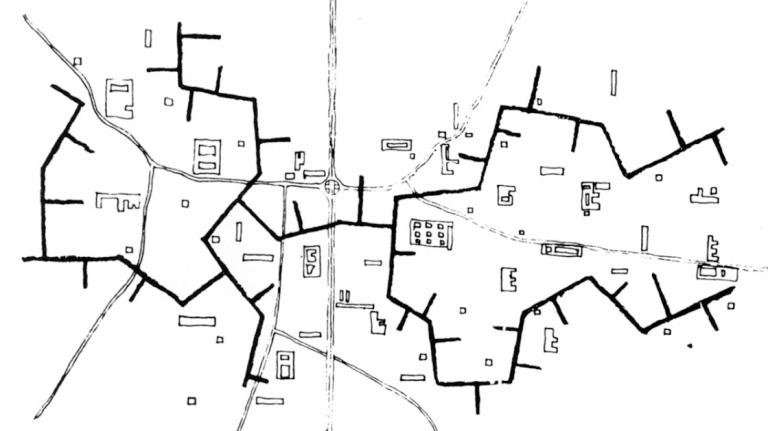


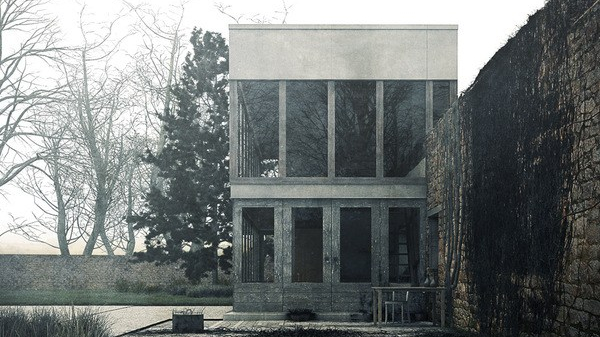
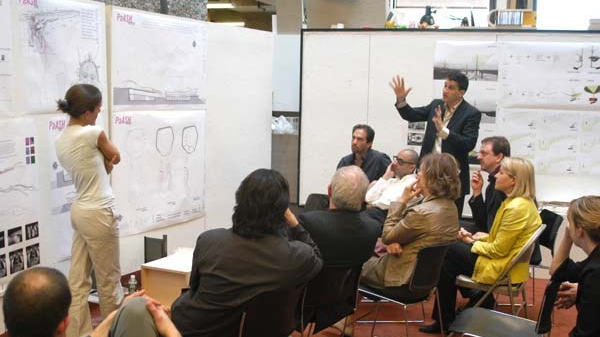







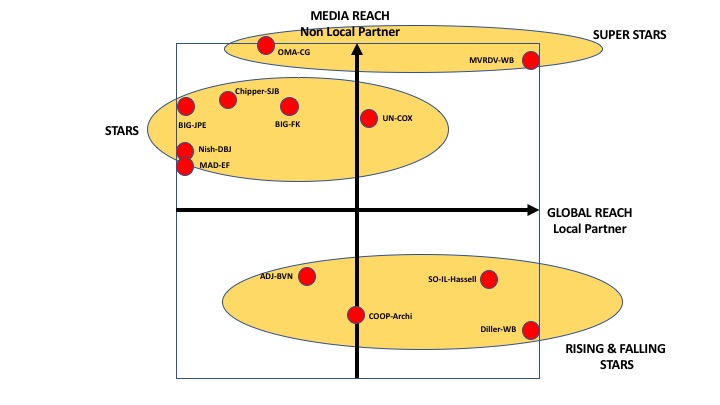




 8. Without wanting to sound like one of those awful American Architecture school






 Peter Raisbeck: surviving the design studio