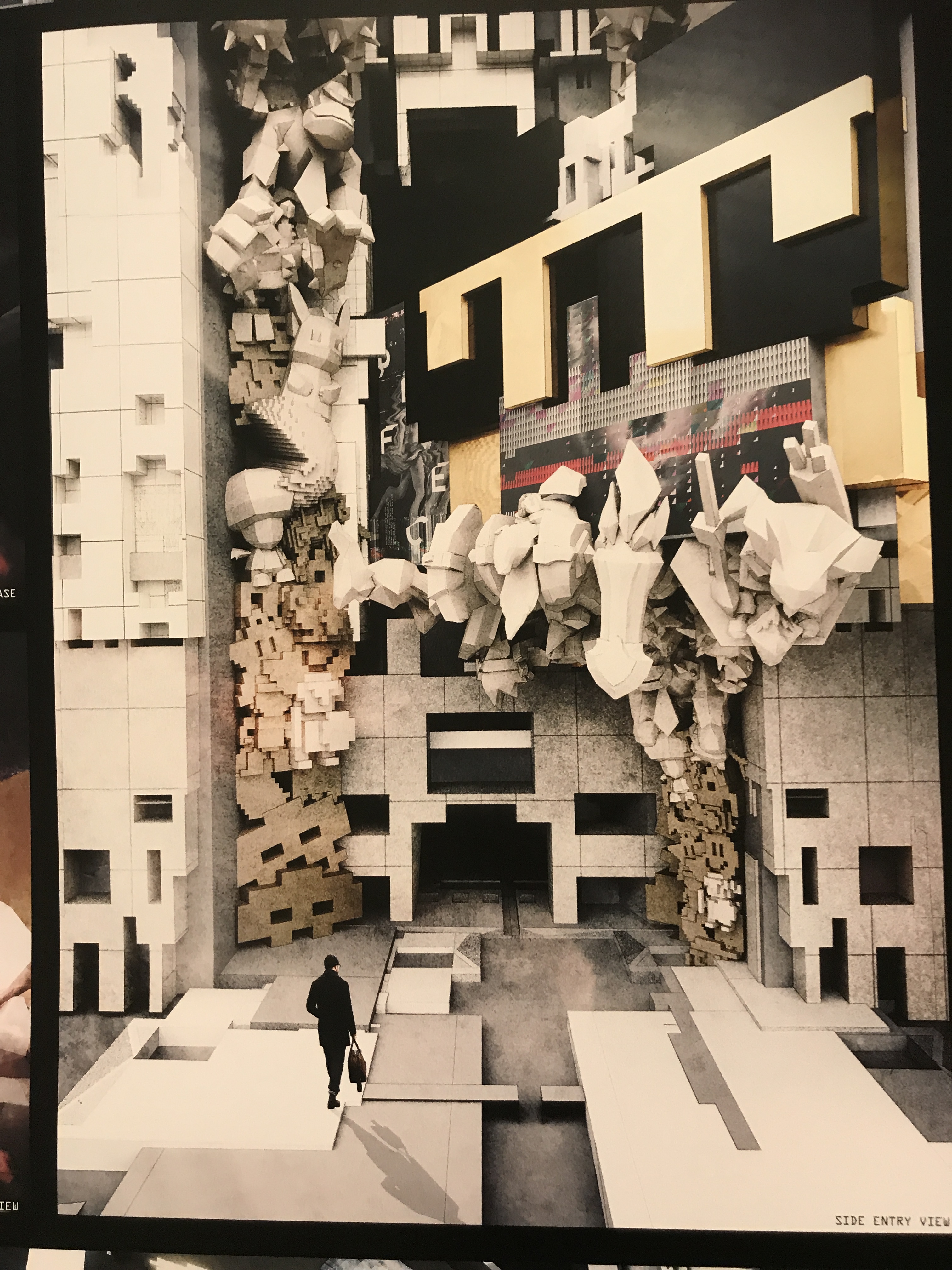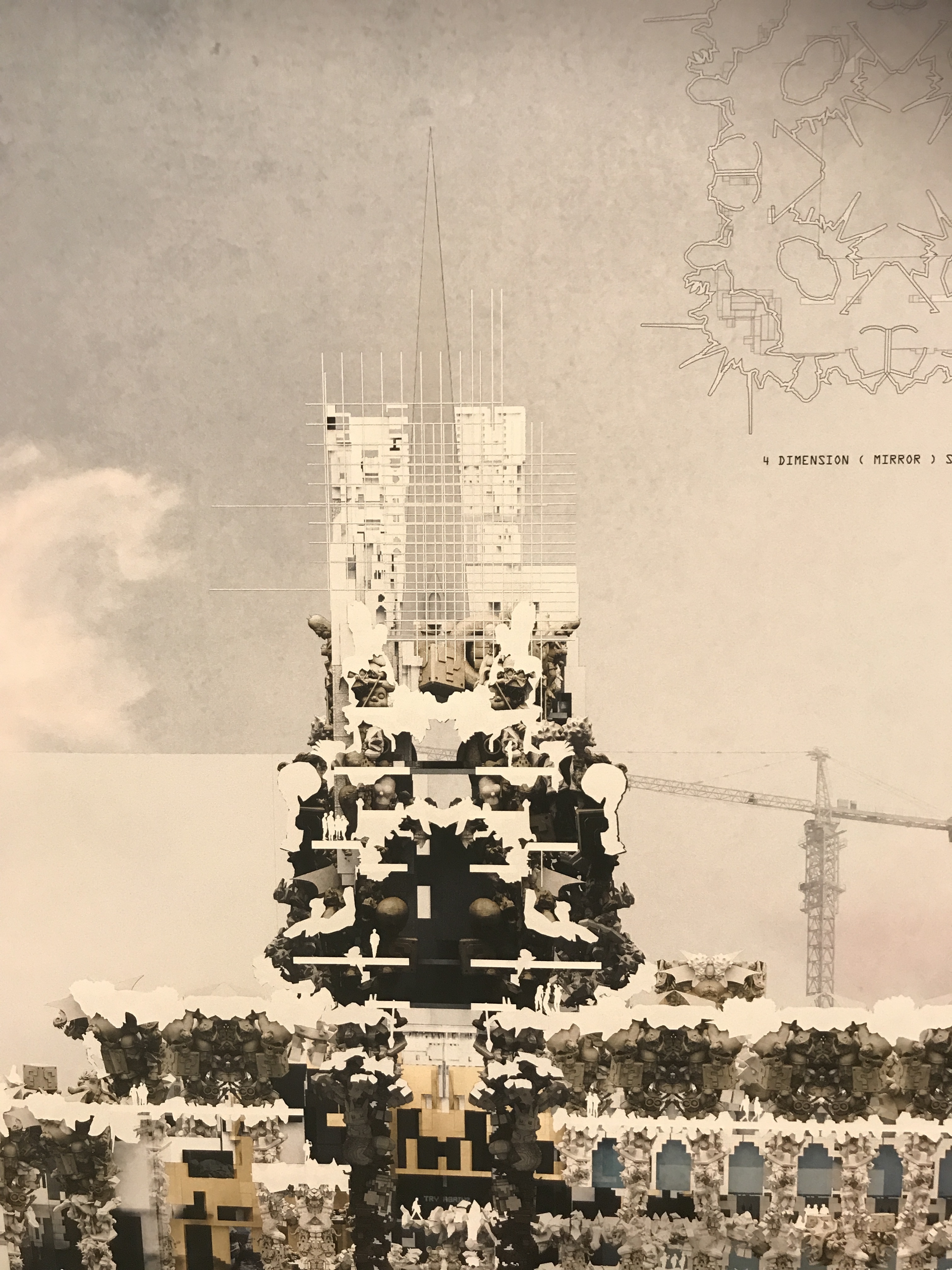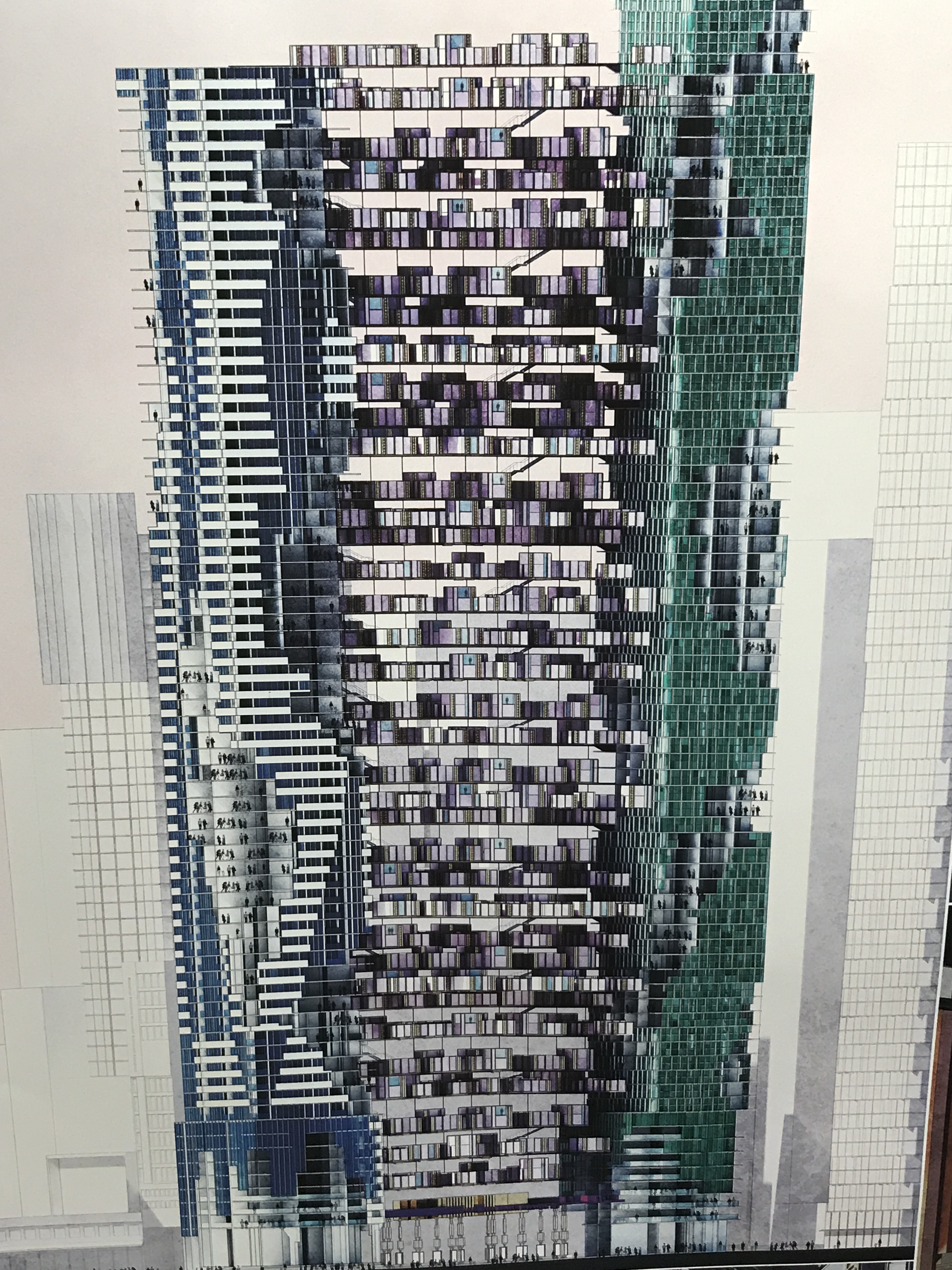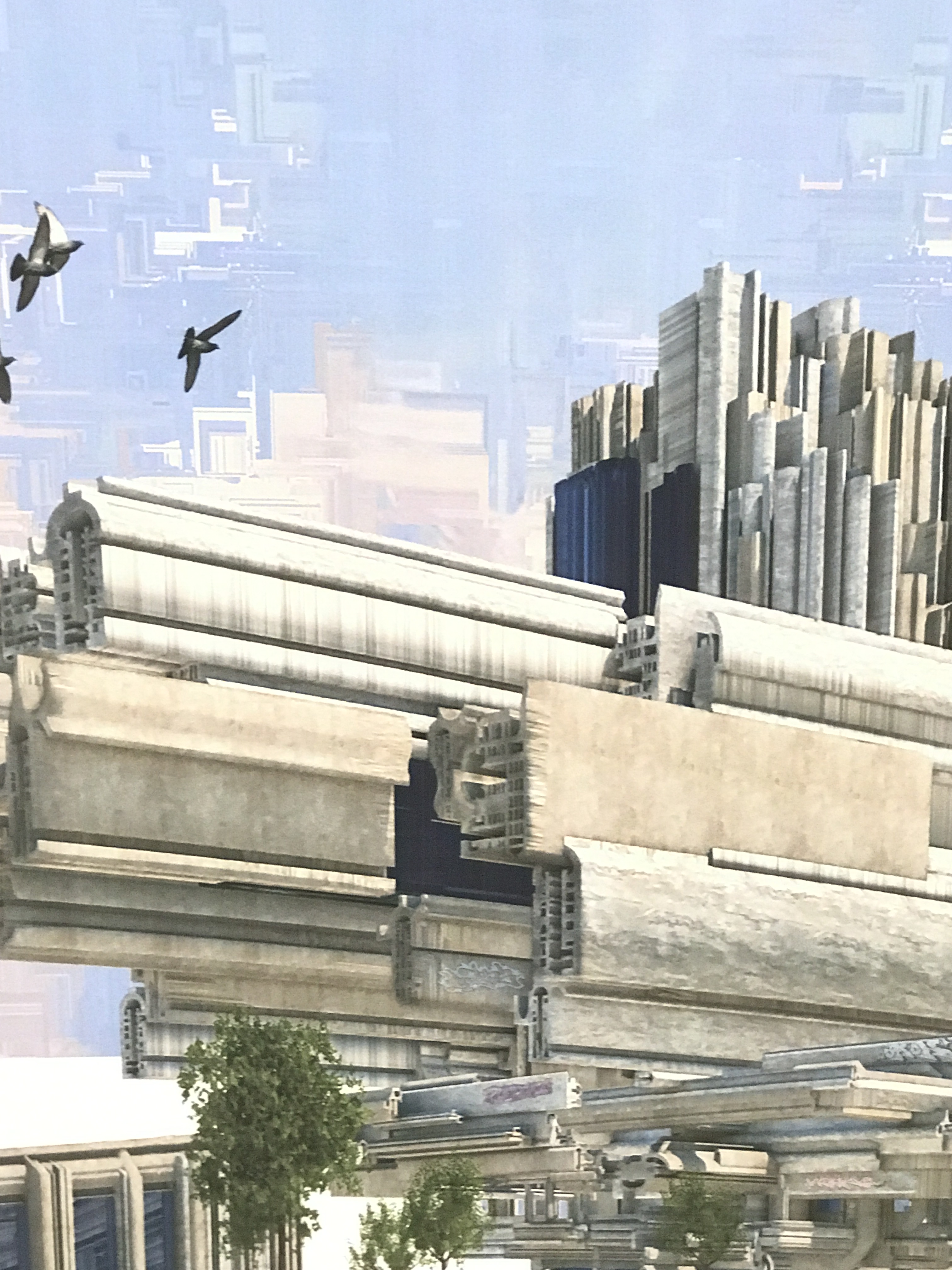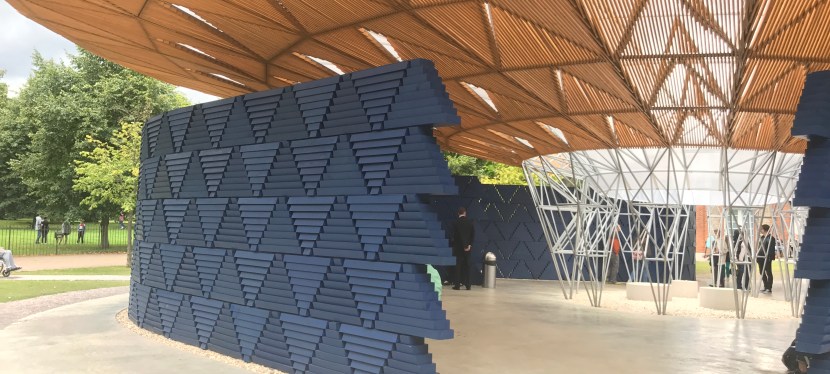

The @archienemy awards for the 2017: 5 Ugly Moments in Architecture. 

Season Greetings 

IMG_1634

Of course, getting this close to Christmas its time to thank everyone who has actually bothered to read this blog. Thank you so much.

The blog has gone from strength to strength this year and the number of unique visitors has doubled. Whilst the blog has primarily an Australian focus there are still many visitors to it from elsewhere. The largest number of visitors outside of Australia are from the USA, Europe and India. Many people visit from the cities of London, Mumbai, Los Angeles and even KL. Architecture is indeed a global system and one aim of the blog is to explore the inequities, contradictions and limits of this system. Of course along the way it is hoped the blog can help architects learn how to navigate their way around the design studio.

Next year the look of the blog will get a makeover and I am hoping to get some podcasts interviews with architects up as soon as I figure out how to do that over the summer. In the meantime thank you for all of you who regularly read Surviving the Design Studio. I will of course still be transmitting over the Southern hemisphere summer.

The @archienemy awards for the 2017

There has been a lot of talk about architectural urban and architectural ugliness in the media lately. It’s easy to blame the architect for “ugliness”, whenever anything is outside of a “stylistic” norm; yet, that norm is never defined. As an invective ugliness has had some measure of success in the media and continues to do so. I hate it when the political class, usually unversed or untrained in visual arts, decries something as ugly. More and more it’s becoming a way to grab media headlines. Perhaps there has always been an anti-intellectual streak towards architecture and the visual arts in Australian public life. Architects need to call this tendency out at every opportunity as it has coarsened our public debate around what our civic realm should be like.

As an architect recently pointed out to me recently the use of the term ugliness by politicians, contractors or property developers and the like is usually accompanied by an underlying or concealed economic imperative. My favorite example is Southern Cross Station whose procurement and delivery was mismanaged by the contractor after a very low bid for the project. Of course, the large contractor got mileage in the press complaining that all the problems were the result of the “krazy roof” by Grimshaw Architects. The roof is great. Earlier in the 2000s Federation Square was no different at the time of its construction. LAB’s great Western Shard at Federation Square was zilched, by a coalition of contractors, politicians and the tabloid press in 2002. Easier to blame the architect every time. Of course Federation Square has come to be a great civic space in the city.

So here are my top 5 @archienemy “ugly” awards for 2017. These are examples of the real ugliness underlying our architectural and urban discourse. Architectural aesthetics is entwined with politics and to think otherwise is a mistaken conception.

Of course I would be happy to get further nominations for next year, or even late nominations for this year. Don’t hesitate to let me know.

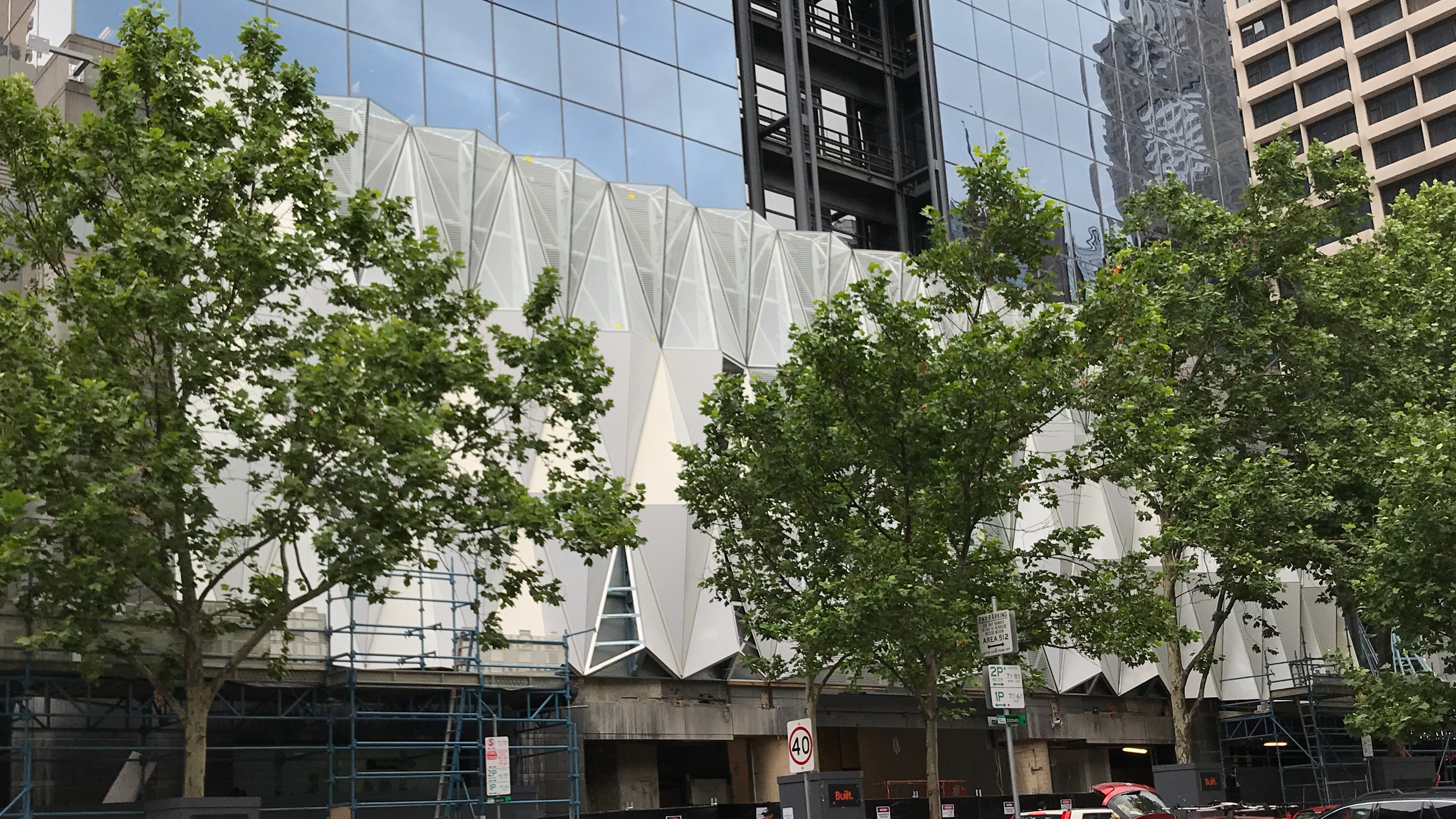
1. Ugly Office Makeover Award: 222 Exhibition Street 
IMG_4555

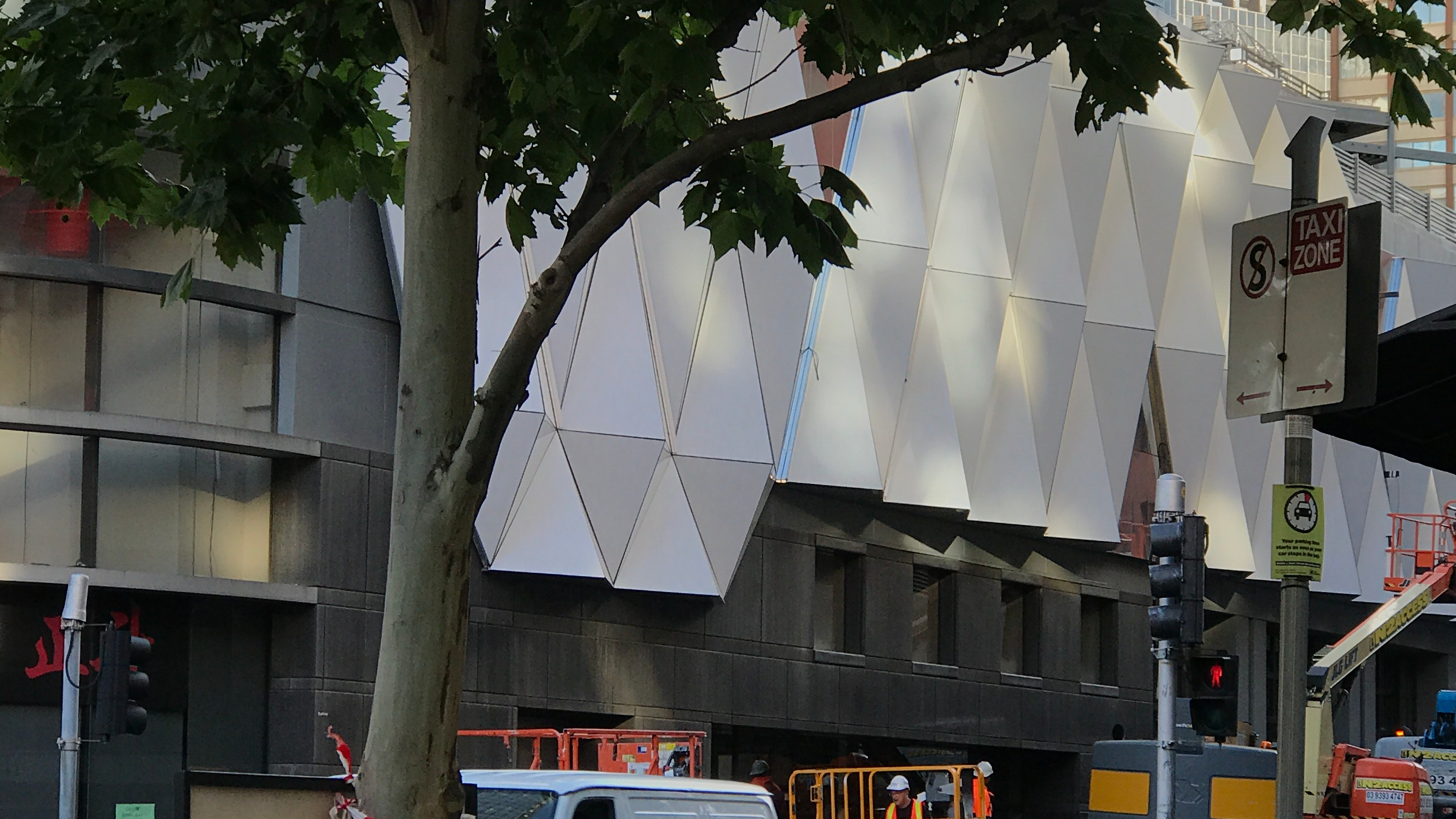
For some reason this addition really annoyed my sensibilities. Probably because it is indicative of a situation that is all too common. It has been given a kind of fake and folksy parametric make over by Jones Lang Lasalle. So they get the award. No idea if there is an architect. The casual and unthinking destruction of a fine Post Modern building originally designed by DCM.
IMG_4561

Apparently all this flummery is in the name of sustainability ratings. I wont call the new additions a dog, but I think the slightly lesser rating of shocker, is relevant. This sort of thing only reinforces my prejudice that sustainability consultants, despite their hyperbole, have no regard for aesthetics and that the sustainability push in the context of commercial office space is so often greenwash.

The original building, 222 Exhibition Street received a RAIA Merit Award New Commercial for DCM in 1989.

2. Ugly Security Addition Award: Parliament House Fence Canberra

1507537587404

The Parliament House fence. Not sure who deserves this award. Maybe the AIA for going along with it. It should have been an Australian wide design competition. But that would require political leadership. It was simply a bit of a media debate and a process focused on security. A debate that, as it progressed, at no point questioned the aesthetic or symbolic implications of putting a fence around Parliament house. I met a journo who works there and mentioned it to her. She didn’t really get it. Who cares about that stuff when our secure lives are at stake. The fence says, its ok if we look like a Gulag state as long as we are safe.

I know it may sound crazy, but I think there is a logic in the idea that we are now living in our own Australian version of Stalinist style social realism. Soviet social realism existed in order to generate and transmit propaganda from the ruling class into populist mythology. Is this any different?

No.3 Its Brutalist so its Ugly Award: The Sirius Building 

nsw_mp__0029_dominic_perrottet

The actual award goes to  NSW Treasurer Dominic Perrottet who unleashed a vitriolic diatribe via the Daily Telegraph on 28 July, dismissing the Sirius building as “a boxy blight on The Rocks,” made from “towering slabs of grimy concrete,” that stands as a “drab relic of union power.” He went on to say:

“Sirius represents the destructive, dehumanizing vandalism of the modernist movement; the legacy of the likes of architect Le Corbusier, high priest of the cult of ugliness, who was determined to demolish the stunning heritage of downtown Paris in favour of utilitarian concrete skyscrapers,” he proclaimed. “You might say it’s brutal: the epitome of the out of touch left, putting ideology before people.”

Comments like that seem to bear a lot in common with the celebrity fascist Milo Yiannopoulos comments about the Opera House here. Actually you have to Google the link yourself. I don’t actually want to give Milo much air. Again, you have to ask are we living in our own version of Soviet Social Realism?

As noted in a previous blog this award pretty much sum’s up many of the battles over state-owned land in our cities. The NSW government seems determined to sell the site. Why not make it an international architectural design competition? Rather than some low-grade property investment tender orchestrated by people who look like they come out of the Riviera series.

Of course we all know, the money made from any Sirius sale will not go back into social housing. It will just dissipate in treasury accounts and be used to rebuild a few new ageing stadiums. After all the sporting brands are worth more to the state than the social housing brands.

4. Apartment Clusterfuck Award: Ministerial Planning Approvals. 
img_4588.jpg

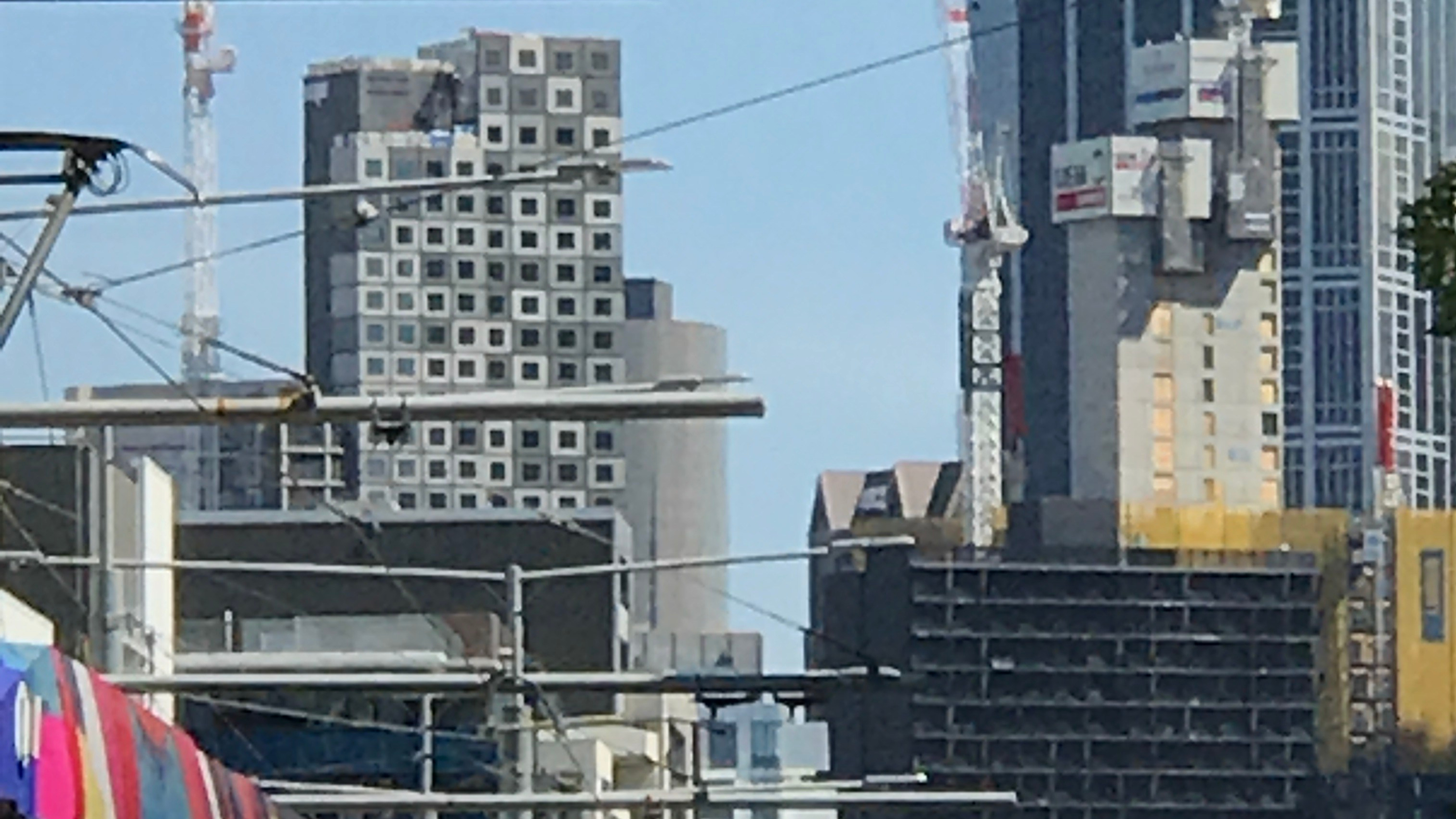
I don’t normally like to sound overtly partisan, but we are now witnessing in our city the results of Matthew Guy’s planning decisions, from his time as planning minister between 2 December 2010 – 4 December 2014. There is always a 2 to 3 year time lag with tower builds. If you are in Melbourne just go down to the corner of Franklin street and Elizabeth street and have a look around. You can follow the links below in Google street view. You will wonder WTF happened? Well Matthew Guy happened and the award goes to him.

Super Tuesday 2014 and also in June 2014 was Guy’s best of times. But follow the link below to see the resultant cluster of apartments.

127-141 A’Beckett Street

398 Elizabeth Street

452 Elizabeth Street

500 Elizabeth Street

5. The Apartment Ugly Standards Award: Plus Architecture
franklin2.jpg

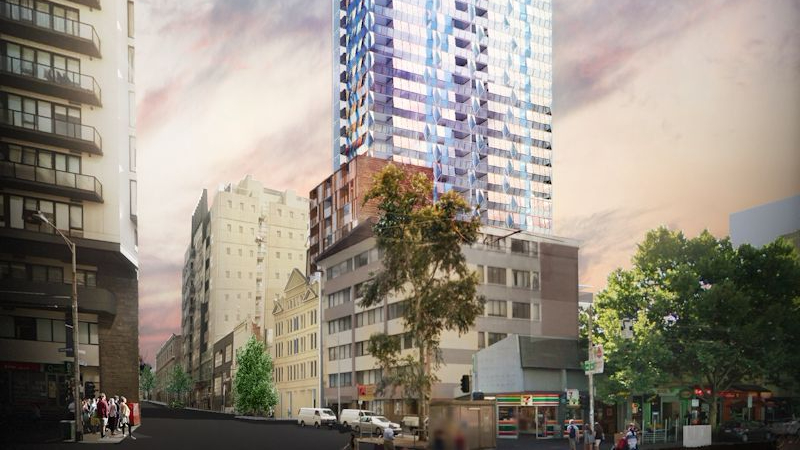
Its great when architects lobby politicians to make the world a better place. There is nothing wrong with that. It is always good to see actual architects engaging with the political sphere.  This award goes to the fine firm of Plus Architecture. In particular to Craig Yelland. Plus is responsible for some truly great projects around the city.

Richard Wynne the planning minister who succeeded Matthew Guy actually put in place a policy to mitigate the worst of the apartment plans in Melbourne. The policy can be found here and the standards came into place in April 2017. 

I really enjoyed reading the counter arguments from Plus Architecture about how much extra these minor changes were going to cost the so called consumer per apartment.

“If all of the apartment standards being considered are brought to Melbourne, apartments will cost approximately $115,000 to $145,000 more”

It seems they were going to cost the consumer, and developers, of these apartment products a lot of money. But sadly, no thought in the analysis by Plus to the longer term costs or benefits to the community or the city.

Finally

If anything, the above awards indicate the continuing power of the property development lobby.  Whole of life costs are usually missing in action. Cowboy aesthetics often reign supreme. Riding shot gun with the developers means just making those priapic towers bigger and taller and meaner inside. Its a lobby that arguably has no interest in urban aesthetics, amenity or the quality of civic and public spaces. Its a lobby more interested in the comforts of its seaside beach house taste culture.

Combine the developers with unthinking provincial politicians and its little wonder our cities are degrading almost as soon as they are built. Of course, it is always good to see actual architects engaging with the nexus of property development issues and politics. We definitely need to have the debates around “ugliness” when the ignorant impinge onto our disciplinary turf. But some architects also need to ask whose side are they actually on?


Surviving the Design Studio: Architects have the best Christmas parties.

IMG_4491

Now that the festive season is just about upon us I thought it might be good to be less serious, after some very, and all too serious recent posts, and to reflect on why the architectural profession is such a great a great thing to be a part of.

Architects have the best parties 

One of the main reasons people are so desperate to do architecture is because architects are the best at doing parties. In comparison the parties at my business school were never as good as the parties at my old architecture school. I have been to numerous  birthday parties (recently hosted a great 75th) , christenings, pre-wedding parties, weddings (including a few of my own), engagements, parties, cocktail parties, dinner parties and exhibition openings as well as other various events in genteel polite society.

I know to my friends on  the outside I look like a boring middle-aged academic. But actually on the inside I am really a wild party animal. Once I realised this in my late teens I vowed to have a big party at each decade milestone. After a three of these so-called milestone partays I thought it was better for the entire city not to continue. I know this sounds a little narcissistic, but a Raisbeck birthday party usually has reverberations that go beyond the immediate event.

img_4486.jpg

I have not been to my Faculty Christmas for 5 years after a kind of self-imposed exile. Maybe its only 4, but I can’t really remember a lot about the last one I went to, I vaguely remember going to the party, maybe it was at the ARM Recital centre, or maybe it was ACCA, or the Abbotsford Convent, and then I remember the bar on the Yarra, and I don’t remember much after the tram-ride. Unfortunately, just when I was about to venture back to the Faculty festive party this year, it was cancelled because of the prospect of dangerously bad weather. The whole city was shut down.

If architecture is dangerous then architectural parties are potentially very dangerous. We should all worry about what we do at the end of season partays. Any personal information revealed at a party, and distributed across social media, may be of interest one day to the HR types, who seem as young as my teenage son these days, or  promotion and interview panels, who, we are led to believe, scour the interwebs for details of our past lives, just to make sure we are not crazed alcoholic or drug infested maniacs. Not to mention the local and judgemental village gossips that every organisation seems to have in its nooks and crannies. I am constantly amazed at the antics of the Kardashian generation on Instagram and Snapchat and I fear that when they are my age they will regret all those terrible bathroom selfies.

img_4505.jpg

I better get back to the point.

Engineering parties are not great, still a lot of shorts and white sock action. Quantity Surveyors have not been known to kick their heels up and the conversation soon goes stale. They tend to choose wine and food that is prudent but not lavish. Think, smoked oysters (lavish) wrapped in slivers of bacon (prudent). Planners and parties don’t really mix as these can get argumentative if you attend as an architect. They will usually have a healthy selection of celery sticks, carrots and dried apricots. Its amazing to watch them dip the dried apricots into the little containers of hummus. They are planners after all.  Builders and sub-contractor parties are really a no-go-zone for architects; best not to say why. Let’s just say they are yet to discover craft beers and so they only drink beer from brown glass stubbies.  Plus, you wont get in with any black and without a fluoro hi-vis vest. Its amazing what they will do to each other at the end of an evening when they are drunk. Thats exactly when you should try and get them to tender. Its incredible to think, you have to virtually bribe them to get them to tender on any architecture project under 0.5M$. The parties of Project Managers are not much better. There is a lot of kabana sausage bits, pineapple and yummy glaced cherries (PMs love shiny cheap things) on skewers sitting alongside buckets of Costco dips. They always forget the crackers and the party never starts on time. Then they blame the architect.

Whatever why you look at it: Architects have the best parties.

Avoid Lawyer Parties. 

img_4513.jpg

In my experience the worst parties are the ones where there are too many lawyers. The worst thing about the Lawyers is that they also try and dress fashionably. But, then they always get it a little bit wrong (except the lawyers who are my actual friends).  We should give them style lessons. But then they will probably sue us anyway.

They all get down one end of the room and talk about the law. Then their actual partners are, usually sort of down the other end of the room, and if you tell any of the partners you are an architect they will say things to you like:

“oh, so your an architect, how interesting.”

“oh, my partner wanted to be an architect but he became a lawyer instead.”

“oh, our architect (insert name of appalling fee cutting architect) has just finished our Georgian style renovation, do you know them?”

“oh, I went to school with an architect, do you know them?”

“oh, we have a garage extension that needs doing what do you think?”

“oh, what do you think of the Opera House?”

img_4507.jpg

Its better if we only go to architect only parties as they are more fun. As you should be able to discern from the attached images here. This particular party was a great exercise in brand building. It really makes you want to do business with this office.

For those architects averse to parties, my advice is to loosen up, if you want to build your brand the best thing you can do is have a great end of season party. Invite me along. I will be one of the last to leave. After all is said and done there is nothing like having fun and partying to the max as architecture goes down the gurgler in Australian public life.

Surviving the Design Studio: Making architecture dangerous in the swamplands of design mediocrity.

Autonomous Waypoint_View_a

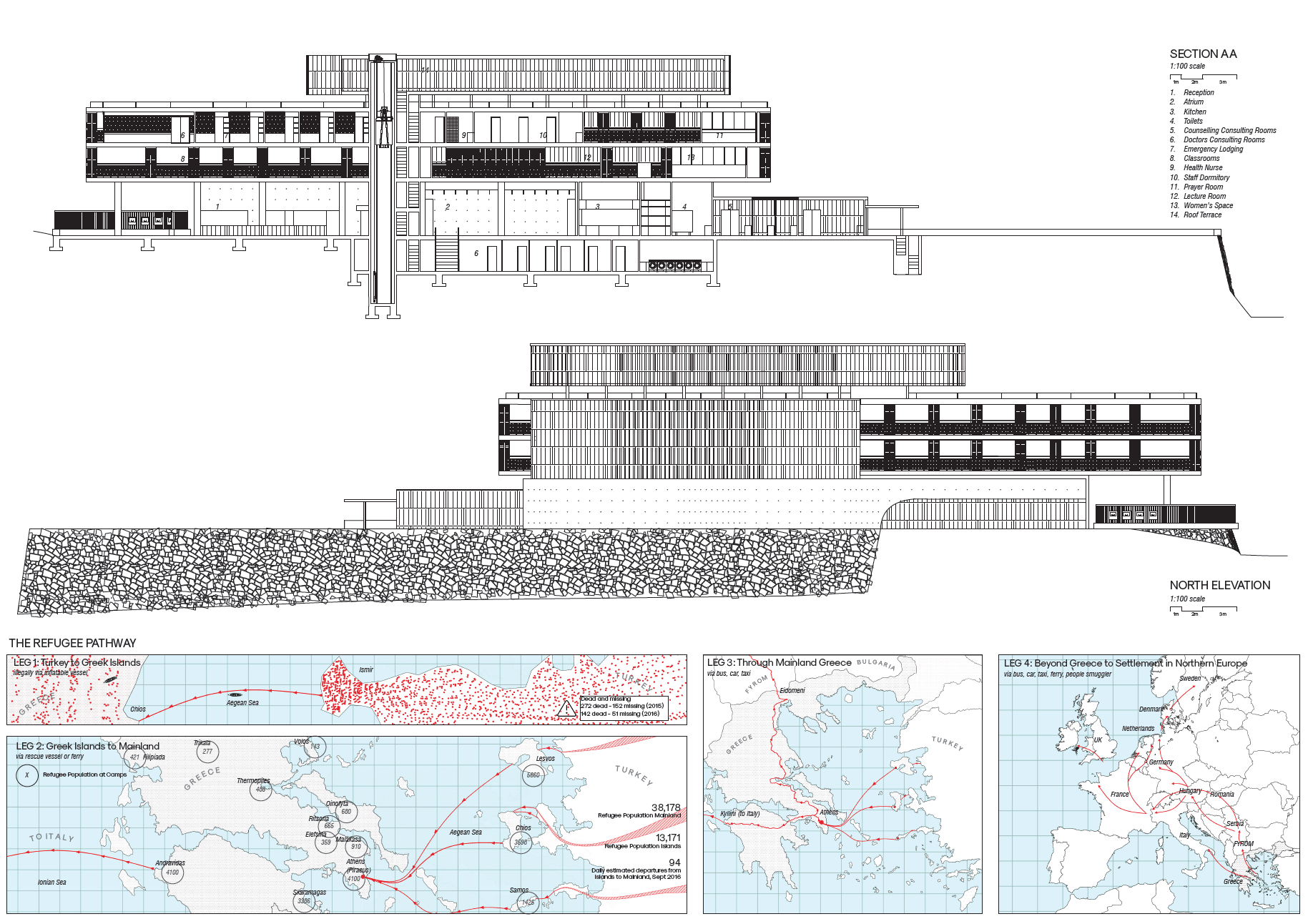
Daphnes Spanos Autonomous Waypoint project (above) from Independent Thesis MSD 2016. Rehabilitaing and old modernist resort hotel, this project grappled with the flow of refugees to Greece and Europe from Syria. Numerous critics were aghast that she was even trying to do this. One critic thought she was doing a Manus island detention camp, another couldn’t believe she was doing it at all. I was aghast at the emotional reactions to this admirable and well thought through project that sought to tackle a seemingly dangerous issue. 

Memories of the old school 

Recently, I returned to my architecture school of my architectural birth to look at the final year projects. It reminded me that my architectural education was largely a mix of being self-taught and learning a few things in the actual classes, being bullied by tutors, and stumbling from one design studio disaster to the next. Ironically, even though I now teach it, professional practice was not my best subject, whereas architectural theory was.

I should also add at the time the principal mode of studio criticism seemed to be good-cop bad-cop combined with a large measure of passive aggression. I didn’t talk, but I did observe. Luckily for me one of my design tutors had a, seemingly dangerous, passion for Christ. It was great education to see over the years how that dangerous and unconventional passion manifested itself in a subsequent career and built works.

It’s also best, if I skip over and dont mention, my not so fabulous design marks. Needless to say, I have always been suspicious of people who got the top marks in design. Unless, of course they were in my studio or my own thesis students. Two of which are featured here to illustrate my points.

Autonomous Waypoint_ViewDaphnes Spanos Autonomous Waypoint project from Independent Thesis MSD 2016
 Danger Danger Will Robinson

I think one of the most important things I learnt at architecture school was that architecture needs to be dangerous. I remembered this when I saw the final year projects on the walls of my old architecture school. Not all of these projects were vapidly pragmatic or useful. In almost every one there was a sense of danger, a sense that architecture itself mattered more than logical design thought and functional solutions and techniques. More than a sense of concise, orthodox and well expressed arguments. It reminded me that architecture can still provoke ideas through spatial experience, the way we make sense of the world, questioning aesthetic norms, as well as allowing us to pursue techniques to there most extreme, and often surreal, conclusion. A sense that architecture was about estrangement, evoking worlds, states of being, and memory that exists outside of and in parallel with our everyday lives. Of course, to complicate matters further, and this may come as a shock to some readers, architecture doesn’t always need to be about anything all the time anyway.

Once you get past the naïve swamplands of thinking that architectural design is all about designing solutions to problems it gets more interesting and paradoxically, I think, architecture also becomes more effective. Last year in a design crit I heard a jury member say: I don’t like those materials and the way the project has been drawn it looks “hard and impersonal and repetitive” and hence the implication was that the project itself was hard and maybe should it have been soft? I wonder, what it is with the hard-soft dichotomy anyway, the more I think about that the weirder it gets. Our level of critical discourse and criticism needs to rise above this kind of simplistic determinism and crap dichotomies.

PK_Diagrams_Super_Studio

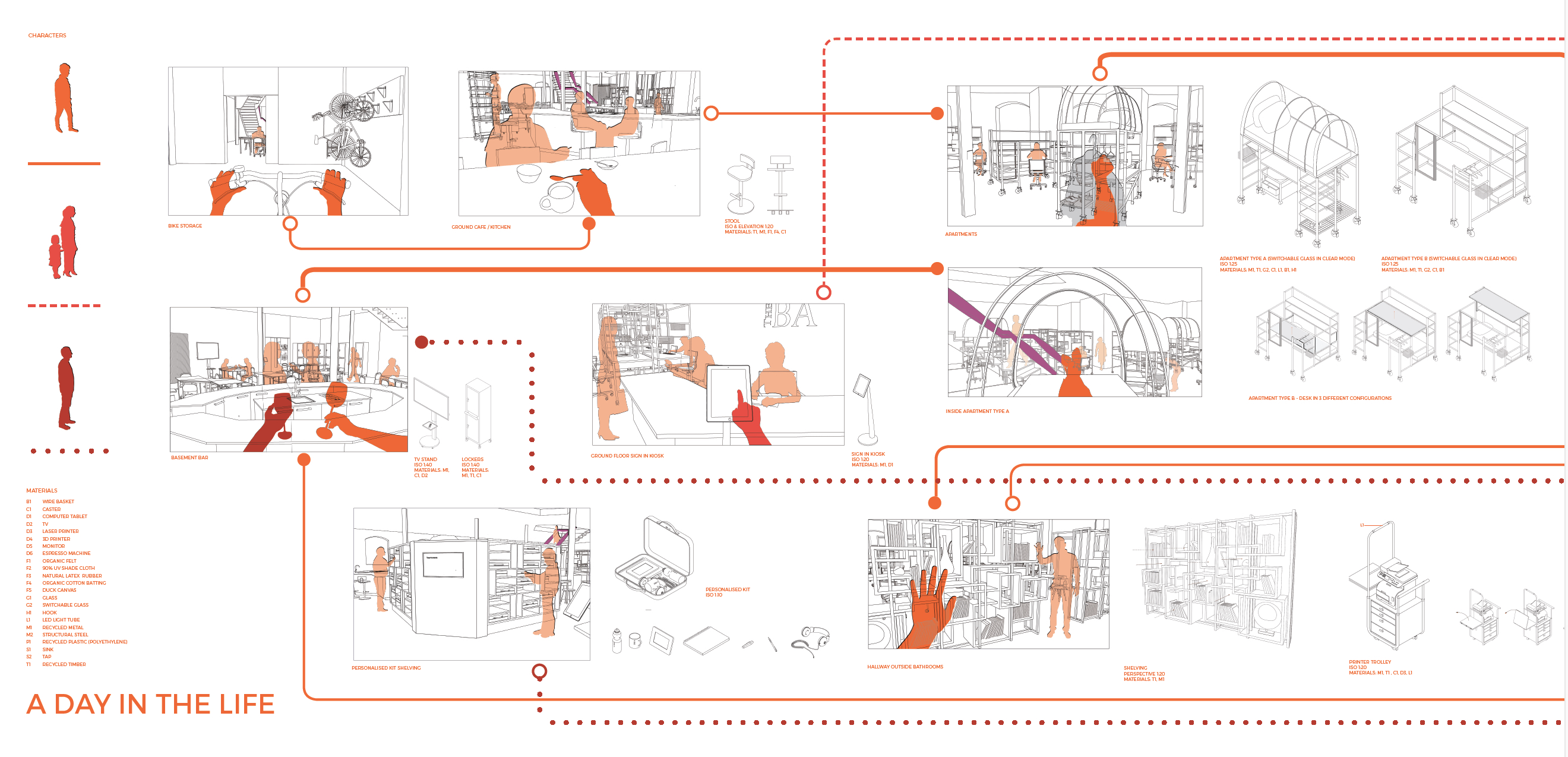
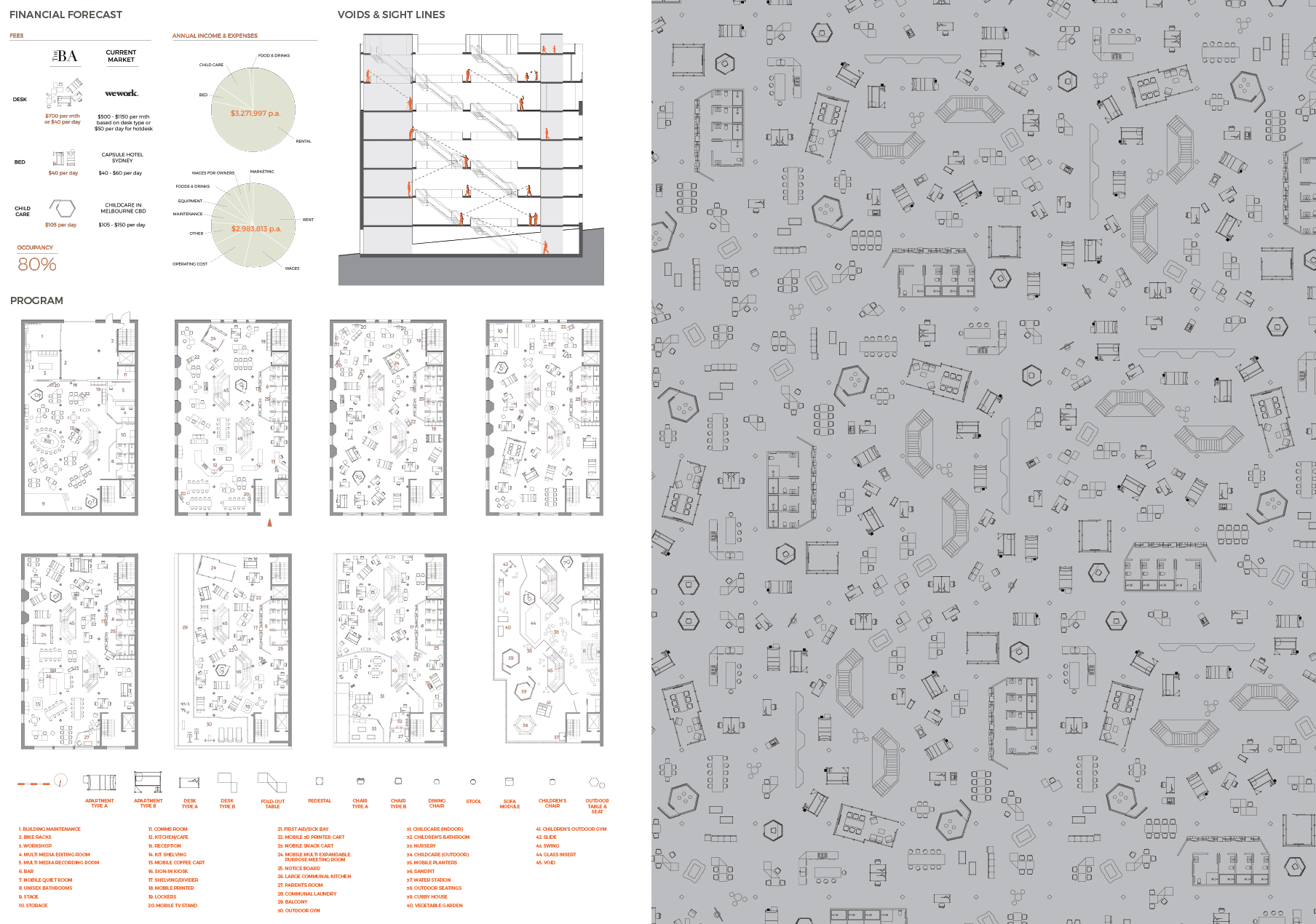
Above and Below: Priscilla Kwok’s Independent Thesis MSD 2016 drew on the polemic of Superstudio and critiqued the all male culture of innovation spaces. The project was a poetic and thorough critique of current fashions and exclusion in workplace design. 

PK_Diagrams_a

Architectural Design needs to be a little polemical and dangerous to be of any use

What should be of concern is that the problem solving ethic, often ignores aesthetics and does little to produce architecture that either provokes our thought or speculates about the future. Even the smallest and most budget restrained project can speculate and provoke us to think.  Being self-satisfied with the baby pap mix of concepts based on simplistic functionality, constructional CNC logic or another “bespoke” policy issue, or social enterprise do-gooding is not enough.

The “urban happiness” push is fine but is it just about making the already privileged comfortable in consciousness and urban lifestyle?  Is it just about trying to organise and mitigate the horrors of neoliberal capitalism: sustainability, green innovation (another apartment building covered in green) and clients with that “awesome” lifestyle. Making the deterministic and causal link between material aesthetics and how a building feels only diminishes our design practice.

So along these lines what follows are no less than six talking points, to help you think about how to make architecture a little more dangerous, and even fun. Plus, I have included a few images of “dangerous” final year projects.

1. Architectural design should create problems

Yes, there are times architects are so caught up in solving immediate design problems for the instantaneous moment that they disregard forget how to create problems. Have architects become too risk averse? Of course, I don’t mean deliberately creating problems related to some technical lack. Like the roof leaks or bits of the building fall down. Creating speculative problems is about the long game; the real game after the project is delivered. For example, architects can choose to design to disrupt. To disturb or distort prevailing urban aesthetic, sustainable or material patterns and orthodoxies. Just doing sustainability isn’t really enough. I hate it when developers get their green on.

IMG_4325

Jing Yi How, Bridging the Edge, RMIT Major Project 2017 Mark Raggatt and Tim Pyke Tutors. 

2. Create architectural images that burn a hole in your brain

Create dangerous architectural images (and I don’t mean pornography). I dislike images that are full of sanitised clarity or have been over saturated with “realistic” colours or filled with bright happy Google people. Create, fuzzy and blurry images, ambiguous images, images that play with perception, images that obscure and confuse us and play with existing regimes of power and media distribution. I am sick of seeing that archetypal housey thing covered in black zinc in my social media feeds.

IMG_4345

Kayden Khoon Yaw Lau, Game-On, RMIT Major Project 2017 Ian Nazareth Tutor. (Above and below).

IMG_4346

3. Make architectural design subversive

In what way does the design subvert or counter a client context, prevailing typology, or economic situation. We need more projects that speak to refugees, migrant labour, gender inequality and LGBTQIA and indigenous people. We need more projects that reference the political contexts that confront us and it is architects who have the spatial, form-making and material tactics to do this. I am not sure the community pop-up barista café design market urban garden is really that political. Sorry.

IMG_4318

Jan See Oi, Abyss in Luxury, RMIT Major Project 2017 John Doyle Tutor. 

4. Foster alternative futures

Architects can really foster debates about the future of our cities and architecture and I don’t just mean debates around making those cites nice, or “great”, or high density or more liveable. Or another thought leader convention full of urban densifiers and city exciters. Architects can also propose experimental futures. Architects can and should have a real discourse around utopia and dystopian outcomes for our cities. I am not sure those renders of endlessy flooded cites, or cities full of windturbines, will do that either.

IMG_4343

Imogen Fry, Regenerated Farms Regenerated Towns Regenerated Nature, RMIT Major Project 2017,  Mauro Baracco Tutor.

5. Architecture should be kind of annoying

IMG_4328

Austynn Machado Hi-Fi Lo-Fi RMIT Major Project 2017,  Paul Minifie Tutor.

Is architecture just about giving the everyday users, or punters, what they want? Maybe people need to bump into architecture more, maybe it needs to be in their faces more, maybe it needs to make them walk through a labyrinth or see different aspects of light than the monochromatic fluorescent and halogen wash we are all living in. Architects should avoid, like the plague, that happy little bright and sunny sustainable community focused apartment development with all the big floor to ceiling windows looking onto the garden.

6. We need more ugly 

In decrying these things I am not wanting to evoke a sentiment of cynicism or bitterness. The tone is probably meant to express a kind of desperation in order to save the discipline of architecture. The images of the final year projects reproduced here suggest a little about my position. I am not suggesting that architects should escape the world and outcast themselves into a zone of isolated hypocrisy or pernury. I am not forgetting architects need to get the fees in. But, intellectual appeasement to the prevailing norms, fashions or about to happen policy problems is not architecture. Nice and safe is not architecture. It only leads to an architecture easily swallowed up by the mass produced business as usual landscape.

We need more ugliness and danger in our aesthetic and critical practice. Maybe naïve art and kitsch is pretty good after all and thankfully the architecture schools are still places where we can experiment. Architecture needs to take us, and be, somewhere else from where we are now. Playing it safe is not going to do that.

Architects & Badass Clients: The perennial moral question?

There has always been a debate in architecture about patronage and politics. The central question of this debate, which I am sure many architects are familiar with, is should architects work for those with no morals? This becomes a dilemma and does it really matter who architects work for as long as they make good, or even great, architecture?

The bad and sometimes evil clients.

All architects have had clients we don’t like, or we don’t particularly want to work for, or we are worried that they will rip us off by not paying. We refused a client once because he looked like Catweazle. But what happens when the client is a demagogue or a war criminal?

Usually, when this debate gets going, the old hero icons of modern architecture get trotted out: Gropius and Mies and the Nazi and the Reichsbank competition. Le Corbusier and Vichy, and the break up with his Marxist cousin, Pierre Jeanneret. Phillip Johnson, that most subversive of architects and the actual Nazis. For a brief moment, in the late 20s the constructivist worker architects and artists had the same problem, should they work for Stalin? However, by 1932 it was too late for them and most were killed in the Terror or went to the Gulag’s.

Tessenow and Speer and Krier 

tessenow-interiors-00-featured-460x300

Inevitably this argument cycles around to Hitler’s architect Albert Speer, the gargantuan and ham fisted classicist and pioneer of modern managerialism. Speer was no Plecnik or Lutyens. As an architecture student Speer was reputedly thrown out of Poelzig’s studio and then ended up in Heinrich Tessenow’s studio. What would have happened to Speer if he had stayed with the early expressionistic Poelzig who later embraced New Objectivity rather than the classically orientated Tessenow.  As most know, Speer was later to be admired so much by Leon Krier, who published the monograph on Speer, once Krier himself escaped the clutches of James Stirling. In the 1980s as students we once interviewed Tadao Ando through a Japanese translator and asked him what he thought of Krier, the response in Japanese, was opaque, long winded and incomprehensible and surprisingly animated. However, in this perplexing outburst there was one word that we could discern through the rush of Japanese: Fascist. Yes, Ando thought Leon Krier was a fascist. As Paul Davies has noted Giorgio Grassi would rehabilitate Tessenow; and Leon Krier, Speer.

 Patrik Comes to Town

IMG_4363

Hot on the heels of Rem Koolhaas, all of this history, came back to me when we had a new star architect visitor these weeks past. Yes, in my small city on the architectural periphery, it was none other than Patrik Schumacher. Suddenly, my Archienemy Instagram social media feeds were full of people I know doing selfies with Patrik. Rather than going all out I chose to get a photo of his ear. He even spoke at Rem and David G’s MPavilion, which I am yet to visit, with the Victorian State Government Architect.

Perhaps I was a little jealous, I asked myself, I was not invited to the Pavilion, nor was I invited to the jury sessions where Patrik appeared. Had I through some character flaw and self-sabotage avoided the great man and celebrity. Had they read all the bad stuff I had written in the obscure conference papers about Parametricism. I had already avoided the Remmy Koolhaas festival when he came. Should I have lurched into Patrik’s field of vision to get a selfie? I did at least manage to get a picture of his ear.

IMG_4355

Patrik and the Mayfair Development

Regular readers of the blog will recall Patrik’s statements about Aravena winning the big Pritzker prize in an earlier blog.

“I respect was Alejandro Aravena is doing and his ‘half a good house’ developments are an intelligent response. However, this is not the frontier where architecture and urban design participate in advancing the next stage of our global high density urban civilisation.”

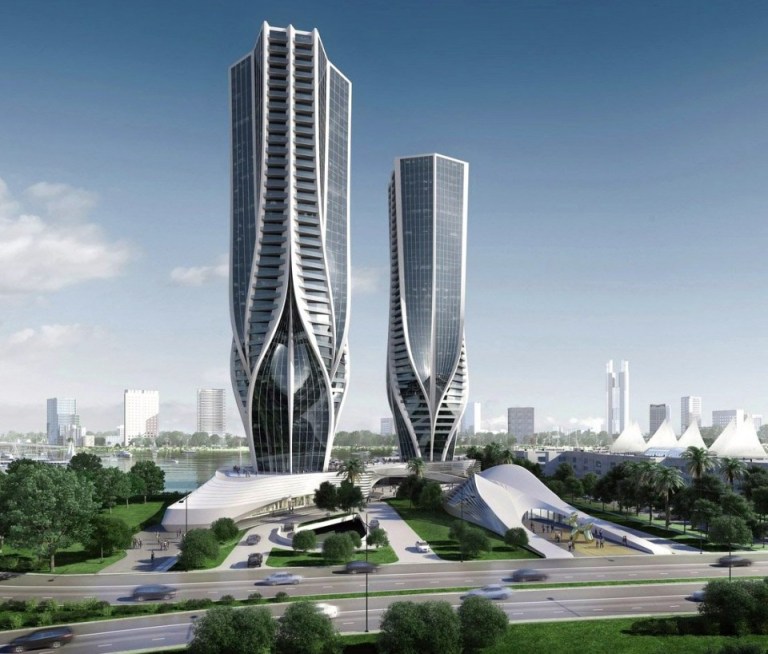
ZHA architecture, in  which Patrik is a partner leads, has also designed a “vase” shaped tower in my city intended to be housed by the Mandarin Oriental hotel. In Brisbane ZHA has also designed a  “champagne flute” tower development. Nothing like a metaphor to motivate the sales team.

size_large

Chin-chin in Brisvegas.

The Mayfair 

image199a

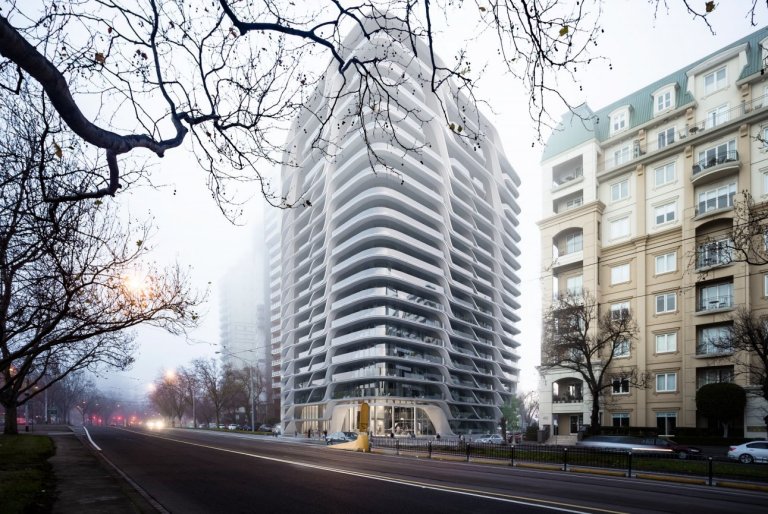
More interestingly, there is also the Mayfair sited on a prominent corner on St Kilda Road, for those not familiar with Melbourne this is the boulevard leading into the cities central grid. The developers UEM Sunrise are employing the ZHA brand to sell the apartments off. This one has the soft flowing curvy butterfly metaphor attached to it. Apparently, the design is based on the “Lorenz attractor – a mathematical set of equations that, when plotted, resemble a figure eight or butterfly.”

There is also great Zaha Hadid exhibition associated with the sale of units in the development and the website is pretty slick. All the apartments look great on the inside and are full of well designed and exquisitely fabricated ZHA designed wall finishes, furniture and fittings.

Bris-Vegas?

Amongst all the signature suite excitement of the interior there is the exterior. In contrast to the interior, the exterior does seem a bit, how shall I say it, Bris Vegas with its predominant horizontal blades and glazed balconies. Perhaps, the Mayfair, and other luxury apartment types in general, are more about the exquisite luxury interiors and less  to do with the exterior. I am not sure how the facade might contribute to a high density urban civilisation?

Perhaps this is the danger the architectural fascination with CNC fabrication and digitally enabled supply chains. Perhaps, all we will get to do as architects in the future, are the luxury interiors: the product marketing types and planners will design the exteriors.

Maybe we are already at the point where we are no longer architects but in fact strategic product designers and marketers. Architecture is a key element in the marketing material for Mayfair:

“Mayfair is unmistakably Zaha Hadid. A mastery of scientific precision and artistic integrity, its soft, organic form pays tribute to St Kilda Road’s leafy streetscape, and the context within which it exists.”

I don’t really know what to say about the “soft organic form” line.

The local connections

With such international collaborations there is always a local architectural connection.  With the apartments on St Kilda road, branded as the Mayfair, it is that notable firm of high rise apartment architects Elenberg Fraser.With the ZHA Mandarin Oriental tower it is Plus Architecture. On face value across the liveable city of Melbourne these two firms, Plus and Elenberg Fraser, seem to have cornered the market for apartments design. Interestingly Plus’s 4248 scheme looks a bit like the ZHA Mayfair. These are architects who seem happy to surf the real estate free market. No doubt  in doing so they are ensuring their fee for service regimes are commensurate with the excellent plan-façade combos they are producing.

Follow the money

Of course, in the modern age all architects immersed in the free market no longer need worry about the Nazis or Stalinists to work for or fight against. Arguably, it is the kleptocrats and big sovereign wealth funds, hedge funds and Panama Paper style investors who provide the juice for the luxury housing fragmenting our cities.

The Mayfair development is being developed by UEM Sunrise. UEM Sunrise is wholly-owned by Khazanah, an investment holding arm of the Malaysian Government. A few years back the sovereign wealth find of the Malaysian government was the subject of a financial investigation. You can follow this here and even search for Khazanah and UEM Sunrise at the Panama Papers. You can also read about some the advanced urban civilisation stuff Malaysia has done for Palm Oil and Penan people.

It would be monstrous to suggest that the architects, or anyone else associated with these current projects, are in any way implicated in illicit financial flows of capital. But the point is that we are all connected in this new digital age via 6 virtual degrees of separation. The landscape in this new global system no longer resembles the past.  The old empires and their classical icons have gone and it is the oscillations of distributed capital propelled through conduits of digital finance that now shape the monumental vistas.

Subversion 

Spare a thought for the other architects, more distant from luxury housing and the celebrity system of architetcure. The local architects who ponder the vicissitudes of the NDIS roll out, informal settlements and the possibilties of producing new housing types driving by financial structures that enable a range of demographics, typologies and ownership.

Perhaps it will always be a perennial question for architects: Does it matter who we work for and who our patrons are? Does it matter where the money comes from? But, maybe the even greater sin for architects is not so much where the money comes from, or the issues around patronage, but whether or not the project is simply trash for cash.

Lets hope that there is a subversive sentiment somewhere in that approach.

The Failure to Fail Fast: The parametric and BIM fail in architecture.

I recently came across two quite disparate fragments of knowledge in my travels across the so called interwebs. The first was an article at e-flux, one of those curiously named architecture websites, by the eminent American architectural academic Joan Ockman. Ockman’s article, which can be found here, details the trajectories of history and theory in architectural discourse since the 90s.

Elon is really Iron Man 

The second fragment was more fleeting. This was a glimpse, as one tends to get these days when scanning and cramming your brain with your social media feeds. I saw a post in my Facebook feed about Space X.  Space X is Elon Musk’s, the Iron Man like entrepreneur, attempt to develop cheap low earth orbit rockets. In the process a few of Elon’s rockets have crashed.

As Elon says, “Failure is an option here. If things are not failing, you are not innovating enough.” This led me to a few other interweb mantras and business school type aphorisms such as: “Innovators today are told to run loose and think lean in order to fail fast and succeed sooner” and of course there is all the Lean Start-up and Lean Design thinking encapsulated in the “Fail Fast, Learn Faster, Deliver Fastest”

It was then easy to worry if I had missed something in the past few years. To worry if I missed the whole lean design movement. Had I missed another potentially career propelling and thought leading bandwagon?

The managerial ethos. 

Thankfully, Ockman’s article had a few choice quotes that helped me to think a bit more deeply. The article helped me to join the dots, in my mind, between the proponents of the lean design, fail faster, movement and the unfolding catastrophe that is the digital “revolution” in our profession of architecture. A “revolution” disguised in futuristic rhetoric that is diminishing the domain and agency of architectural practice and knowledge. Ockman writes:

“Now that capitalism is the most revolutionary force in the world, a triumphant managerial ethos has given rise to a host of new specializations laser-focused on issues of optimization, performance, and delivery.”

Citing the last issue of Assemblage, the influential (and oh-so-pedigreed) architectural journal, as a point at which political and critical theory departed from architecture, she argues that:

“Instead of history/theory today, what we now have is research. Research is the holy grail of contemporary architecture education, and the “laboratories” in which it is carried out–by white-coated architectural technicians, figuratively speaking–are its shrines. As for criticism: arguably, we now have something like “curation.” History/theory has turned into research/curation.”

In the current climate of neoliberal universities we, myself included, all prey to the idea that curation is research (but that’s probably the topic of another blog).

Productive creatives

But then, just before I got diverted into a curation-is-research reverie, there was this little gem:

“Yet in an increasingly commodified system in which architecture students are in training to become future members of a productive (and debt-ridden) class of “creatives” and, at the same time, are not shy about exercising their rights as educational consumers, the tradition of scepticism and negativity associated with critical thinking holds less and less allure.”

The need to fail

My thought linking all these interweb fragments is that the education, research and digital practices now inscribed in the global system of architecture does not allow architects to fail. It doesn’t allow us to fail quickly enough.

I don’t think Parametric design has failure built in to its processes. In the studio, once the designer is committed to a particular digital model it becomes a kind of juggernaut. Once the model’s relational geometries are loose, design is then just addition and refinement; addition and refinement in the service of optimisation.

251eb363f8de42f8e6a51e1e5f0e7268be0c5033

As architects we are not teaching our architecture students to fail. In the neoliberal university it is easier to teach the architecture students that everything is ok.  Consequently, design teaching has become focused on serial techniques and technical problem solving disguised as “productive” and waste minimising techniques. A lather of doing good for the world.

The rhetoric of techno-future 

What also bound my own disparate thoughts together is the thought that the rise of the digital in architecture and its associated rhetoric of the future has, by and large, escaped critical scrutiny. The abandonment of theory in the 90s, in the name of a post-critical position, in architecture has led to the erasure of politics in our discourse. It is worth reading through Ockman’s article to see the outline of this history.

931e81892d655fc133babb1897d4b1b5--self-organization-wood-patterns

Both BIM and Parametric design seek to optimise and configure patterns rather than socio-material systems. In both of these architectural methods, the everyday experience of the user has been replaced by the gaze of the operator, design iteration has become the spinning of the model in the shimmering screen, experimentation has become additive rather than truly generative, collaboration is reduced to the efficient exchange of data and there is no sense that architects should learn how to fail and fast in the design process.

Emad_Al-Qattan

Let’s face it, Parametric architects don’t care much for history and theory. Who needs it when you need a job in an office after you graduate. Who needs the politics of the everyday when you can play in the spectral sphere of the digital. As a result parametrics as a movement in architecture has done little to free architectural discourse from a global system that perpetuates: entrenched privileges of professional strata, a culture of design optimisation and design research that is techno-utilitarian rather than thought provoking.

As noted here Architects need to think more about digital disobedience.

Architects versus the barbarians: Saving Sirius in the housing policy dead zone.

In Australia most architects design housing. In some ways, it is the last bastion of architectural control. But only just. Since the 70s housing has increasingly come under the control of developers, project managers and builders. Single interest groups, none of whom have the slightest interest in design, who see policy as being about their own profits, have dominated housing policy and as a result government’s have done little to develop housing policies.

Since abandoning the Public Work Departments in the 1980s state and bureaucratic actors have left it up to the market. The last gasp of the Victorian Public Works Department can be seen in my own suburb which is littered with small well-designed houses by architects. You can read about it here. These buildings still stand, fit into their streetscapes, and despite impoverished State Government maintenance regimes they still look great.

The Privatisation Experiment 

So where has housing privatisation  actually got us? There answer is this: homelessness for the vulnerable, a casino type mentality in our property markets, inner cities turning into swamps of unsustainable cheap curtain wall ugliness and intergenerational inequity. The Australian dream of home ownership has gone.

Let me repeat that: The Australian dream of home ownership has gone. It no longer exists, but Australians still cling to it. Because we are still clinging to the dream, this is exploited by a consortium and class of people who do not give a shit. The real dream is that Australia has always been a property developers paradise. Let’s hear it for the beautiful tower products of  Central Equity.

So now our cities are a ticking time bomb as climate change and two degree warming, or more, kicks in. Alongside this failure of policy,  housing in our cities, has lapsed into a miasma of deteriorating public assets, a new ageing and impoverished demographic, and a generation of young home buyers locked out of housing markets. Capital flows have led to the housing being valued more as an asset class, and hence subject to speculation, rather than as a right. Is it too little to ask for a actual policy: given the newly minted crap towers in our inner cities and the “cheap as chips” suburbs, where builders are too mean to build houses with no eaves, because a bit of extra framing is expensive?

London 

In-Defense-of-Housing-1050st-7c77e97f4aaef40db868cff05bddeb37

This situation is, not just an Australian problem but  a global problem. Arguably, London is a city where we can begin to see what will happen to Australian cities, and suburbs, if we persist with our current dead zone policies. In London the Grenfell tower fire has perhaps focused the debate around these issues and what some call the colonial politics of space. Three new books on housing suggest the range of approaches, and type of research advocacy, that is missing here in Australia.

Saving Sirius 

In Sydney the battle over the Sirius building is a case in point. For architects the brutalist aesthetic in architecture came at a time when architects still had control over projects. Sirius exemplifies this, housing containing, and allowing for a range of family demographics along with the inclusion of collective functions. Housing made through  participation. A building designed to engender a sense of, wait for it, community. A housing development that was actually designed and its delivery controlled by an actual architect instead of few corporate marketing types aligned with the UDIA. 

Sirius_web_Barton_Taylor_Sirius_interior_6836_3000px_sRGB

“A drab relic of union power” 

Meet the Barbarian 

Sadly for Sirius, this last week, the Land and Environment Court in NSW denied it heritage status. This was probably helped along by  NSW Treasurer Dominic Perrottet who unleashed a vitriolic diatribe via the Daily Telegraph on 28 July, dismissing the Sirius building as “a boxy blight on The Rocks,” made from “towering slabs of grimy concrete,” that stands as a “drab relic of union power.” He went on to say:

“Sirius represents the destructive, dehumanizing vandalism of the modernist movement; the legacy of the likes of architect Le Corbusier, high priest of the cult of ugliness, who was determined to demolish the stunning heritage of downtown Paris in favour of utilitarian concrete skyscrapers,” he proclaimed. “You might say it’s brutal: the epitome of the out of touch left, putting ideology before people.”

Oh yeah Paris in 1925 is so so so like the Rocks in Sydney. Maybe Dominic should tell the late President Nehru or the proud Punjabis that the pride they take in Chandigarh is misplaced because Corbusier designed it. Not sure Sirius is actually a skyscraper  and maybe Dominic P should look out the window and notice the “utilitarian concrete skyscrapers” mostly apartments, now emerging on our skylines, but I guess they are ok, because whilst being made of concrete, they are covered in shiny shiny glass. Lets shout it out. Dominic: they too are made of concrete. Is he proposing that Sirius should be chopped down a few stories and covered in glass to make it all ok? He definitely needs a Bex.

There is not a lot more I can say about his diatribe. It’s just plain wrong and completely ignorant of 20th Century architectural history. Maybe a staffer wrote it. How do people like this get into our parliaments?

All this says to me that Dominic is a true Barbarian. Mate, FFS dont take take the name of Corbu in vain. Calling , long dead architects names, only coarsens our political culture.  Yet, Dominc is not alone, another of the political class, another lawyer who has had no architectural training in either architectural history or visual arts training. I am not sure if he, or others like him, are then qualified to talk about aesthetic ugliness and I don’t see why, as architects, we have to put up with these ignorant barbarians who want to inflict their own personal tastes onto the public. The Korean guy does that as well. Remember when Joe Hockey said wind turbines were ugly?

You can read Dominic’s maiden speech here especially the bit where he says:

“My second ideal is generosity”, but there is nothing generous in his comments about Sirius with their tinge of vindictiveness towards Corbusier (WTF?). Also, there is nothing like holding a grudge against the unions after a few thousand years since the BLF green bans. He is a really generous guy.

As he also stated in his maiden speech:

I strongly support the principles of free markets–we are the party of small business, of enterprise and of wealth creation. And I agree with Churchill when he calls the socialist model the equal distribution of poverty, not wealth. I oppose plans for more social engineering, more welfare handouts and the continual obsession with our rights at the expense of our responsibilities. These toxic ideas signal the death of the opportunity society.

Oh yeah, that’s right let’s not put out of touch ideology before people.  This guy really hates architects now, and maybe any educated so-called elite, for that matter. Just like Trump. Only problem is, with a Law and Commerce degrees he is an elite as well, not to mention his Tom Ford City of London Chambers style glasses, or the fact that he is the Treasurer of NSW.

imgrc0064786269-1

Calling out the Barbarians

When this happens architects need to call out this kind of talk out, draw a line in the sand, and assert our knowledge and expertise in the public domain. Thankfully,  it appears they have indeed done this. 

All I want for Christmas is for the political a class to craft some decent housing policies. Is it too much to ask? Is that too socialist and ideological?

At the MSD this semester there are about 9 different design studios exploring different aspects of housing all across the spectrum of  housing. Architects have always been involved in and actively exploring housing, and housing policies, for other Australians. You can come and visit at our annual exhibition and see for yourself.

Maybe the political class types need to come see what architects actually do before they mouth off about Corbusier. Until then there is no reason why architects shouldn’t name and shame our politicians as the cultural and policy barbarians that some of them seem intent on being.

Phillip Room, photo by Barton Taylor. You can also help the Save our Sirius Campaign here. I might  even go to the book launch which I would urge you to attend.


Big Data and Architects Part 1: Big vs. Little Data in the Architectural Practice

The Big Picture

The image accompanying this blog is my Google Analytics map from the cities across the globe from which I have had new visitors this year: The blog is big in Samara and Almaty and of course Dunedin and Lagos. So, thank you everyone who has visited from near and far. 

Cities_Blog

There has been a lot of talk about big data and data analytics of late. I saw a talk at work the other day about metrics concerning global-cities and thought: Wow ! We all love the macro-view. It makes us feel that we are above it all. Big data nowadays is kind of like a juggernaut as online information is constantly being gathered by big, big, big firms like Google and Faceybook. Arguably Trump employed data analytics from Cambridge Analytica to win HIS election. Of course, much closer to home is AURIN.

It’s easy to get seduced by the big picture stuff and BIG DATA; it has become such a catchphrase for the academic, consulting and elite chattering classes; So, I thought I might devote a few blogs to discussing it from the architect’s perspective.

For the architect it is not so much about BIG data but in fact LITTLE data.

Little Data = Data generated within and circulating through the architect’s firm.

Architects are too small and certainly not the cloud platform or solutions we might find at Google.

I am quite interested on following Meltwater a firm that gathers and gains insights from the realm of online data that exists outside of “internal reporting systems.” I guess when I saw those words I wondered about the internal and external reporting systems of architects. Do these systems actually exist? Or, is it all just seat of the pants decision-making and guess-work in the architect’s office? Their CEO of Meltwater has written a book which looks good and can be found here.

It’s probably a good idea to start with some of the basics of what I might call Little Data pertaining to the architect’s studio. Then further blogs will cover big data, data analytics and strategic intelligence (including its politics and ethics) and most importantly how data analytics might be employed in the design studio. I might even throw in a bit of critical theory for fun.

Think of this as a crash course in data, information and knowledge management. For most architects there is probably three or four types of data that they need to gather (and scrubbed), and manage in order to make effective decisions.

1. Internal Firm Data and Information:

Information about the firm internally is really critical. Especially, given that for architects the primary input is the amount of hours worked accurate data on this is crucial. Another category of data central to the firm This can then be mapped against the fixed and variable expenses that the firm incurs in doing the work. Of course, in Australia, as is the case elsewhere, keeping time and wages records (like overtime) is an important thing to do under the Architects award.

2. Broader Industry Structure Data and Information:

This covers information about the broader Industry, other similar, or contrasting  firms and how all of these things are performing. How much profit should a firm be making, how many hours should it be spending on particular project phases? How much should be spent on marketing each year, for example, and how does this compare to other architectural firms?

Yes, all architects really need to pressure our professional associations, groupings and even governments to continually collect and distribute this kind of information about the market for architectural services.

3. External Facing Data and Information:

This includes information about potential clients, potential areas or sites of development and expertise. In the real world they call this Business Intelligence. If an architectural firm is to be entrepreneurial and anticipate future work then it needs to develop a base of research and knowledge in particular area. For any firm it is important to understand that overall demographics and needs of the entities or agents that might fund architectural work.

For this reason data gathered around the strategic imperatives, culture, asset management, site, planning and regulatory contexts, demographics and anything at all to do with the client is important. How is client’s business and operations structured? Who should we develop relationships with?A good question to ask is: where is the money coming from and who actually owns a company that might give you work?

4. Online Information:

A rapidly rising subset, if not the only one to be concerned with, is online information. This could mean anything from collecting data and about the firm’s own websites or new media channels like Instagram or Farcebook. Or collecting (scraping, is the term used, I think) information, from online, about areas of knowledge the firm is interested in. I will discuss this more in future posts.

So what ?

Once you have all of this data a firm might then be in a situation to make some reasonable design decisions. But all of this data, once gathered needs to be readily at hand. In other words it needs to be in some kind of legible and easily accessible data, information and knowledge management system. Maybe it’s an just an excel spreadsheet, database or maybe that’s  a IT system with a legible file directory.

It’s not rocket science but too often data, information and Knowledge Management in architectural firms is not seen as high priority.  But, how many architectural firms have a knowledge manager or even think about having a Knowledge Management function within their firms.

For small firm’s it is a stretch to even get the right information and data systems, even if it is only an excel spreadsheet of contacts, in place and for large firms too often data is spread across to many different silos and knowledge is too often locked into people’s heads or hidden from view by management.

Too often architects are sucked in by the production and delivery orientated technologies. Yet in the future, for both clients of architects managing data, information and producing knowledge will be where it is at. Not producing actual things. This is especially the case,  in terms of design and design outcomes, so let’s hope architects don’t miss the boat on this one.

Surviving the Design Studio: 6 hacks to develop your crap design quickly.

The all too familiar scenario

For many students, even in the most prestigious architecture schools it is easy to be seduced by the computer: The lure of the computer with the shimmering screen, often means you can easily convince yourself that what you are creating is Architecture; that your design is more developed and refined than what it actually is.

In fact a computer can help you think your design is actually fabulous.

Crisis

Then suddenly you realise your time has run out. The jury crit is looming, or the client is coming, and you haven’t done enough to develop the design. You were too busy researching, or procrastination, or kididng yourslef you were great, or bogged down in admin, or suffering under the hands of a capricious tutor or client. Crisis time !!!

The problem with having a capricious tutor is that they will quickly cut you lose, and wont defend you when the jurors start drilling down into the details of your design; actually, jurors don’t actually care that much about function; they are usually more interested in discussing, those things known as ideas. Holy Rissole Batman !!! Do you you mean actual ideas !?!?

 The Danger

A primary danger is this: allowing the computer to fool you that you had done more design development than what you have actually done. In fact, if you haven’t done enough design development, all you have really done is a functional diagram at best. At worst a conceptual diagram simplistically mapped onto the site. It is awful to see people fashion these diagrams in order to make them seem like architecture.

Knee jerk reaction

The common response to time pressures of the jury session combined with a lack of design development detail is to develop the design through an obsessive and irrational focus on the brief or program, function and functional elements. Yes, it is easy to lapse into form follows function when you are in a desperate panic to get that conceptual and schematic design finished in time.

Certainly, The first thought of most people in this situation is the old keen jerk reaction of developing the design further through, an even further and intense consideration of function. But probably over-thinking the functions is what got you in this mess in the first place.

The worst thing you can do

For a start it is too easy. Secondly, architecture is not about just solving functional problems. Sorry, to have to tell you but it is about more than this and it is also about Ideas. As a socio-material practice architecture concerns itself with embodying ideas in space. I will even stick my neck out and say, architecture actually has nothing to do with function. In the hierarchy of elements a designer should be concerned about function is really a very, very, very, low level concern.

A bit of theory

Yes, in modern architecture, some architects in the past have been to develop radical notions of “pure” functionalism that manages to escape the prosaic. Hannes Meyer, Ernst May, and the Neue Sachlichkeit in Weimar Germany spring to mind. Maybe even Hilberseimer. In the late twentieth century Kazuo Shinohara springs to mind. There are glimmers of this functional realism and objectivity in the work of OMA and Bjarke Ingels. But all of these architects are able to evoke a functional realism resulting in a highly refined and abstract ambiguity (let’s argue about that point later).

Architecture can’t escape being read, or perceived, in ambiguous and uncertain ways. Just solving a design for “function” won’t allow you to control or even apprehend the pathways of ambiguity.  Hence, over-thinking function is really, really, really boring. Developing a design by over-thinking function will not actually allow you to develop the design in a way that accounts for all the other factors architects need to consider.

So here are the 6 so-called hacks:

In no particular order, that might help you get out of the function rut and save your career as a capital D designer.

1.Develop the spatial experience

Develop the spatial experience. What is it like to walk through it. What will people see? Box-like rooms with no windows maybe? What kind of light is in each of the rooms and at what time of day?

2. Develop from the context

What is physically around the design?  How does your design respond to this? Take an element or idea from the context and integrate it with your design or use it to develop your design. Or is your design just an isolated object with no relationship to the  surrounding context. A box, or a industrial product on a blank site.

3.Develop the materiality

What are the materials?Is there materiality or texture? What is your functional diagram like as a physical entity? Or is it just lines in a computer?It won’t look good if it’s just a functional series of boxes. It’s your your pick, is it concrete, parametric plastic or inflammable metal cladding? How do these materials look? How are the materials joined together? Are there floor or wall patterns?

4.Develop the façade treatment (and technology).

How do things look on the façade. Is there a pattern? How is the facade constructed? Are the facades layered or just one material? Will the facade get hot or cold, or mitigate sun, and or carbon emissions? How do the openings look like on the facades?

5.Develop the Public and Private

How are the public and private spaces gradate? Which rooms or spaces in the functional arrangement are more public, or more private. What can you do to emphasise and reinforce this?

6.Develop the car-circulation

Cars can seem like a really functional kind of consideration. But not really. The car is a site where the future will be a contested area; as the AI revolution and the data analytics cult kicks in.

But if you can do this with elegance and actually design the way the parking works and how this is linked to overall concept that helps. Slamming the carpark next to your building or sticking it underground and showing this only in the section is really ordinary. The more, you can think through how people drive to your building, the better.

In other words: Develop the design through playing

Exit the computer and play. Get the design out of the of the computer and print it. Ask yourself how does it look? Then draw on the prints. Draw on the plans, draw on the renders, draw on the elevations. Draw on yourself.

Yes, if you are looking at something in the computer and have yet to translate it to the real world or to the layout sheets. How, the on earth (I will refrain from using profanities this week), do you know what it is you have is actually designed and developed?

The point is, to play with and explore a design, in order to create and even better developed design. Yes, I mean play, like getting into a sandpit and making a sandcastle. After all when was a sandcastle made as a result of strict functional requirements? But some sandcastles l are really cool.

Finally

Everyone can tell, especially jurors,  if it’s a uni-dimensional overthought-in-function design. A better rule to be guided by when developing a design is: If it looks good it is good.

Design Activism and the Economy of Distraction: Do we need another pavilion?

Pavilions and urban pop ups are everywhere in the architecture cult. That’s great I suppose. I recently visited the Serpentine Pavilion’s 2017 summer pavilion designed by Francis Kere. Last year the Serpentine had the big man of  Danish architecture Bjarkey. Rem (or is it REM) is doing our latest M Pavilion in my city and I am polite enough to say that I am looking forward to seeing it.

So, it seems that as architects we all love the pavilion popsicles and these days these things are built and then the images, associated lectures, talks and events are distributed out through traditional media and digital media channels. Instagram and our digital feeds are full of this stuff. Pavilions are machines for creating digital content. Within the digital economy each pavilion seems to have a media half-life. But perhaps we can ask are these pavilions simply distractions in an economy where everyone is seeking to grab our attention for a few milliseconds? Are these things really architecture?

With the rise of Trump, and the celebritization of politics, there has been a renewed emphasis on researching the relationship between technology and politics. As some have noted we are in a different kind of economy now. This new economy is primarily focused on distracting our attention. Its kind of fun to think about data analytics and all the wonderful things that architects and urbanists might do with that data. But, perhaps the real question we should be asking as architects is: how does technology translate to the politics of architecture and how does it shape those politics? This is a critical issue that architects need to face and understand. To some extent, if not totally, the political landscape of architecture has already had the Kardashian makeover treatment.

This last week or so I have been teaching Design Activism an intensive subject at MSD, the Melbourne School of Design. As a subject Design Activism explores the dynamics and effectiveness of architecture in relation to the politics of advocacy, activism and protest. It seeks to look at the ways architecture can be linked to politics, spatial practice, critical theory, activism and community development.

This time around in the subject we had a number of invited lecturers who gave the class valuable insights into the mechanics of politics and design activism. Notable amongst our guests in the subject were those who through their own practice propose alternative ways to pursue architecture including:

Dan Doricic from OnOff design collective. A Berlin based network whose experiments examine the contemporary condition in order to question, tune into and to discover new urban realities.

Targol Khoram the president of Architects for Peace a collective seeking sustainable urban development based on social justice, solidarity, respect and peace.

Simona Castricum whose research contributes to our understanding of how architectural typologies are complicit in violence, displacement and erasure through its gendered programs.

Design Activism goes against traditional models of architectural practice normally taught in architecture schools. Media literacy, digital activism, transgressive spatial practices and queer theory is not normally seen as being part of archi-school curriculum. Yet this is what I think we need to teach. This is because the predominant mode of teaching architecture is too often focused on technology, urban techniques and policy “controversies” untethered from the politics of design speculation, aesthetics and lived experience.


Making Sense of Design Research: Five questions

It doesn’t really help if the Design Research debate is polarised between practitioners, bewildered by the fact that their project outcomes are not considered research, and academics, from within and without the discipline, who say that such outcomes are “not real research.” The area is fraught with ambiguity and emotion. This is the same for both the practitioner “just doing it” and the academic trying to fit into university research metrics.

After I blogged about Design Research last time I offered up a few definitions. A few further definitions of Design Research which I came across rang true in this article.  And at the, now infamous, RIBA Research Symposia of 2007 it was reiterated that ‘“Research” for the purpose of the UK’s University Research Assessment Exercise was:

original investigation undertaken in order to gain knowledge and understanding. It includes work of direct relevance to the needs of commerce, industry, and to the public and voluntary sectors; scholarship; the invention and generation of ideas, images, performances, artefacts including design…;

OMG! That sounds like from the above definition that Design Research is in fact actual Research with a capital R! (regular followers will know what I mean: but, sometimes, I really wonder if I am living in a research coal mine).

My ironic tone above is because, some still think Design Research is “not real research.” When I hear such things, I think architects are actually on the right track in order to elicit such doctrinaire reactions. So here are few quick ideas, and by no means definitive, for how practitioners, might strengthen, that most dangerous, impure and evil of things, Design Research.

1. Consider how the research fills or pursue a gap in architectural knowledge?

Ok, just going out and designing something is not really Design Research unless you can show or demonstrate that you are seeking new knowledge. Perhaps, you are seeking to develop a new fabrication technique, or designing a building type that other people have not designed before, or designing an existing building typology with a different design approach.

But to do all this you have to know what knowledge has been previously created. What are the relevant design contexts, projects, or techniques being the reference points for this new design project? What new ideas are you trying to test or explore? How is this new Design Research positioned in relation to the canon of architectural knowledge that already exists?

2. Develop a catalogue of projects which the Design Research can refer to.

It follows from above that you need to have a catalogue of either, the projects you have done before, or projects you are interested in. This information can come in different formats: In books, (yes, strange but true), or in some kind of data storage. This information could also be in your brain. But, it’s probably best if it is explicit rather than tacit.

One practice I know produces an in-house research books or file for each new project in the office. This contains a range of things.

3. Develop a Design Research methodology.

A methodology is not a method. Don’t be confused. Understand this and everyone will think you are a Design Research guru.

Methodology was once described to me as, the arguments for the way, or manner, that the research is being pursued. This is the same for Design Research. Why is the Design Research being pursued or approached in a particular manner?

What kinds of design activities or processes are involved in the design investigation and research? For example, is it master planning, or spatial planning or is it something about materials or light or maybe it’s something about form making and coding.

You need to be able to argue, and think about, why the particular type of design processes you have chosen is appropriate to what you are trying to investigate. The resulting argument is your methodology.

3. Are new methods of designing or making involved?

This is probably an easy question to answer. But, that is perhaps the problem. Just getting out the robots or 3D printer and making something anew doesn’t make it Design Research.

All too often is it easy to be seduced by the technologies of making. It is all too easy to think that, superficial objectness or aesthetic funkiness alone means that what you are doing is in fact Design Research. All because you are designing something new (and oh-so-organic and diatomic) doesn’t necessarily mean that the thought behind it is new.

Are there steps in the process that make it unique? For example, employing or developing, anew plug-in, a new algorithm, a new geometric regime, unique patterns of design iteration.

Is the design research exploring a new or existing technology and its relationship to design process itself? How is the technology, shaping or changing the way that architects design?

Taken together how do the different methods employed in the Design Research support the methodology?

4. Does it develop or add to new theories of architectural design?

Architects should ask does the design research, or the design itself, build or develop a new theory of how architecture is made?

With fellow students, I once went to a presentation by an architect of a large and prominent downtown high-rise office building. We asked the architect how he came to make the forms he was proposing. He stated these had come about as result of “whatever just came into his head.” We were aghast.

The mysticism associated with so-called “intuitive” design has often led to the situation where any theoretical scrutiny of architectural design is greeted with ignorance, and even hostility. For some architect’s theory is always going to be bullshit.

As architects, no matter the type of work we do we have responsible to develop theories that explain and argue the general relevance of what we are doing. Is there a body of theory around your firm’s design practices?

Testing theory and building new theories is an essential part of the outcome any ongoing research. As Design Research generates new design solutions how does it help to formulate guide, or determine a theoretical framework.

5. Finally, has Design Knowledge been added to?

This is the key question. Can the architect argue that new Design Knowledge has been created? How strong is this argument? Do the foundations of this argument simply rest on intuitive designing. Or is there a logical substance to the argument based on a clear aim to fill a knowledge gap, sound documentation, a supporting methodology, established or unique methods and a new theoretical framework?

Understanding and promoting Design Research in architecture as a discipline is essential to the disciplines viability. For architect’s attitudes to Design Research need to be clearer and less contaminated by the twin evils of academic prejudice, about what research is, and the theory free zone of intuitive alpha-male designing.