The Research Paradox for Architects: What is design research?

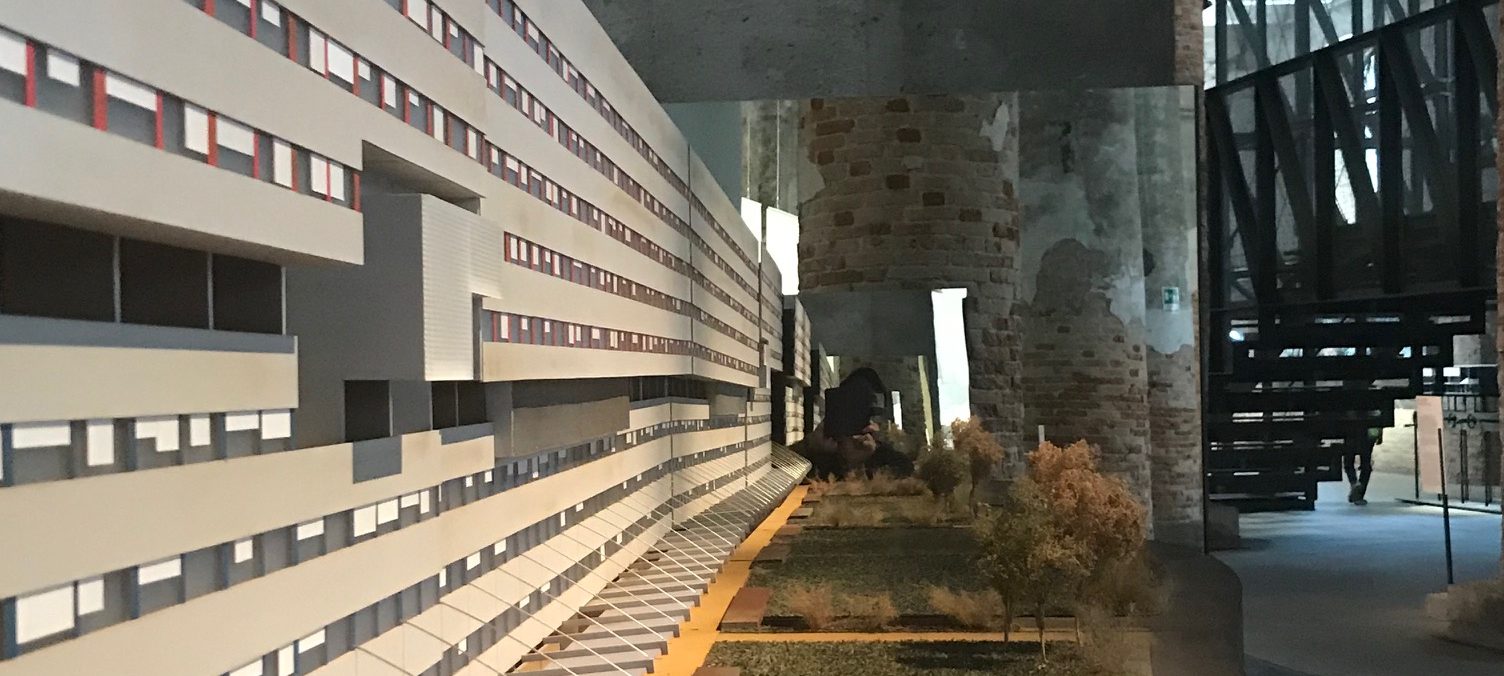
The image on the home page next to this post is a picture of a typical architectural researchers desk. Sadly there are people in this world who dont think architecture has much to do with research. Even I sometimes have trouble convincing people that I am actually doing research. 

Yet, in recent practice, architects have argued that architectural design is a research activity in its own right.  The research activities of architects include a range of problem solving and design related research activities such as data collection, workshops, internet searching and design drawing. In addition architects also research historic precedents, climatic issues, construction methods, products and materials. Design as research, also points to the emergence of research amongst architects related to the scripting of programmes, 3D digital modelling and prototyping. But is design research simply speculative or generative designing?

I like many other architects agree with the proposition that designing can be research. But this is clearly a problematic proposition.

 The design as research culture

Numerous PhDs, design studios, books and even entire courses have been built around the notion of Design as Research. In fact no one really knows how to write it: design research, or is it Design Research, or is it “design as research” ? But the real point is that, many architects regard design processes such as creating sketches, making digital CAD models, building physical models and building prototypes as research. But is that what design research is?

Of course, some have had a go at defining what it is. Dr. Peter Downton at RMIT argued that design is a ‘way of enquiring a way of producing knowledge; this means it is a way of researching.’ In a study of architectural design PhDs Radu asserts: ‘Architectural design is to architecture what research is to science’ and the ‘process of architectural design is close to the process of knowledge creation in the sciences’

No research infrastructure

Across the globe system there is clearly a lack of research infrastructure for architects at a number of levels; research infrastructure doesn’t just mean having big grunty boyo computers. In my country of Australia, research skills are not clearly articulated in the architectural accreditation system. Architects don’t often do formal research methods courses and few graduate schools of architecture offer courses around design research. Notably, my own school does offer such a course. Worse still design research outputs, such as buildings are not counted in research evaluation and publication exercises.

The reality of practice.

In actual practice, I fear that the documentary, formal and methodological structures supporting the organic activities of design research are fragmentary and adhoc. Few practices have formal R&D procedures in place, and few practices have developed procedures for articulating and documenting its original design outcomes. Aside from, practices publishing their projects for peers and marketing. much of the knowledge generated by all of the research in architectural offices remains largely implicit within firms.

Few firms write research reports on the information they collect and yet many often claim that research information is transferred to other projects. These adhoc practices make it difficult to ascertain, and argue, which aspects of architectural research are a contribution to new knowledge.

 Research models in practice

As a result, many firms flounder around when it comes to research. A lot have tied their own research models focused around digital design and fabrication. Other firms have focused their research on Sustainability. But simply having and seeming to follow through on this research focus is not enough. A few firms go beyond a simple focus on a strategic research area. Many dream of, or attempt to adopt, research models related to a management consulting. Larger firms are better at this. But this is, more often than not, without the well-worn and templates and proprietary methods that real management consultants have.

Moreover, only a few architects have embraced research models related to patent innovation and product development. I am still struggling to teach graduate archi students what Intellectual Property is.

The research paradox for architects.

The paradox is that many architects often state that research is a part of their design philosophy yet there is often no further articulation of this. Often in practice the organic integration of routine research and design as research activities makes it difficult to identify what is routine design and what is design which creates new knowledge. Establishing the contribution to knowledge of any research endeavour is necessary if it is to be regarded by non-architects as research. I worry that to many architects in practice R&D is about simply placing product and materials information at the back of a project file.

This is not to say that architects do not develop new knowledge or insights as a result of design processes. But, many firms appear to lack the methodological infrastructure, systems or research training needed to support R&D activities. This makes it difficult to isolate and position the research knowledge and innovations arising out of design research. Without these methodological and meta-structures in place it is difficult for architects to argue how design as research makes a contribution to knowledge. It also makes it difficult to position and distinguish new design from previous design research.

Policy failures

The focus on design as research, and its rise in architectural schools, has too often tended to emphasise research related to material issues: drawing, modelling, fabricating and constructing. But further research in the architectural schools could identify to what degree design as research in practices is focused on non-material and context-dependent topics: urban space, gender identities, teamwork, and cross cultural issues. Not to mention history and culture.

Arguably, few other professionals would actively have this broad range of skills and expertise at their disposal. Yet, the role of architects is not often accounted for or encouraged in national innovation systems or construction innovation policies.

All the politicians love a so-called smart and sustainable city. We require initiatives need to examine in the potential role of architectural design as research in national innovation systems. These considerations could lead to policies that highlight the linkages between, design as research arising out of architecture and new technologies, construction, industrial design and manufacturing.  But at present the design thinking and research of architects is often subsumed and only seen as a minor element in national innovation, research and educational policies. As architects, we need to build and develop our industry in a way that substantiate, explore and promote the design research agenda to the max.

Just designing, and then making something, and then claiming that this is research will not be enough.

The Architect’s office: Gleaners and waste pickers in a scrapyard.

In many respects the architect’s office resembles a scrap yard and the organisational pattern that emerges from the activities and material artefacts in the office is the idea that an architect is a gleaner. Or in other words, a kind of waste picker of knowledge. I will explain more about what I mean below. I came to this conclusion after conducting an ethnographic study of two small architect’s offices, sharing the same office space, in Melbourne and the full write up of the study was presented at the ARCOM conference in 2016 and can be found here.

In the Agnes Varda film The Gleaners and I (2000) a gleaner is a person who hunts for food, knick-knacks, and thrown away or discarded items. Similarly, as I observed this office I began to think that an architect is a person who collects together, or gleans, data and information from various sources in order to create and generate design knowledge.

Often the knowledge we architects salvage, find, assemble, test, reassemble and put together, or glean, is not valued by the other people we work with in the design supply chain. Design knowledge is often viewed as being of no use. For builders, developers, sometimes consultants, tradespeople or other workers all wanting to make a buck along supply chains the knowledge architects value is seen as being as. Design knowledge related to history, urban theory, sociological perspectives, spatiality, aesthetics and nuanced construction processes are is seen as being wasteful.

With the rise of digital software and BIM work practices the architect’s office is increasingly, and should be seen as, a knowledge intensive digital workplace. Dare, I say a KIDW. Digital technologies are blurring the line between physical and virtual work practices both within and outside of the firm. Internally, physical and virtual workflows are now to a degree interconnected. Externally, architects are now digitally connected to various stakeholders including clients, builders, consultants and sub-contractors.

Given this context, and from my perspective, the study was a quick way to explore the myth of seamless integration, between our digital models and the physical world, that the technology proponents and software vendors seem to push down our throats as architects all the time: all the time and all the time.  I worry that it sometimes makes us architects feel a sense of self-loathing, because we are not “real” architects unless we have, and are, using and immersed in the latest and newest technologies.

As an ethnographic observer in the office, this initial thought of gleaning, was related to how the material artefacts in the office reminded me of the scrapyard and waste pickers I had met in Monterrey Mexico. We can think of the architect is a waste picker of construction and building knowledge for two reasons. Firstly, the material artefacts and tools in the office seeming organised across the space of the office in an extremely ad hoc fashion. Secondly, the office contained 12 substantial physical bins. This space was full of physical artefacts and in no way paperless or entirely digital.

The sources from which the architects glean information from are varied and diverse. An architect may glean information from the computer or from the Internet; the architect may also glean information from the digital models that are created in the computer. Hence much the information that is embedded and inscribed into the architect’s digital models in this office comes from a diverse and extensive range of sources including: personal knowledge as expressed through hand gestures and vocalization; information gathered and gleaned via communication devices, paper documents and all manner of physical materials including scale models, material samples, drawings, printed materials books and videotapes.

A predominant metaphor that appears to dominate the discursive practices and sale pitches of software vendors is that of the library. This in sharp contrast to the conceptual model observed here. That the broader milieu of knowledge used to design a building is a scrapyard and that architects using techniques of gleaning via performance narratives to create design knowledge. Architects fashion knowledge out of chaos.

However, BIM and digital software proponents presume that the projects or indeed the world is a library that can be categorised and that the design of project can be done by drawing or data mining this catalogue. This is a metaphor that certainly supports industrialised building and automated design processes. Many of the objects that are in BIM libraries are building components that have been manufactured by building component companies. The prevailing metaphors in used association with BIM and the Industry Foundation Classes all suggest a high degree of ordering and structure.

If the digital realm is one of structure and order then it is the architect who uses his skills of gleaning to bring order to this digital realm. If the architect’s office was to be understood as library then much of the material in the office would be catalogued and filed in particular formats. However, this is not often the case because too much of the materials and tools used to create design knowledge within the office are simply not catalogued. The library metaphor does not account for the way that material is bought together through narratives that may rely on the architects sketching, vocal communication or gestures. Data entry and information transfer via framing and the translation of things into common scales or media was a predominant activity in the office.

To reiterate, gleaning is an activity that includes materials (both physical and digital), gestures, rituals and suggest that architects create designs, and fashion design knowledge, out of a chaos data and information.

This process of gleaning in order to produce design knowledge also suggests that current models of knowledge management and models of IT management in architectural practices should be revised. These models need to account for the rituals performed in the office and the material culture contained within it. In other words, the super duper digital model of the architect’s office does not allow for the many rituals, narratives and inflections when architects design.

This suggests that more comprehensive and nuanced models of how architect’s offices generate design knowledge should be developed. No more dumb-ass technological utopias. Maybe then we can make better architecture with the technologies at hand and stop feeling ashamed about not being on the latest technology bandwagon.

I am just back from a short holiday and hoping to head to the SAHANZ conference over the next few days where I am presenting 2 co-authored papers. I would like to thank all of you who have supported and read the blog this past 18 months. So far, this year I have had as many visitors to this blog as I received for all of last year. I would encourage you to follow me here and at the other social media channels.

Q: Why do Architects need to be better communicators? A: Because everyone is ripping us Architects off.

A few years back I got together with another architect who had also been to business school. We had the idea of looking at how we might develop a course about that would help corporate strategists and line managers understand the nuances, ambiguities and worth of design thinking, innovation ecosystems, prototyping, creative destruction, design methodologies, iterative generation, developing idea portfolios and managing creative teams. We had even gone some way to developing a syllabus.

We trucked it around to the architecture schools. No one really cared. The local business schools were more interested but wanted to see architecture schools buy-in. The architecture schools did not really get it. Oddly enough the only people who seemed half interested were the Edward De Bono types.

Of course, these sorts of courses have now sprung up in quite a few places. But certainly not in architecture schools. Nor, have they emanated from anywhere near the domain of architecture. There are now design thinking courses and more  courses, and consultancies all over. In fact everywhere. Except in architecture. Maybe because of these developments architects are slowly coming to the realisation that they have a unique way of viewing the world and this is valuable and can be of value to others. But coming to this realisation now could be too late.

Now all of this is not to say, or exalt our own egos, by saying that we were ahead of our time. But I did start to think about this failed project when I came across a recent article by Barbara Bryson at Design Intelligence entitled, the Future of Architects: Extinction or Irrelevance. This article appears to have gone viral across the usual social media platforms and it is worth quoting and analysis an excerpt:

Firstly, I strongly agree with her argument that:

Design thinking, the empathetic problem-solving methodology, grew, in part, out of our architectural problem-solving design methodologies. Education innovators are also taking lessons from architecture schools. Active learning, making spaces, and student engagement all have roots in the studio process.

But it’s probably not just in the education that our design expertise is being ripped off by others. Everyone is grabbing our best stuff. Maybe this is why, the next sentence struck a chord with me:

The rest of the world is learning from our processes, grabbing our best material, and moving on to success and relevance.

She then concludes that:

Architects, on the other hand, are impossibly stagnant in process and perspective, incredibly vulnerable to irrelevance and even extinction. I believe we have been on this road for decades, and we need to make some profound changes if we as architects are to have an impact on the built environment in the future and if we wish to be relevant.

Her argument is that architects have become too narrow in defending the territory of design. It’s still a hard task to convince architects that we need to expand our territory and domain of knowledge. Trying to convince other architects that a couple of architects with MBAs could teach the strategic line managers something was mostly greeted with blank looks and polite silence. Yet, Architects are better at design and know more about it than engineers, accountants, lawyers, and dare I say it, even software developers.

But, have architects really been that good at communicating why design thinking is important and how it may apply to other fields of knowledge? Have we really been able to develop our own research methodologies and methods in order to stake expanding territories of knowledge rather than shrinking ones? Are we really open to strategic collaboration and using our design intelligence to expand what we can do; and what we need to do in cities and urban settlements?

Unless architects move out of a defensive mode to a more generative and expansive domain in regards to our traditions of design thinking, it is possible that we will become irrelevant. Spitting the dummy, and having apoplexy every time: we perceive our design territories becoming somehow “impure”;  or when we argue that simply designing something  is somehow design research, without understanding what the contribution to architectural knowledge is; or we cling to an alpha-male and pedigreed star system, a star system that rewards the biggest egos; or worse still, the biggest spinmeisters; or we silently support a non-inclusive career path system; or an intern and work culture of chronic underpayment; or an industry association research infrastructure that is non-existent; or our unthinking love of new and emerging technologies. Any wonder we get cut out of so much stuff.

Don’t get me wrong I love architects and wouldn’t be in any other profession. But, we need to grow up as a profession and have a mature discourse. Otherwise, we are heading down the gurgler.

As one of my connections in my social media feed said: Barbara Bryson has “nailed it.” And you can read her full blog here.


Architects vs. Builders: Are builders the world’s experts at rent-seeking?

It’s getting towards the end of the semester and we are starting to talk about procurement and contracts in the Architectural Practice class. This inevitably leads to the issue of how architects relate to builders and contractors and which procurement pathways are better for our clients. It is also gets to the issue of which procurement pathways maximise design outcomes and give architects a greater degree of control over the process.

Of course, for those of you who read my previous blog on our alien overlords the project managers you can probably guess what is coming next.

The above picture the back of my bro’s car. He is a highly intelligent concreter and he spends his life existing from contract to contract, driving across the burbs in his Nissan for up to 4 hours a day.  As sub-contractor, he is regularly screwed over by the contractors and builders he works for. This is often when it comes to the last payment.

As a concreter, the type of work he does is hard and gruelling and the industry is not looking after his health. If he gets sick or can’t work he is in trouble. He has worked on bridges, tunnels, rail, pools, facades, toll roads and of course that noble of all structures the floor slab. At the time of the pictures he was doing concrete stairs in a high-rise apartment building.

So with this background in mind let’s make a few points from an architect’s perspective about the state of the Australian building and construction industry.

Builders vs. Architects.

 Builders will always blame the architect no matter what. It’s just an easier thing for builders to do. They will make out that architects are design orientated wankers who know nothing about construction. They are adversarial and combative negotiators. In fact contractors are more likely to blame the architect if the building has been actually designed. For a number of large public building projects around my city this has certainly been the case. In fact many contractors will often cover up their own missteps by blaming the architects and point the finger at “design” issues. Or that other great spectre “design changes.”

The other aspect of this is the way they will go behind your back and whisper into the ear of the client that you are an idiot. Many clients, including large institutional ones, do not often have the expertise to manage the conflicts arising out of these tactics, or have the knowledge to make the necessary judgements or trade-offs when a builder does this. The culture of the Australian construction Industry is riven with anti-intellectualism and these tactics usually work.

I don’t want to sound overly pedantic or didactic. But, for clients, large and small, arguably it is always in a client’s real interests to get an architect. An architect is an independent professional and carries professional indemnity insurance. Just like the lawyers, and just like the doctors. Why would you do otherwise?

Builders love to “design”

Of course, people don’t employ architects because they see them as being too “expensive.” Certainly, this is a notion that the builders, large contractors and project managers will readily promote. Yes, this is all about the dollar for the builders, whatever is cheaper and easier for them to do, they will do it.

They especially love, and are great at, what I call builder redesign. Usually this involves some pretence at simplification, minimisation or easy substitution. Before you know it those well-crafted spatial arrangements, geometries and details have been erased by the builder.

Builders will do anything or say anything to justify changes, variations or easier and better designed ways to do things. Yep, builders love to “design” stuff. They, in their own minds at least, are great designers. Who needs an architecture degree to design stuff? They will always tell you how much they love to design stuff and how much they know about design, which is generally based on the reality TV shows, and what they have observed at their local gastro-pub or shopping mall homewares store. Of course, they all love Utzon’s Opera House. But none of them would have the guts to do or support something like that nowadays.

All about the dollars

For the builder class it’s all about the dollars. Forget about design, life-cycle costs or zero carbon buildings. If there is some eaves framing and eaves lining that can be easily cut back to the top of the wall plate they will do it. It’s cheaper. You only have to drive out to the outer suburbs of my city to see the results. Tract after tract of houses without eaves. Who needs eaves when you can add a Fujitsu air conditioner

The rise of new forms of procurement have tended to diminish the role of the architect. Yet the best civic buildings in my our city have been procured by methods where the architect has the primary role to both design, oversee and deliver the project. In novated contracts, as soon as you get novated across the contractor will ask for a value management meeting. In PPPs (or PFIs) They will pretend to love your design if it gets them the job then they will butcher it.

Zilch policy initiatives.

Most big contractors will say or do anything to get their local governeloper to redevelop that large slab of industrial vacant land on the outskirts of the city. They will do anything in the name of low carbon, green star city densification. The all love to talk about ESD but they really don’t care.

As policy advocates the builders (e.g. The Master Builders Association) have spent a fair bit of time arguing against apartment standards. Their solution to building more “affordable housing” is not to create design innovation but to ease the regulatory barriers (especially planning) as can be seen here. It’s like they actually want more project homes without eaves and apartments with inflammable curtain walls to be built.

Zilch R&D.

 If the builders cared they would put money into construction and urban research. The inside of my bro’s car is his control centre and probably gives you a pretty good idea of the level and state of ICT technology in the building industry. It is an industry with a low technology base. This is where he does most of his business while he is driving about.

IMG_4211.JPG

In the early 2000s I worked for the CRC for Construction Innovation. It was headed up by a civil engineer and its governing board had a few head honchoes from big builders. Its network comprised of a small tribal clique of contractors and CM academics centred around Brisbane; in other words, a network of mates. The case study and the semi-structured interview reigned supreme. Mates talking to mates. There was a lot of spin about technology futures that did not actually include architects (the naivety of it was unbelievable).

Whilst the CRC did produce some worthwhile intellectual property it produced next to nothing that could be commercialised. You would think after spending millions of bucks on research something might have come out if it apart from a few how to do BIM books. Construction Innovation related research in Australia has never really recovered. In 2013 Australia’s chief scientist Ian Chubb argued that after the CRC R&D investment by the builders in Australia fell into a hole.

Try this and then run 

The Australian construction industry is arguably riddled with bullies, brutes, hi-viz-vest-leering tradies (Tony’s tradies) whose minds are never elevated much beyond low prices and cheap results. Try talking to a builder or tradie about design and watch him (and usually a him) start up with the jokes and the eye rolls and the thought that you are an onanistic character regardless. Of course, cisgender is probably not a word you would even mention to a builder or a contractor: Try it and see what happens.

The upshot

Of course, there are bright things in the contractors and builder’s firmament in Australia. some of them are NAWIC and certainly there a few admirable builders who do support research in my workplace. But mostly it is the builders holding our sector back.

Architects are way smarter, are educated for far longer, have professional insurance, sit actual registration exams and have a better handle on innovation, construction, detailing, urban design and spatiality. Yet many of the builder brutes keep propagating the spin that we are useless aesthetes and could not construct our way out of a paper bag. As one of our graduates once said “I thought you were joking when you said that builders are evil vermin, but you were spot on.”

It’s time for architects in Australia to rebrand ourselves in the public eye. We need to be seen at the forefront of policy and innovation in the design and construction industry. Maybe we architects need to spend less money on the awards programs and the funky conferences and more on promoting our brand at large. 

Q: Is Architecture Inclusive? A: No.

In my part of the galaxy architecture is in a dire state. I think this is the same everywhere. Most architects are either individual scavengers or living in tribes scrabbling to survive on scraps from the big tables.  In sociological terms an institutional logics of survivalism reigns. Architectural knowledge is being increasingly commoditized in a global system. This commodification will eventually erode design knowledge to the point of where it’s domain and practices will have merged into other networks of knowledge.

For many architect’s architecture still remains a coherent and unified discipline. It certainly seems like it might be if you have the privilege of being able to access and pay your social media subscriptions. Everyone on Instagram is doing the Architectty influencer thing (me included). The digital viewpoint — all the images, the hashtags, the digital spin, the groups, the likes, — can easily seduce us into thinking that architecture is a multi-faceted, idealistic, humane, reformist discipline.

But when I think further I am not sure any more. There is something monstrous at the heart of architectural practice. The fundamental issue that hampers architecture’s survival, despite digital appearances, is that: architecture is not inclusive.

If architecture is to survive then it must embrace diversity and envelope in our ecologies of practice: gender, LGBTQIA, first nations and indigenous peoples; different ethnicities, minor literatures and the Subaltern; the disabled and the insane. As architects we need to have this conversation. But it needs to be a broad conversation and one fostered, but not dominated, by our professional associations; or by the new associations and networks that will replace them in response to architecture’s current lack of diversity.

This lack of diversity is killing the profession and exhibits itself in myriad seen and unseen ways. Mostly, it is an exclusion through quiet and passive silence. The woman who goes to the robot-in architecture-conference where there are not peers like her, the gay person who can never quite make the Associate Director grade, the transgendered person who is shunned from studio teaching, the indigenous person whose seemingly radical views are wanly smiled at by the senior management academic but never truly engaged with, the study group of international students that no one wants to join at architecture school. Of course, I myself can’t speak for these other voices. But how often do we as architects silence them? It’s our role as architects to make our design research, networks and practices inclusive so that these other voices are prioritized.

Architects need to understand intersectionality, the idea that intersecting identities compound to make a whole, in order to understand how regimes and flows of power have structured our discipline and the symbolic capital that circulates within the global system of architecture. An intersectional approach is different to the diagrammatic description, segmentation and distinctions made by the taste-makers of our discipline. As Gary Stevens notes in The Favoured Circle: The social Foundations of Architectural Distinction. “Taste is the primary notion by which privilege groups can maintain their cohesion and separate themselves from outsiders.”

It never ceases to amaze me that even in the field of Construction Management, a seemingly “backward” field, for architects that extensive research has been undertaken in notions of inclusiveness, identity and ground up ethnography. All we seem to talk about is Design Research. There are of course some glimmers of hope as last year’s November 2016 AHRA conference in Stockholm indicates. At the conference the aim was to address “connections between architecture and feminism with an emphasis on plural expressions of feminist identity and non-identity.” There were some notable papers from local colleagues Gill Matthewson questions the existing notions of “meritocracy” in architecture and the need to forge new modes of practice and identity in architecture. Janet McGaw questions, what I call the Boyo-ness, of recent biomorphic inspired digital production in architecture. She asks to what degree digital experiments and design research in architecture are “simply new practices of anthropogenic subjugation of non-human material systems that continue the environmentally destructive modernist industrial project.” Nicole Kalms examines, so-called safety technologies, their corresponding digital apps and sexual violence in the city.

The lack of diversity shapes both architectural history and the current dilemmas of architecture’s global system. A system dominated by a charmed circle of masculinities. As Martin Hultman has suggested this charmed circle — of tribes, warlords and transformers as I have called them– are intimately involved in the production of the contemporary city. The production of new and renewed cities, and the ecotopian dreams associated with them, are intended in theory at least, to be our salvation in the face of environmental catastrophe. Yet, as Simona Castricum noted at the same conference our current cities are riven by fear and a lack of safety for those who are different. Fear is embedded into the core of our cities. Cities have largely been designed through privileged masculinities that have produced spatial configurations that now need to be challenged; and in any case, hasn’t it always been the subaltern at the centre of the cities actual history.

Architects need to recognise they are a long way from being an inclusive profession. The silence of the smile that elides and silences difference is not really an option nowadays.

The full image of Leigh Bowery in this post can be found here.

Design Entrepreneurship: Getting out of the bog of traditional architectural practice.

We all have our own contradictions. In between railing against the vagaries of the capitalist system and dreaming of living in Constant’s New Babylon, hanging out in Paris with Alice Becker and Debord and having coffee with Tafuri in Dorsoduro, I also have a real job.

But as it happens, there are some people in this world who don’t believe being an academic is a real job. WTF? In Australia, these myths still seem to prevail, especially amongst politicians, and maybe this is why our current federal government does not actually have a working universities policy model. Yet, it is forecast that international education’s (including unis and VET) contribution to export dollars is expected to almost double to in excess of $33 billion by 2025.

A Quiz 

Despite the above prediction I wonder if it would be different if academics all took part-time jobs as coal miners or shock jocks in order to get some policy respect from our politicians. I still get people thinking that as an academic I am:

a) having lots of holidays for 6 months of the year when I don’t teach.

b) always on university funded overseas trips (don’t get me started on this misconception).

c) hanging out with nerdy bespectacled graduate students in my cargo shorts, white socks and Jesus sandals.

d) I am spending my time down the pub drinking and carousing with the non-nerdy graduate students 24-7.

e) researching weird shit about floating cites that seemingly has no benefit for anyone.

Only one of the above is true. Can you guess which one? (Click here to find out? Actually the link to the real answer is here).

Seriously, for academics, the old mantra “publish or perish” is slowly being overtaken by a new mantra of “impact or perish.” I think this mantra also equally applies to architects, especially those struggling to survive in a tribal system, looking for new pathways and modes of practice. Architectural firms also need to create impact if they are to survive.

Design Entrepreneurship is one way to do this and to begin thinking about this. This is because of the following seven factors.

1.Market Size Supports Entrepreneurship

The size of the markets architects operate in suggests we should be more entrepreneurial. According to 2014 IBIS figures the AACA notes how architectural services revenue will grow by 2.6% per annum over the five years to 2019-20, to reach $7.3 billion. (you think someone at the ACA or the AIA would buy the latest IBIS report).  The ABS reports that the overall construction market the seasonally adjusted estimate of total building work done rose 1.3% to $26,695.2m in the December 2016 quarter.

2. The Shift to Research Impact

 As international teaching revenues are forecast to increase in Australia and remain stable I feel graduate schools of architecture have a greater role to play.  But this role should not be simply about producing architectural graduates in order to gain short term revenue for central university coffers. With the rise of new policy initiatives around research impact graduate architecture, and built environment schools, need to foster entrepreneurship and entrepreneurial outcomes.

As defined by my favourite institution the esteemed Australian Research Council (ARC): “Research impact is the demonstrable contribution that research makes to the economy, society, culture, national security, public policy or services, health, the environment, or quality of life, beyond contributions to academia.” If that’s the case why doesn’t architectural research, which cuts across so many of the above things, get more funding?

Of course, the ARC being the ARC, we are still waiting to see how this broad policy will shake out and what the measures of impact will be. I would put money in my Ladbrokes betting account that whatever measure the ARC comes up with will actually add another layer of regulation to academics and in fact stifle innovation.

3. The Emergence of Early Stage Exemplars

A significant number of entrepreneurial design initiatives have emerged of late such as: Shacky, Crowdspot, Black AI, Larki and Nudel and STRUDL and of course United Make and AR-MA. All of these start-ups and early stage firms point to different modes of practice now available to architects and all have a design entrepreneurship basis.

4. Strategic Opportunities

The emergence of the above new ventures and start-ups come at a time when many traditional, and tribal, architects themselves are struggling to survive as small businesses.The above conjunction of the above industry segment revenues and research policies suggest there are opportunities available for architects, with architecture schools and professional associations, to exercise their design skills in order to create new opportunities.

There is a strategic opportunity for architecture schools, because of their critical mass, to be a bridge between architects, the engineering and construction industry and the recent crop of digital entrepreneurs, who are often so code and engineering systems orientated, that they do not know a lot about architects or the other allied professions such as landscape architecture, urban design, property and planning. Hence, architecture schools need to both teach and market design entrepreneurship through engagement activities and alumni networks.

Architects are great system integrators and have a better overall understanding of the construction industry than other specialists; this is particularly true in the competitive area of housing. In construction architects are more futures orientated technologically savvy and entrepreneurial than the brutish contractors who rarely think beyond the short-termism of the cheapest price.

5. New Entrepreneurial Pathways

The traditional path to entrepreneurship for architects has been through property development. This is high risk and we all know a few architects who have embarked on this course and who have failed dismally as property markets have turned.  But I also know of a few others who have through good risk management made mega-bucks.

But I think property development opportunities are limited and also highly speculative. Our  architectural associations need to think about creating entrepreneurial pathways based on creating new products, licences, companies, spin-offs start-ups and joint ventures.

6. New Housing Prototypes

I see opportunities in the areas of  alternative housing forms, sustainable and green housing, not to mention the impact on housing as result of the roll out of the NDIS and ageing demographics. Let’s face it unlike our political class architects have been exploring and proposing alternative housing typologies for a long time. That is what they are great at. I foresee opportunities in the emergence of different financing structures, and new ownership structures. Internationally, I see opportunities for architects who pursue design entrepreneurship in South Asian cities in the areas of low-cost housing, urban design, waste and recycling and construction technologies. The UB system is a great example of a commercialisation pathway.

7.The Robots are Coming

Time and space here prevent me from saying more about the design entrepreneurship opportunities in AI, CNC fabrication and the coming world of the robots. If the profession is to survive into the future, we need to build the research and design entrepreneurship infrastructure that will create both opportunities and new pathways of practice.

This is The End: Australian Architecture’s end game.

Like Martin Sheen in the above image most architects in Australia are barely surviving. Their heads are just barely above water. Like the Doors song “The End” one must question if the profession is heading down the gurgler as I noted in a previous blog. For those of you reading this in larger practices with lots of awards and institutional work or from the comfort of the large multi-disciplinary practices or consultancies spare a thought for the noble and small architectural firm. The tribal firm, protecting its own local territory and connecting to community, and yet struggling to survive. These firms exist in a highly competitive climate; most do housing , competing with every other wackadoodle price cutting, project manager, builder or huckster, and most are struggling to survive.

Tipping point. 

Without new industry wide strategies and approaches aligned with effective industry development the long term survival of these firms is not sustainable.  We are possibly about to reach a tipping point as baby boomer firm directors retire leading to even less critical mass in the profession. A tipping point and mass extinction.

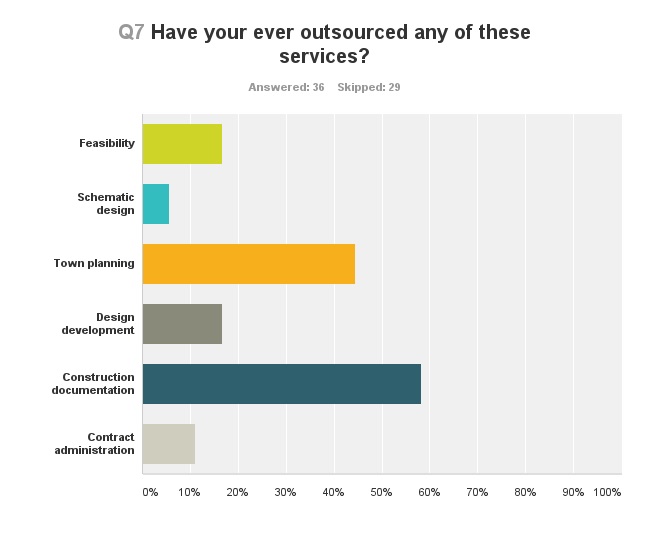
Chart_Q7_170406Chart 1: Outsourcing is widespread 

Technology and Disaggregation

A few quotes from the architects who responded to our recent surveys will suffice:

“We see that conventional Architectural Services are not going to be sustainable in the future and are looking at other services and models of practice to survive.”

and:

“Specialist Services, sadly, are a precursor to the the shame of the an industry being eroded by the increasingly acceptable practice of piecemeal delivery”

and this doosey from a practitioner working in the housing market:

That market is highly competitive and the fees were not sustainable and the liability was enormous. The role and respect for architects in those areas has dramatically reduced over the last 15 to 20 years.

In the practice class at MSD this week we had a Q&A panel on documentation. A practitioner who runs a documentation outsourcing company came and spoke. He is at the cutting edge of disaggregated services. He fills the gap for architects who can’t document or administer contracts. Some of the work of this practice is outsourced to documentation factories in South-East Asia. Increasingly technologies such as BIM are driving the commodification of architectural services. Design Development is almost non-existent these days. Ever tried explaining to a client what DD is? 

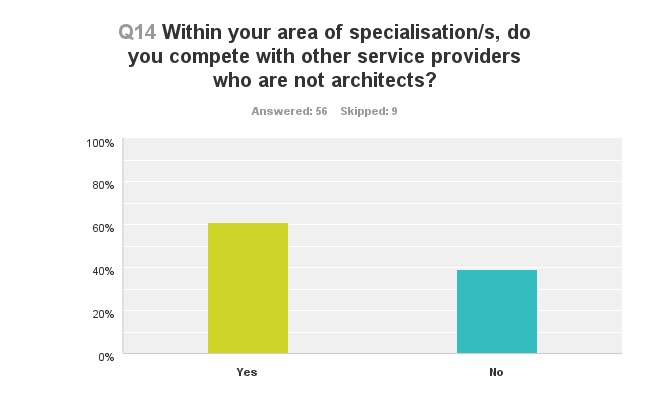
Chart_Q14_170406Chart 2: Competition is Intense 

Strategy and business plan education

Architectural education at large, alongside the accreditation standards, basically doesn’t give a fuck about anything outside of the box ticking. By this I mean any curriculum or syllabus, that might suggest that architects are more than just a profession of digital building technicians; more than a profession plying commoditized knowledge and processes. The univerisites simply want fee revenue, customer satisfaction and graduate employment outcomes. All of which conspires to corrode our discipline of architecture. Worse still, our own accreditation standards have been built around activities that, are not about analysis, entrepreneurship, strategic thinking or innovation but are about simply “doing it.” Doing the old SD, DD, CD, CA dance is what it’s all about.  Thank god those national competency standards still at least cover a knowledge of history and theory. It won’t be long before the university’s replace those aspects of our architectural education with CNC fabrication subjects. 

Business planning or strategy specifically tailored to architecture students is scant. Much easier to get the commerce faculty to give them a dose of generic marketing and branding. In response to our survey questions it is obvious many architects do not have business plans and I suspect this is because they are just struggling to get the work at hand done.

Chart_Q6_biz-plan_170406 (1)

                      Chart 3: Too few business plans 

Demographics and Diversity.

Yes, we still need more data and research into the demographics and underlying industry diversity. But the problem here I think is that architects think they are already diverse enough when they clearly are not. This is still a white Anglo-Celtic male dominated profession. This has hampered the profession at large from rejuvenating itself from within. It may be the efforts to rejuvenate the profession by correcting its misalignments with gender, race and class may now be too late.

Check out this great video and then think about the profession you know.

Research 

The architectural profession in Australia has had no research infrastructure for some time. As a result, architects have little knowledge about their own industry structure. Profitability, what segments of the market they dominate, various practice financial demographics, and the impact of technology. are all mostly mysteries. In the battle for survival it is always the larger firms that win out in driving industry policy, research and shaping industry structure. The problem is all of our current research on our industry, fostered by the peak bodies and associations, is catch-up research. Very little of it will add to the competitive standing of architects. It’s mostly about understanding how things stand. Not about how architects can get better at innovating. 

My own bitter experience suggests that the ARC research system, with few exceptions, has not served us well at all. As far as many architectural researchers are concerned it is a broken system. A few years back myself and two other middle career researchers joined with a small firm to submit an ARC Linkage proposal focused on small practices and BIM. We got excellent peer review reports back. The other researchers thought it was in the bag. One of them even had dream we had got it. But in that round the big money went to a project with eminent and credentialed researchers with a big practice partner focused on health. In the ARC system its much easier to get funding if you have been to an elite uni overseas and sometimes you don’t even need a PhD. Fair enough, that’s how the system works. It would be a better system if it was blind reveiwed. But it’s a system that is killing a profession that needs effective bottom up research as it struggles to survive.

The Perfect Storm 

It’s a perfect storm. Of course its easier to think that everything is ok. But everything is not ok. Architects in Australia may be at a tipping point. The profession is in a parlous state and even though I believe architects have much to offer our society and culture it is tragic many ordinary practices are stuck in the constant game of survival.

Architects, Branding and Narcissistic Personality Disorder.

Things are in full swing here. The place is full of students and the bicycle park is full by the time I get in everyday. I am “under the pump” as they say and this may be why there were so many typos in the first posting of this. 

Narcissistic Personality Disorder.

As a profession in some ways architects have all the characteristics of Narcissistic Personality Disorder. The common complaints by clients and of course other members of the construction industry are: grandiosity, lack of empathy for others and a need for admiration; a common willingness to be arrogant, self-centred, manipulative, and demanding. This is of course a harsh assessment and many other groups in our industry also suffer from these traits. Especially, Project Managers and contractors !  People with NPD, Narcissistic Personality Disorder often believe they are superior or special. We all know people like this.

Arguably, some of these narcissistic traits are needed to get architecturally designed projects built, in a world that seems not to care about architecture, design or aesthetics. A world that really doesn’t care about design value. It may be because architects go against the normal grain of “cheaper and quicker is better,” and actually care about design, that they are seen by others as being narcissistic.

However, there is one area where I wonder if the self-regard and narcissism of architects is skewed.  This week in the MSD Architectural Practice class we ran a Q&A panel on architects and branding. One theme that came out of this panel  was the fact that architects were great at producing awesome renders and most, although I would say not all, have a pretty good idea about communications design and graphics. Yes, all of those things are taught at architecture school. We are good at building brands for other people like developers. But I think that is the problem. That’s all we architects are good at; we are only good at doing the renders and the graphics for the designs. As a result, we think we a really good at branding because these activities have visual components. But being the narcissistic profession, that we are, we then think this is all you need to do. We too often reflect and bask in the glory of our own technical skills.

Knowing a little about computer generated renders and graphic design does not necessarily mean architects know much about branding. This is an even more pressing issue as branding is now  more complicated in an era of ubiquitous computing, customised advertising, the rise influencers, the proliferation of social media channels. Data analytics of consumer preferences is now a dark art and few architects understand it. The shift to the very short digital film clip as the most common form of communication is smoething that seems to have eluded us.

Branding for architects isn’t just about a few slick images and a funny cute name. Its not something you can do in an afternoon in the office (unlike a blog full of typos).  As Verity Campbell reminded me at our Q&A session architects really need to think about how our representational, images, logos, names and graphics are seen by others. Architects need to bridge the communication gap between ourselves our clients and community.

At the firm level. 

Branding is about  distinction and positioning. What’s the point of every architect in town claiming to do sustainable design. When I searched for sustainable architects in my city I got 684,000 results in less than a second. I couldn’t believe this search result. Whats the point of doing a website that seems more like a hodge-podge of quirky graphics that does your head in when your cursor tries to engage with it. Or loads so slowly you have a aneurysm waiting. At my age aneurysms are a real issue when you are looking at slow moving web sites. All of  this hokey pokey branding schmaltz is like the caricature of the architect with the Corbusian glasses in black with the Comme des Garcon jacket driving to the site meeting in a Citroen.

As noted at our panel architects need to develop marketing and branding techniques that uniquely position themselves. This is a common error. For example when you find blurbs on websites like this. (I have redacted a few things to avoid mutual embarrassment).

and the combined experience of the office ranges from significant major projects in Melbourne, to many small and site specific projects, and international works. Our activity, interests and expertise, ranges from urban design to interiors and furniture – architecture in its broad sense.

We bring design to a broad set of situations and audiences, including peripheral locations, difficult problems and tight budgets. We aim for our work to participate in the widest environment it can; in new forms of communication, in sensitive natural environments, new types of cities, and with ordinary life.

Yip. All things to all people. Everywhere. How can the above be seen as effective branding? Yet, this is the mistake that is commonly made. I am sick of reading about what architects could do: Anything you ask them to do apparently? Or what they are like: creative, smart, experienced etc. etc. Most potential clients probably what to know what architects are doing, what they have done and how they are actually different to the tens of thousands of other sustainable design orientated architects in the universe. Maybe this is why I like the Assemble web site so much as a model.

At the community level

Our professional associations need to get much better at marketing and promoting architecture. Lamb does it and now they kind of own Australia Day. I am actually not sure how many punters are going to get to this “find your architect” AIA page  deep inside what is essentially an industry association website.

The AIA 2017 National conference is called PRAXIS. Holy Sardine Batman ! At least there is a bit of diversity in the speaker line up. Of course, when I think of the word PRAXIS I think of Deleuze & Guattari. But its just lots of architects talking about architecture. At least you get a tax deduction. Maybe the conference needs to include more punters, more real people, more politicians, policy experts, and more decision makers and be seen as means to market what we are as a profession to these broader groups.

In Australia the individual AIA chapters have Twitter accounts, the  National AIA Twitter account seems to have tweets few and far between. The account that has over 23,000 followers but just seems to feature a lot of stuff about the AIA conference and little that would be engaging to the punters, decision-makers or any one else for that matter. It’s a real snooze fest.

There is no obvious involvement through these channels in promoting architecture as anything beyond a kind of slick image marketing brochure. No wonder the punters think we work for the rich Kardashians. There is no deeper engagement, through all of these channels, with the policies and dilemmas of architecture in our time. I know I am biased but Parlour is a much better model of how to do things. At least the Parlour Instagram account doesn’t send you to sleep.

The last upload to the AIA Youtube site was about 2 months ago. Whoops that was the wrong link ! Here is the real AIA website. This doesn’t really appear to be a direct or crafted communications strategy that would link architects to anyone, except for maybe: other architects. No wonder we are too often, and unfairly, regarded as narcissistic out of touch idiots. At least we are fashionably dressed and have nice, although ineffective, websites.


Hair Wars: Hair and Australian Architects or why I never made the grade as a star architect.

One of my most popular posts in 2016 was the one about Bjarke Ingels being evil because he had hair. But then I thought what about Australian architects. How much hair do they have? What about their hair? How is Australian Architectural hair portrayed in the media and across social media? As a result, I decided to conduct a few Google experiments. With the research aim to explore how the hair of Australian architects is portrayed on the web. Like all good researchers I needed a hypothesis a methodology and a few methods. My hypothesis is that architects with hair get more hits on social media. My  broad methodology is to focus on notions of identity and how these are constructed within architectural discourse. As for methods a bit of Google Image search combined with a visual analysis. In doing this I referred to some diagrams about male pattern baldness (myself being a prime example).

pattern-hair-loss

Google Search: Australian Architects (searched 170217 1.31pm

  1. Glenn Murcutt
  2. Jorn Utzon
  3. Robin Boyd
  4. Harry Seidler
  5. Roy Grounds
  6. Nonda Katsalidis
  7. Walter Burley Griffin
  8. Francis Greenaway
  9. Philip Cox

It was a relief to me as they pretty much all had hair undergoing various stages of Male Pattern Baldness. Numbers 5 and Numbers 6 seemed to have the most hair. It goes without saying that its shockingly amazing that even Google doesnt include female Australian architects when you do this kind of search.

Google search: Top 10 Australian Architects (searched 170217 1.40pm)

  1. Glenn Murcutt
  2. Sean Godsell
  3. Philip Cox
  4. Robin Boyd
  5. Harry Seidler
  6. Jorn Utzon
  7. Nick Murcutt
  8. frederik Romberg
  9. Roy Grounds
  10. Edmund Blacket

and with this search something weird  happened. Suddenly an insurgent with lots of hair jumped up to second place on the list.

I then decided to search just in Google Images  (searched 170217 2.30pm) rather than Google.

Google Image search: Best Australian Architects (searched 170217 3.00pm)

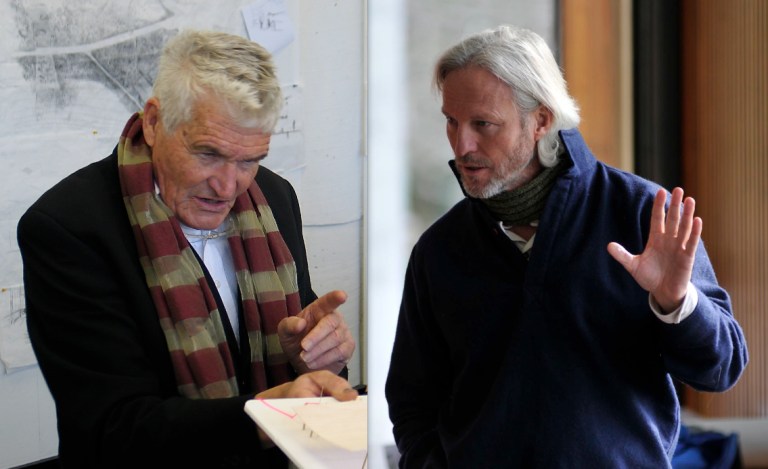
In this search you get a lot of buildings but of course only one Australian architect features and that is Peter Stutchbury who admittedly has a pretty good ahead of hair (as does his comrade Richard Leplastrier)

leplastrier-and-stutchbury

These are of course Sydney architects. Before I write any more I need to make a disclaimer which is this: At my tribal architecture school in the 80s one of the first things we learnt was to hate, and I mean really HATE, Sydney architects. Despite my biases a kind of Roland Barthes semiotic analysis seems appropriate here. There is certainly no sign of Brylcreem or Hair  Dye in this image. These architects are in some ways proto-hipsters. These men appear to be the very negative of the urbane, metropolitan, Don Draper suited 50s and 60s architect like Gary Cooper in the Fountainhead or indeed some of the architects in the above lists like Robin Boyd, Harry Seidler or the seemingly avuncular Roy Grounds.

Nup these guys are wild architects with all that hair: Raw, mountain men, lumberjack architects, with natural poetic instincts and urges, the very antithesis of the cosmopolitan architect; they appear to be flaunting an organic and seemingly natural sexuality and masculinity. Satyrs in the woodland with set squares. Its all a bit too Norsca Soap like for me, and even the work of these architects is kind of entwined with the myths of Scandanavia and the scarves, for some unknown reason, start to remind me of the columns in Alvar Aalto’s Villa Maireia. 

498072

When he was younger Stutchbury, who was born in 1954, looked like this (what is he looking at?). I  was surprised to find this image so easily on the web.

imgres-1

Stutchbury 

Untitled.jpg

Raisbeck 

I had hair as well when I was young as you can see from the above comparative photo of me in the 70s at my outer suburban high school. So its interesting to wonder why our own practice never got up and running. I mean I had long hair as well. But actually the reason is probably very obvious. Firstly, I lost my hair and I was also confused about the semiotic identity I wanted to portray as an architect. This is fairly obvious in this picture of me below from architecture school in the mid to late 80s. Little wonder I never made the top 10 Google list.

raisbeck_2

I was already loosing my hair then. Plus, I had obvious aligned my self with the cosmopolitan urban intellectual types rather than the organic FLW loving mountain men. But the tie was all wrong. No wonder I never got into the club. At night I wonder if our practice had done better if I had retained my hair and somehow gone the long hair silver mountain man foxy route. Or worn a straighter tie.

As my friends will now I have kind of re-invented myself a few times now. And as I noted last time our wrote about this kind of stuff in the Bjarke blog: The construction of the architectural identity should be regarded as being problematic and contested rather than being seen as a singular, holistic and a stable domain. As architects in this age of, oh so awful, celebrity we need to foster debates around the real laws, and dilemmas of architectural design our cities.

It perhaps goes without saying, but it keeps needing to be said, that the identities that we privilege in architectural discourse need to be more inclusive of difference. The recognition of collaborative practice is one way forward. But in the swamplands of social media a constant critique and dismantling of the rhetorical images that are presented to us is essential and necessary. Otherwise, the rhetorical idealisation of the architectural identity will continue to corrupt our discipline and architectural education. It’s time for the the cult of architectural celebrity to die. The mountain men architects like to think they are poets but they are really just celebrities.

Its been crazy here as I prepare for the students and substantially revamp my Architectural Practice course which starts in two weeks. Notably, I have prerecorded 9 lectures and have another 9 to do. It will be an interesting experiment in online teaching models. This will give me more time to run an actual tutorial in the subject and organise the guest lectures. This year we will also have a number of Q&A style panel sessions which we will advertise here and elsewhere. 

Surviving the Design Studio: Architectural Practice as a Design Knowledge Ecosystem.

For some practicing architects, there is the prevalent fantasy that they are valued for their knowledge. In this utopian world architects, with their unique generalist knowledge alongside an ability to drill down and easily grasp disciplinary detail, are employed just like management consultants. In this scenario, all the practicing architect has to do, rather than slaving over CAD drawings, is to sit back and relax and dispense valuable knowledge to the clients. In fact, in this oh so wonderful scenario, architects get paid lots of money for it. But maybe this is dream, is the dream of a discipline slowly losing its currency, moribund by the fact that architects are hung up by the building delivery paradigm.

The best way to get anywhere near this dream is to operate an architectural practice as a Design Knowledge Ecosystem or DKE.

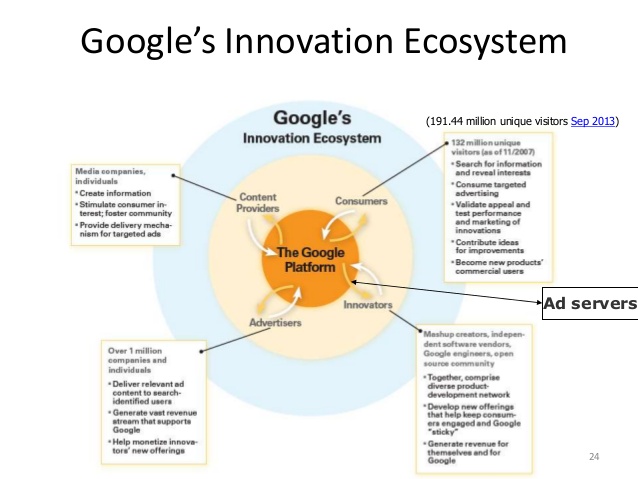
Ecosystems as a model, and a theoretical view, of practice are well known and prevalent in the world of big software development. For example, Google’s ecosystem has been described in the following diagram from HBRgoogle-designed-for-innovation-24-638

Some business commentators have even argued that Apple is no longer a hardware or a software company but an ecosystem. In construction management Chris Harty and Jennifer Whyte discuss what they call ecologies of practice. One of my favourite sociologists is the Bronfenbrenner who has developed Ecological Systems Theory. Bronfenbrenner’s theory contributes to our understanding of individuals in organisational contexts. Check it out if you are interested.

Thinking of the practice as an ecosystem of design knowledge is a much better way to conceive of and create new architectural theory, new modes of architectural education, and practice management. So what does the above mean for the practicing architect? For me organising a practice as an ecosystem of design knowledge implies the following:

It’s all about the idea and not the building

 A practice needs to be organised around the generation of knowledge. In other words ideas. The design of buildings are a by-product of these ideas. For a start this means that the practice must embrace research, research and development and even in some cases strive to produce innovative intellectual property. Dare I say it, Intellectual Property that might even be commercialised. This will mean that architects need to better understand and even be taught the dark arts of entrepreneurial pathways, innovation systems and associate policy contexts.

What is important for practices is not so much the creation or delivery of buildings, or representations of those buildings for that matter, but the creation of design knowledge. Managing the Design Knowledge Ecosystem is about constantly creating new ideas and managing a system that is in flux. Knowledge ecosystems can take on a life of their own and architects need to be comfortable with the ambiguity this can create.

Leadership 

Within practices new decision-making process and modes of leadership will be required. In the past, far too often knowledge was centred on a single designer or figure within the practice. Too often this knowledge was by its nature was tacit and for the most part hidden. Knowledge transparency is the key to creating better designs; designs that have been subject to rigorous process of design testing and re-testing. In the future leadership in the best practices will be those that are able to harness in an inclusive way all the members of a diverse team. The best leaders will be those with an intimate knowledge of design processes and different modes of designing. These leaders will understand that

Diversity

The purpose of having a diverse team within a practice is not simply about giving people opportunity. Although that is really important. Practices that recruit in their own image or through existing intern networks (really, how many interns from Columbia or the AA can you get?) may miss the opportunity to create teams that spit out a range of ideas and perspectives. The Management Consultants are the same and possibly worse. Worse because consulting is an industry that constantly espouses its creativity. But, whenever I get in a room for management consultants I usually shrivel up from the stench of conformist boredom (harsh I know). Diverse teams, is about having team members with contradictory and diverse perceptual, and conceptual thinking skills. It’s also about having diverse age groups and backgrounds. Tell that tot he management consultants.  To put it cruelly who needs a team entirely composed of “big Picture” people or only the under 30s.

Boundaries

Building a robust knowledge ecosystem, means not limiting information to the closed boundaries of the firm. In the design knowledge ecosystem, clients, consultants, product suppliers, sub-contractors, manufacturers and yes even academics may form a part of the way a firm gathers, produces and sifts through design knowledge. This is not dissimilar to what the software developers do.

Hybrid practices

One of the problems of the current system of architectural production is that the focus on the built object has been aligned with the digitisation of design processes and workflows. And whilst the delivered object is physical, hopes for its efficient realisation has increasingly led to the myth that this realisation is entirely reliant on the virtual processes. In the design knowledge ecosystem is an immanent system where both digital objects and practices are seen to be equal with the physical. As Harty and Whyte designate the real practices of the firm are hybrid practices.

The tyranny of the commission

I suspect that for some architects the idea of a Design Knowledge Ecosystem goes against everything they were taught at architecture school. At architecture school, many of us were inculcated with the idea that architecture was ONLY about designing buildings. I think a pedagogical approach focused on building design is far too narrow an objective. This unduly puts the focus onto gaining, and then delivering, an elusive built commission. This leads to the physical object, or building, rather than the knowledge or ideas embedded in that object, being debated. Don’t get me wrong as I am the first to argue that architecture’s presence, as well as architectural aesthetics, is an important component of architectural debate (As I say in the studio, “is if it looks good then it is good”). But what interest me more than anything else is the link between architectural aesthetics and ideas. It is the ideas that architects create through design knowledge ecosystems that gives rise to the ideas that are of most interest to me. Not necessarily the completed building itself.

However, the crude emphasis on the built and completed object has helped to create a global system of architecture that is overly bound to educational pedigrees, the clustering of architectural brands around star architects, a discriminatory intern system and worst of all a clustering of theory around crude ideologies focused on the latest delivery technology. I thought we had gotten rid of those, banal notions, of a historical zeitgeist driven by technology in our discipline and discourse.  Since when was architecture just, and only, about technology: in particular delivery technologies like CAD, BIM, the gymnastics of coding and CNC fabrication? Of course the contractors and the Project Managers will flip out when they hear it’s not about the building. But maybe that’s the point of the exercise.

So, next time someone tries to tell you it’s all about: getting actual stuff built, the big brand star architect or some new technology run for the exit. It’s time for architects to stop being content with both a local and global system of practice that is entirely inflexible and increasingly redundant.